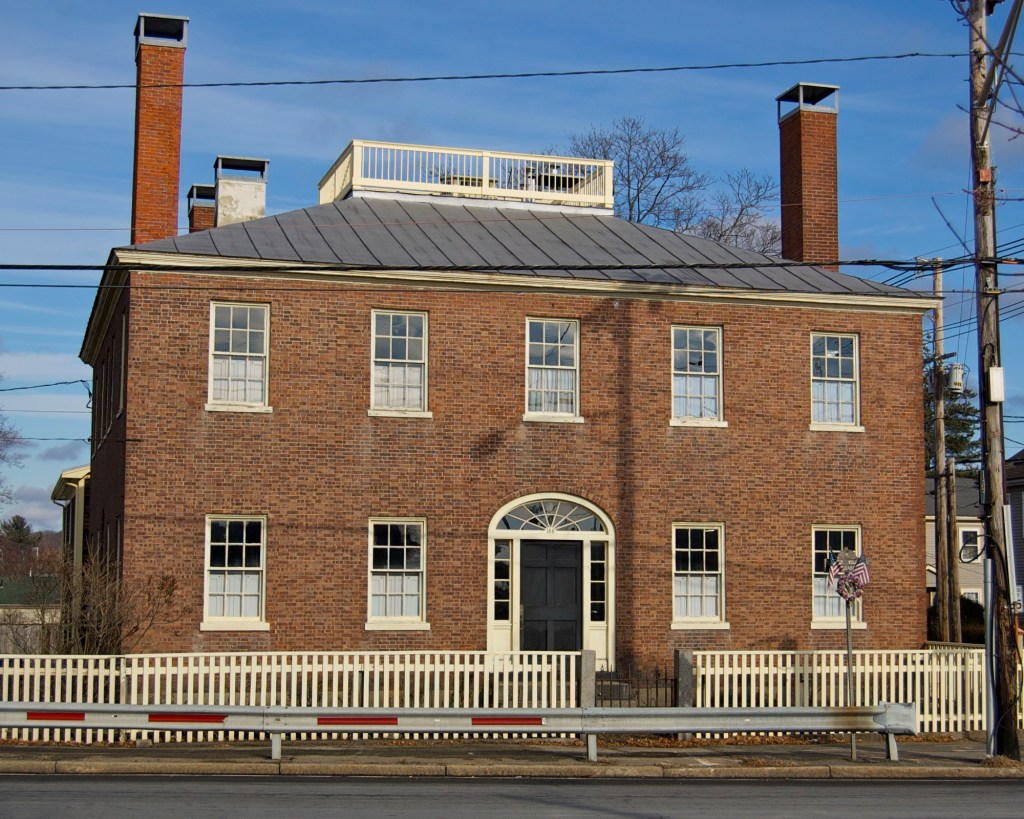
Fowler House // 1809

Photo courtesy of Wikimedia commons.

The Fowler House is located in the Danversport section of Danvers, Massachusetts, and is one of the town’s few brick Federal period homes. The residence was built in 1809 by builders Levi Preston and Stephen Whipple for Samuel Fowler Jr., an early Danvers industrialist and landowner in this part of town. The property was passed down through generations of the Fowler family and ultimately acquired by the Society for the Preservation of New England Antiquities (SPNEA, now known as Historic New England) as their second property acquisition in 1912. Uniquely, Historic New England granted life occupancy of the house to the two unwed Fowler sisters, who had resided here, even as it was converted into a museum. When bought by SPNEA, some members were concerned that the Fowler house was not grand or architecturally interesting enough to warrant its acquisition, Samuel Appleton, the founder, stated, “As might be expected, the Fowler home reflects the simple tastes of its owner. As seen from the square the house is as severely simple as it could be. It depends for its effect on its very simplicity and admirable proportions. The principal features of the house may be said to be simplicity, good taste, solid construction, splendid preservation, and homogeneity.” The property was eventually sold by Historic New England to a private owner, but a preservation easement by the Society ensures its preservation for the future. The Fowler House was recently listed for sale, and the property retains many historical features, including original ca. 1810 wallpaper in the main two-story entry hall and a large hearth in the main kitchen, its original floors, plaster, woodwork and other features.
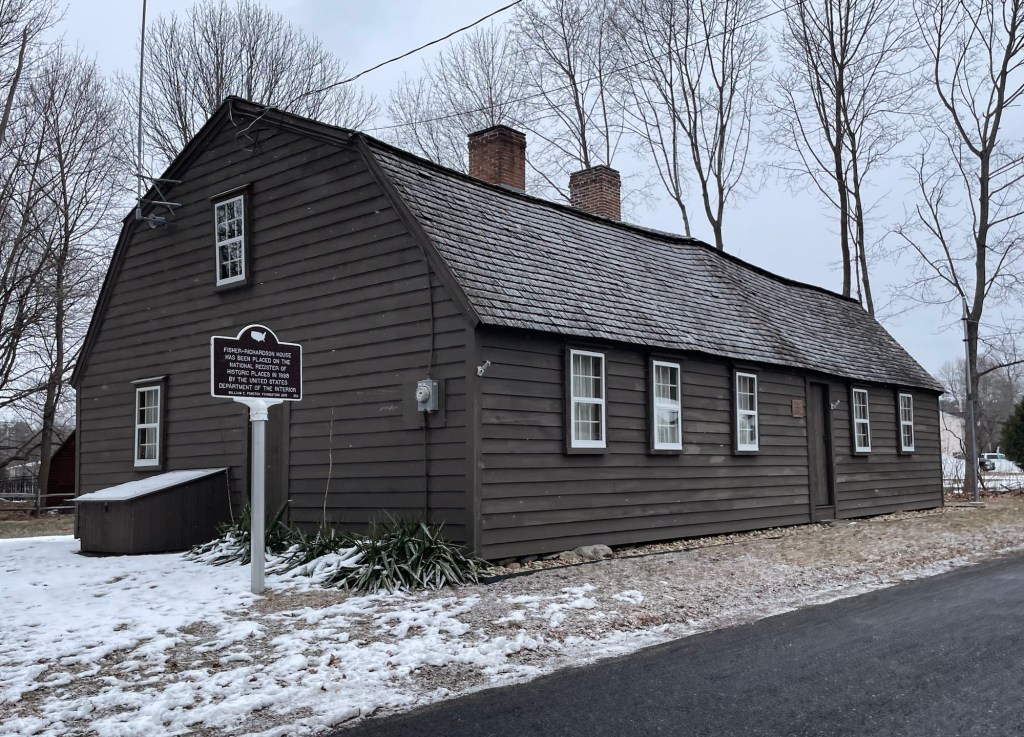
Wellman-Fisher-Richardson House // c.1745

The Fisher-Richardson House in Mansfield, Massachusetts is considered to be one of the oldest buildings in the suburban town. The home dates to sometime between 1743 and 1751 and was built for its original owner Ebenezer Wellman (1720-1776). The property was eventually owned by Lemuel Fisher, who in about 1800, doubled the size of the house adding its western half. When Lemuel died in 1820, the property was inherited by his youngest son, Daniel, a farmer and blacksmith who also built a gristmill nearby. The home was later inherited by Daniel’s daughter, Evelina and her husband, Captain Ira Richardson. By 1930, the gambrel-roofed Georgian house was in disrepair, and the owner at the time contacted SPNEA (now Historic New England) who drafted an agreement to acquire and restore the house. However, as local interest in the property increased, the owner deeded the property to the town, and the town took on the costs of restoration. The property is now managed by the Mansfield Historical Society.

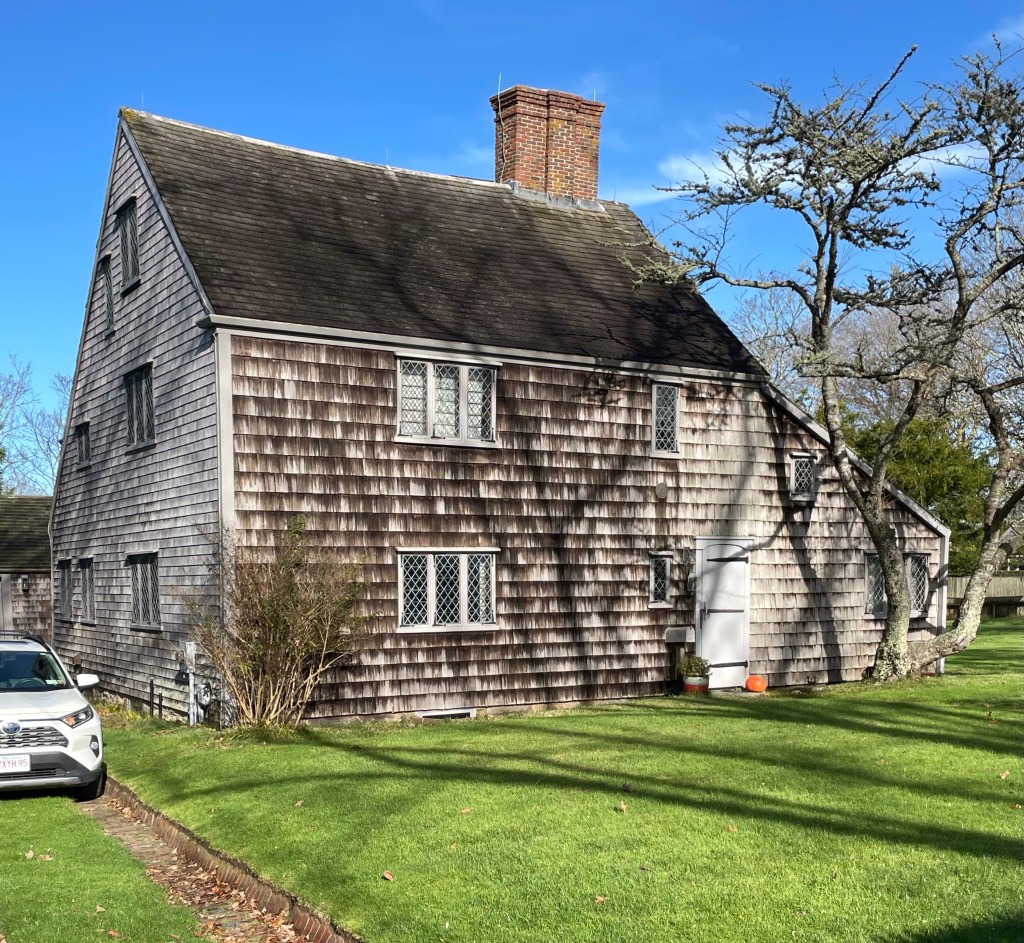
Richard Gardner Homestead // pre-1688

In 1690, Richard Gardner Jr. (1653-1728) received the land and dwelling house from his late father Richard Gardner (1622-1688) who was born in England and settled in Nantucket by way of Salem upon his death. The primitive, First Period home was occupied by subsequent generations of the Gardner family, and altered and expanded to fit the growing needs and wealth of the family. By 1840, the house was owned by George C. Gardner, a whaling captain and descendant of Richard Gardner. The original home was located on what is now Lowell Place, just off Main Street, and the Gardner Homestead was converted to a carriage house for the more modern George Gardner Home. By 1927, Ms. Gladys Wood purchased the deteriorating and heavily altered structure, and moved it to its current location on Main Street. Ms. Wood hired architect Alfred Shurrocks, who summered on the island and was restoring the Jethro Coffin house nearby, to restore the former Gardner Homestead, but this one was all based on conjecture and historical precedent. The home looks much like a 17th century saltbox and has stood the test of time.

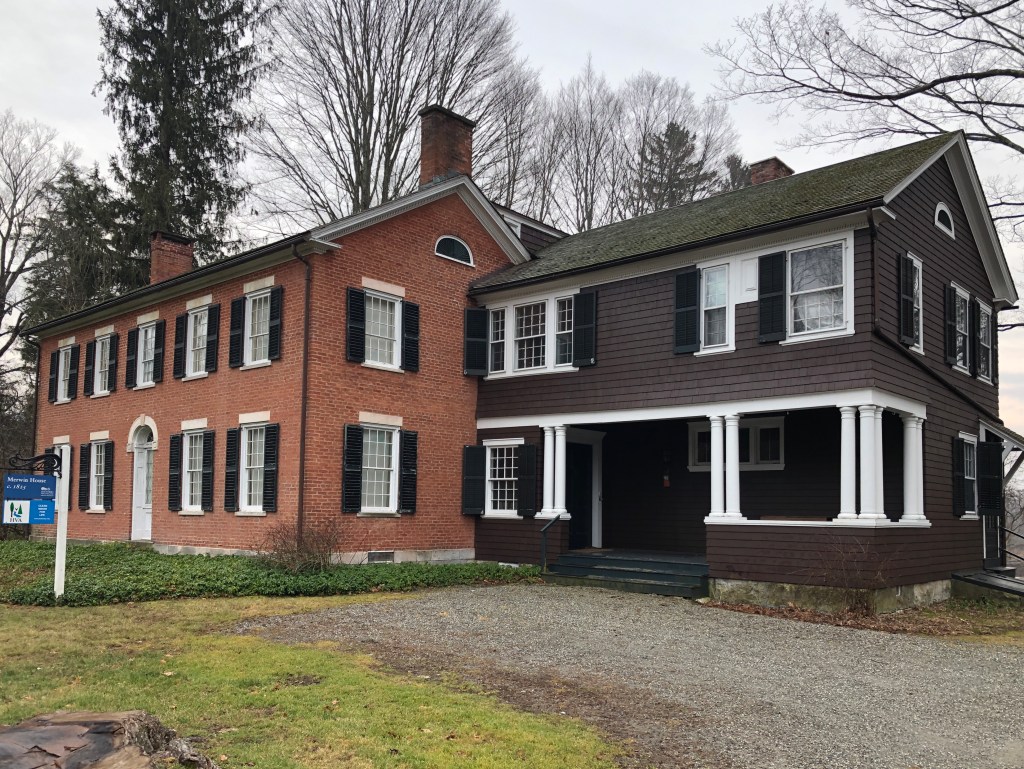
Merwin House // 1825

In about 1825, Francis and Clarissa Dresser built this charming brick Federal house in the rural town of Stockbridge, MA. Just 25 years later, the railroad arrived to town, connecting it to Connecticut and New York to the south, opening the town up as a leisure destination for wealthy city dwellers looking to escape the noise and congestion of the city. The period following the Civil War through World War I saw the Gilded Age reach the Berkshires. With artists, writers, financiers, and industrialists flocking to the rural hills of western Massachusetts for seasonal escapes. In 1875, William and Elizabeth Doane, wealthy New Yorkers, purchased Merwin House from the Dresser family to use as a summer retreat. As the Doane family grew to include two young daughters, Vipont and Elizabeth, they added a Shingle Style side addition to the original brick structure. The home became known as “Tranquility”, even after the home was willed to daughter Vipont. After a couple marriages, Vipont married Edward Payson Merwin, a New York stockbroker. Historic New England acquired Merwin House in 1966, shortly after the death of Marie Vipont deRiviere Doane Merwin, known as Vipont. It was her desire to leave Merwin House as a museum, as her will states, “as an example of an American culture which is fast becoming extinct.” The space is occasionally open for tours and is partially occupied by the Housatonic Valley Association.