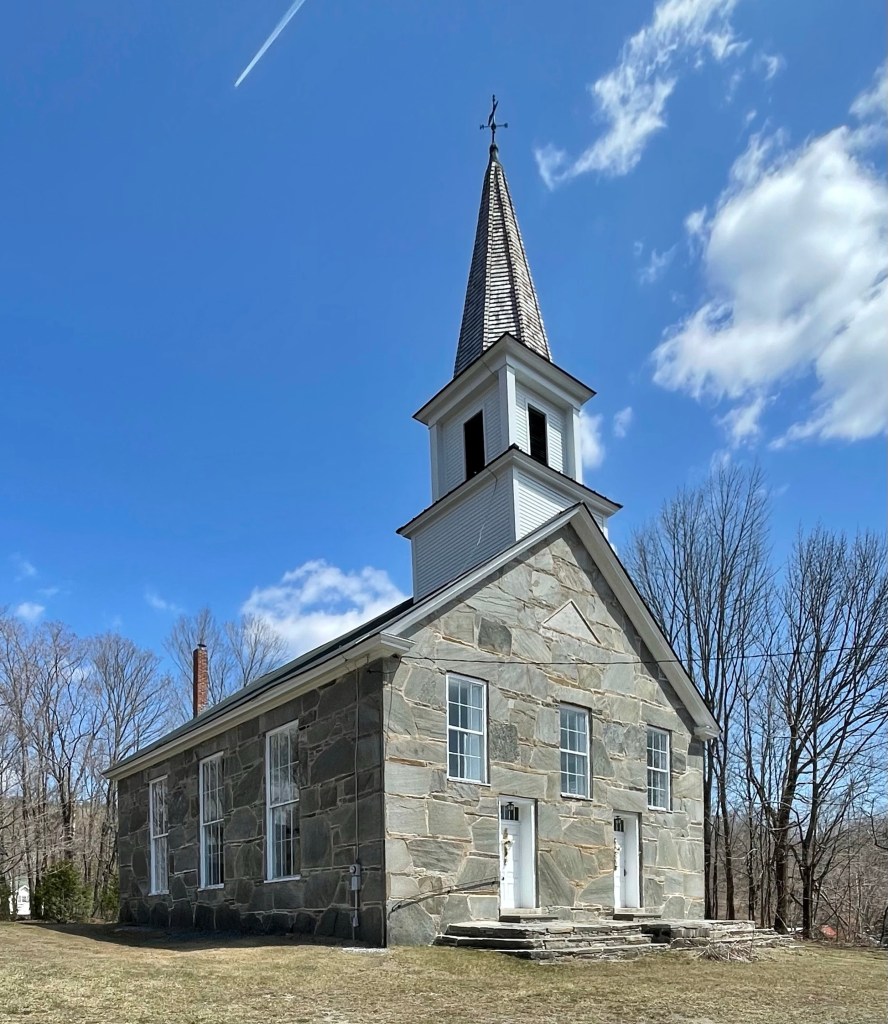
South Reading Union Meetinghouse // 1844

A very rare example of a snecked ashlar church, the South Reading Union Meeting House in Reading, Vermont remains in a great state of preservation, and a testament to innovative building styles seen in rural parts of New England. Built in 1844, the stone church was built by local stone masons based on the unique regional stone construction method. The church features a triangular stone in the facade which shows its construction date. There is something so stunning about stone churches..
Snecked House // c.1850

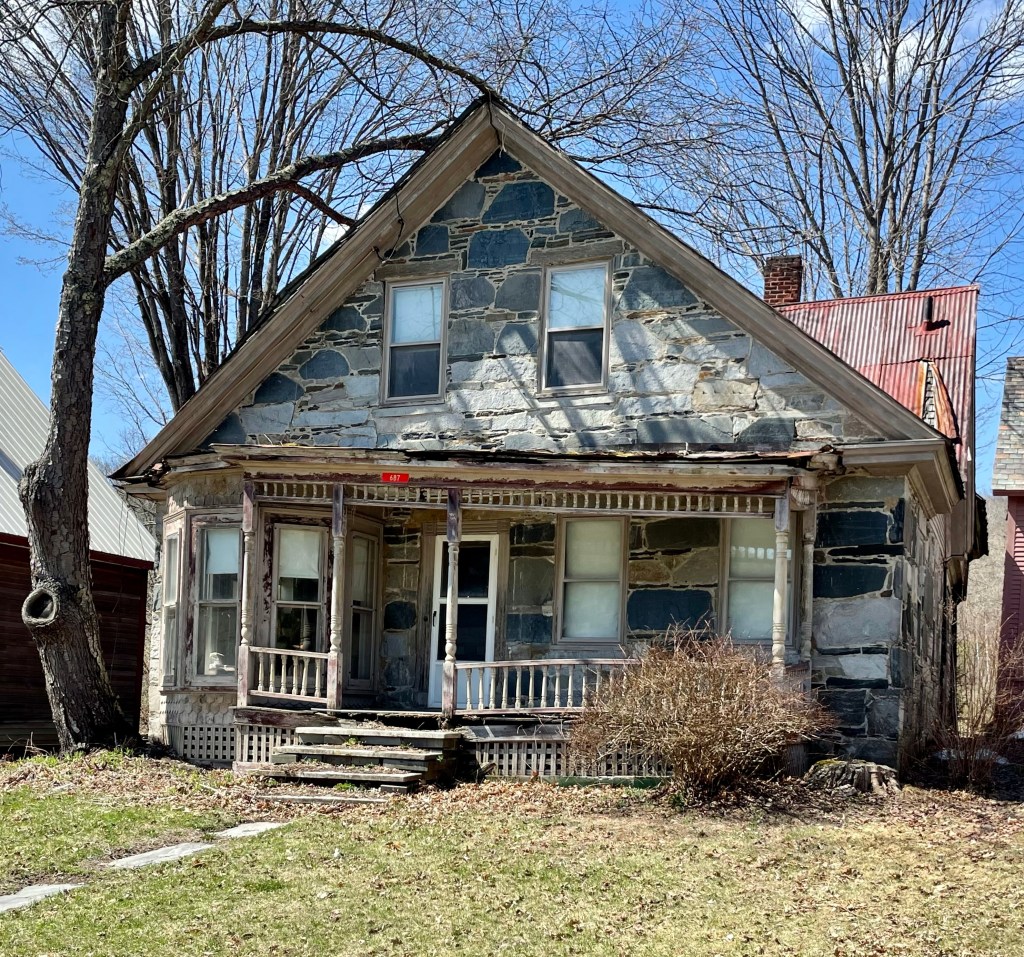
In the early 1830s, skilled masons from Scotland and Ireland came to central Vermont to work on building projects. A number of these workers, mainly from the Aberdeen area, and specialized in a specific building style in which plates of stone are affixed to a rubblestone wall. This method of bonding stonework is so prevalent in Scotland and
Ireland it has been referred to in some journals as ‘Celtic Bond’, but in Vermont, it is known as “snecked ashlar”. The mixture of stone sizes and colors produces a strong bond and an attractive finish. This home is a rare example in the state, which is estimated to have about 50 of these homes left. I could not locate any information on the owners of the home, but the house has seen better days, with the wooden front porch shifting away from the main house. Also, if you look closely, you can see the original wood shingle roofing breathing under the sheet metal roof!

Goddard Mansion // 1859-1981

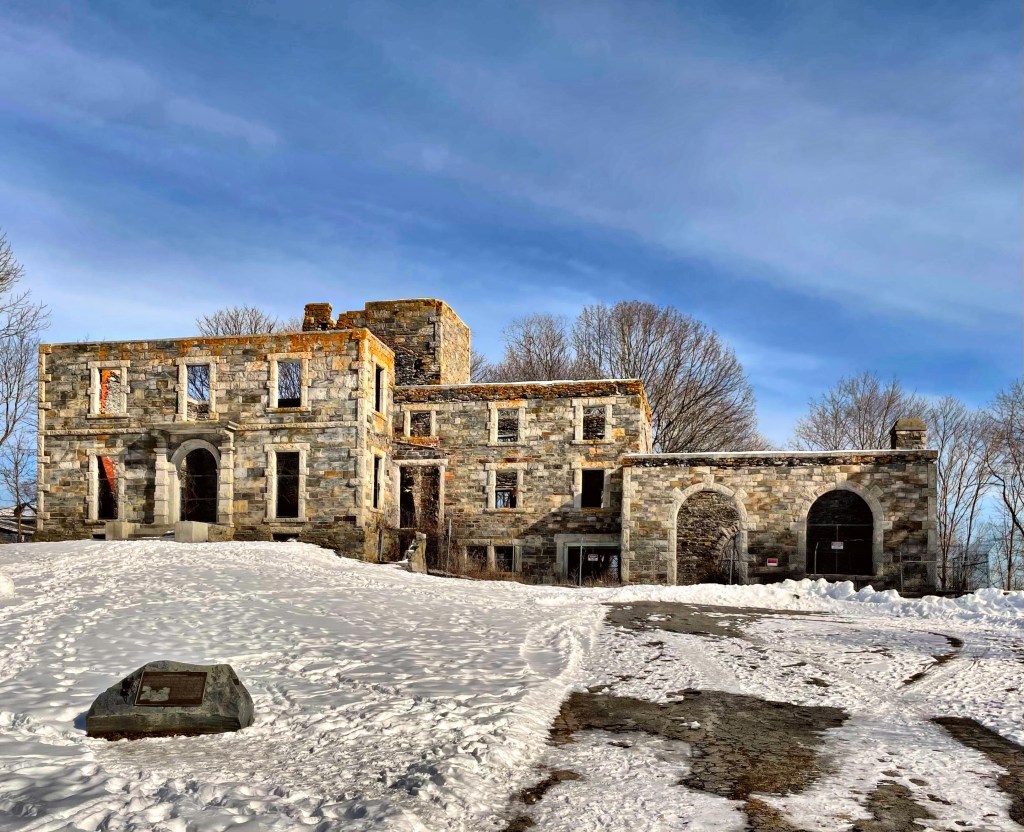
This shell of a former mansion was built in 1859 for Colonel John Goddard (1811-1870), a Civil War Union Army Officer. Goddard was a “lumberman” who amassed substantial wealth before the outbreak of the Civil War, and he hired architect Charles A. Alexander, to design an estate house for him and his family. The home appears to have been constructed of local stone with white granite trim and featured a prominent tower, emulating an Italian Villa. The home was purchased in 1898 by Judge Joseph W. Symonds, who presided over the Maine Supreme Judicial Court. Just two years later in 1900, during the expansion of Fort Williams, the estate was acquired by the Federal government. The home was used for housing married enlisted men and their families while stationed at Fort Williams. The basement was converted into the fort’s Non-Commissioned Officers’ Club. At the time of the town’s purchase of the Fort in 1964, the mansion was already in serious disrepair and its future was uncertain. People routinely broke in and damaged the interior, which suffered numerous small fires over the years, until the town decided in 1981 to hold a controlled burn of the home, leaving the shell. The shell remains a significant architectural landmark and a massive opportunity for the town.

Stone Machine Shop // 1849

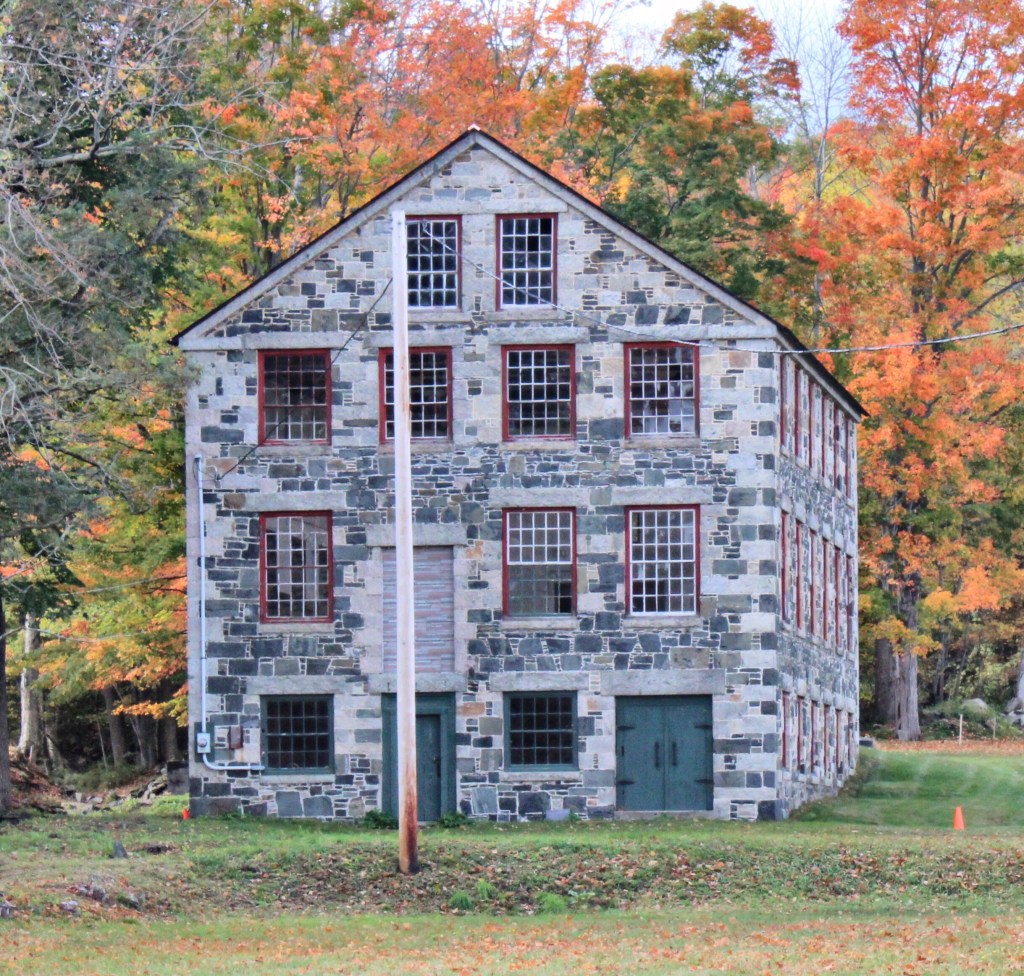
Located across the street from the main collection of remaining Shaker buildings in the Enfield Shaker Museum campus, this historic stone structure stands as a lasting remnant of the workspaces built for the active Shaker community there. Once part of a larger group of structures that once stood here (the machine shop being the only extant), including a tannery, blacksmith shop, animal sheds, and broom shop, this stone structure shows the significance of rural industry in Enfield. This structure was built in 1849 and was water powered. Stone Machine Shop was powered by a nearby stream and mill pond. Water flowing through the stream would enter into the mill’s head race, move across several water wheels, and exit through the tail race before being dumped back into the stream

Pettee Stone Barn // c.1840

Built adjacent to the stone cottage, this stone barn was also constructed in around 1840 by Otis Pettee (1795-1853) as part of his business venture. Pettee was a major mill owner in the Upper Falls Village of Newton and was a major silk manufacturer in the area. The stone barn was used as a warehouse and later as the location for raising silk worms for the silk mills down the street. As with the adjacent stone cottage/shop, Pettee likely built the barn of mostly stone on the site as a fireproof design to protect his valuable product. It is now home to Danish Country & Modern, an amazing furniture shop which sells Scandinavian furniture and accessories.