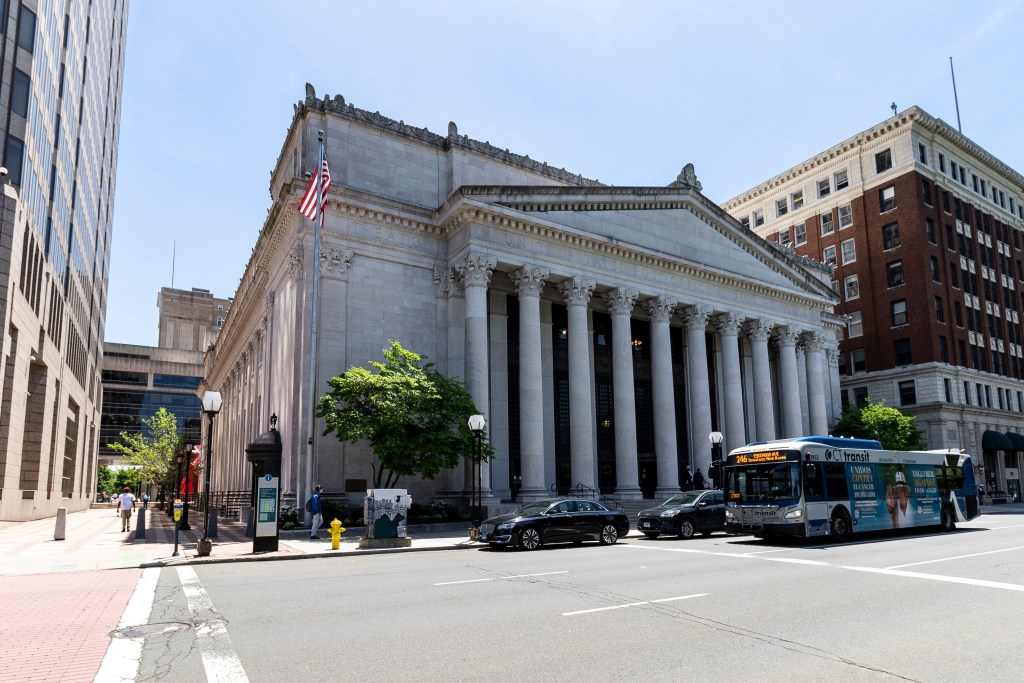
Richard C. Lee U. S. Courthouse // 1913

Image by Brandon Bartoszek

The monumental Richard C. Lee U.S. Courthouse is located on the west side of the Town Green in New Haven, Connecticut, a stone’s throw from the New Haven City Hall. The building is an excellent example of Classical Revival architecture. The building originally served both as a courthouse and post office, although the post office moved to another location in 1979. James Gamble Rogers designed the building, which was constructed between 1913 and 1919. Rogers was also the architect for structures at Yale University, his alma mater (more on some of those later). The building was the last to be designed under the auspices of the Tarsney Act (1890-1912), which allowed the Treasury Department to hire private architects rather than use only designers employed by the federal government. Classical architecture was commonly seen in federal building design during the early twentieth century because officials believed it conveyed the dignity of the federal government. The New Haven courthouse displays several hallmarks of the style, including the colossal portico and pediment with columns capped by Corinthian capitals. The courthouse was slated for demolition in the 1960s as part of an urban renewal plan. However, a coalition of federal judges and local historic preservationists rallied to save it. In 1998, the building was renamed to honor Richard C. Lee, a former New Haven mayor who was a pivotal figure in the building’s preservation as well as the city’s revitalization.

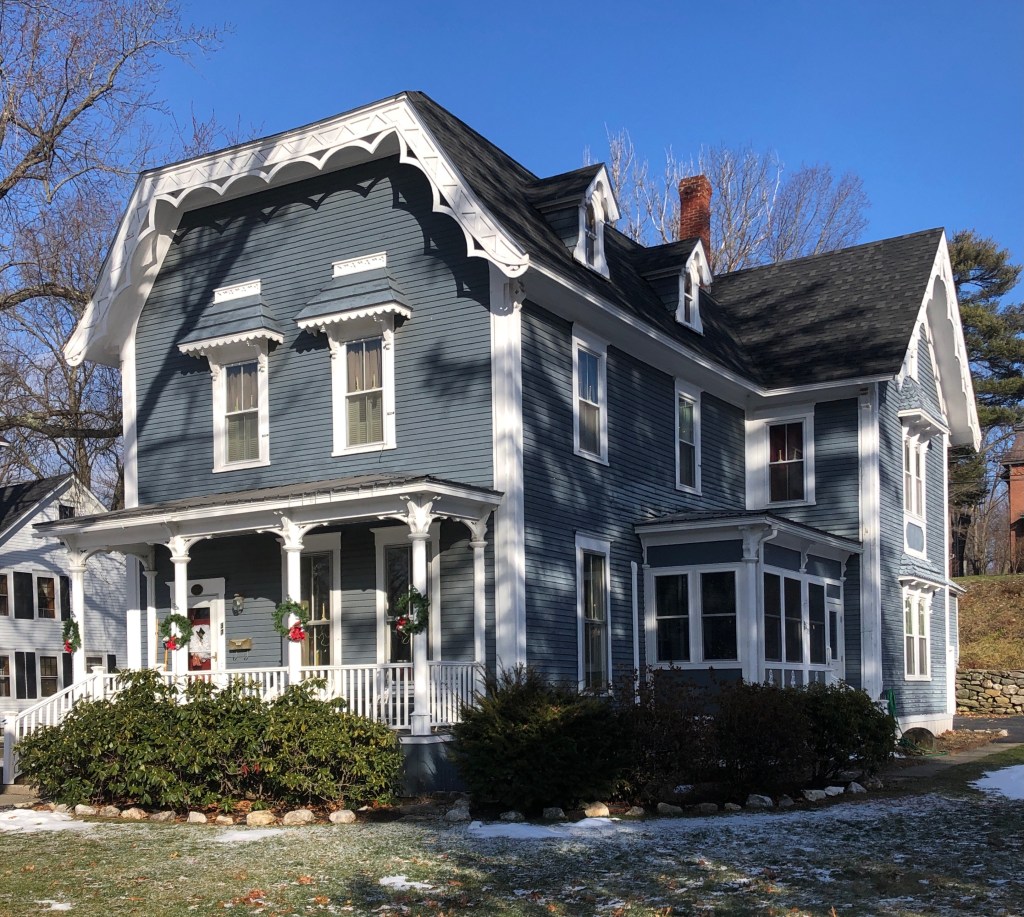
Parmelee House // c.1879

Located on the east side of the Town Common in Newport, NH, the Parmelee house stands out as a unique vernacular Stick style home. The home was built for Joseph Warren Parmelee (1818-1892), the grandson of original settlers of town, Captain Ezra Parmelee and Sybil Hill. He began his adult life as a merchant in Newport, before moving south to Charlestown, South Carolina in 1847. Joseph was forced back north at the beginning of the Civil War, and he lived in New York City until he finally relocated back to his hometown in 1879, which is likely when he built this home for his family. Upon returning, he became active in town affairs, and also pursued interests in history and poetry, creating a book of poems from his home. The Parmelee house retains much of its original detailing from the decorative bargeboards at the gable ends, large eyebrow window hoods at the second floor, and the interesting trapezoidal roof, possibly a vernacular nod to a mansard roof.

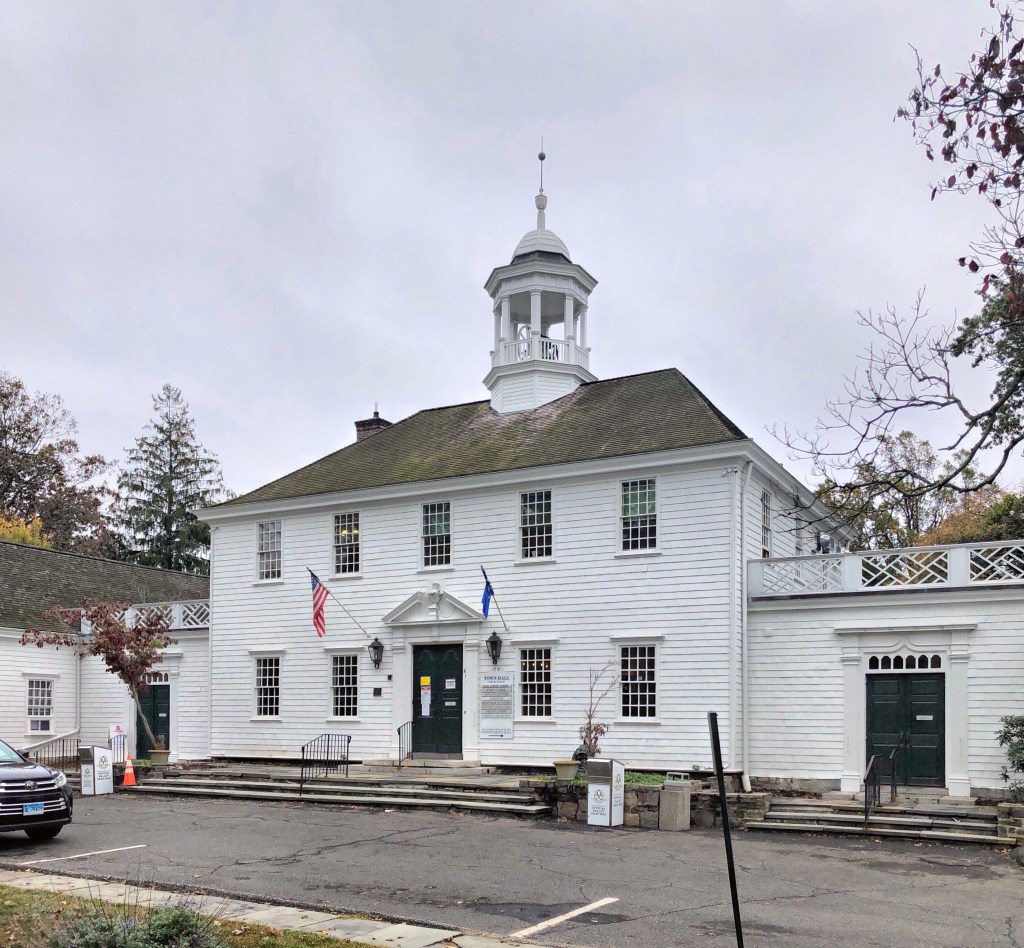
Old Fairfield County Courthouse // 1794

Located at the Fairfield Town Green, the Georgian-style Fairfield County Courthouse stands as a reminder on the town of Fairfield’s Colonial-era history. The first courthouse at the site was built in 1720. After a fire destroyed the first (which housed the jail as well), a second structure was built in 1767. That second courthouse was the center of a thriving, wealthy village with a port just blocks away. In July 1779, the British landed in Fairfield and destroyed much of the town, harming its prosperity for decades to come (though it has clearly recovered since). In 1794, a new courthouse was built, also housing town offices. In 1870, it became solely a town hall (the County Court moved to Bridgeport years before) modified and altered in the Second Empire style to ‘modernize’ the building. As Colonial Revival resurged in popularity in the late 19th and early 20th- centuries, the town sought to bring back the Georgian style Town Hall building, in 1936 hiring architect Cameron Clark, to restore the building.