Originally built in the Carpenter Gothic style in 1863, the Sawyer-Gillett Mansion in Whitingham, Vermont, is the highest-style house in town today. Indistinguishable from its Civil War-era original construction, the house was greatly expanded and altered into an elaborate take on Queen Anne / Shingle styles in 1914. The house was originally constructed by John W. Sawyer, but it was his son, Lincoln H. Sawyer who renovated the house and etched his name “L.H. Sawyer” on the glass of the new front door. The updated house style reflects a nostalgic Victorian preference by the owner, who sawed all the trim and materials on site at the family sawmill. It was recently sold and is now a B&B!
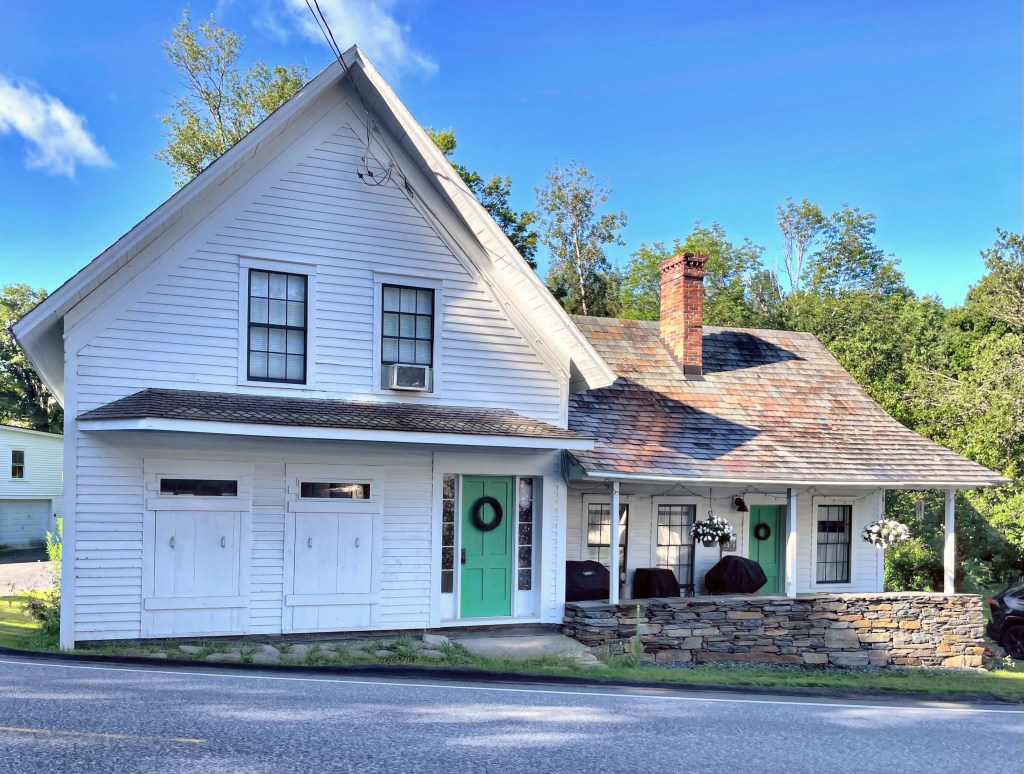
One of the cutest old houses in Whitingham Village in Vermont is the Abraham F. Chase House, just a stone’s throw from the country store and post office. Abraham Chase was a dealer in dry goods, groceries, boots, shoes, and hardware in this village, possibly from half of this building. The vernacular one-story clapboarded frame house has some Gothic details like the rear steep double gable wall dormer. I am actually a huge fan of the green doors and newer stone porch wall, they really make this cottage pop!
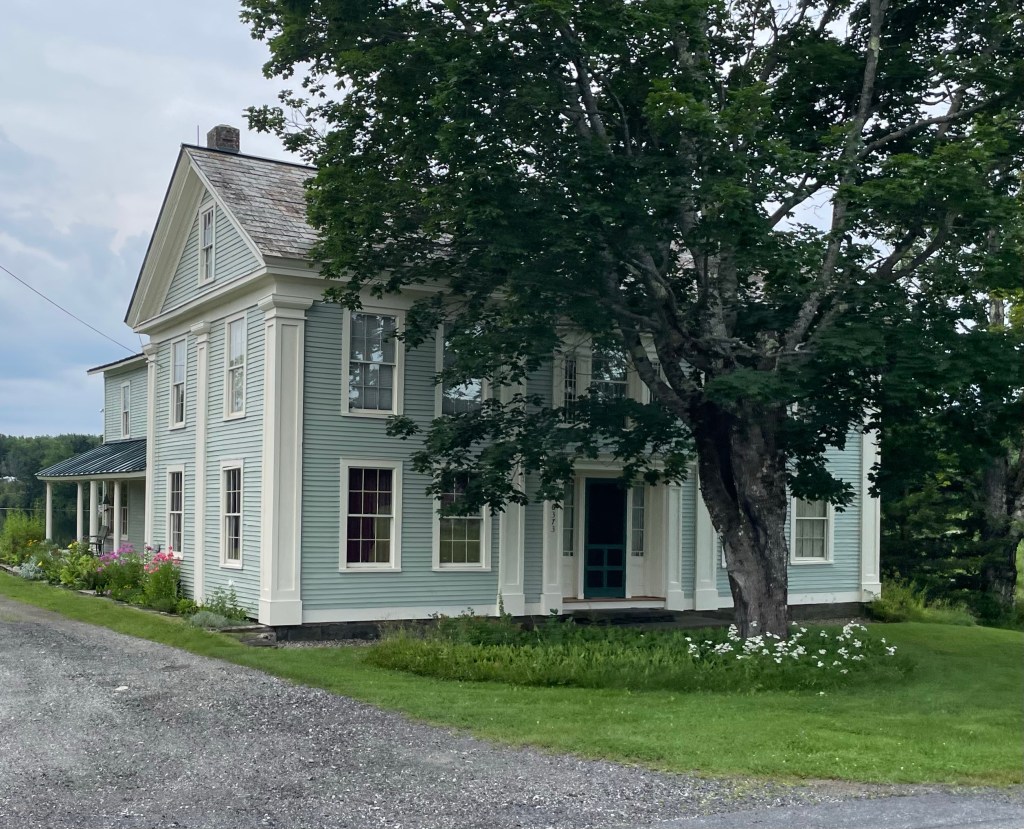
The main part of this stunning Greek Revival house in Whitingham, Vermont was built by Reuben Winn around 1840 and was originally located on the town common, southeast of the present village of Whitingham. The building was the only one to be moved from the hill to the valley as development shifted westward to the current town center and its access to water power for industry. This house was moved in 1889 and was run as the Sadawga Lake House hotel by Charles E. Putnam who also was listed in local directories as a slate dealer. The present slate roof was likely added by Putnam! The architectural element which stood out to me was the three part Palladian window directly above the front door that uses the motifs of the Greek Revival pilasters and entablature common to the other façade elements. The home is very well-preserved and even maintains a detached barn on the property!
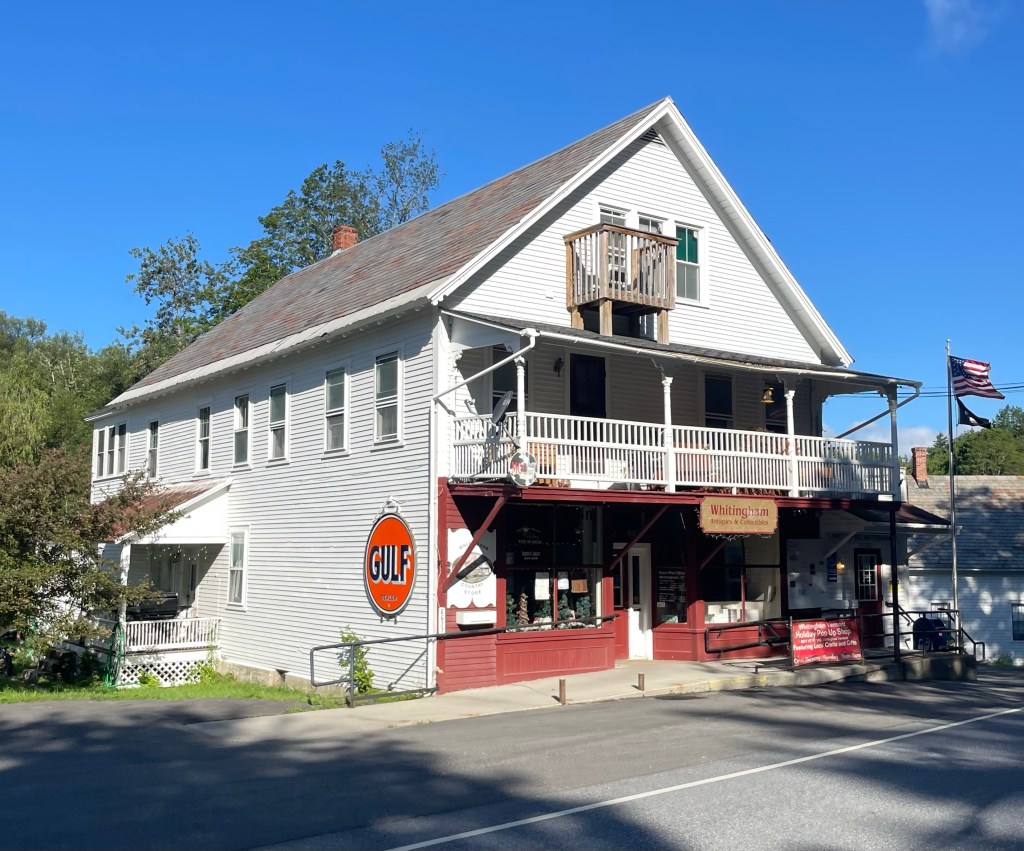
To me, Vermont is synonymous with Vernacular architecture. The state obviously has high-style and architect-designed buildings all over, but the character of the state (to me) is based around local builders, local materials, and local traditions. The patchwork of towns and villages in Vermont all have one thing in common, at least one general store. These buildings serve as an informal meeting place or community center where residents and visitors alike can hear the local gossip and events taking place. The general store in Whitingham, Vermont is located in the middle of the village, perfect for stopping in. The building was constructed in the first decade of the 20th century, replacing a former hotel/tavern on the site. The late-folk Victorian style store exhibits some decorative columns and storefronts, likely produced at one of the working lumber mills in town at the time. The store was originally built by Arthur and Carl Wheeler as the “Wheeler Brothers Store” but after 15 years changed hands and became the “F.W. Jillson & Son Store”. Since then, the Jillson’s opened up an antique store in the building which serves as a multi-use facility (collectively as a country store). Keep it local Vermont!
Tucked away on a dirt road in rural Whitingham, Vermont, the Amos Brown House sits among fields of tall grass, bounded by historic stone walls and rows of apple trees planted centuries ago. I was lucky enough to be able to stay at the Amos Brown House this past weekend and it was everything I could have imagined…and more! The property is owned and managed by the Landmark Trust USA, a nonprofit organization based in southern Vermont that preserves and restores historic properties through creative and sustainable uses for public enjoyment, education and inspiration. In the past, I stayed at the Kipling Carriage House, another charming property. The Amos Brown House is thought to be the oldest house in Whitingham, Vermont, and is a well-preserved example of a Federal style brick farmhouse in this part of the state. The telescoping ells of a summer kitchen, barn, chicken house, and shed showcase how farms would grow over time to serve the needs of these families in the undeveloped wilderness of New England. By the time of The Landmark Trust USA’s acquisition of this property in 2000, the house had seriously deteriorated. Inappropriate repairs and alterations in the 1960s and 1970s had weakened the brick walls, leading to severe cracking and small areas of collapse. They underwent a massive restoration of the property inside and out, and it remains an absolute treasure in the state to this day.
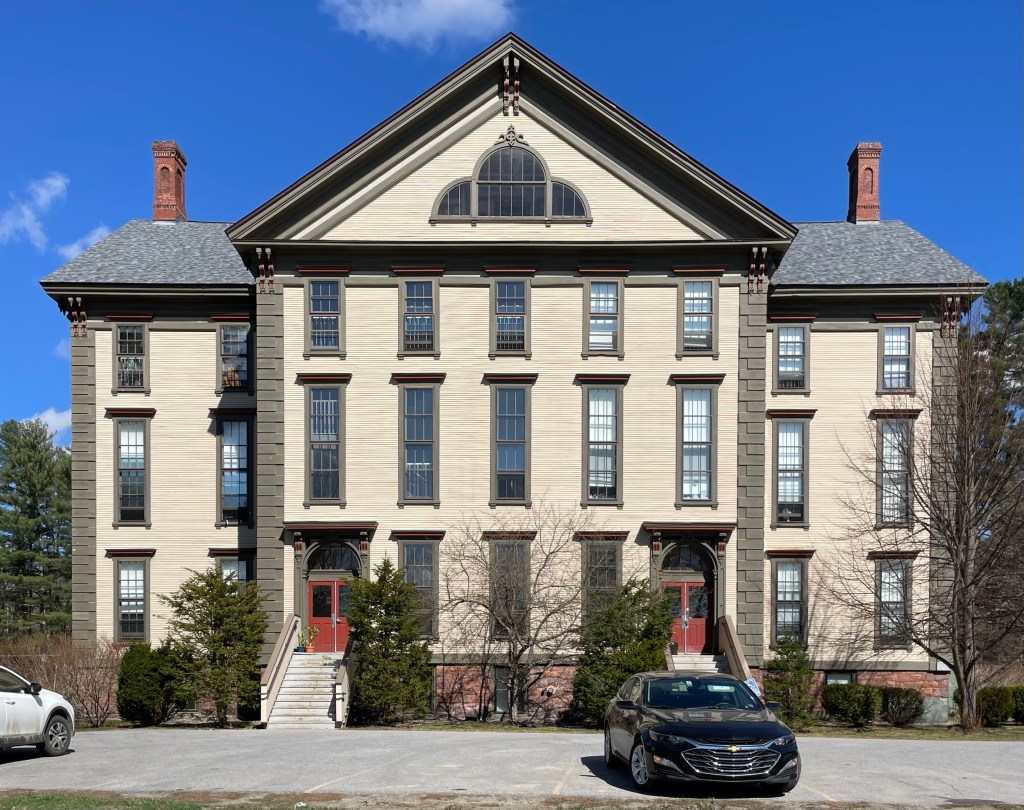
The Green Mountain Seminary building in Waterbury Center, Vermont was built in 1869 as a co-educational Free Will Baptist school. The building is one of the largest and grand examples of Italianate architecture in this part of the state. As originally laid out, the lower two floors were used for educational purposes and included a chapel, while the third floor and attic level were used for men’s housing. Here, men would be trained to be Baptist priests. Upon opening, a catalogue expressed the building’s rural location in the town as a benefit, stating “It is removed from the bustle and distraction of large commercial villages; is free from the haunts of vice and dissipation or temptation to idleness; and is surrounded by natural scenery unsurpassed in its magnificence and grandeur.” The building went through a variety of educational and boarding uses until 1895, when it was deeded to the town for use as a public school building. The building is nearly unchanged as when it was built in 1869, besides the removal of the rooftop belvedere and walkway in the 1940s.
Historic train stations are among some of my favorite types of buildings as they transport you to a different time (no pun intended). The Waterbury Railroad Depot was built in 1875 by the Central Vermont Railroad, connecting Montreal, Quebec with New London, CT and to other lines to Boston and Albany on the way. Waterbury service began in 1849, but this updated station was built later as the railway prospered and expanded. The station suffered from some deferred maintenance for decades in the mid-20th century and its fate (like many such stations) was unknown. Beginning in the late 1990s into the 2000s, Revitalizing Waterbury worked with the Great American Station Foundation, the Vermont Agency of Transportation, and Green Mountain Coffee Roasters Foundation, establishing a capital fundraising campaign meeting the goal of $1,200,000 through donations from the private sector and community members. These funds helped restore the building in phases, beginning when Keurig Green Mountain, Inc. agreed to lease the station from Revitalizing Waterbury, and created a visitor center and cafe (now Black Cap Coffee and Bakery) that has become a first-class attraction and provided an economic boost to the downtown.
Located just steps from the former State Hospital of Vermont in Waterbury, the Charles C. Warren House on Main Street stands as an important Victorian-era residence in the town. The late Italianate style residence features a detached carriage house at the rear which was later converted to a auto garage and most recently to office space. Mr. Warren was a businessman in town who owned a tannery and creamery. He built a water system in the town in 1879, making a substantial amount of money in the process. Mr. Warren was a serious auto enthusiast who in addition to purchasing the first automobile in Vermont (a 1899 Haynes Apperson), he held Vermont registrations #1 and #2. He had his carriage house converted to an auto garage equipped with a turntable that obviated forever the tedium of backing down the driveway. The building is now home to a law office.
The former Vermont State Hospital campus in Waterbury, Vermont, is a 36.3-acre campus of institutional buildings that have been converted for use as state government offices. A sprawling array of more than 17 structures, the hospital, which historically treated mental disorders, was first funded by the Vermont State Legislature in 1888. Construction began on the plans by the Boston architectural firm of Rand & Taylor in 1890. The architects designed the landmark main administration and auditorium building at the core, which is built of brick on a rusticated stone foundation and under a steep hipped slate roof. The building is connected by single-story links to two-and-a-half-story wings, which are attached to clustered two-story cylindrical wards. In planning the hospital, Rand & Taylor stressed the isolation of patients and stressed the importance of light and air in each room and restricted height of the building to facilitate egress from upper floors in the event of fire or emergency. The asylum has a dark history in that Dr. Eugene A. Stanley, the Superintendent from 1918–1936, was an advocate of eugenics and espoused forced sterilization and advised the Eugenics Society based on his patients records. From this, the word, “Waterbury,” became used in a derogatory sense, and did harm to the town for years. The hospital was closed in 2011 due to flooding in the aftermath of Tropical Storm Irene, and after a thorough renovation by architects Freeman French Freeman and Goody Clancy, the complex re-opened in 2015 as State Offices with renovated historic assets and modern, contextual new buildings.
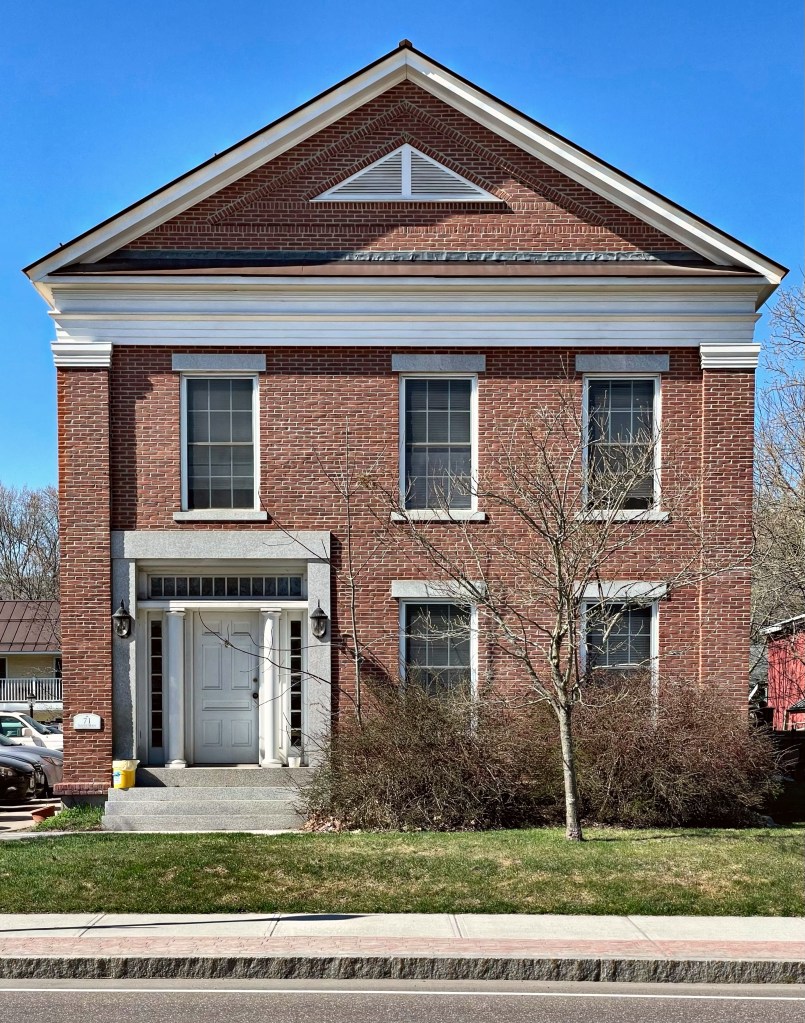
One of the most stately and classic homes in central Vermont is this Greek Revival beauty constructed of brick, right on Main Street in Waterbury. The home was built for William Wellington Wells, who was born in Waterbury, Vermont in 1837. He soon became one of Waterbury’s most prosperous merchants of the mid-nineteenth century, starting as a lawyer with business interests including a tannery and grist mill in nearby “Mill Village” and a mop and chair stock business. He served in the Civil War and contributed much to the town’s growth. After successive ownership, the town’s appeal during the winter months shifted the demand towards short-term stays tied to the ski industry. The Wells House was added onto at the rear and converted to a motor hotel called the “Gateway Motel” in the mid-20th century. The use remained for decades until a fire destroyed much of the motel, leaving the 1840s Greek Revival home’s future in limbo. Thankfully, new owners restored the home and built much-needed residential housing at the rear, largely in the same form as the old motel. Love to see preservation at work!





 Buildings of New England