Dr. Ptolemy Edson House // 1834

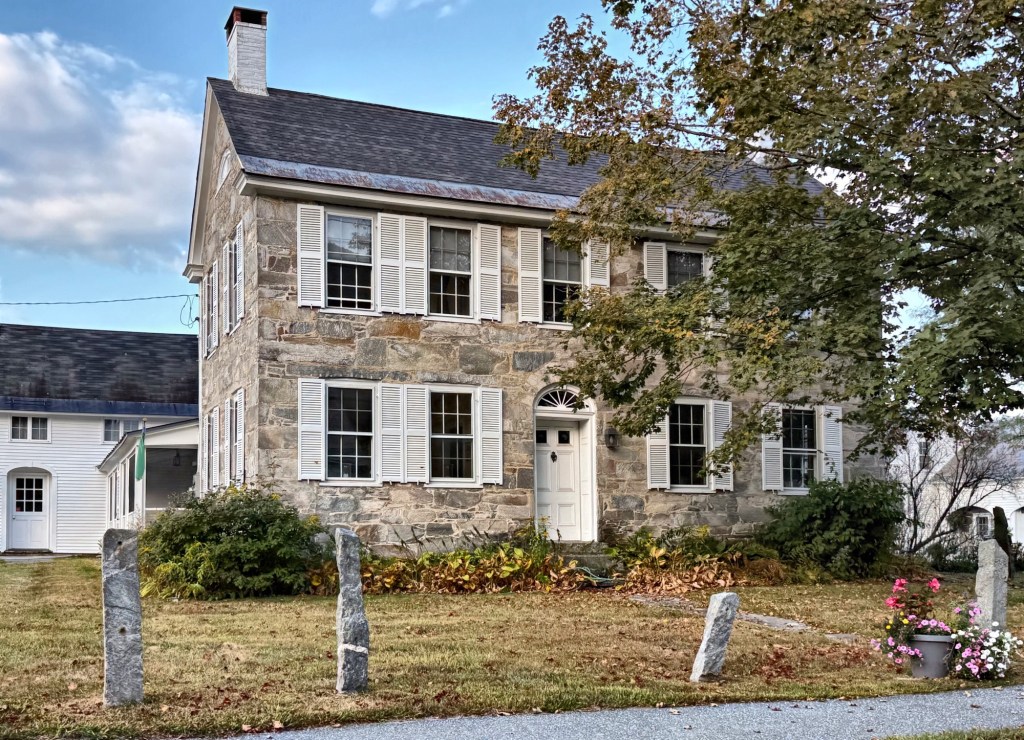
The Stone Village of Chester, Vermont, is said to be the largest collection of stone buildings in the state. Built in 1834, the Dr. Ptolemy Edson House is one of a few dozen “snecked ashlar” buildings in the region, where rubblestone is laid up with mortar using small long stones called “snecks” to tie an outer and an inner wall together. The construction method is said to have been brought to the area by masons from Scotland and Ireland which is known there as ‘Celtic Bond’. Oral tradition state that Scottish masons from Canada introduced the technique to local masons while erecting a mill in nearby Cavendish in 1832. Local Chester resident, Dr. Ptolemy Edson became such a fan of the building that in 1834, he had his home, the first stone building in Chester, built in this method. He then would influence the rest of the North Village of Chester, where many of his neighbors, as well as the church and schoolhouse, built their structures in snecked ashlar. Designed in the Federal style, the Edson House is a vernacular, five-bay, two-story residence with central entrance and arched fanlight transom over the front door.
Amos Heald House // 1803

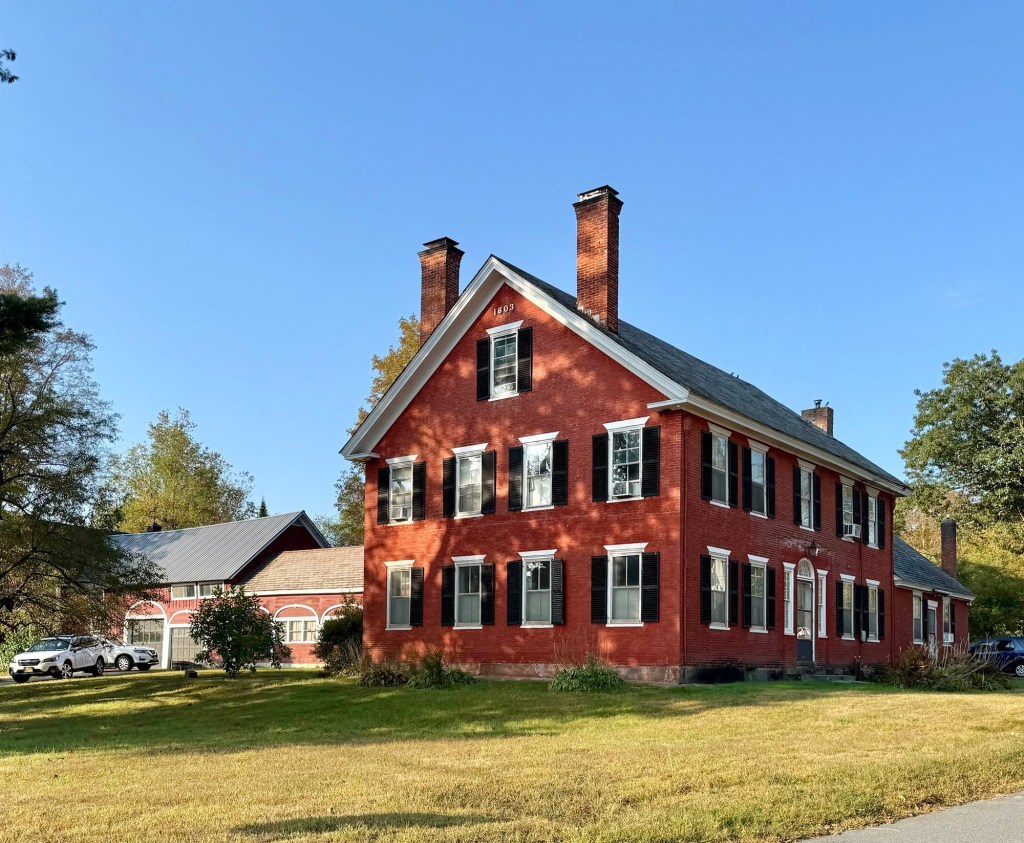
This large brick Federal period house in Chester, Vermont, was built in 1803 and is said to have been a stop on the Underground Railroad. The large residence was built for Amos Heald (1767-1849), who was born in Concord, Massachusetts, and when just a boy of nine years, Amos witnessed the Battle of Concord kicking off the American Revolution. In about 1777, his father, Daniel Heald, moved the family to Chester, Vermont, which was then named New Flemstead, to escape the conflict. Daniel Heald acquired land near the Williams River and built a large Federal style home. He later deeded his son, Amos, land on which he too would build a residence. Amos Heald lived in this brick home and served in many positions in town until his death. The estate was bequeathed to his son, Amos Heald Jr. (1804-1873), who also served in the town offices. Locals state that Amos would shelter escaped enslaved people from the south on their way north to Canada. After his death, his son Prescott took over the property and built a wood-frame addition off the rear stables and barns, which became the town clerk’s office during his tenure, as well as the office for his insurance business. Sometime in the 19th century, the house was renovated with the addition of porches, and later, the building became the Weathervane Inn.

Daniel Heald House // c.1785

Daniel Heald (1739-1833), one of the earliest settlers in the town of New Flamstead (later renamed Chester) Vermont, established his farm on the west side of the upper Williams River. He moved to rural Vermont from Concord, Massachusetts, where he was one of the Patriot soldiers who at the Concord bridge, fought against the British troops while his wife and children who had fled from their home viewed the battle from a neighboring hill. He, with his family, emigrated to Vermont in about 1776 and eventually would serve as town clerk from 1779 to 1799 and as town representative from 1783 to 1797. Around 1785, he built this residence, oldest wood-frame house in North Chester, a two-story, central-chimney house with saltbox roof sloping to the rear. When his son, Amos Heald, was of age, some of the property was deeded to him, where he built a stately Federal style residence that stands across the street to this day. Both of the Heald houses tell the early history of Chester through well-preserved houses.

Comfort C. Dresser House // 1799

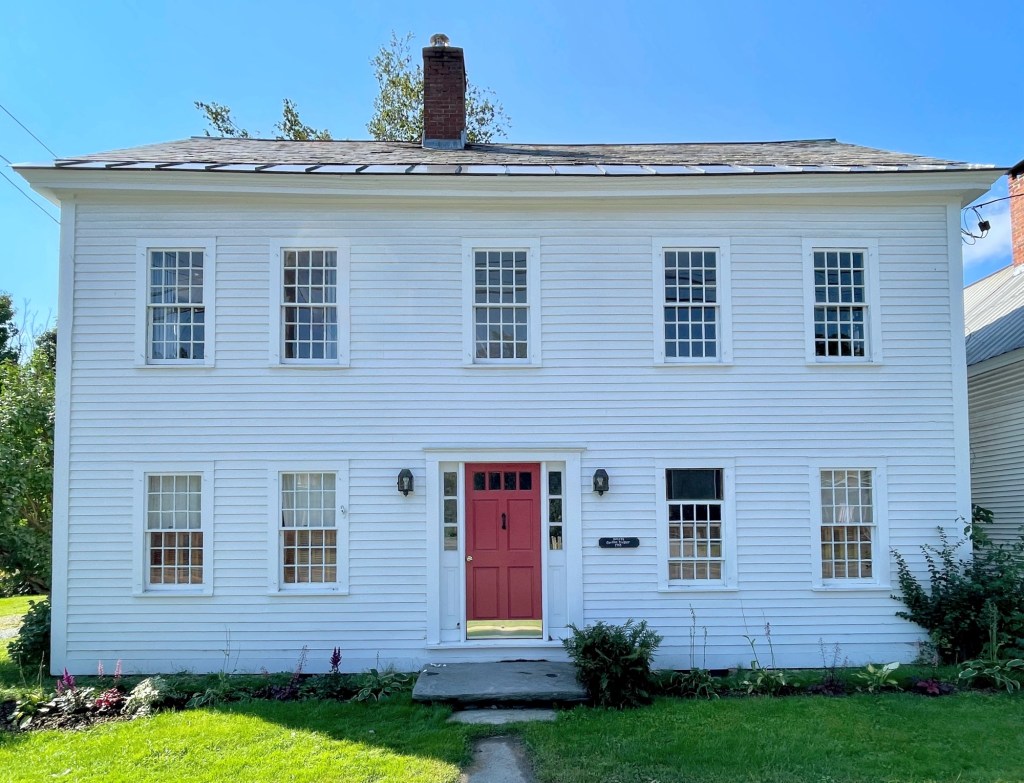
Built just before the turn of the 19th century, this handsome five-bay vernacular Federal period house is located on the charming Main Street of Chester, Vermont, and is one of the oldest extant houses in the village. The residence was built in 1799 by Comfort Carpenter Dresser (1777-1856), who with his family, moved from Bridgewater, Massachusetts, to the town of Chester, where he found work as a carpenter and housewright, a fitting profession due to his middle name. The family resided here for nearly 30 years until they moved to New Hampshire. The beautiful home, painted a bright white sometime in the 20th century, features a front door with sidelights, 12-over-12 sash windows, and a symmetrical facade, common for the style. 

Kent-Isham House // c.1800

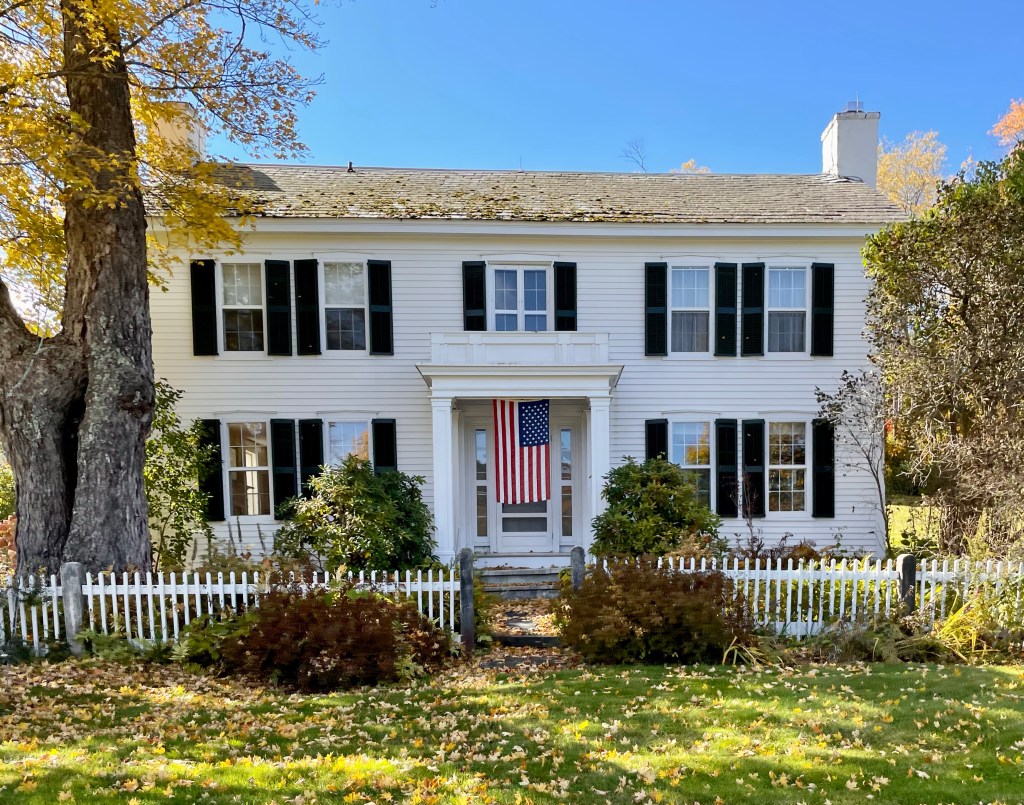
Located at the principal intersection in the Kent Hill area of Dorset, this home is the visual anchor for its surroundings. The property is a typical early 19th century Federal style house in Vermont, sheathed in clapboards, a central entrance, with a slate gabled roof and two exterior end chimneys. The house was probably remodeled not long before the Civil War, which would account for the classical entry porch, with square piers, entablature, and paneled parapet. Together with the peaked lintels, these are the only classical details on the exterior of the building. This was the home to Martin Kent (1769-1857), a son of Cephas Kent, an original settler to the area of the prominent Kent family of Suffield, Connecticut. Cephas built a house and tavern on the southwest corner of this home, which hosted four meeting of delegates from various southern Vermont towns in 1775 and 1776 to determine how to act together against New York claims to their lands, a catalyst to the establishment of the state of Vermont. Other owners of the Martin Kent House have included historian and novelist Zephine Humphrey, her artist husband Wallace Fahnestock, and Lincoln Isham, Abraham Lincoln’s great-grandson! Lot of history here!