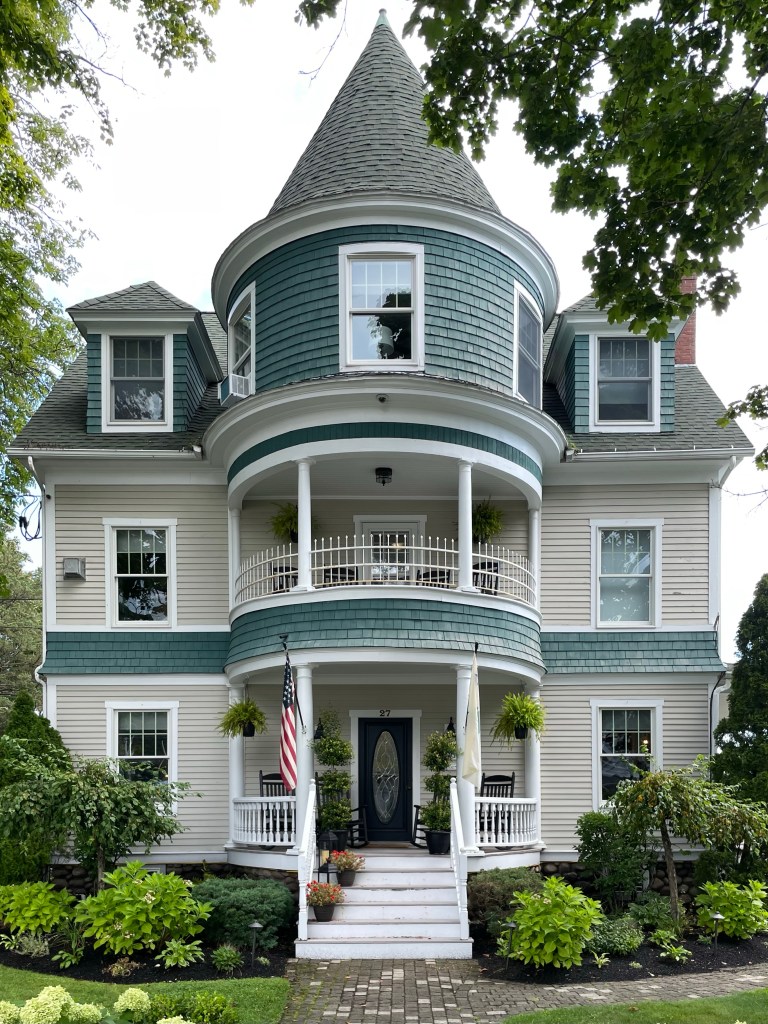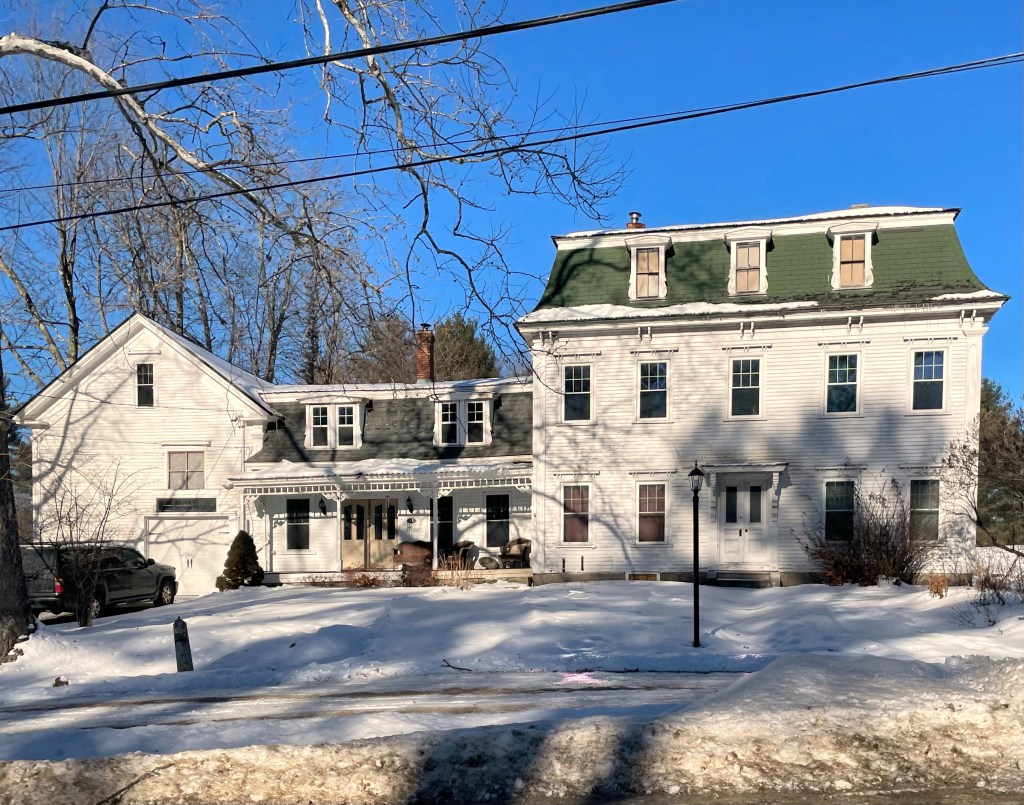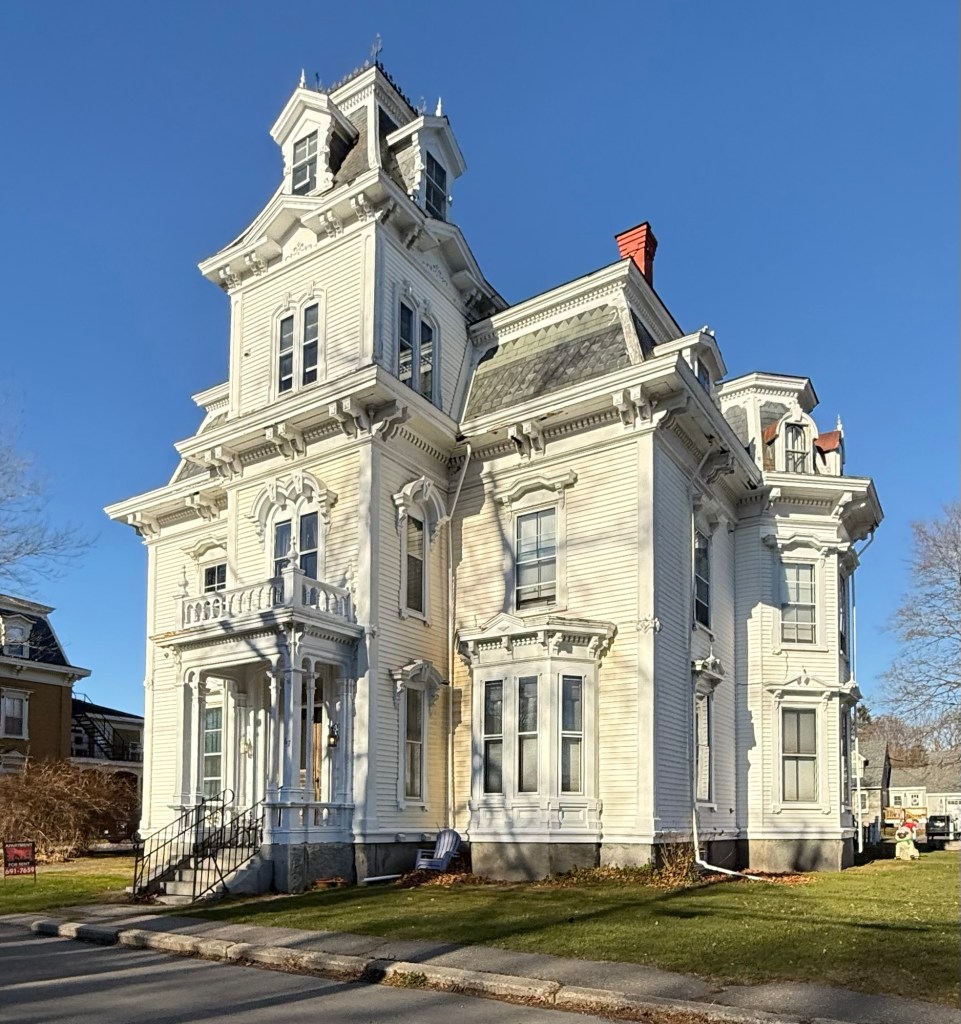
William H. Glover House // 1873

William Hurd Glover (1834-1910) was a prominent lumber dealer and builder in Rockland, Maine, and would built this house as his residence on Talbot Avenue. Mr. Glover hired architect Charles F. Douglas, to furnish the plans for the Second Empire style mansion. While covered in vinyl siding, the handsome residence features a slate mansard roof, central tower, delicate projecting portico over the entrance, and decorative window hoods and brackets. The house is one of the best examples of the style in Maine, even with the later siding.

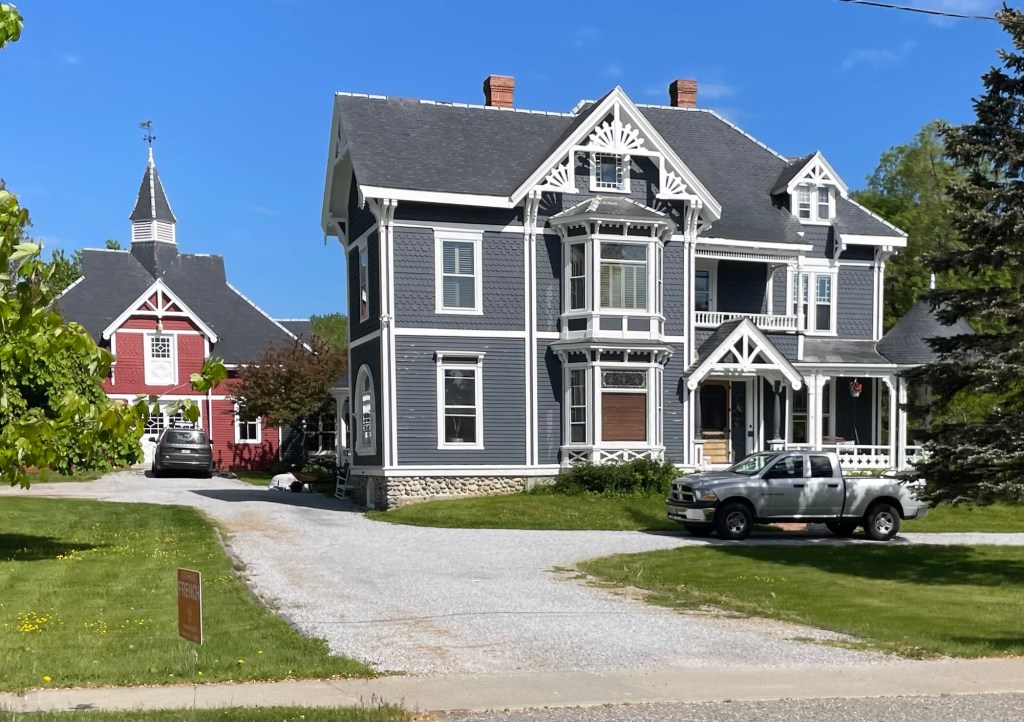
Hiram Ricker House // 1893

The Hiram Ricker House sits in the Poland Springs Historic District of Poland, Maine, and was built as the personal residence of its namesake, who developed this formerly sleepy town into a destination in the 19th and 20th centuries. Hiram Ricker (1809-1893), the son of Wentworth Ricker and Mary Pottle, helped turn his father’s country inn in Poland into a popular late 19th century resort, bringing in droves of tourists to take in fresh air and the healing natural spring water. He and his wife, Janette (Bolster) Ricker had six children, all but one of which helped run the resort. This Queen Anne style residence was designed by Lewiston architect, George M. Coombs, and is set back down a long drive overlooking the resort grounds. Sadly, Hiram Ricker died the same year his residence was built, but the home was occupied by the Ricker Family for years after, notably by Hiram’s son, Hiram Weston Ricker. It is covered in later siding, but the trim details are preserved and typical of high-end Victorian homes of this period in Maine.

Captain Ephraim Harkness House // c.1875

Captain Ephraim H. Harkness was a young sea captain and Civil War veteran who built this large Stick style residence and detached stable in Rockport, Maine by 1875. Sadly, Captain Harkness would die just a few years after completing the home as he died from Yellow Fever while out at sea. The house has remained in an excellent state of preservation 150 years later, even including the stickwork and brackets, which are some of the applied ornament that is removed first in renovations on so many coastal homes.

Juniper Ledge Cottage // 1889

Ellen Kemble (Bartol) Brazier was born in New York City in 1844, the eldest of four children of Barnabas and Emma Bartol. Her father had many business interests in sugar refining and the family was able to travel the world from his wealth and success. The family spent most of their time in Philadelphia, but like many of the city’s wealthy residents, they often summered elsewhere. Ellen Bartol married Joseph Harrison Brazier in 1866 and they had two children. When her father Barnabas died, Ellen inherited some of his remaining fortune and as a part of high society, she had a summer cottage in Kennebunkport built. Working with Maine architect John Calvin Stevens, she oversaw the designs of Juniper Ledge, this gorgeous, eclectic shingled residence in the Cape Arundel summer colony. Ellen would summer at the cottage until her death in 1925, but before she died, she joined her daughter in the 1910s and 1920s at Women’s Suffrage events and fundraisers, helping to pass the 19th Amendment, allowing women the right to vote in the United States. Ellen is buried in the West Laurel Hill Cemetery in Philadelphia next to her husband, not far from her parents.

Nellie Littlefield House // 1889

One of the most charming buildings in the quaint village of Ogunquit Maine has to be this Victorian inn, located right on Shore Road, the town’s main thoroughfare. The house had its beginnings in 1889 when Joseph H. Littlefield constructed it for his wife Ellen “Nellie” Perkins and their family of four children. Joseph was a member of the esteemed Littlefield Family, which goes back to before Edmund and Annis Littlefield and their six children traveled from England and settled in the town of Wells in 1641. The family was prosperous in the area, and Joseph used his wealth and position in local affairs to develop summer cottages and buildings at the beginning of the town’s large development boom in the late 19th century and early 20th, catering to summer residents and tourism. The Littlefield House was passed down to Joseph and Nellie’s children after their passing, last occupied by Roby Littlefield (1888-1988), who served in local and state politics. It was Roby who was instrumental to establishing the Ogunquit Beach District, which allowed the government to acquire the beachfront in Ogunquit, making it public. The old Littlefield House is now an Inn, known as the Nellie Littlefield Inn & Spa, and it retains so much of its original charm.

‘Mountain Aqua’ // c.1882

Located near the base of Pleasant Mountain in Denmark, Maine, you’ll find this stunning Victorian house, possibly the best example of Queen Anne architecture in town. Down the dirt road, you can imagine how shocked I was to stumble upon this beauty set back off the road, overlooking the White Mountains in the distance. The house was built around 1882 for the Warren Family, descendants of one of the first settlers in the town. Caleb Warren Jr., is likely responsible for this house, which served as a base lodge for the hotel once located at the summit. In 1845, Caleb Sr. built the first guesthouse atop the 2,200′ mountain, which was purchased just years later by a Joseph A. Sargent. Sargent converted the old hotel into a bowling alley and built a new hotel at the summit. That structure burned to the ground, and was replaced in 1873. The buildings at the summit were eventually purchased and demolished by 1908 when the mountain was sold to the Appalachian Mountain Club. Mountain Aqua would have served as a base lodge for the mountaintop hotel, and was a place where visitors could depart by foot or wagon to the summit. Mountain Aqua appears to be a single-family home today.

Boothby House // 1870

The Second Empire style did not take off in Maine as it did in other parts of New England (and the U.S. for that matter), so it’s always a treat to spot one driving the backroads of the Pine Tree State! This house in Denmark, Maine, was built around 1870 for E. A. Boothby, who worked as Assistant Engineer of the Maine Central Railroad. The Second Empire style is evident here from the mansard (French style) roof, bracketed eaves, and a hooded double-door entry.