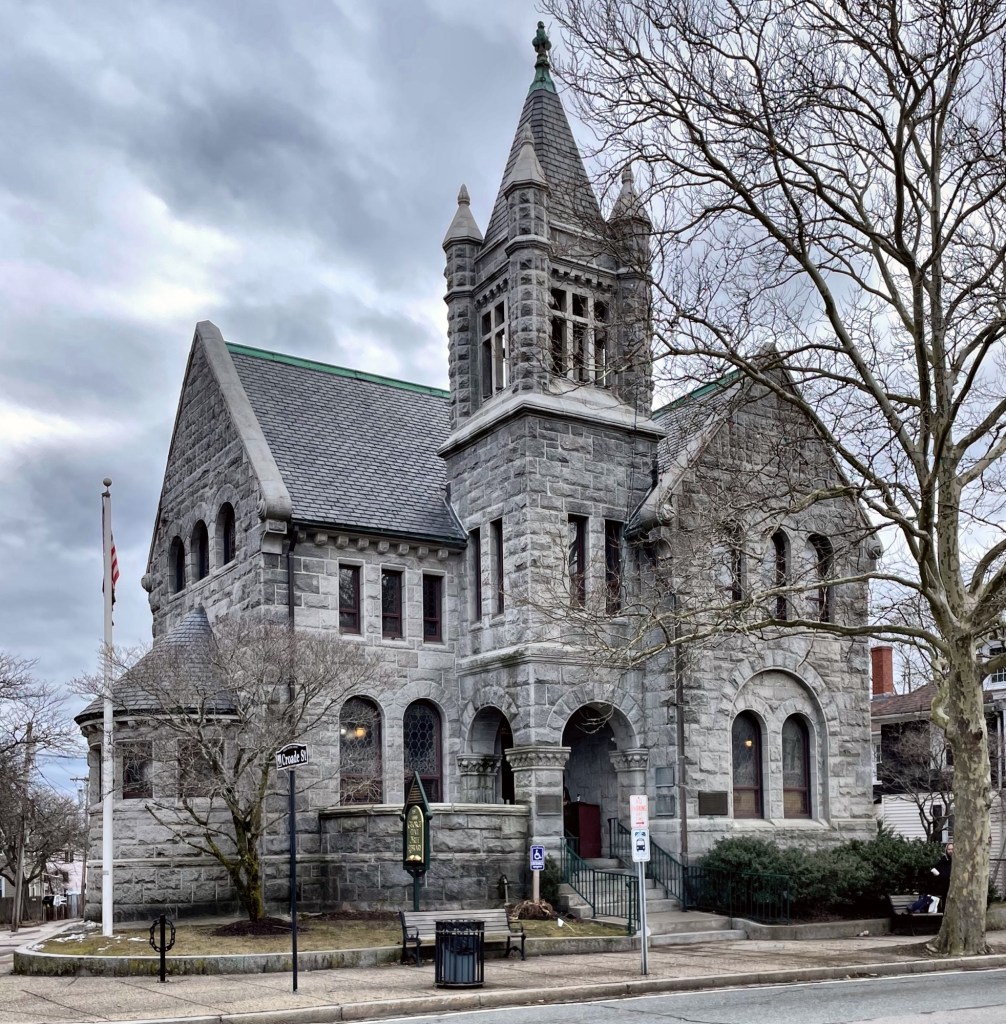
The George Hail Free Library on Main Street in Warren, Rhode Island, is a unique, Victorian-era public library building that has been lovingly preserved by the community. Built in 1888, the building cost just over $16,000 and was designed in a more vertical expression of the Romanesque Revival style by the Providence architectural firm of William Walker and Son and built of rough-faced granite. The library is named after George Hail (1793-1873), a merchant, philanthropist, industrialist, and native son of Warren. His second wife, Martha Hail died in 1882 and left $5,000 and their home to the Warren Public Library provided that the name of the Library be changed to the George Hail Free Library in memory of her husband. The Library Committee agreed and planning began soon after for a new, purpose built library we see today. The exterior is distinguished, but the interior is also well-preserved, with original cherry woodwork grained to resemble mahogany, brass gaslighting fixtures, fireplaces, and leaded glass windows patterned with stained glass, together with some of the original furniture, that preserve a sense of the original setting.
 Buildings of New England