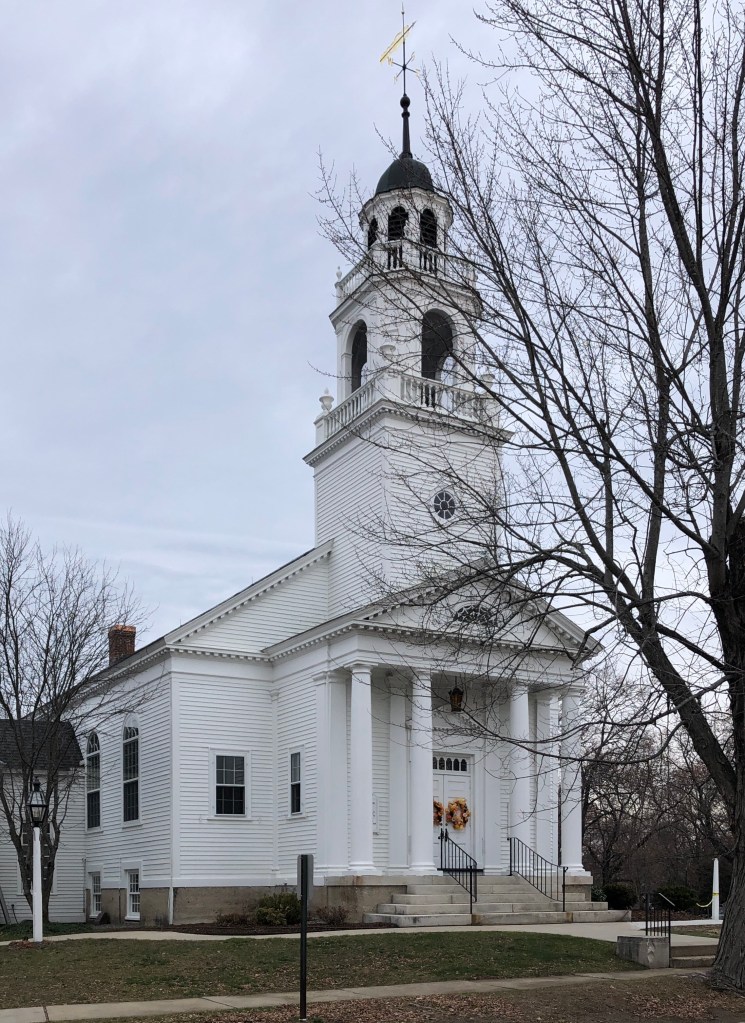
The present Congregational Church in Hollis, NH is the fourth to be located on this site and was constructed in 1925, replacing an earlier 1804 building destroyed by fire in 1923. The church is oriented with its porticoed facade facing Monument Square and perfectly blends in with the Colonial era homes and buildings around the green to retain the integrity of one of the best town centers in Southern NH. The present church building was designed by Boston architect Oscar Thayer.
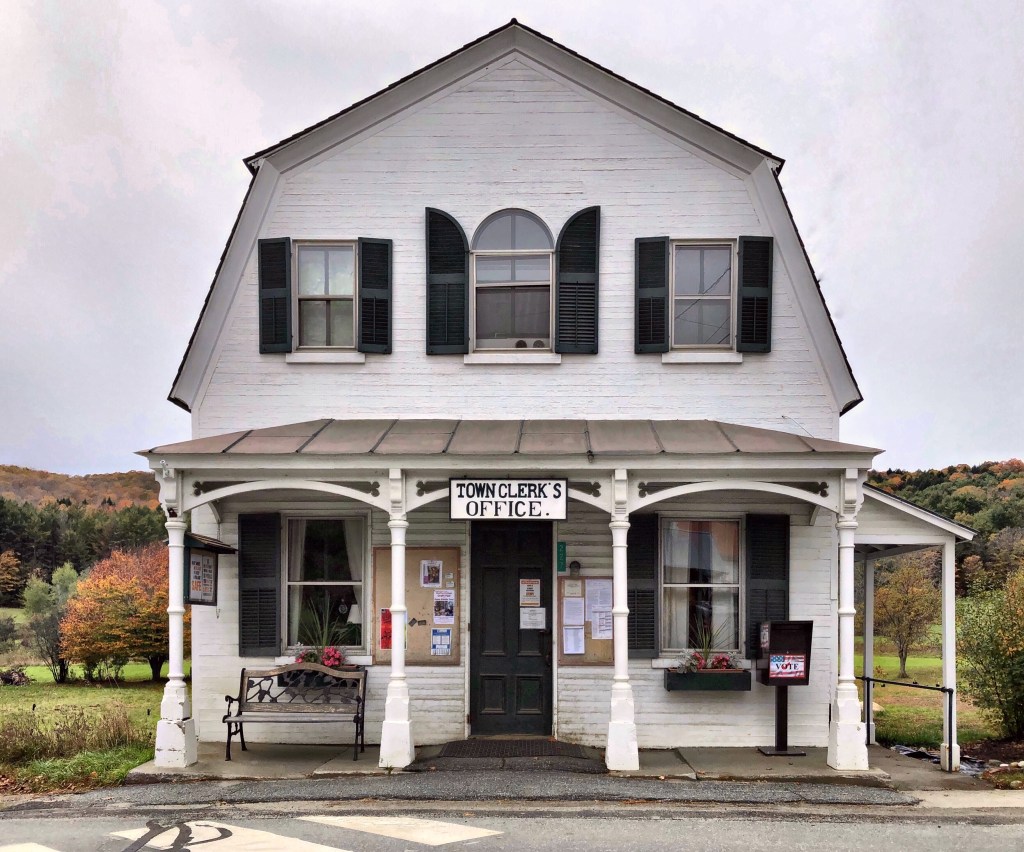
Designed and built by Senator Justin Morrill in 1883, this building was donated to the town of Strafford by Morrill in memory of his mentor Jedidiah Harris. It was given to the town as a public library in part to house the Harris Library, which in turn had been created by a bequest from Harris. This structure remained a library until the Morrill Memorial Library building was completed in 1928 and its collection was joined with Morrill’s. It is currently used as the Town Office building providing space for the Town Clerk/Treasurer and Town Records, and town boards. The white clapboarded building has Victorian detailing with the spindled posts at the porch with a prominent gambrel roof covered in slate. Cute!
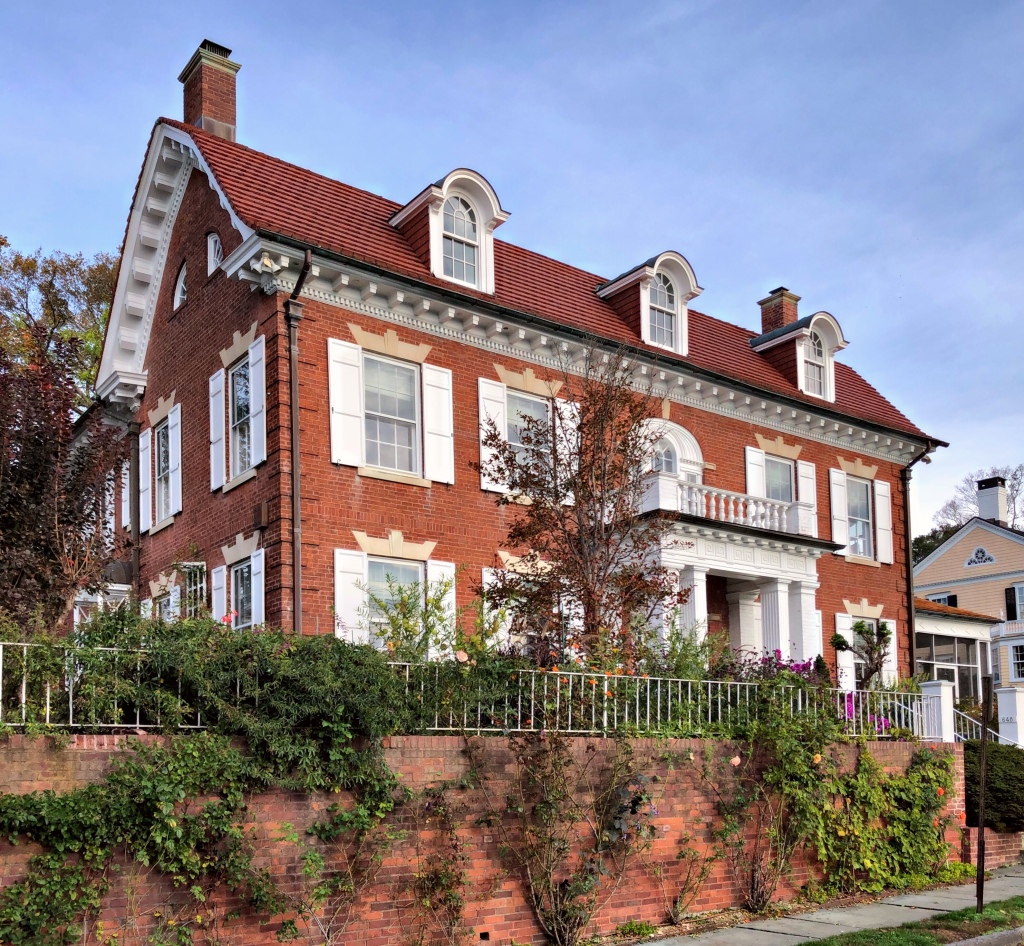
The Wakeman Memorial Building in Fairfield, CT, is one of a few buildings erected in the Southport area during the early twentieth century. The boldly proportioned central portico is supported by square Tuscan columns with an Ionic fretwork entablature and denticulated cornice, and topped by a spindled parapet and an elliptical shaped Palladian window on the second story. The red tiled gambrel roof, splaying beyond the exterior walls, is bracketed by decorative modillions. The building was constructed in 1913 through funds by Miss Frances Wakeman in memory of her grandfather, Jesup Wakeman, at a cost of fifty thousand dollars. The building was used by the Boys and Girls Club of Southport as a club house, offering sewing classes, a reading room, and offices. The building was converted to a home after the Boys and Girls Club moved to a larger facility.
Walking around Southport Village in the town of Fairfield, Connecticut, transports you to an early-mid 19th century town with large Federal and Greek Revival homes overlooking Southport Harbor and the Long Island Sound. This home on Westway Road was built around 1830 for Augustus Jennings (1814-1886), the son of Captain Abraham Gould Jennings. Augustus became a carriage maker in Southport before founding Jennings Brothers, a paper manufacturing company; which in 1867, began to produce Japanese paper products. The Jennings House was originally located near the Pequot Library, but was relocated in 1899, which was likely when the central shingled gable at the roof with Palladian window was added.
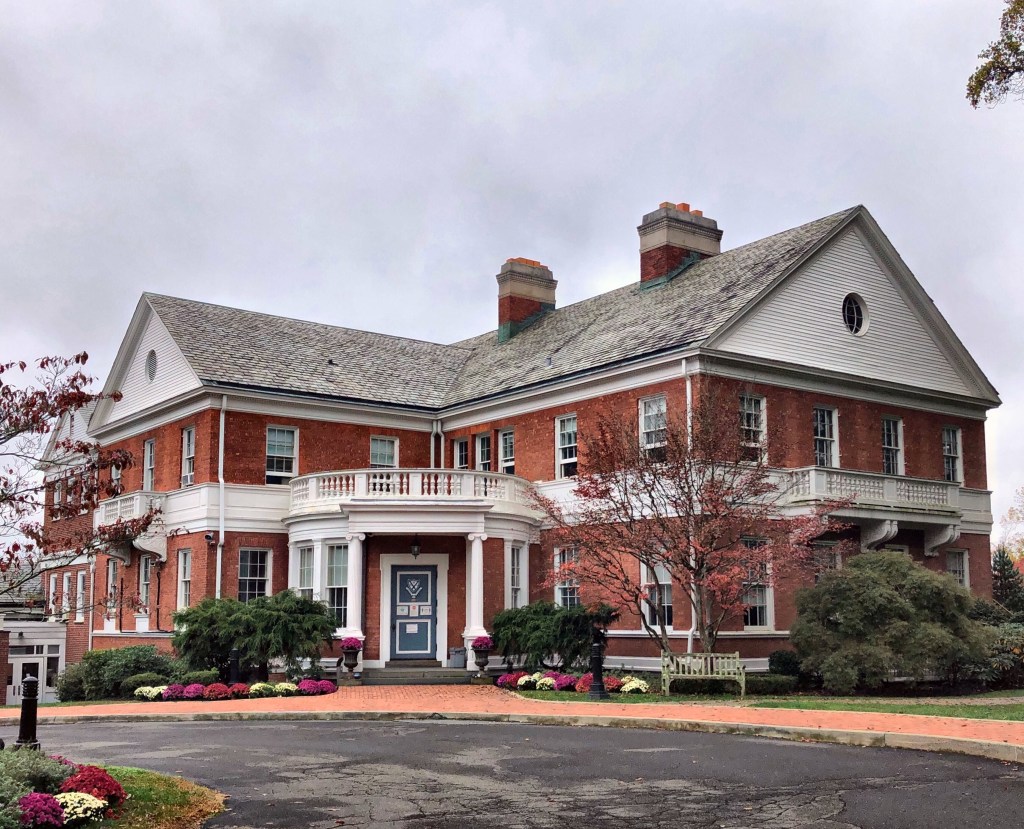
In Fairfield, Connecticut, land owned by Timothy Dwight, a minister and eighth President of Yale, a large farm once stood. The year after he was appointed to his position at Yale, he sold his farm Verna Farm, in 1796 to Isaac Bronson. The farm was eventually inherited by his grandson, Frederic Bronson. Dwight’s eighteenth-century house was eventually torn down in 1891 by Frederic’s son, Frederic Bronson, a wealthy New York City lawyer and socialite, who was included in Ward McAllister‘s “Four Hundred“, purported to be an index of New York’s best families, published in The New York Times. In 1892, Bronson hired starchitect Richard Morris Hunt, one of the greatest American architects of all time, to design a new country estate here. In 1933, the Bronson estate was acquired by W. A. Morschhauser, who had the house remodeled and made smaller in 1900; removing the third story and reducing the number of rooms from 42 to 13! Since 1949, the property has been occupied by the Fairfield Country Day School. The windmill as part of the estate was eventually gifted to the Town of Fairfield.
I’m starting to see a trend in Easton, almost everything is named after the Ames Family! In 1893, Oliver Ames (1831-1895), a grandson of shovel company founder Oliver Ames and son of Oakes Ames, offered to fund the construction of a new high school building if the town would pay the cost of building its foundation and grading the site. While governor of the Commonwealth of Massachusetts (1887-90), Ames had hired Boston architect Carl Fehmer as consulting architect to the State for the extension to the Massachusetts State House, and it was Fehmer who secured the design contract for the new school in Easton. The refined Colonial Revival school building features a central pavilion with an entrance set within an ornate stone architrave with a Classical entablature with central pediment. The school was outgrown in 1957 and became the town’s middle school, outgrown again in the 1990s. The town sold the school to a developer with preservation restrictions and it is now used as apartments!
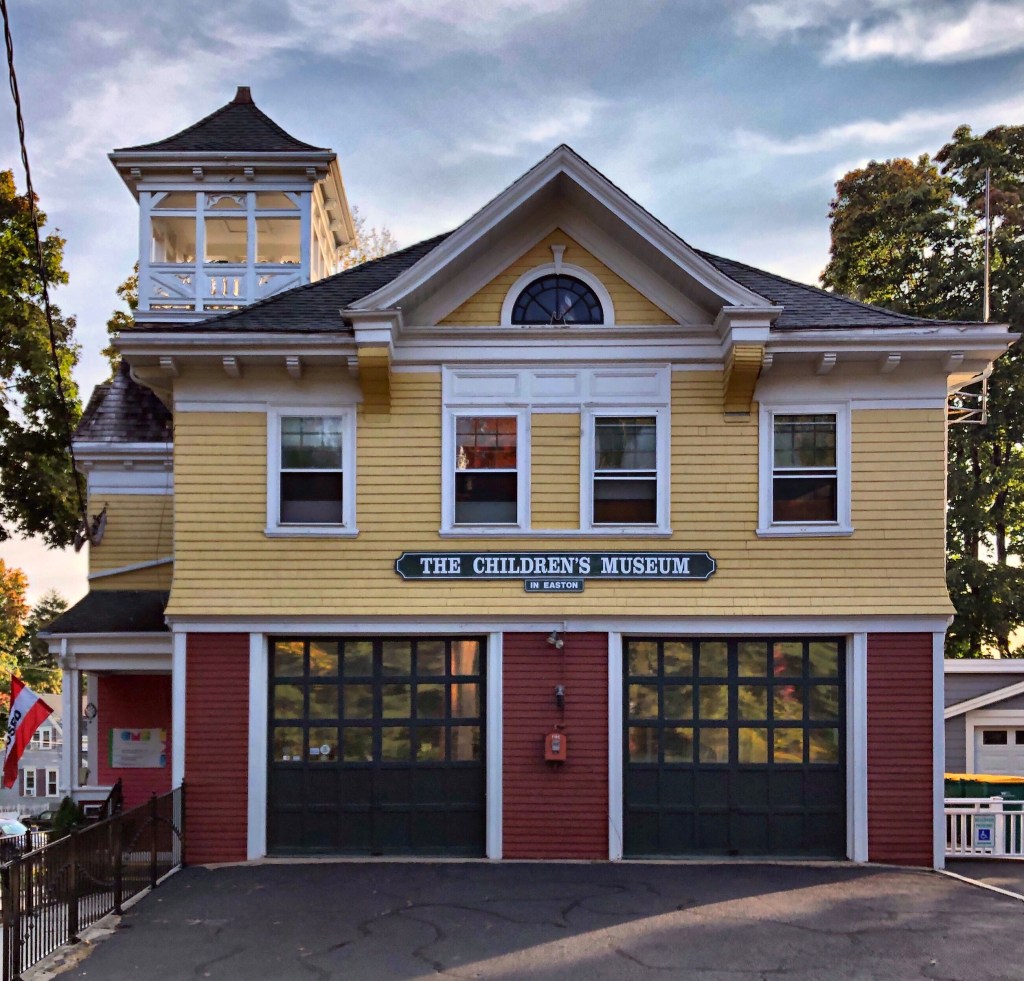
In the early 20th century, the village of North Easton, Massachusetts saw large growth, in large part by the Ames Family. The town had previously had a volunteer fire station, but due to the development, a permanent fire department was needed. In 1904, Mary S. Ames (later Mrs. Louis Frothingham) donated land for the purposes of building a fire station; across from the Ames Shovel Works. The fire station, completed in 1905, remained active until 1968, when the town’s modern firehouse that could accommodate larger fire apparatus was constructed. In 1991, the former fire station became the home of the Children’s Museum in Easton, which it remains to this day.
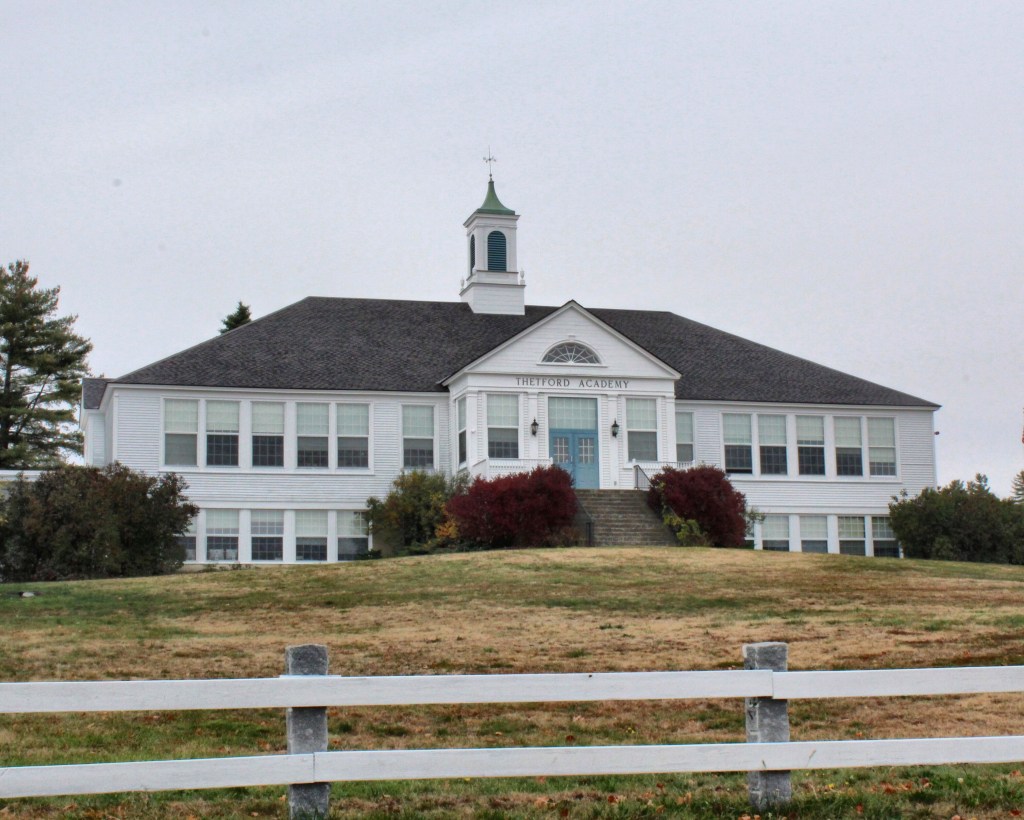
Thetford Academy opened in February 1819, after the constitution of Vermont called for free elementary schools in each town, a school in each county for studies above the elementary level, and one university for the state. These schools prepared students in classical languages, mathematics, “natural philosophy,” and the arts for entrance into colleges and universities, and careers in ministry, law, medicine, and teaching. By the time Thetford Academy was founded, girls were being admitted to some academies (usually in the summer term) for studies which were advanced beyond the common schools, but which were not intended to prepare for college. Thetford Academy admitted both boys and girls from its founding. The school thrived beginning on it’s first day of classes, growing almost annually with new buildings constructed to house new classrooms and dormitories.
The first academic building, erected in 1818 by Fitch, was crowned by a bell tower and featured separate entries for boys and girls. It was destroyed by fire on November 14, 1942. Fueled by high winds, the fire also destroyed the girls’ dormitory and the library. Undeterred, the school rebuilt nearby beginning with this Colonial Revival building, known as the White Building. Later buildings were added to create the campus we see today.
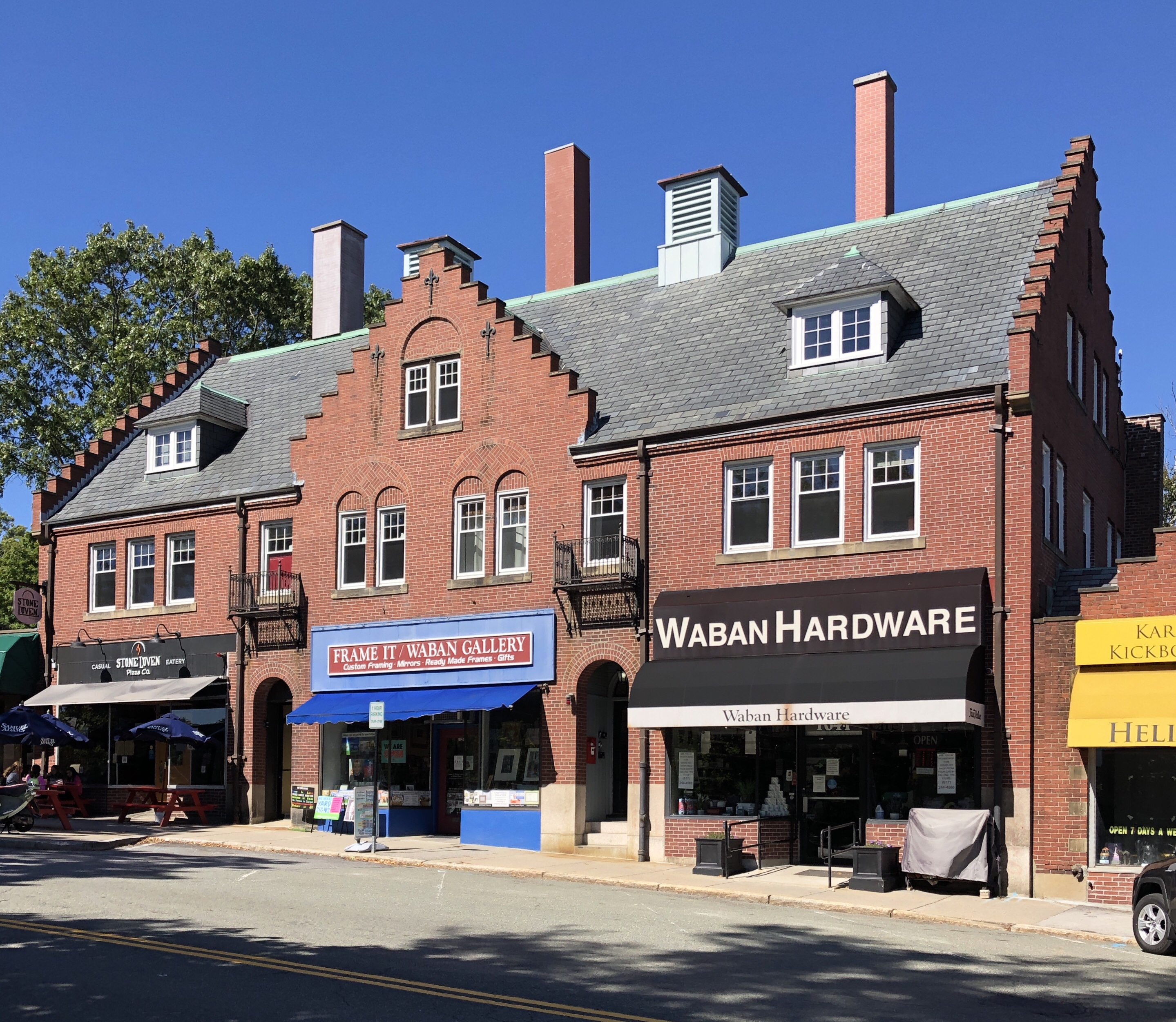
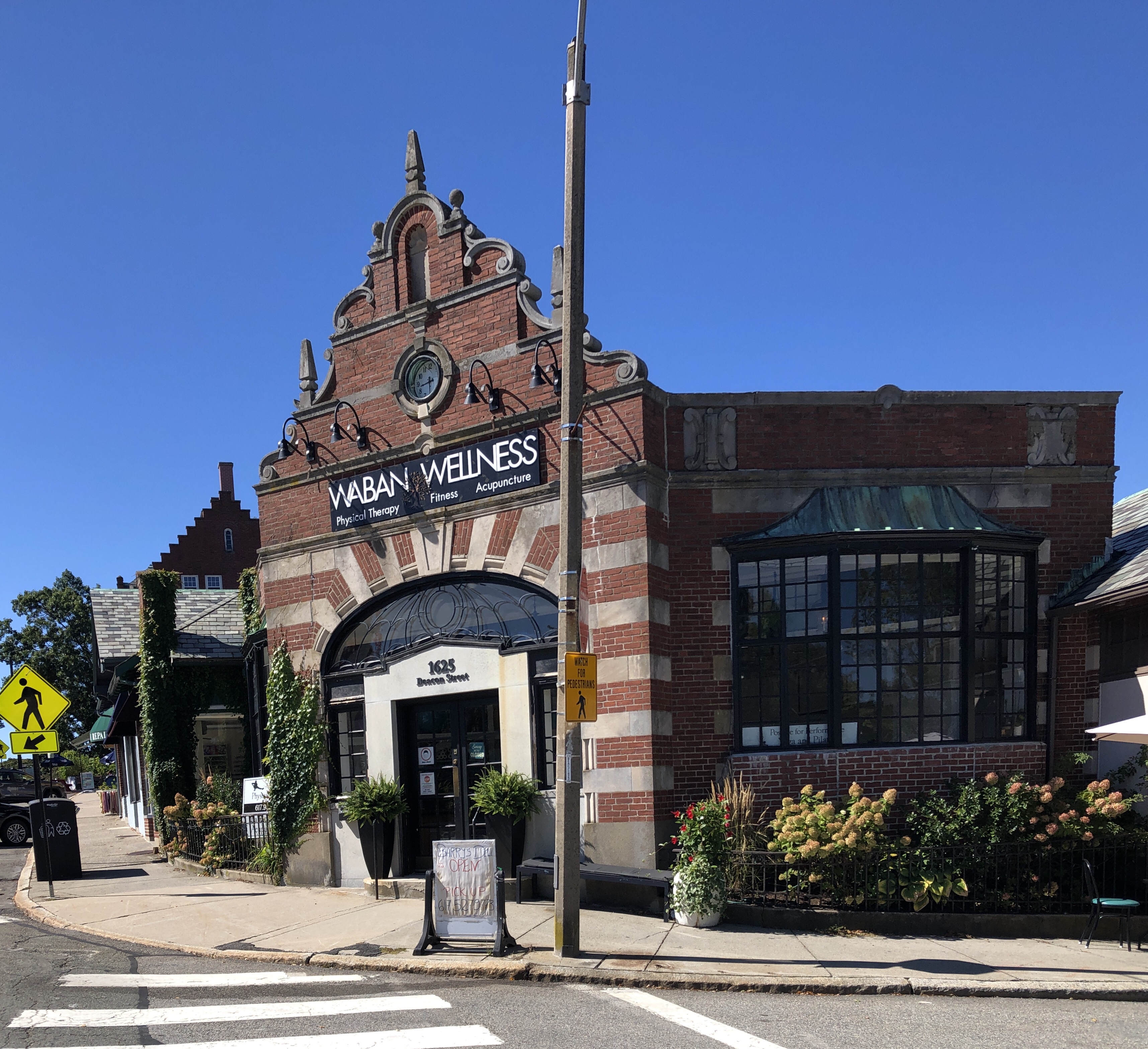
William C. Strong, a prominent local citizen who resided nearby, had this stylish commercial block built to serve the expanding population of the village which eventually became known as Waban. After the completion of the Waban Train Station, the demand for neighborhood retail became apparent and William Strong was an early developer to realize this. He hired Lewis Bacon, an architect who resided nearby, to design the commercial block. The result is a stunning Dutch Revival building with gables showcasing stepped parapets. The upper stories were apparently used as apartments when completed. Notwithstanding Strong’s efforts, the Waban commercial district developed rather slowly. It was not until 1924 that the row of one-story shops was added to its right. The addition was designed by Edward B. Stratton, who followed suit with Tudor and Jacobean motifs, to compliment the Dutch Revival block.
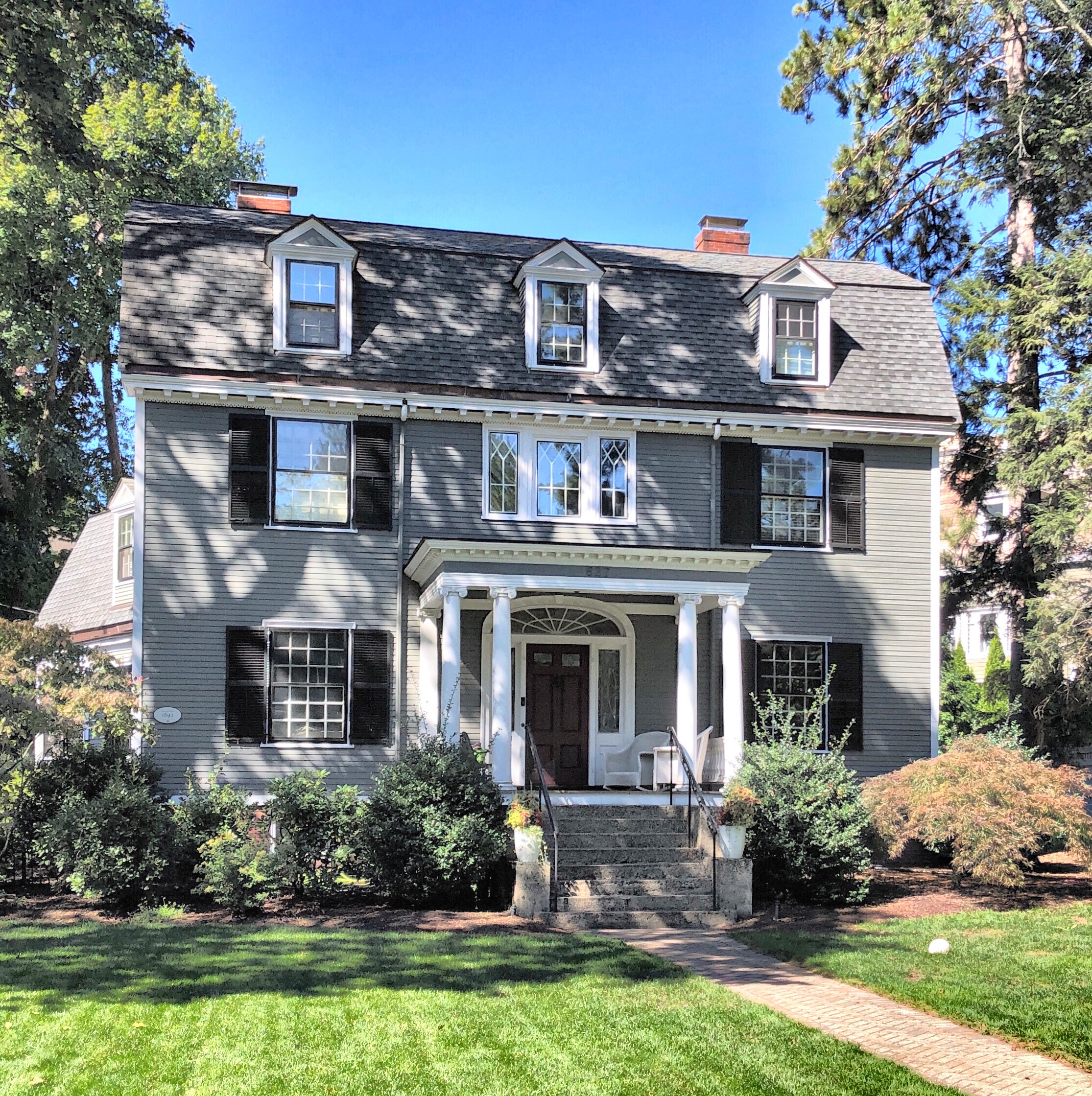
Another architect-designed home for their own use in Waban Village in Newton, is this house on Chestnut Street. Built in 1892, the Colonial Revival home is set far off the street with a commanding presence and symmetrical facade. The home was designed and occupied by Lewis Howard Bacon (1857-1941), a former chairman of the Newton board of appeals and a member of the school committee and the board of aldermen in Newton, also a practicing architect. He studied architecture in the office of Samuel Lane, architect of Cleveland, 1877-80, when he moved to Boston as a draughtsman and supervisor of construction for the firm of Sturgis & Brigham, 1880-1886. For four years he was a member of the firm of Morrison & Bacon (1888-1892), before embarking on his own practice in an office in Downtown Boston. He resided in this home until his health failed and he moved to a nursing home where he died.


 Buildings of New England