Sturgis Library // 1644

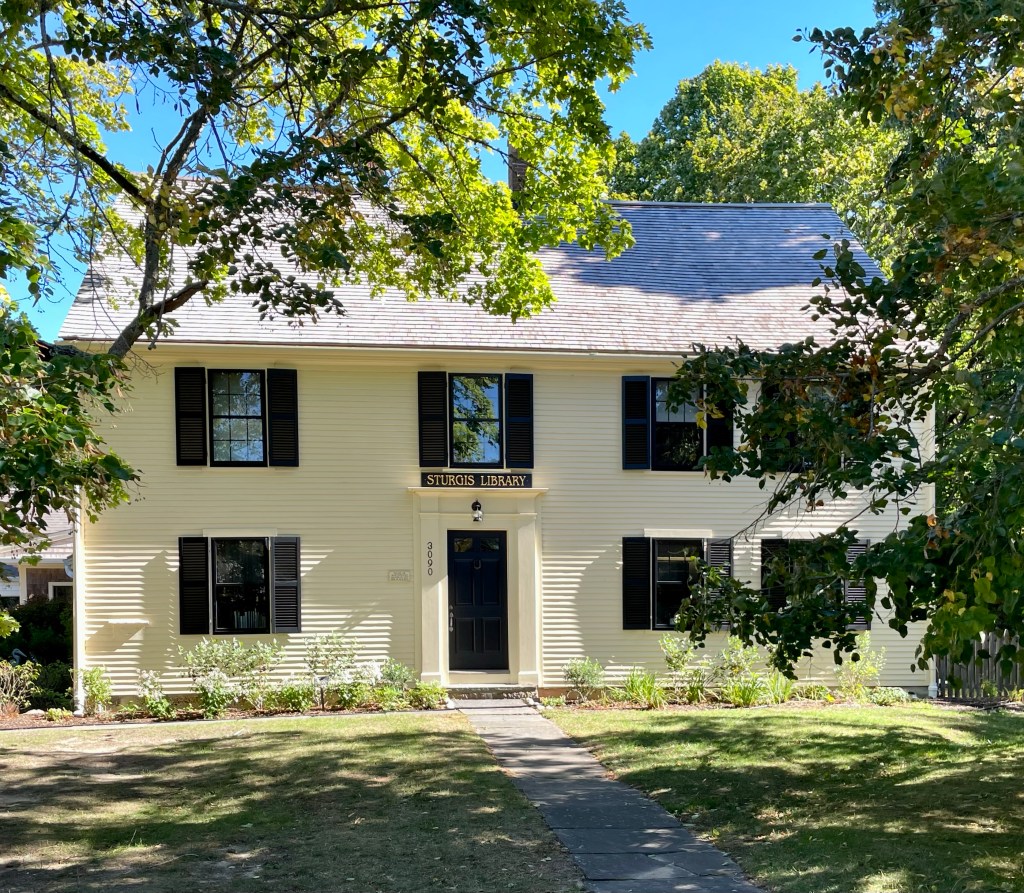
The original section of this building was the second dwelling house of Rev. John Lothrop (1584-1653), one of the first European settlers who settled in present-day Barnstable in 1639. The oldest part of this structure, built in 1644 (yes you read that correctly), is possibly the oldest extant house in the Town of Barnstable. The home was constructed as 21 feet long and 29 feet deep with a chimney on the west side of the house. Perhaps John Lothrop’s principal claim to fame is that he was a strong proponent of the idea of the Separation of Church and State (also called “Freedom of Religion”). This idea was considered heretical in England during his time, but eventually became the mainstream view of people in the United States of America, because of the efforts of Lothrop. His descendants today include six former presidents, Louis Comfort Tiffany (of the stained glass fame), J. P. Morgan, Clint Eastwood, Henry Wadsworth Longfellow, and many more recognizable names! The house was eventually owned by Isaac Chipman in the 19th century, and he modified the house close to its current conditions, adding on numerous times.

Captain William Sturgis, a mariner, businessman and politician, who was born in the house, purchased the property in 1862 from the heirs of Isaac Chipman. Sturgis left $15,000 along with this property in a trust to be gifted to the people of Barnstable for a public library. The library opened in 1867 in his honor, with 1,300 books. As the old Lothrop House is incorporated in the building, it makes the Sturgis Library the oldest building housing a public library in the USA. A great claim to fame for this town!


Polly Crispell Cottage // c.1700

Another of Hurley’s stone houses is this beauty, known as the Polly Crispel Cottage. The house was built before the American Revolution c.1700 by an Anthony Crispell, a cordwainer. The home was likely a half cape in form with the door and two windows to its right. The other half was added at a lower level later on with the floors uneven, likely in 1735 where a construction date plaque read. The home also features a dutch door, which I wish we had more of in New England.

Half Moon Tavern – Elmendorf House // c.1710

When Pieter Ostrander settled in Hurley, NY with his family in the late 1600s. Being of Dutch descent, he (and other settlers) built their homes and barns in Dutch traditions. This lot along the village’s main street was acquired by Pieter and inherited by his son, Arent in about 1710, about the time the home is estimated to have been built. It was acquired by the Elmendorf Family by the early 19th century. At that time, the property operated as the Half Moon Tavern, after Petrus Elmendorf purchased it in 1804. The addition to the east (right) was built as a weaving room. The property remained in the Elmendorf family until 2008 (that’s almost 300 years in two families!) It was acquired by the new owner who has been restoring and researching the home ever since. He runs a blog documenting the property’s rich history.

Ostrander-Houghtaling House // c.1705

Pieter Pieterzen Ostrander (1657-1706) was born in Amsterdam, Netherlands by 1657. His father died in the East Indies and soon after, Pieter, his mother, his stepfather Arent Teunissen, and older sister Tryntje Pieters immigrated to New Netherland (New York), arriving in 1661. Initially the family settled on Coney Island in Brooklyn and were eventually forced out by English settlers. The family removed to Wiltwyck (present-day Kingston, in Ulster County, New York. In Kingston, Pieter married Rebecca Traphagen Ostrander (1662-1720) in the Reformed Dutch Church of Kingston, New York, on 19 January 1679. Some time after their marriage, Pieter and Rebecca moved southwest to the nearby village of Hurley, where in 1687 he was one of several villagers to take an Oath of Allegiance. They built a small, single-room cottage here and lived there until it was expanded around the time Pieter passed away. In 1715, the house was deeded to Pieter’s son, Arent. During the time of the American Revolution, the home operated as a tavern. In October, November, and December of 1777, this house is said to have been the military headquarters for General George Clinton’s Continental forces and the town was the temporary capital of New York State. In 1782, the home was later believed to be where a reception was held in front for George Washington as he rode through town in 1782. In the 19th century, the left (northern) half of the house was added on by owner Abe Houghtaling, who operated that side as a wagon making shop. Whew! That’s a lot of history!

King’s Head Tavern // 1691-1870

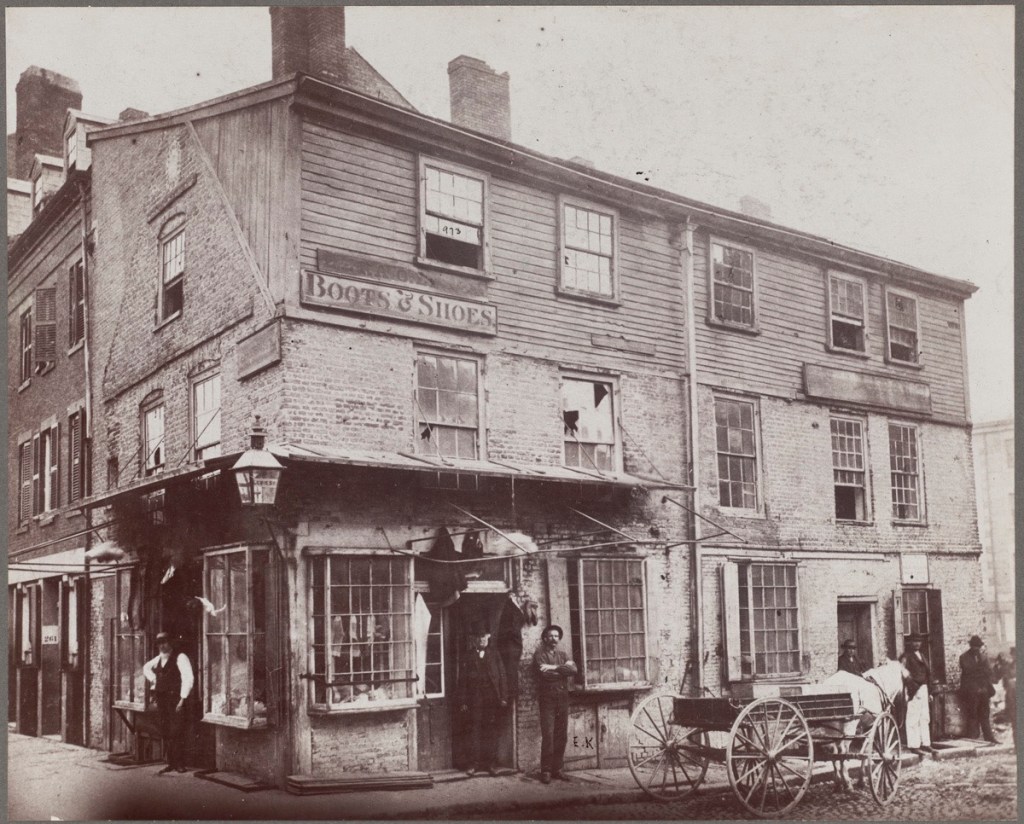
Another of Boston’s Lost buildings is the King’s Head Tavern, an old establishment that was built in the early days of Boston and rebuilt following a fire in 1691. It stood on the corner of Lewis and North Streets, in the North End near Scarlett’s Wharf. Due to its proximity to the harbor and wharfs, it became the first place weary sailors stopped to get a drink on solid ground. The two-story, brick tavern was capped with a gambrel roof, which was later filled with wooden additions giving the structure a boxy look. The establishment was named the King’s Head Tavern after a popular London tavern of the same name. Like much of the North End, surging immigrant populations put immense strain on the built environment and many older buildings were demolished in the late 19th and early 20th centuries for tenement housing. The old King’s Head Tavern was demolished in 1870, just two years after the photo was taken.

Downe-Tremere House // c.1674-1896

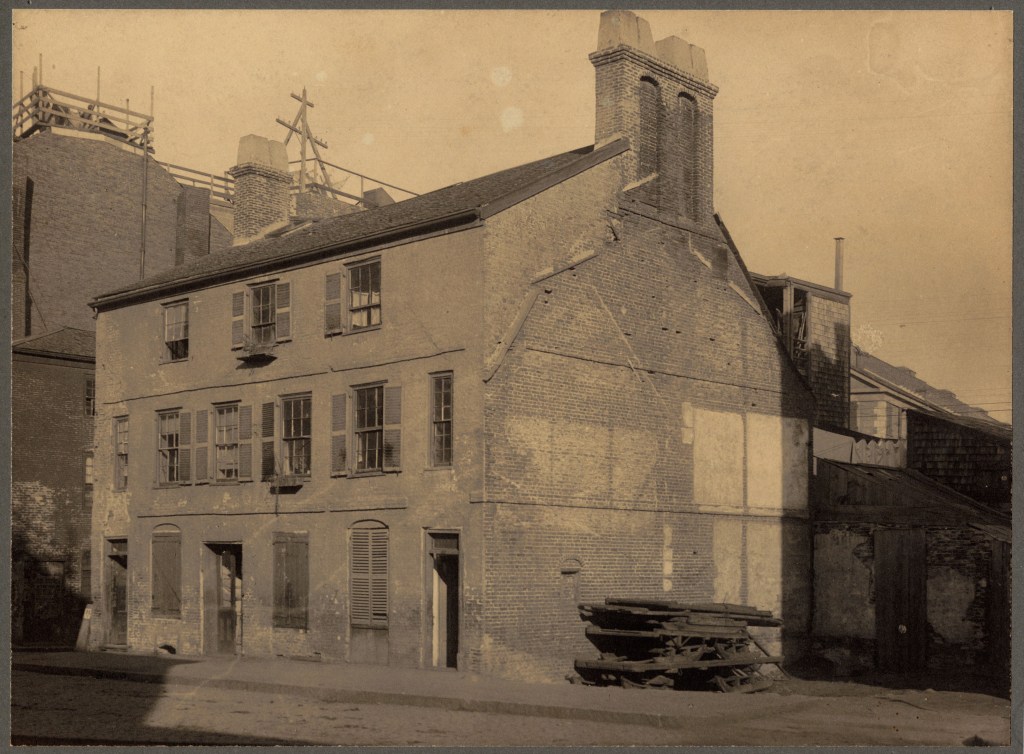
Image c.1896 courtesy of Boston Public Library.

One of the finest First Period Houses to have been built in New England was this brick mansion, formerly on North Street in Boston’s North End. On December 29, 1674, John Paine conveyed his property including a dwelling house to William Downe his new son-in-law. It is unclear when the house was built, but it was completed by the time of sale to William. Luckily, the house was constructed of brick, which likely saved it from the Fire of 1676. In later centuries, the building was converted to commercial use. After the Civil War, the property was owned by the Tremere Family, who rented out commercial space and held tenements in the floors above (the third floor was added, filling in the space between the two end chimneys which were added in the early-19th century. The property was razed in 1896 for the present tenement building on the site.

John Palmer House // c.1683

In 1682, John Palmer acquired a small piece of land in Marblehead, soon after building this First Period home. The house is said to have framing timbers made of English walnut, salvaged from a sailing vessel off shore, with one timber formerly a mast and still displaying rope marks. The house was willed to his son after his death, who built a larger home soon after nearby. This house was “modernized” with double-hung windows which likely replaced the smaller, diamond pane casement windows typical in homes of this period.

Joshua Norwood Cabin // c.1680

This old, leaning home sits just outside downtown Rockport and is said to be the oldest house in Rockport. The plaque on the house says it was built in 1680 by Joshua Norwood, the son of Caleb. Joshua Norwood (1682-1775) was born in Gloucester nearly 100 years before the United States was a country, but the plaque on the house means the home was built two years before Joshua was born. I would estimate the home was built in the early-mid 1700s. Joshua married Elizabeth Andrews and they had 16 children. The family apparently resided in the northern part of modern-day Rockport, in this small home for some years until it was moved by wooden barge to the current site, when Sandy Bay (downtown Rockport) saw a huge population surge with the harbor in the early 19th century. The tiny half-cape home was added onto once with the entry room at the front, but besides that, it looks much like it would have hundreds of years ago. There are a lot of mysteries about this home, so if anyone knows more, please share!

Judge Corwin House – The Witch House // 1675

The iconic Witch House in Salem was the home of Judge Jonathan Corwin (1640–1718) and is the only structure you can visit in Salem with direct ties to the Salem witch trials of 1692. The Post Medieval English house was constructed by Nathaniel Davenport, commander of the fort on Castle Island in Boston from 1645-1665. After he left that post, he moved to Salem and began construction on his house. Jonathan Corwin, a merchant and judge, purchased the unfinished home from Davenport in 1675, he soon after finished construction of the large home. When reports of witchcraft began circulating in Essex County, Corwin was one of the magistrates called on to make preliminary inquiries into the reports. He and John Hathorne, another local magistrate, held hearings in early March 1692 in which testimony was gathered from Tituba, Sarah Good, and Sarah Osborne, the first three women accused of being witches. Corwin presided over all the other cases, which ended after thirty individuals were found guilty, nineteen of whom were executed by hanging (fourteen women and five men). One other man, Giles Corey, was pressed to death for refusing to plead, and at least five people died in jail. The lasting legacy of the Salem Witch Trials still draws thousands every year to Salem to learn more as to how such a terrible set of circumstances could happen. Jonathan Corwin’s grandson George, lived in the house until his death in 1746. His widow, Sarah Corwin “modernized” the old house by replacing the iconic pitched roof with a gambrel roof, more in line with Georgian design, popular at the time. The building underwent more changes when George P. Farrington, a druggist, owned altered the home and added an apothecary shop to the east side front in 1856. The Corwin House was moved back 35 feet in 1945 to allow for the widening of North Street, and at that time, a new pitched roof (a recreation of the original) was put on, restoring the building to its former glory. It has since been owned by the City of Salem, who maintain the property and open the doors as a museum.


Doe’s Garrison // c.1690-1938

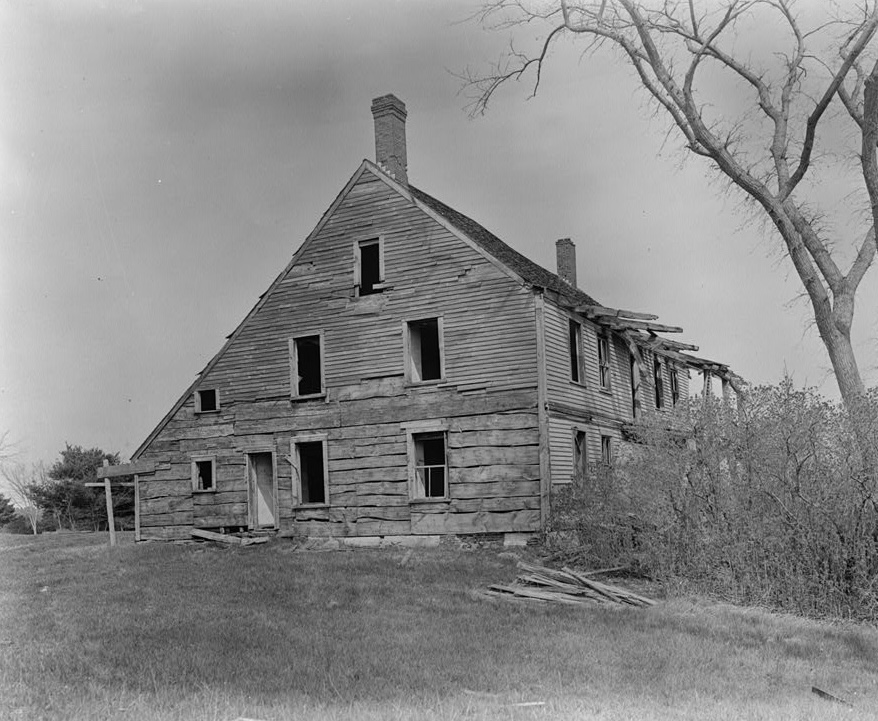
On Doe’s Neck (now Moody Point) in Newmarket, NH, a peninsula at the terminus of the Lamprey River where it meets the Great Bay, has long been a highly desired and contested piece of land. Towards the end of the 17th century, the land here was owned by the Doe Family, who built a Garrison House here. The house was used as a defensive structure to protect those living nearby from Native American attack. The Doe family resided here until after the Revolutionary War. The saltbox building was later altered with full-length porches by later owners, to take advantage of water views. By the Great Depression, the garrison house was suffering from severe neglect, but before it was demolished, it was documented as part of the Historic American Buildings Survey (HABS).