Oaklands // 1835

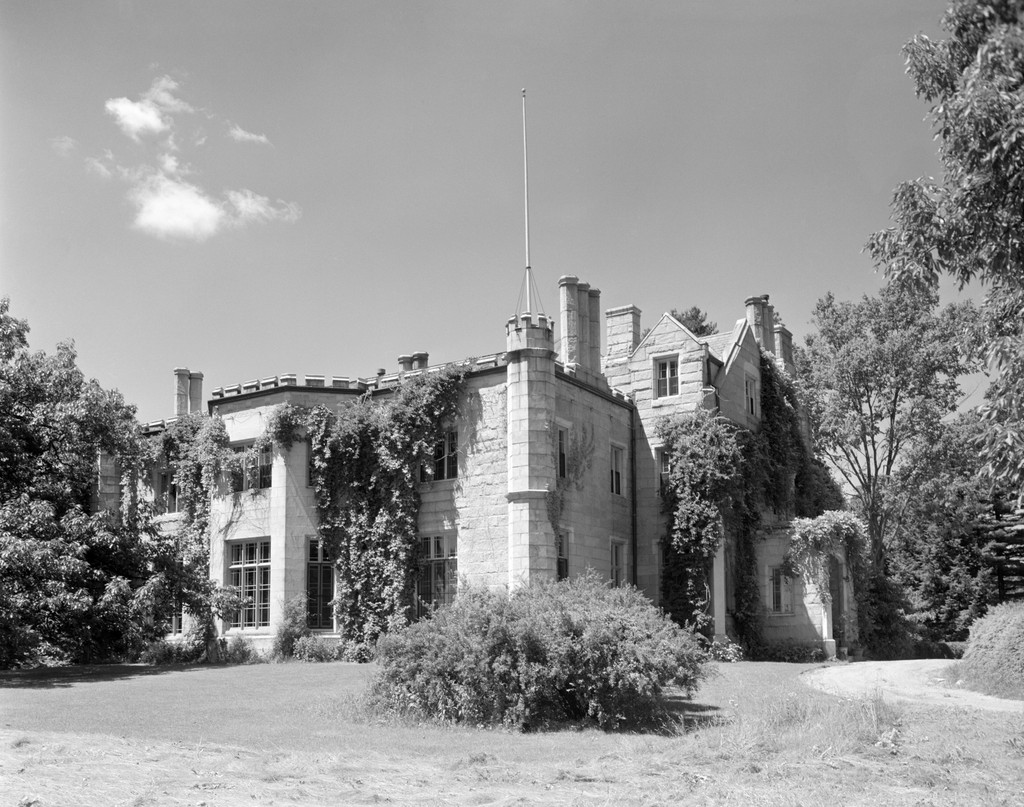
A massive amount of land on the eastern edge of the Kennebec River was acquired by Sylvester Gardiner in the 18th century, but confiscated by the state during the American Revolutionary War (because Gardiner was a Loyalist who fled). Years later, the land was recovered by Gardiner’s grandson and heir, Robert Hallowell Gardiner. Upon coming to age, Robert Hallowell Gardiner returned to Maine in 1803, after graduating from Harvard, ready to straighten out and manage the holdings willed to him by his late grandfather Dr. Sylvester Gardiner, the founder of Gardiner, Maine. He came with no inclinations or training in business, but his cousin Charles Vaughan in Hallowell helped in steer him on the right course. Starting at the age of 25, Robert Hallowell Gardiner embarked on the task of developing an entire city, Gardiner, but with profit and investment in mind over the next sixty-one years. His business enterprises included: six dams, saw and gristmills, shipyards, foundries, a brick mill, broom making industries, furniture manufacture, paper making and the ice-harvesting business. He married Emma Jane Tudor of Boston (who he likely met during his time at Harvard, in 1805. They soon after built a home for their family and welcomed friends and family to stay there on the massive property. The first Oaklands estate burned in 1834 and the present Gothic Revival mansion on the site was built in 1835-37. Designed by English-born architect Richard Upjohn, Oaklands typifies an English country manor house and features a rectangular hip roof, hooded window moldings, turrets and elaborate stonework. Oaklands is among the first and finest 19th-century rural villas in the State of Maine and is among the most significant in the country. The home remains on over 310-acres of sprawling land which looks out over the Kennebec River, and is owned by the Gardiner family to this day!
Reverend Hanson House // 1853

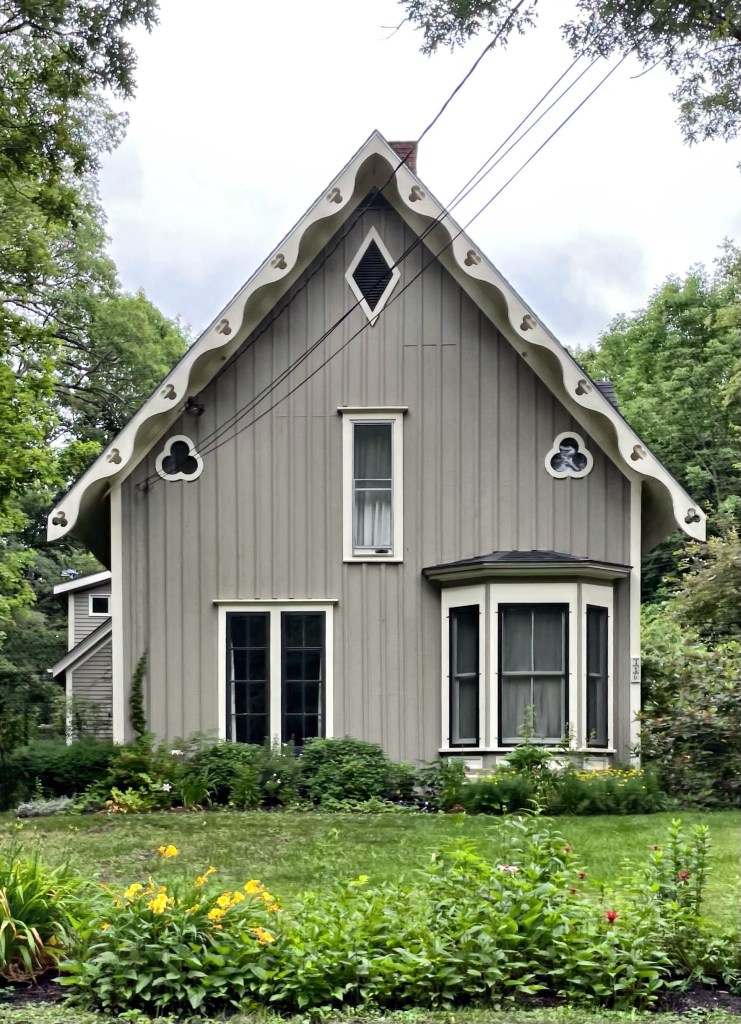
This Carpenter Gothic house in Gardiner, Maine, was built in 1853 by Reverend J.W. Hanson, author of the 1852 History of Gardiner, Pittston and West Gardiner and the second minister (1850-54) of the Universalist Church (last post), after its organization in 1843. Hanson was likely inspired by the design of his church when having his own home built, as he followed the Gothic mode. His house features board-and-batten siding, bargeboards, and trefoil windows and carvings in the said bargeboards. Reverend Hanson lived in the home until 1868 when he moved to Dubuque, Iowa. The home is very well preserved and one of the best examples of the Carpenter Gothic style in the state.

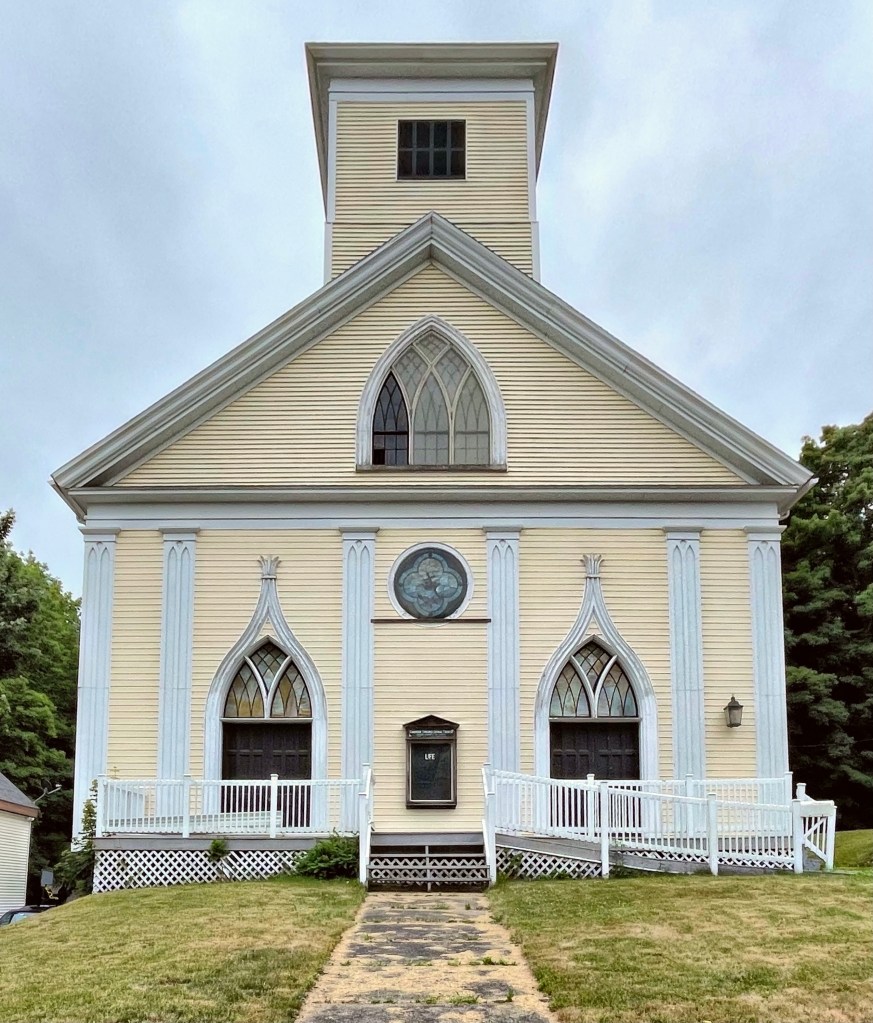
Gardiner Universalist Church // 1843

This stunning Gothic Revival church was built in 1843, on the site of the blockhouse, erected 80 years prior for the settlers of the area from native attack. In the 17th and 18th centuries, many rural parts of New England had blockhouses erected to allow the settlers a defensive fort from attack. The blockhouses were often garrisoned wooden structures with small windows on all sides to allow for gunfire to attackers below. The structure would protect those inside from arrows and melee weapons. This building however, was constructed later for the Universalists, who believed in “universal salvation,” who had been meeting since 1821 in a schoolhouse beside the town common. The church, in its original state with its steeple and clock, was an extremely sophisticated example in wood of the Gothic Revival style with its pinnacles, lancet windows and pilasters. Sadly, the steeple and clock were removed in the early 1920’s for safety reasons as the structure could not support it without significant engineering. The church and congregation changed to the United Church of Christ-Congregational denomination in 1964. After that, the building was occupied by a brewery (believe it or not), before being reverted back to a church by the current congregation.

Dr. Gertrude Heath House // c.1850

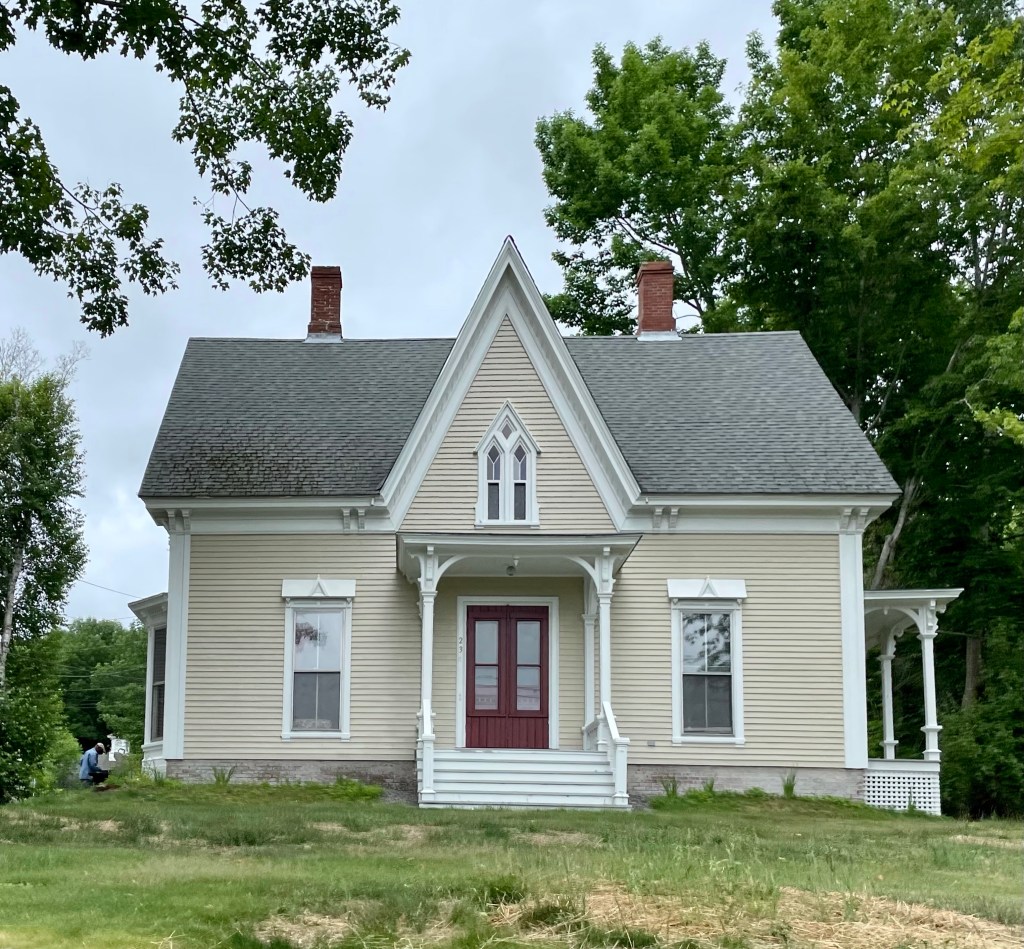
Constructed c. 1850, this Gothic Revival house in Farmingdale, Maine, has many identifying features common in the style: a symmetrical facade, steeply pitched gable, and lancet windows in the front gable. Besides its architectural significance, the home is also historically significant as the home of Dr. Gertrude Heath. Gertrude Emma Heath (1859-1935) was born in Gardiner, Maine in January 1859. When Gertrude was just three years old, after the American Civil War began, her father died in battle at Fredericksburg, leaving his widow Sarah to run the family affairs. She excelled in school and received her early education in the public schools of Gardiner, afterward attending Hahnemann Medical College at Chicago, Illinois, taking special courses. She graduated from this institution in 1883 with the degree of Doctor of Medicine, and began medical practice in Chicago in 1884, moving back home within that year. Soon after returning to Maine, she accepted a position at the Maine State Hospital, at Augusta, where she specialized in eye and ear conditions. It is amazing learning stories about such strong women, when at the time, women medical practitioners were almost unheard of and women were decades away from earning the right to vote.

Governor Waller Castle // c.1905

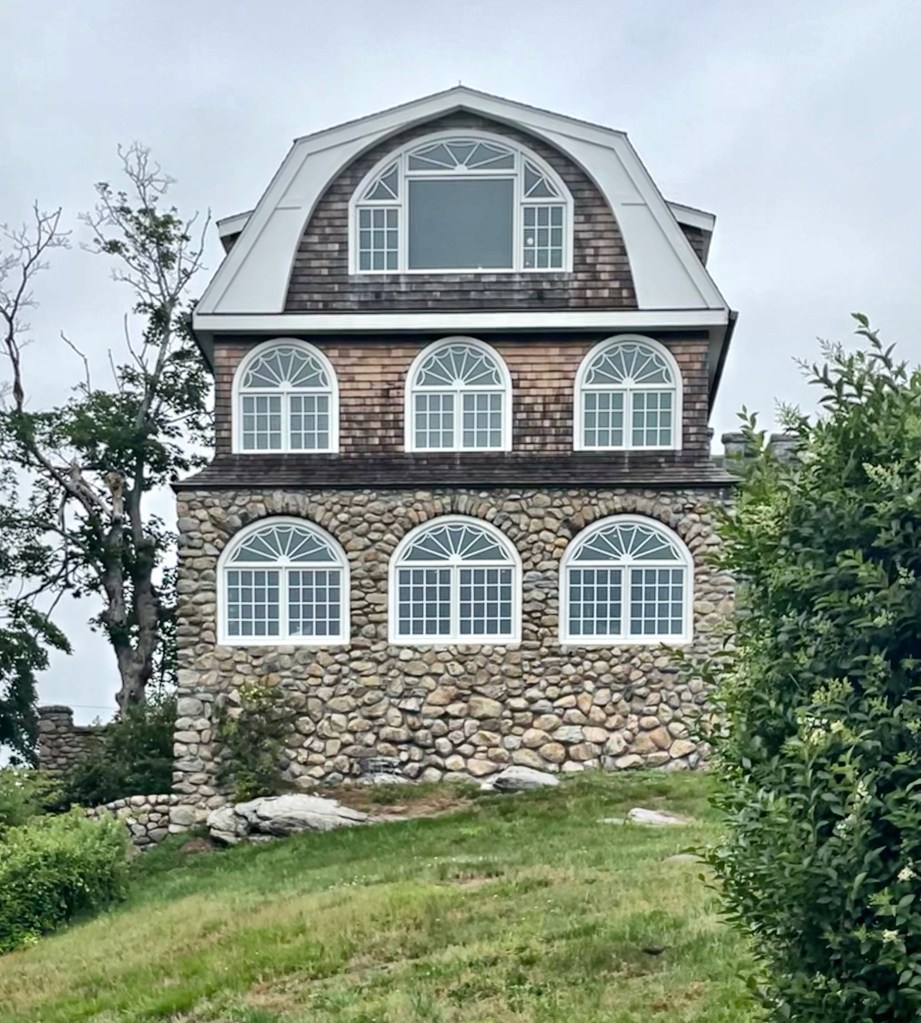
Who doesn’t love a good castle?! This stunning stone house atop a hill in Neptune Park, a neighborhood of summer cottages at the southern tip of New London, CT, was built around 1905 for Thomas M. Waller (1839-1924), an attorney and 51st Governor of Connecticut. Some estimate that the “castle” is much older (1850s), and was built by Samuel Mackenzie Elliott, a prominent NY doctor and abolitionist, but I could not prove that, though the street name “Elliott Ave” is a good starting point. The home was occupied by former Governor Thomas Waller as a summer retreat while he ran his legal office in downtown New London. The home suffered neglect (and possibly a fire) and was partly rebuilt with a new rear wing fronting the ocean proving amazing views of the Long Island Sound.

St. George’s Church // 1759

Schenectady’s oldest extant religious building, St. George’s Church, sits in the center of the Stockade Historic District in Schenectady, New York. As Schenectady was settled and dominated by Dutch settlers, English settlers began moving to the riverfront town, due to its rich fur trade and opportunity. With the growth of English residents, a church where the services were conducted in the English language became necessary. The blossoming congregation hired architect Samuel Fuller, who arrived to Schenectady from Boston in 1758, at the height of the French and Indian War. Ground was broken on the stunning Gothic church in 1759 and it was finally completed in 1763, delayed due to fighting nearby. The church was originally more modest for the smaller congregation, but underwent a large building campaign in the mid 1800s thanks to Reverend William Payne. He oversaw the construction of a new parish house, a new rectory, as well as two successive expansions of the church and the addition of a stone tower and spire to the west front of the church, giving it the appearance we see today. The congregation is still highly active and maintains the building beautifully to this day.

David Forrest House // c.1857

This home in Schenectady’s Stockade Historic District appears to have been built in the mid-19th century, and is an excellent example of a modestly sized Gothic Revival cottage. The house was occupied around 1860 by David P. Forrest, who served one term as Mayor of Schenectady in 1859, later becoming an Inspector of State Prisons from 1860 to 1862. The amazing Gothic bargeboard and other trimmings have remained and add so much intrigue to the home’s design. And that lancet window in the gable end! Swoon.

North Wilmot Church // 1829

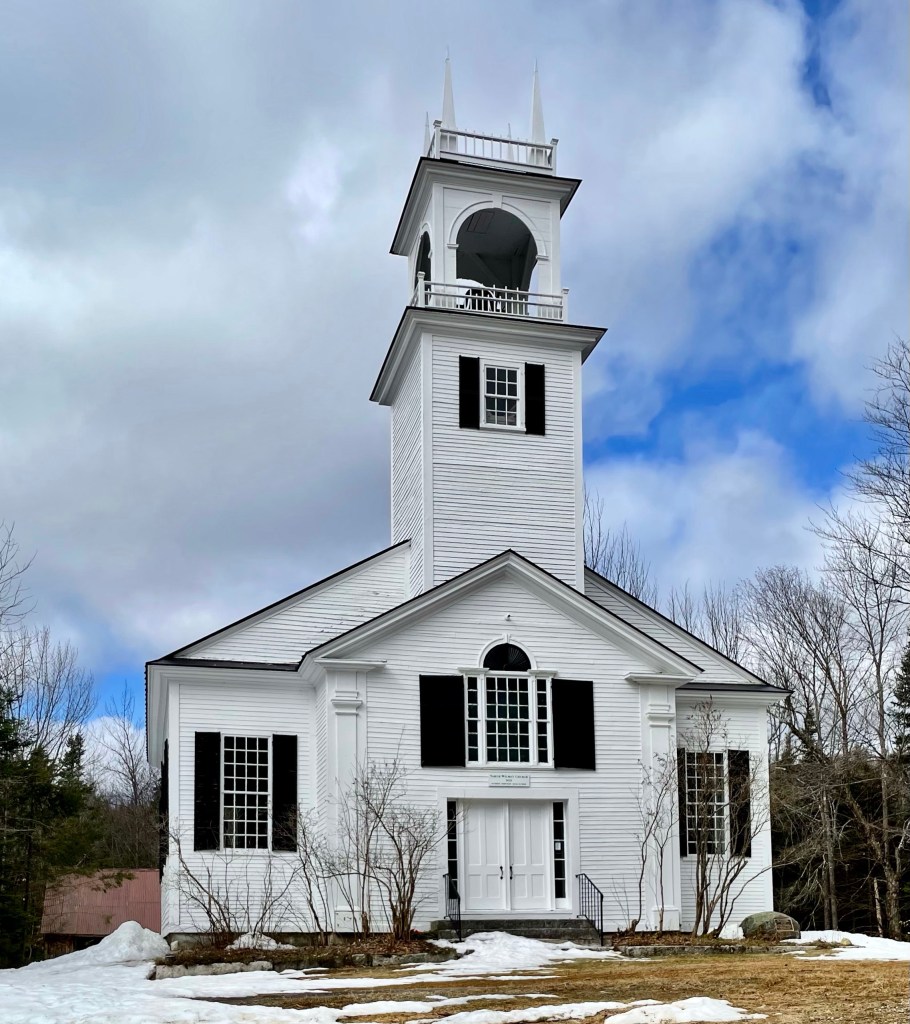
Off the beaten path (like much of the town of Wilmot, NH, you can find this stunning old New England meeting house. Erected in 1829, the North Wilmot Church stands as the oldest extant church in the small town. Five denominations—Congregational, Christian Baptist, Freewill Baptist, Universalist, and Methodist, together collaborated to build this structure then known as the North Union Meeting House. Each denomination held services at the church, as they were all too small separately to warrant their own buildings. Decades after it was built, it was determined that the church should be moved down the hill. In 1846, the church was lifted and placed on rollers (logs), and with the help of oxen, rolled down the hill. It is said that the builder of the church, Josiah Stearns, rode in the belfry. The Different congregations later built churches elsewhere and the building was under-utilized, and it was converted to a meeting space, but allowed a congregation to use the structure. In 1983, with the agreement of remaining North Wilmot Congregational Church members, the North Wilmot Union Meeting House Society was established to maintain the structure and arrange for services in July and August.


St. Michael’s Episcopal Church // 1860

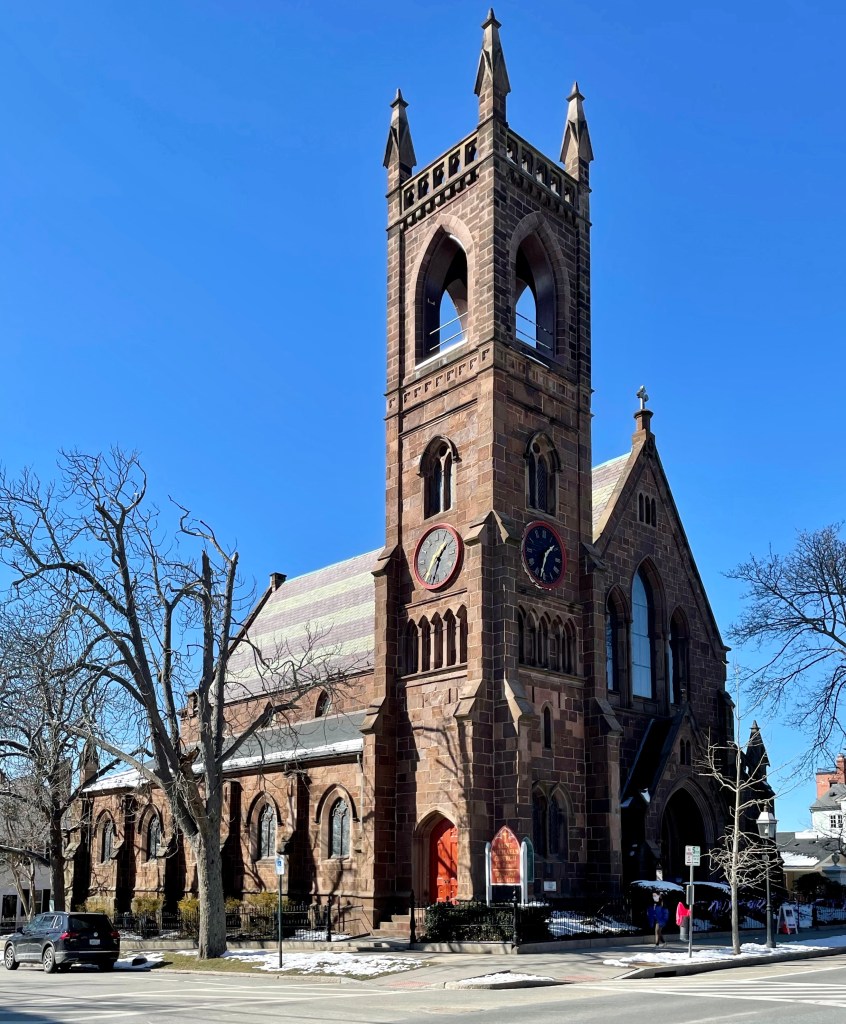
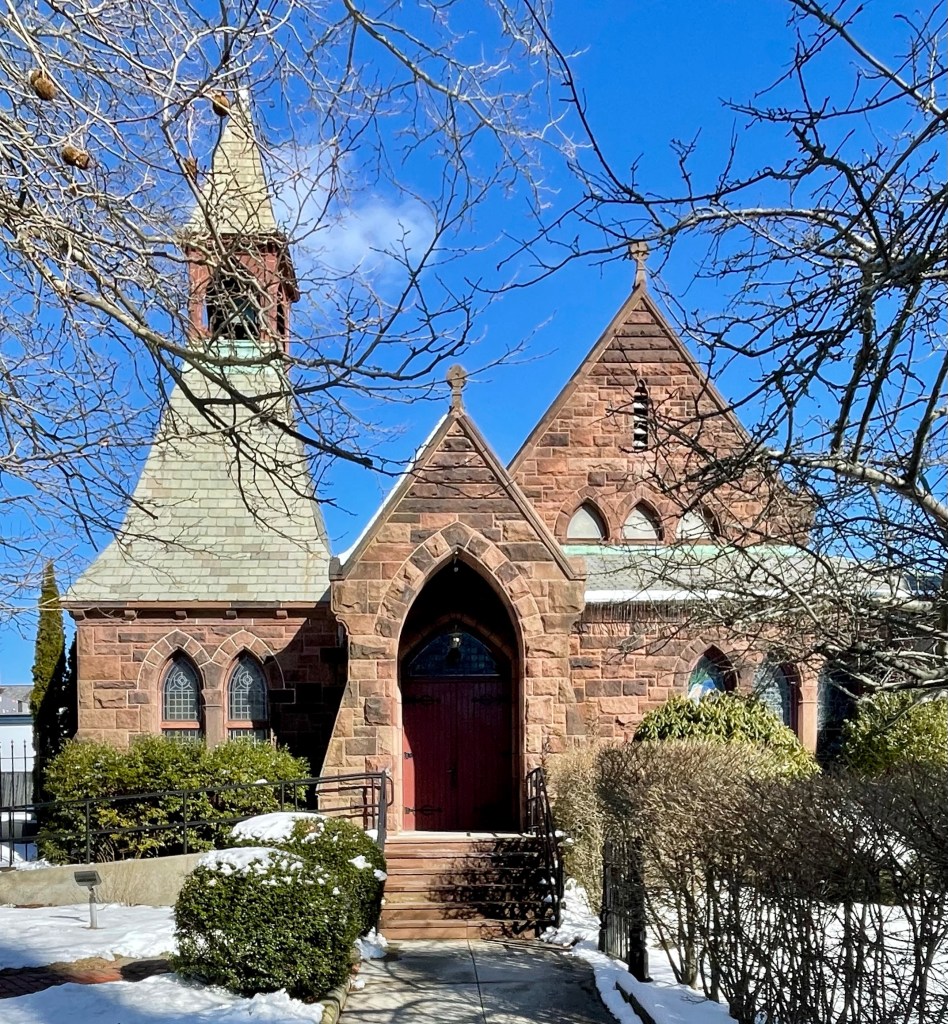
While I love the quintessential white, wood-frame New England churches that proliferate the region, the stone, Gothic churches always make me stop in my tracks; and this example in Bristol is no exception! St. Michael’s parish was founded in 1718 as one of the Rhode Island’s four colonial churches, funded and overseen from London. The first church, built in 1720, was ironically later burned during a British raid in 1778. It was replaced in 1785 by a plain wooden meetinghouse with funds from local residents and partitioners. In 1833, it was replaced by a wood-frame Gothic church which burned in 1858. Undeterred, the church hired New York City architects Alexander Saeltzer and Lawrence B. Valk, who designed the present brownstone Gothic Revival church. Just over a decade later, the church hired Worcester architect Stephen C. Earle, to design a chapel and parish house, across the street. The chapel building follows the Gothic Revival style, but with more Victorian flair, and is also constructed of brownstone to compliment the church. Together, the two structures transport you to the English countryside with their design and presence on the main street in town. What do you think of them?

“Longfield” // 1848

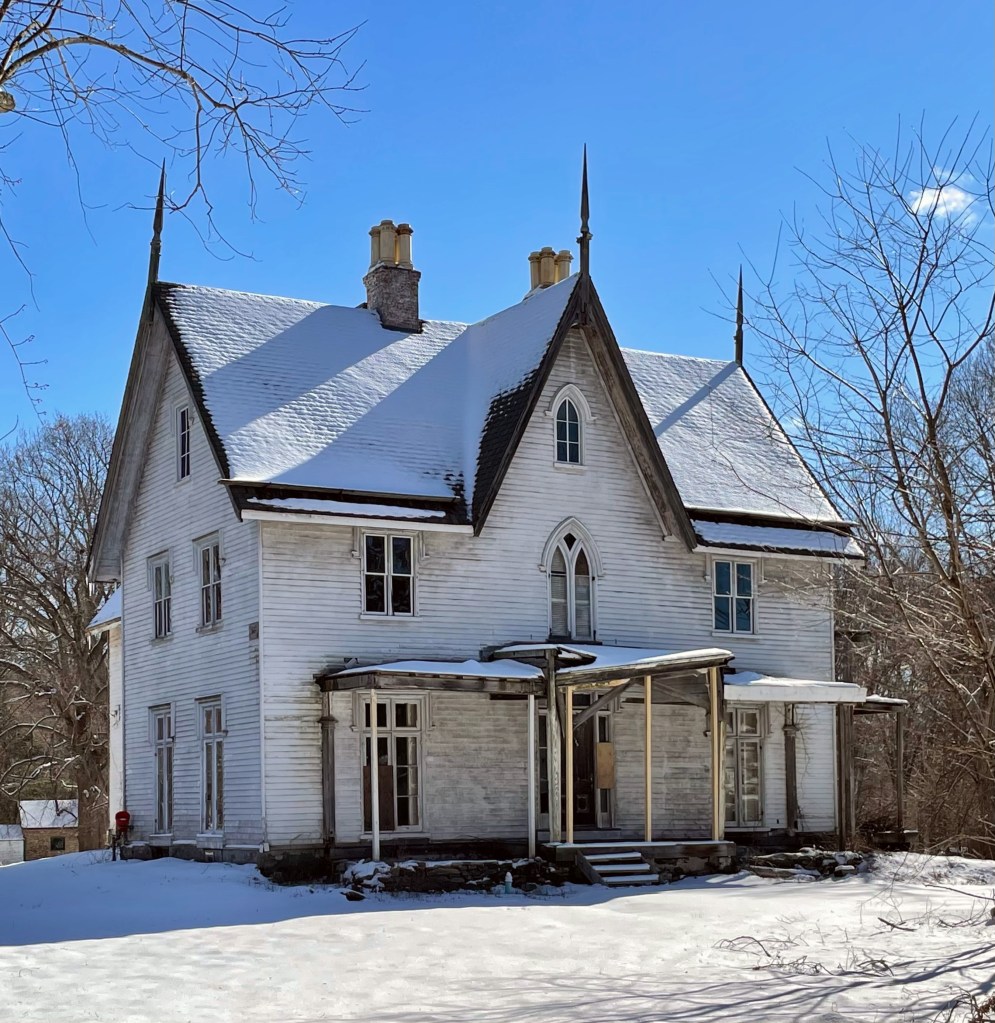
“Longfield”, aka the Abby DeWolf House was built in 1848 and is one of the finest homes in Bristol, Rhode Island. The home was completed from designs by Providence architect Russell Warren, who also designed other mansions in town (I’ll post those later on in this series), the Westminster Arcade in Providence, and “Hey Bonnie Hall” a since demolished Federal style home I featured a couple days ago. Longfield’s name derives from the 60-acre meadow, part of the 300-acre Henry DeWolf farm, given to Abby DeWolf when she married Charles Dana Gibson at just 21 years of age. The DeWolf Family paid for the home as a gift to Abby. The DeWolf Family is infamous for being highly active in the slave trade, and was believed to have transported over 11,000 enslaved people from Africa to the Americas before congress abolished the African Slave Trade in 1808, which “prohibited the importation of slaves into any port or place within the jurisdiction of the United States…from any foreign kingdom, place, or country.” This policy did little as many owners of slaves just kept children born into slavery and also opened plantations in the Caribbean and South America. After Abby died in 1901, the home went to her granddaughter who maintained the home. By the 1970s, the home was sold out of the family and began a period of decades of deterioration to its current state. The interior is effectively gutted, but some original woodwork and fireplaces remain. Recent calls for a townhouse development with ample parking was proposed and approved by the town a couple years ago, but would greatly diminish its siting and architectural integrity. Nothing has happened on the site, but here’s to an appropriate restoration!