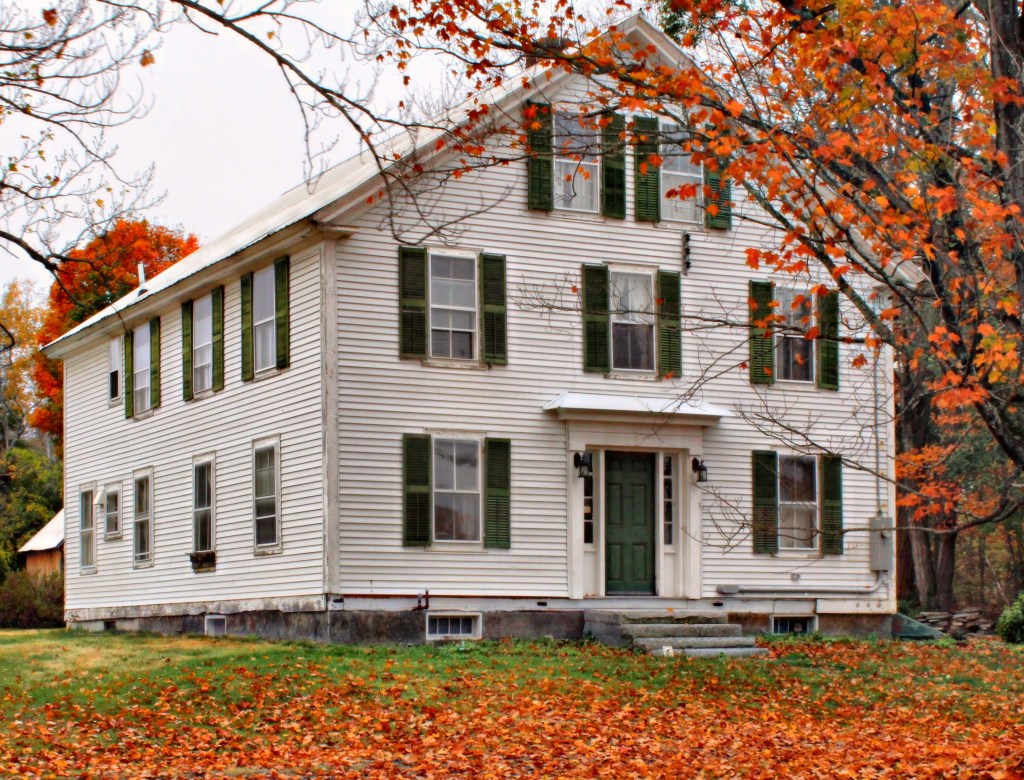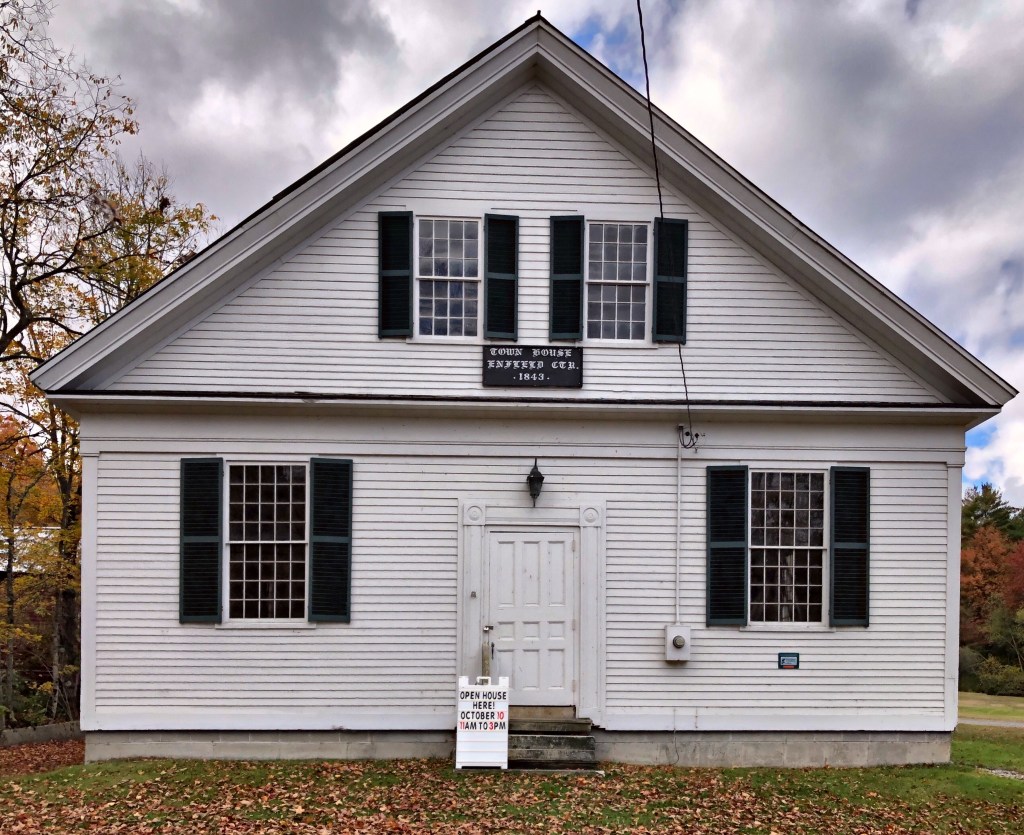
Burton Hall, Thetford Academy // 1845

Burton Hall was constructed in 1845 as a boy’s dormitory for Thetford Academy on a lot given by Orange Heaton (who lived nearby), just north of the original Academy Building. The structure was named Burton Hall in memory of Asa Burton, one of the Academy’s founders. The structure was sold by the Academy by about 1860 for $200, to a J.H. Huntington, who moved it across the street to its present site to replace his house which had burned the year prior. In the late 1930’s, Dwight Goddard, the owner of the home at the time, gifted the building back to the Academy since which time it has been known as Goddard Hall.

Fun Fact: Buildings historically were much more likely to be moved than demolished as the cost of building materials was much more than labor. Today, the opposite is true so many developers and owners prefer to demolish.

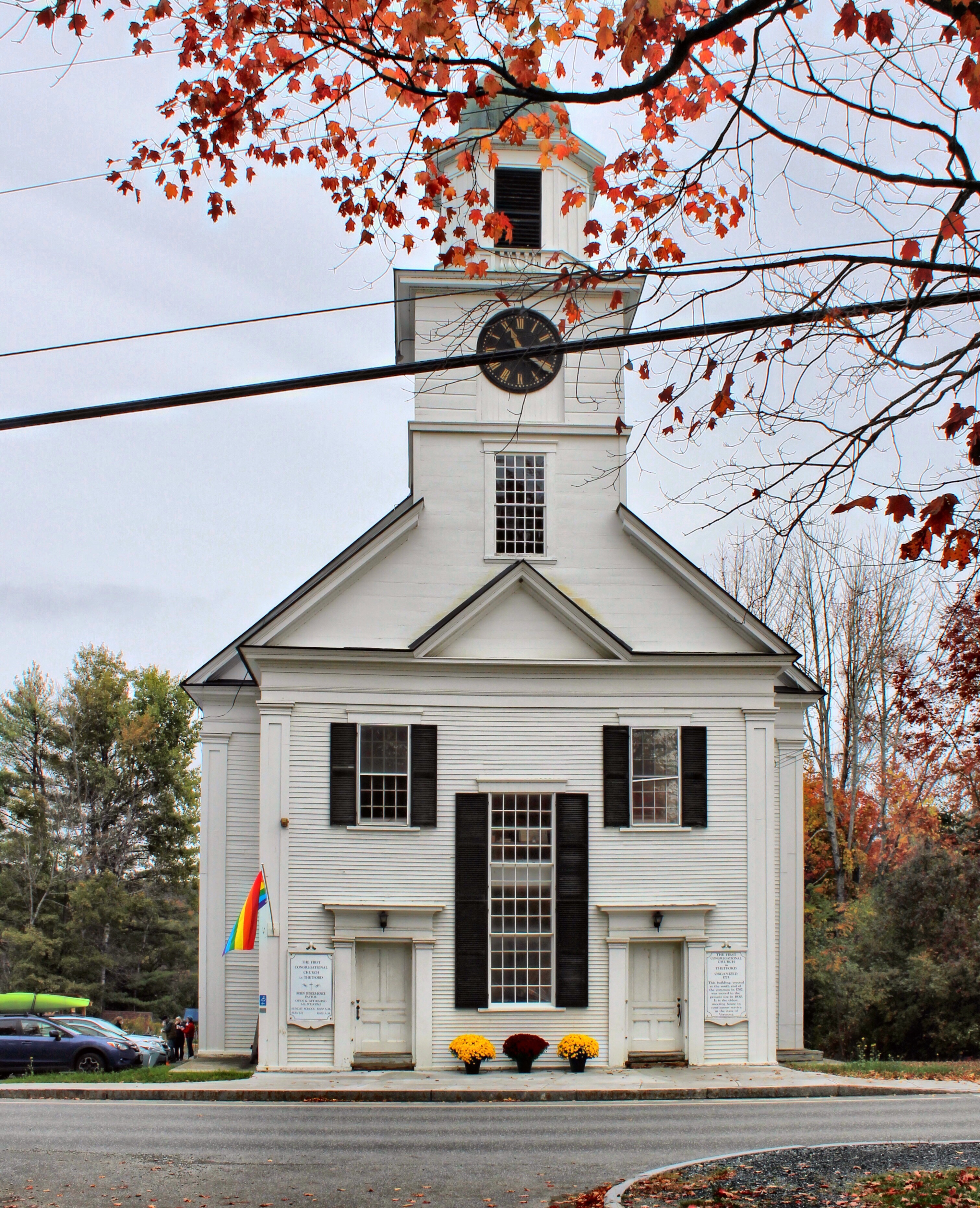
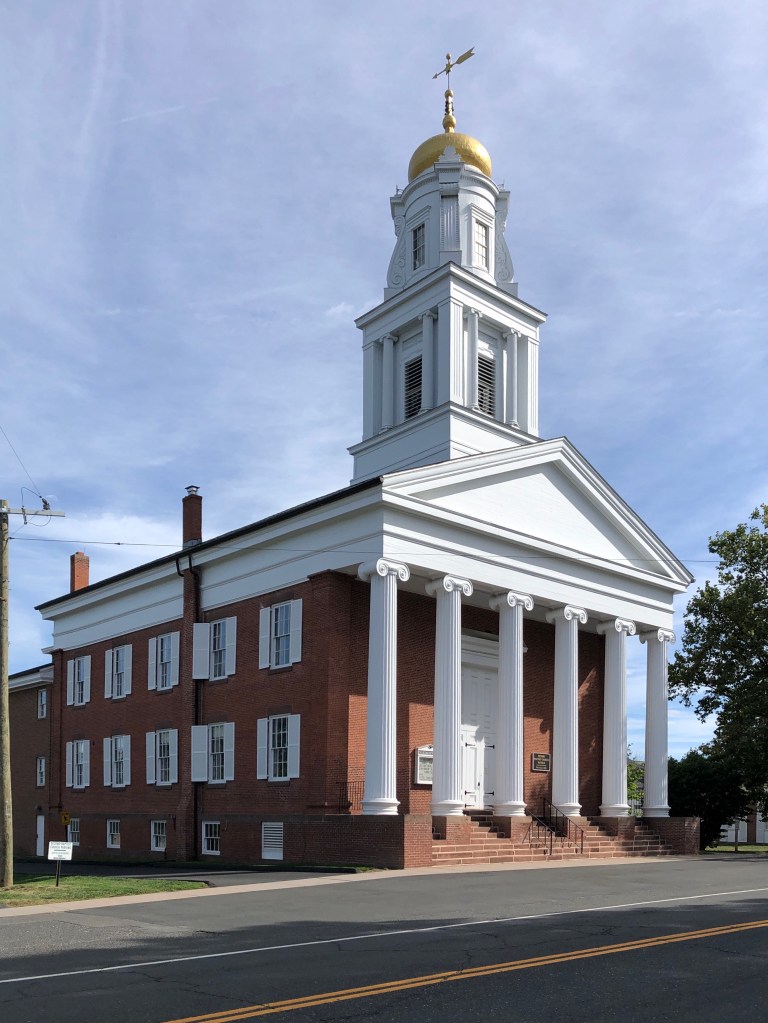
First Congregational Church, Thetford // 1785 & 1830

Attempts were made to organize the Congregational Church in Thetford, Vermont as early as 1771, making this congregation among the five earliest in the state. As was typical of the day, the meetinghouse was intended to serve both public and religious functions, before the separation of church and state. Following the customary dispute over the location of the meetinghouse in town, the structure was erected on the Town Common, marking the beginning of the village of Thetford Hill. Construction began on the meetinghouse in 1785, being completed within a couple years. Sometime between 1807 and 1812, the Congregational Church ceased to be supported by taxes as the separation of church and state resulted in the sale of the meetinghouse and its subsequent move in 1830, from the town-owned common to its present site just north of it. In 1830, the pavilion, tower, and pilasters were added to give the church a Greek Revival flair. The church is reportedly the oldest meetinghouse in the state still in continuous service.

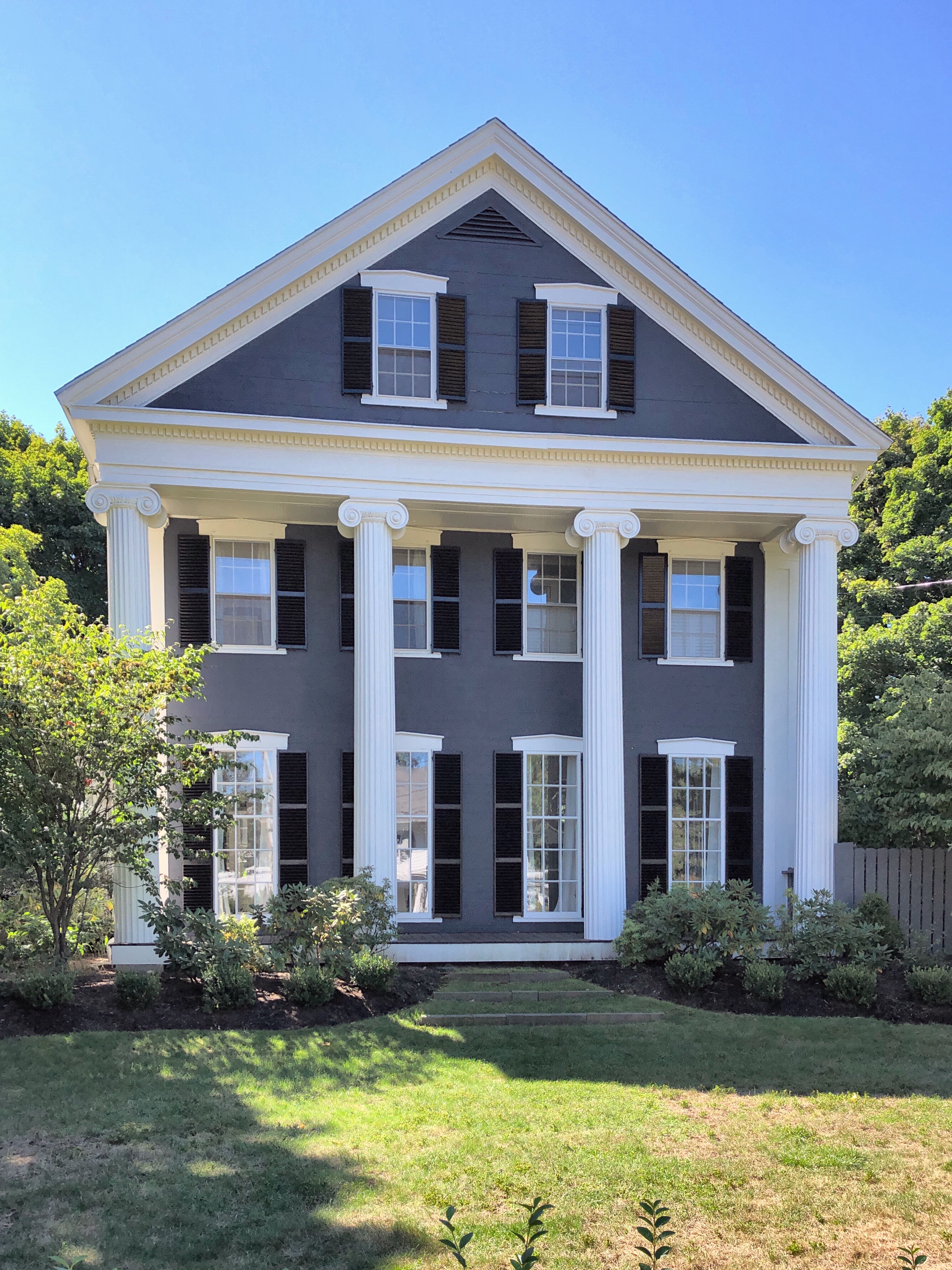
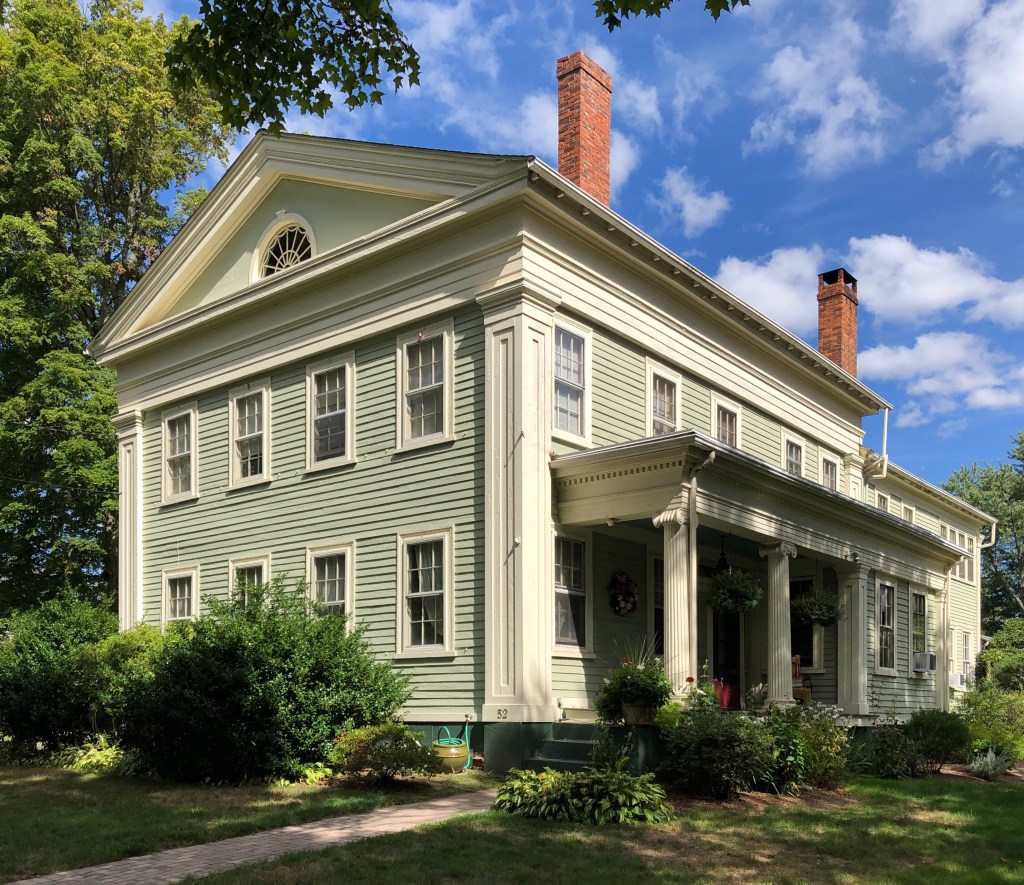
Frederick Collins House // 1847

This house was built in 1847 by Frederick A. Collins on land owned by his father, Mathias Collins III. Frederick Collins (1818-1892) had this house built just after his marriage the same year to Amelia M. Revere, purportedly a grandniece of Paul Revere. Prior to his marriage, Frederick A. Collins lived in Newton Upper Falls and started a glue factory with his brother, which
by 1855, had grown to three three factories and which folded upon the death of his brother Edward Collins in 1879. Collins was active in local affairs, serving in later life on the City Council. The home remains a significant monumental temple-front Greek Revival house in the Boston area. It was designated as a Newton Landmark, meaning it will be preserved for future generations to appreciate.

Second Baptist Church, Suffield // 1840

In early New England, the Congregational Church had a near monopoly on churches. Congregational churches had lost much of its hold on its members and on government by 1725. Eventually, some of its ministers decided a religious revival was needed, creating the emergence of new Baptist and Methodist churches all over the region. Baptists erected a church in West Suffield, far from the town center, which began to rapidly develop in the early 19th century. In 1805, they petitioned to create a second Baptist church, and succeeded. By 1840, the members collected funds to erect this stunning Greek Revival church on Main Street. The congregation hired architect Henry Sykes, who had trained under Chauncey Shepherd of Springfield, Mass and Ithiel Town of New Haven, clearly learning a lot on church design.

John W. Loomis House // 1740

This stunning home on Main Street in Suffield, CT was apparently built in 1740. By the 1840s, it was purchased by John Wells Loomis, and altered to fit the then-fashionable Greek Revival style, replacing the center chimney with two chimneys, adding pilasters and a Greek Revival entry. John Loomis was the head of the Loomis family which made a fortune in the tobacco industry in Suffield, rolling and shipping products as far away as California. Before his death, John Loomis built his son George a house nearby, knowing that his son would carry on the business, which he did until a couple years after his father’s death when he sold the business and moved to New Haven.

Dr. Asaph Bissell House // c.1835

Dr. Asaph Bissell was born into the wealthy Bissell family which started here when John Bissell, the progenitor of the family in America, came from Somerset, England, and landed in Plymouth, Massachusetts, in 1628. He became one of the settlers of Windsor, CT. His descendant, Asaph Bissell became one of Yale’s earliest medical graduates. Dr. Bissell, a member of the school’s second class, practiced in Suffield, often making house calls from his home right on Main Street. The house is Greek Revival in style with a stunning fan light in the pediment, echoing the Federal style.

Moses Rowe House // 1767

One of the older homes on Main Street in Suffield CT, the Moses Rowe House was built in 1767 and exemplifies the architectural history of town. The house was constructed as a two-story Georgian home with minimal detailing, as the family home of Moses Rowe (1733-1799), his wife, and nine children. According to historical maps of the area, the home appears to have been purchased by Horace Sheldon, who in the 1830s modified the home in the Greek Revival style, increasing the height of the home, adding side porches and the entablature at the roofline.

Milo M. Owen House // c.1840

Located on Main Street in Suffield, this Greek Revival home stands out for its perfect proportions, entry detailing, and the large 20th century porch. The home was likely built around 1840 for Milo Milton Owen (1811-1886), within a year of his marriage to Martha Alderman in 1839.

West Suffield Congregational Church // 1839

Suffield (originally Southfield) Connecticut, was once a part of Massachusetts, incorporated as a town in 1682. After having to travel to downtown Suffield to worship at the church there, the families in the west part of town established the Second Ecclesiastical Society in 1743. The first meeting house was built in 1744 on what was known as “Ireland Plain”, now the southwestern corner of the West Suffield Cemetery. In 1775, a second meeting house was erected on the site of the present building. It was rebuilt in 1839 using the earlier foundation. The Greek Revival church building is very charming with its columned portico and belfry surmounted above a stepped parapet. The church is very well preserved and a lasting remnant of West Suffield’s early days.

Fisher-Bliss House // 1832

Maybe the most grand Greek Revival home in Edgartown, the Fisher-Bliss House has stood proud overlooking the harbor as ships come and go for nearly 200 years. Thomas M. Coffin, who built many whaling captains homes in town, constructed this iconic residence in 1832 for Captain George Lawrence, who had returned to town with over $90,000 worth of whale oil from a three year trip to New Zealand. Before the house was built for him, the home was sold to Captain Jared Fisher. The home was apparently to be a two-story gable roof home, but Fisher decided to square off the roof and have a widow’s walk added. Captain Fisher’s granddaughter owned the house and lived there with her husband Mr. Leonard Bliss, a merchant.