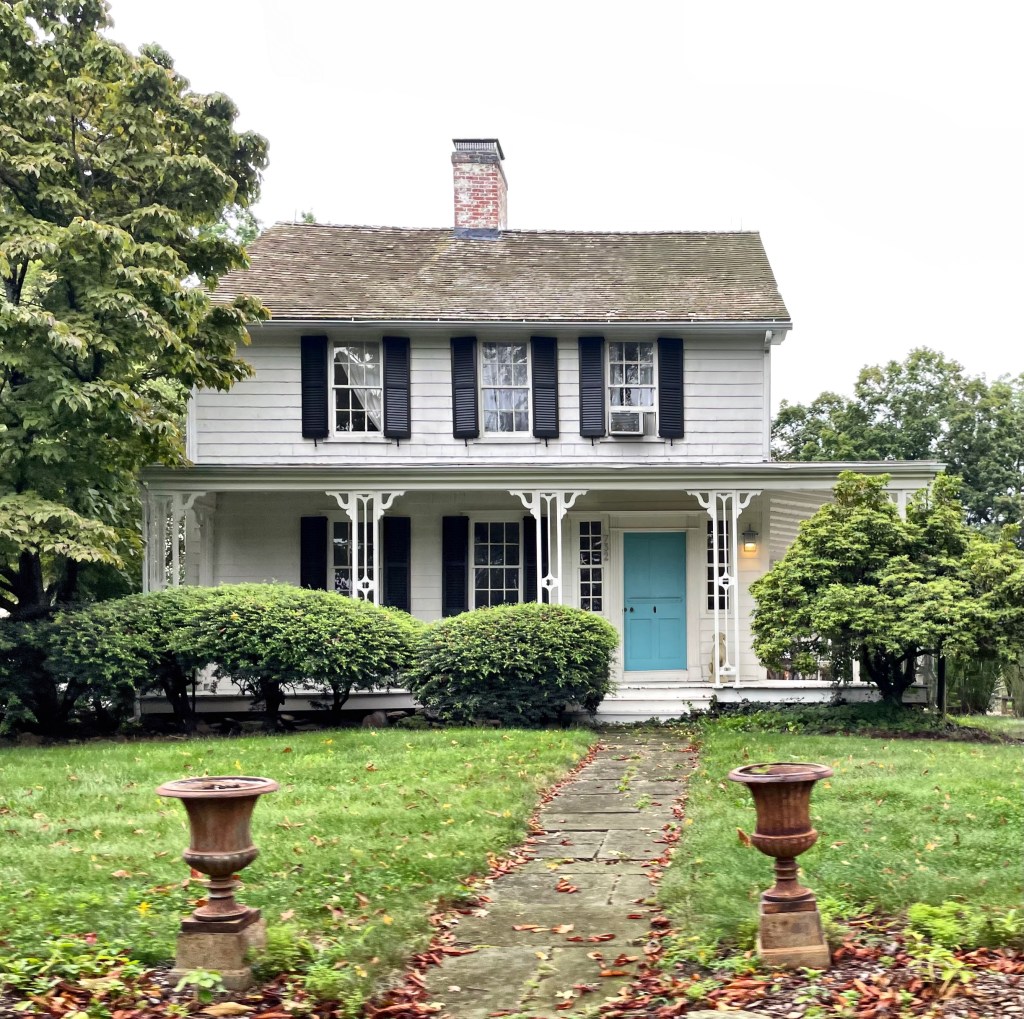
Bradley-Wakeman House // c.1815

While the Greenfield Hill section of Fairfield, Connecticut has some of the grandest houses (old and new) in the state, there are some more average size homes that just ooze charm and curb appeal. This example on Hillside Road, dates to the 1810s and was seemingly built by Alban Bradley (1767-1832) on land inherited by him from his late father, Seth Bradley. The family farmed on the land from this Federal period farmhouse until it sold out of the family by Alban’s only son, Burritt in 1825. Burritt sold the farm to Zalmon Wakeman who farmed on the many acres of valuable land there. Sometime before his death before the Civil War, the house was “modernized” with Italianate-style porch, which is supported by delicate cut trelliswork. This is a great illustration as to how modest renovations which apply up-to-date decorative details can be done to historic properties without compromising the original structure or its architectural integrity.
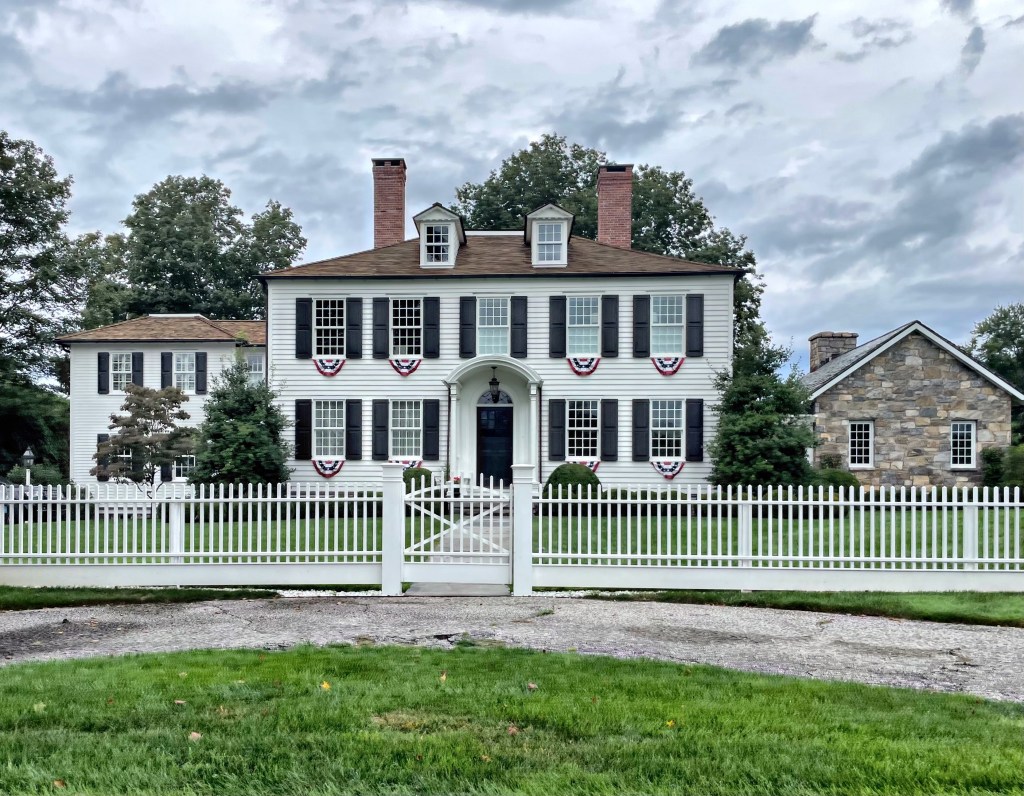
Bradley-Baldwin House // pre-1750

WOW this is an absolute dream home! Tucked away on Meetinghouse Lane in the Greenfield Hill section of Fairfield, CT, you will find the Zalmon Bradley House. It was originally built around 1750 as a modest saltbox and later owned by Zalmon Bradley. The property was inherited by Zalmon’s sister, Sarah, who recently married Dudley Baldwin, an “ardent patriot”. The property was likely updated in appearance by Sarah and Dudley Baldwin giving the house its current four-sided hip roof, chimneys and an exquisite doorway. Dudley and Sarah died young in 1794 and 1795 (at ages 40 and 37 respectively), and the property was inherited by their only child, Abraham Dudley Baldwin. Abraham was watched for years by family, including his namesake, Abraham Baldwin (1754-1807), a senator, congressman, and key figure of the drafting and signing the U.S. Constitution. Abraham stayed in this house often during his time in Connecticut, watching after his nephew along with his sister, Ruth Baldwin Barlow. Abraham Dudley Baldwin as an adult resided in this house with his own family, and was largely engaged in local and state politics and agricultural pursuits. The Bradley-Baldwin House was restored a few years back, and looks amazing!

Reverend Richard and Lavinia Dey House // 1823

Richard Varick Dey (1801-1837) was a young divinity student from New York City, attending the Theological Seminary in New Brunswick, New Jersey, when he met Lavinia Agnes Scott (1805-1886). Dey was the son of prominent New York attorney Anthony Dey and Catharine Laidlie; Catherine’s father, the Rev. Archibald Laidlie, was the first minister called to preach in English in the Dutch Church in New York City. Richard and Lavinia fell in love and became engaged on December 27, 1820. However, Lavinia’s parents were opposed to Richard, and her father even asked Richard’s theology professors at Rutgers to try to discourage his pursuit of Lavinia. It did not work and they married in September 1822. After graduating from the Seminary in 1822, Richard was licensed by the Congregationalists and the young couple moved to Greenfield Hill, in Fairfield, Connecticut, where he preached from 1822-1829. Local history states that it was actually Lavinia who designed this house in 1823 for their family and oversaw the builders during its construction. The Federal style house stands out for its clear Dutch form with its roof projecting to create a recessed verandah, likely influenced by the couple’s New York/New Jersey upbringing.

Reverend Dey, Lavinia, and their children relocated to New York City, and Richard preached at a number of churches the before he died unexpectedly in 1837, leaving his 32-year-old widow with four young children. Lavinia remained in New York, where she served as the manager of The Society for the Relief of Poor Widows with Small Children for over 25 years. She never would remarry and died in 1886.

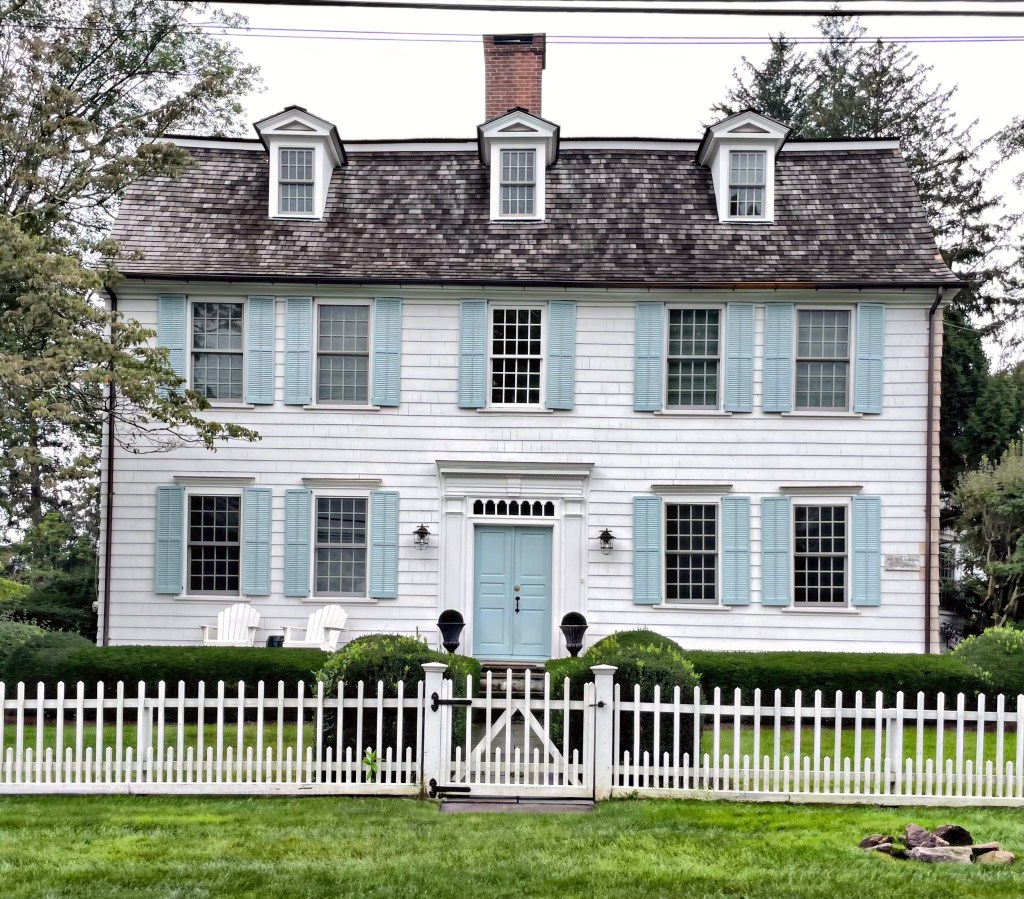
Pomeroy-Belden House // c.1758

This stunning gambrel-roofed Georgian manse is located on Bronson Road in Fairfield’s Greenfield Hill neighborhood, a well-preserved in the northern part of town with large historic homes on large lots. The Pomeroy-Belden House was built in about 1760 for Seth Pomeroy (1733-1770), the son of Seth Pomeroy Sr. (1706-1777) a gunsmith and soldier from Northampton, Massachusetts, who served in King George’s War, the French and Indian War, and the Revolutionary War (at nearly seventy years old). Seth Jr. graduated from Yale in 1753, and would accept the call as the minister of the Greenfield Hill Congregational Church from 1757 until his death in 1770. He had this stately house built for his family during his time as minister. After his death, the house was purchased by Captain David Hubbell who used it as a store until it was purchased by Reverend William Belden, who served as pastor of the Greenfield Hill Congregational Church from 1812-1821. The Georgian mansion features a central double-door entry with traditional door surround, later shingle siding and a gambrel, wood shingle roof punctuated by three small dormers.

Greenfield Hill Congregational Church // 1855

Local residents of northern Fairfield successfully petitioned the General Assembly to establish a Congregational church in 1725 as a new Northwest Parish, a distinct group from the Fairfield Congregational Church. Their first meeting house was erected just years later in 1727. A larger, more substantial meetinghouse was built in 1760. The area of Greenfield Hill has always been remote and more suburban, but became important in the late 18th century when Timothy Dwight became minister of the Greenfield Hill Congregational Church in 1783. Dwight would go on to become the eighth president of Yale College (1795–1817). With increased funds and affluent members, another church was built in 1850 from plans by esteemed architect Richard Upjohn, in the Gothic style. Sadly, just years after it was completed, a fire from a furnace inside destroyed the church. So again, they rebuilt in 1855 with the building we see today, sort of. Architect Alfred Nash furnished plans for the building which was more Italianate in design. The church would be modernized in the 1940s in the Colonial Revival style, from plans by local architect Cameron Clark, likely inspired by the collection of Colonial-era homes nearby, including his own home in Greenfield Hill. The church remains a visual anchor for the affluent neighborhood.

Samuel Dearborn House // 1886

Queen Anne perfection! The Samuel Dearborn House sits at the beginning of Concord Avenue in Nashua, New Hampshire and is among the city’s finest examples of the great architectural style. Samuel Gerrish Dearborn was born in Northfield, New Hampshire, August 10, 1827. His father was an industrious farmer and allowed Samuel to be educated at Sanbornton Academy and the New Hampshire Conference Seminary. He graduated from Dartmouth in 1849 and began practicing medicine in various New Hampshire towns. He served as a surgeon during the Civil War and after, settled in Nashua, remaining a prominent doctor. He and his family were avid travelers and had trips to the Pacific northwest and Mexico. He had this stately Queen Anne style residence built in 1886 which exhibits all the hallmarks of the style. Varied materials and siding types, asymmetrical plan, ornate turned columned porch, gables with detailed shingling, and complex roofline are all so eye-catching.

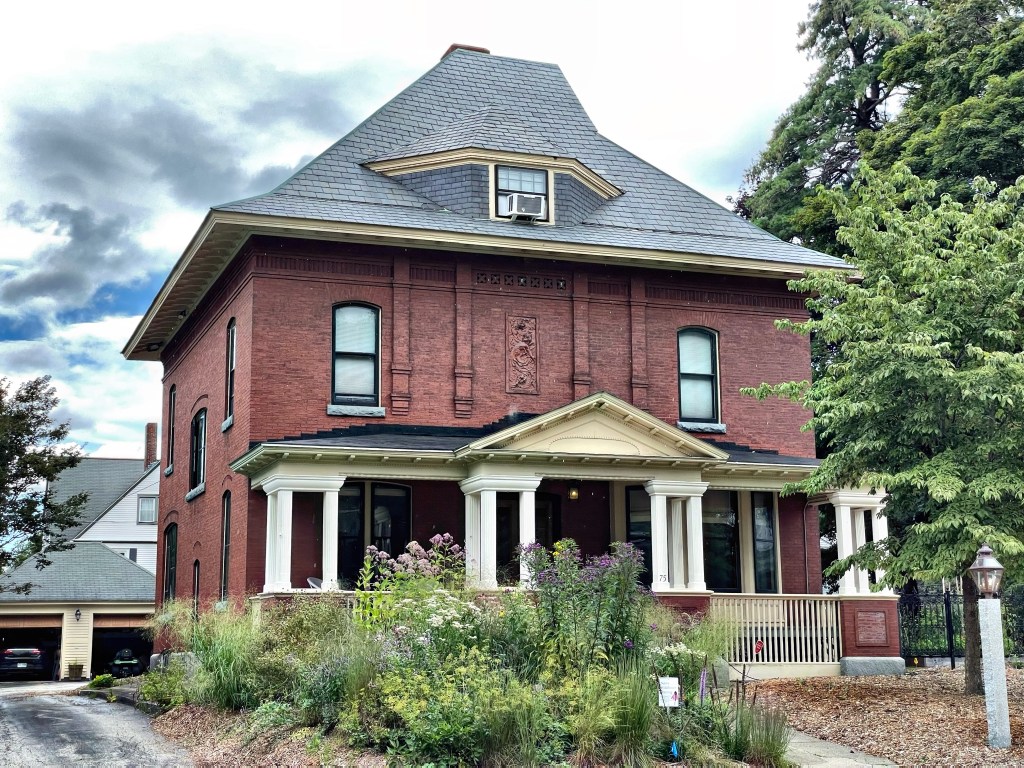
George French House // 1890

Yet another of Nashua’s fine estates on Concord Street is the George French House, a more academic example of the Queen Anne style of architecture. The French House was built in 1890 for George Barstow French (1846-1933), an attorney in town. I really wish I could find more on the architect, as this seems to be a more academic example of the style with bold material choice of brick construction with brownstone and terracotta trim and detailing. The hipped roof with flared eaves and brick pilaster detailing on the second floor add a lot to the design and are not common! Does anyone know more?

John Reed House // c.1840

The John Reed House at 37 Orange Street in Nashua, New Hampshire is a testament that houses can be updated over time with thoughtful renovations, and still be pretty darn amazing! The house was originally constructed in 1840 in the then-popular Greek Revival architecture style. Within a decade, to ‘keep up with the Jones”, the house was “modernized” with Italianate style detailing, including the brackets at the eaves and the large, square cupola with round arched windows and shutters. Decades, later, Queen Anne/Colonial Revival changes were made, with the full-length front porch with turned, fluted posts, enlarged windows, and an oversized front door. The house today blends these very different styles very well and adds to the house’s significance.

Killicut House // c.1740

Thought to be the oldest extant residential building in Nashua, New Hampshire, the Killicut House is an important piece of local history of the early settlement days of the city. The exact date of construction of the Killicut House is not known, with local legend stating that the house was built between 1680 and 1700 with other estimates dating the house slightly later, to 1740. It was known for years as the “1700 House”. Regardless, this is one of only two 18th century houses remaining in Nashua. The first known owner of the house was Thomas Killicut (1723-1784) who resided in present-day Nashua by 1746 when he was chosen to hold the position of field driver for the newly established town of Dunstable, New Hampshire (an extension from Dunstable, Massachusetts). Killicut served as one of “Rogers Rangers” in the French and Indian War. During the early to mid 19th century, the Killicut House apparently passed onto members of the Blodgett family who were apparently related to the Killicuts as up until the 1960s, the house was still reportedly owned by descendants of Thomas Killicut. Later in the 20th century, much of the land was subdivided and single-family homes were built nearby, with the Killicut House now located on the end of an unassuming cul-de-sac. It is a great example of a Georgian-era Cape style house with central chimney.

Dana King House // 1879

Another stately Victorian-era house on Nashua’s Concord Street is this brick beauty, known as the Dana King House. The property was constructed in 1879 for Dana William King (1832-1912) who had quite a history. He was born in Alstead, New Hampshire where he lived until he was 19, moving to Boston to “make his fortune”. In 1852, he shipped aboard a whale boat in East Boston, and realized that whaling wasn’t for him. He was persuaded by his brother to move in with him in Detroit, where he worked as a grocery clerk before moving back to New Hampshire, settling in Nashua, where he did make his fortune. He began working at a local mill until the outbreak of the American Civil War, where he enlisted in the First Regiment of New Hampshire, eventually rising to the rank of Lt. Colonel. He was captured during the war and held in prison in Shreveport for over seven months, failing at least one prison escape. He was eventually included in a prisoner swap and returned to Nashua in 1865. Upon his return, King used his war stories to gather favor locally, and he was elected Register of the Hillsborough County of Deeds, a position he held for over 30 years. The King House is a great, and rare example of the Victorian Gothic style of architecture in Nashua, notable for its steeply pitched slate gable roof with octagonal corner tower serving as a belvedere or cupola.