Clements Apartment Building // c.1885

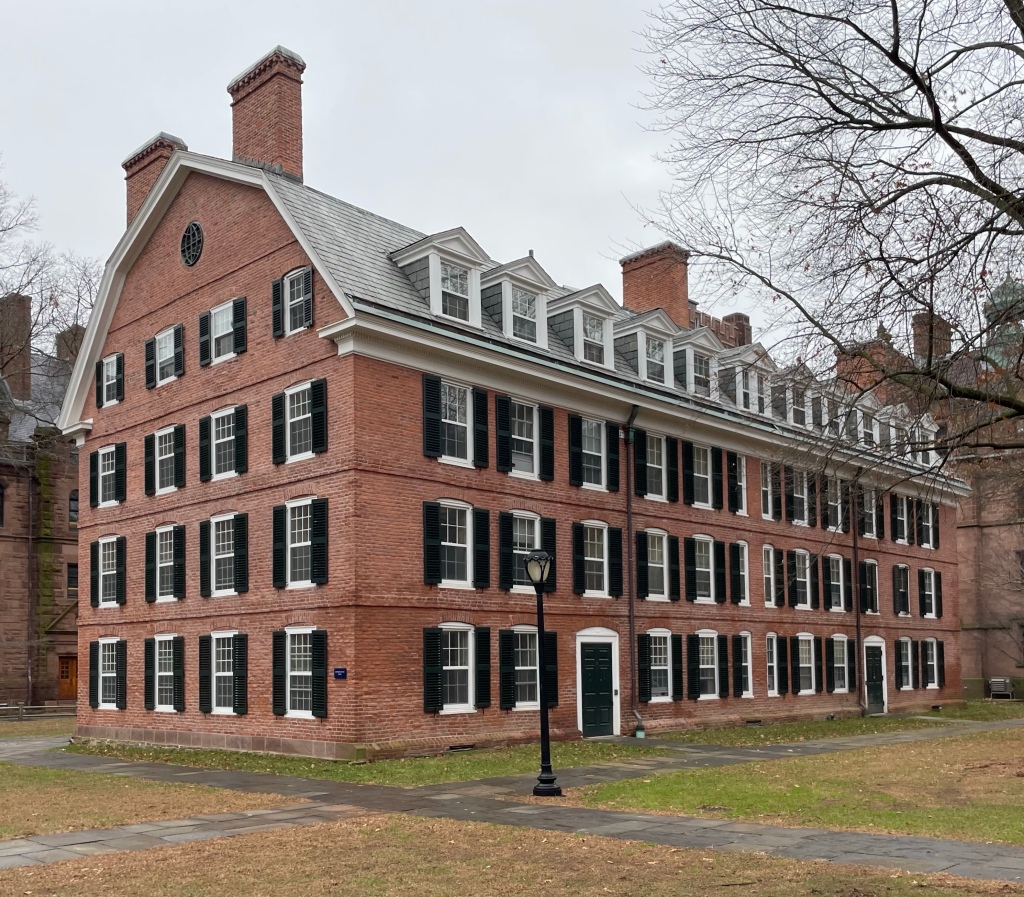
Brookline is pretty great as you can find unique and well-preserved examples of nearly every type of building in almost every architectural style! Staying in Brookline Village, this apartment building stands out as one of the best panel-brick apartments I have seen. The property was developed in the mid-1880s by Thomas W. Clements, who served in the Army during the American Civil War and later settled in the Boston area working as a dentist. Thomas married Lydia R. Clements, who is much more interesting than her husband! She was a graduate of the Boston University School of Medicine and worked locally for years, but wanted more. In the spring of 1898, she set out with a party of men and women, determined to make their fortune in the gold fields of the Klondike. During the months long trek, all of the other women and some of the men in her party left the expedition before reaching their goal, but Lydia Clements persevered and became one of the first white women — possibly the first from the East — to cross the Chilkoot Pass into the Klondike region. She never made a fortune, but upon returning, she was more spiritual, and got involved in the occult philosophy of Prof. Charles H. Mackay and his West Gate School of Philosophy in Boston. She used her new learnings to go back to Alaska to make her fortune, but there is no indication that Clements ever did make her fortune. She did however, remain in Nome and elsewhere in Alaska for more than a decade, hiring men and mining tin and gold. She retained her Brookline residence here on Davis Avenue and travelled back and forth across the continent many times before returning to Brookline, before dying there in February 1927.

Pendleton House // 1826

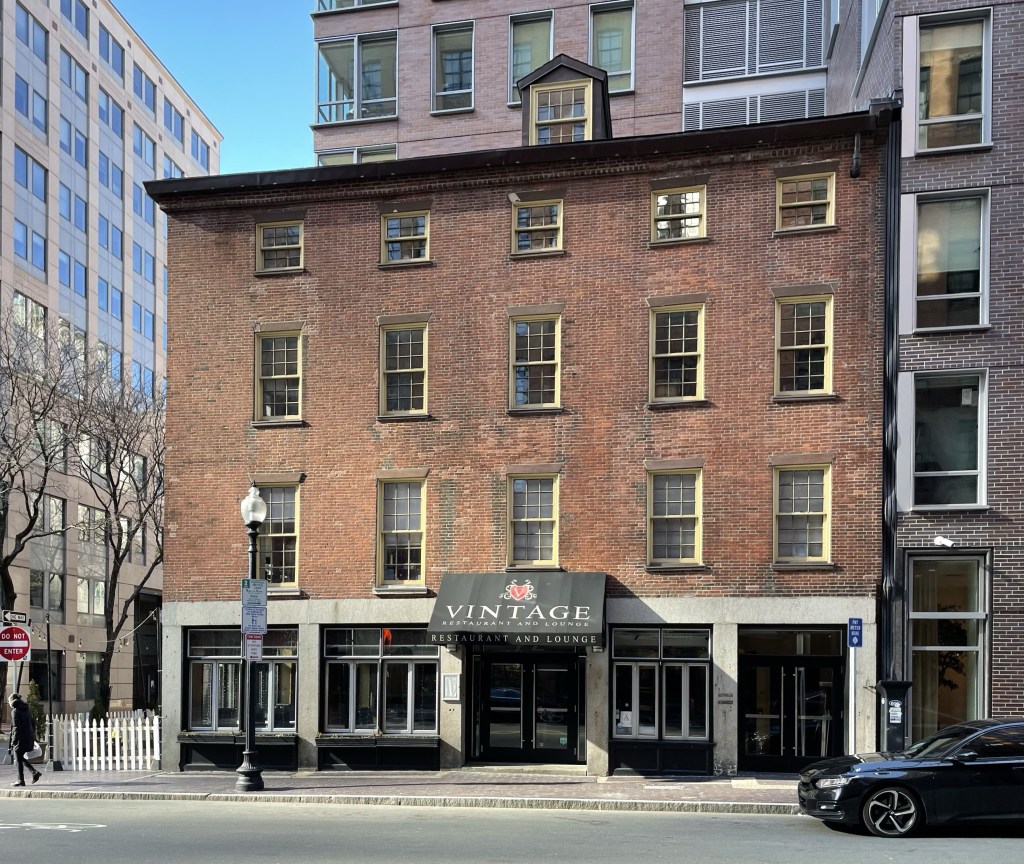
Large commercial blocks like this can really transport you back a century or more! The Pendleton House in Blue Hill, Maine was built in 1826 by Jonah and Jeremiah Holt. The brothers were born in Beverly, Massachusetts and their family settled in Blue Hill, likely to work in the shipbuilding industry. Originally called the Brick Block, the building was a storefront for the Holts. In the 1870s, the building had fallen into disrepair, and was seized from its owner, Frederick Holt (Jeremiah’s son), by the Blue Hill Academy, from whom Nathan Pendleton purchased the building. As an 1877 issue of The Ellsworth American stated: “Blue Hill needs a hotel. There have never been so many strangers and visitors. Five hundred men are working in the quarries.” From the massive demand for lodging in town, tied to industry, Pendleton opened the building as a hotel in 1878, possibly adding the mansard roof at that time. The building became known as the Pendleton House for a number of years and was purchased by John M. Snow in 1888, who added porches to the building. Sadly, the porches were removed in the 20th century, but the old Pendleton House remains a fixture in Blue Hill and is home to small businesses with housing above.

Canterbury Shaker Trustee’s Office // 1831

The only brick building in the Canterbury Shaker Village, the Trustees’ Office, built in 1831, served as the office of the Lead Ministry and also housed a U.S. Post Office for the community beginning in October 1848. The building was made of bricks manufactured by a local family. The building was designed as the hub of the Canterbury Shaker’s considerable commercial enterprises. It housed only those Shakers who had the authority to conduct Village business, and they often hosted guests and clients who arrived from distant places, and met with townspeople and local officials to discuss civic matters impacting the community. Due to the community-facing nature of the building, the community spared no expense inside and out.