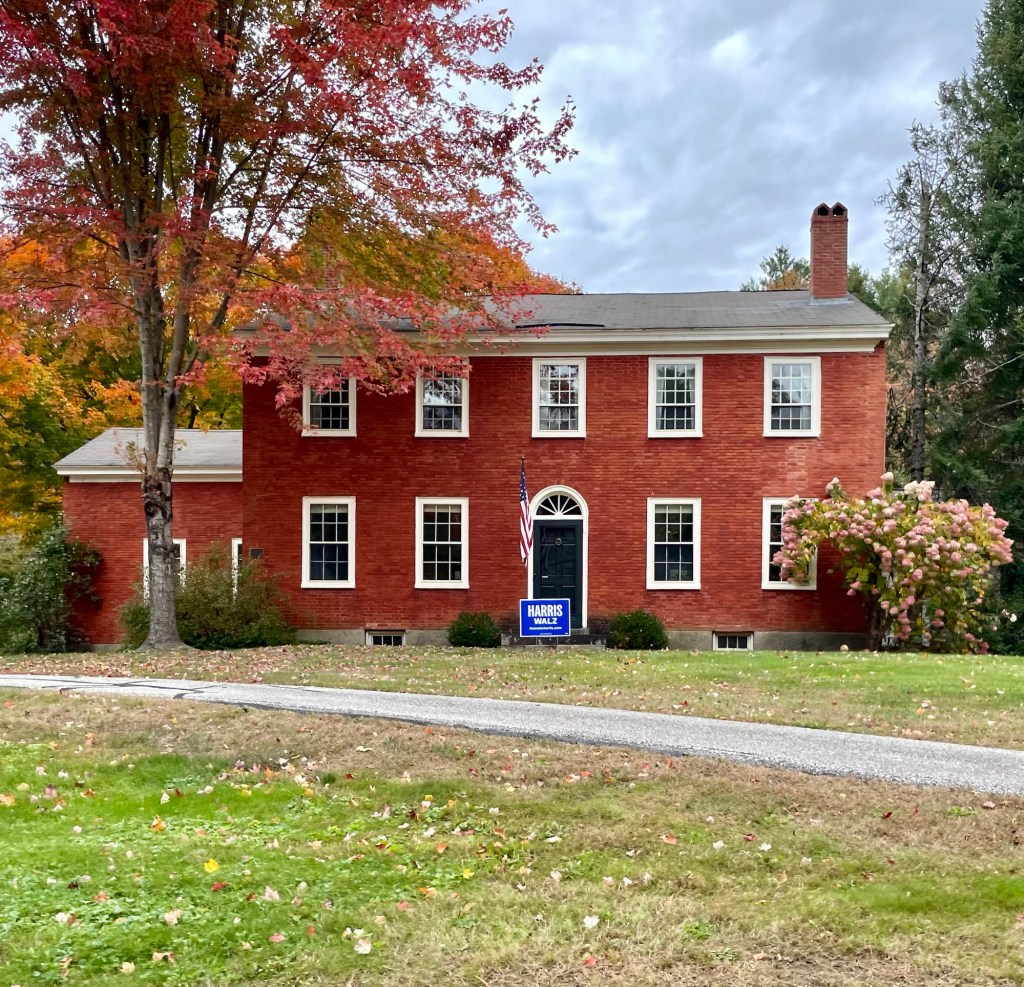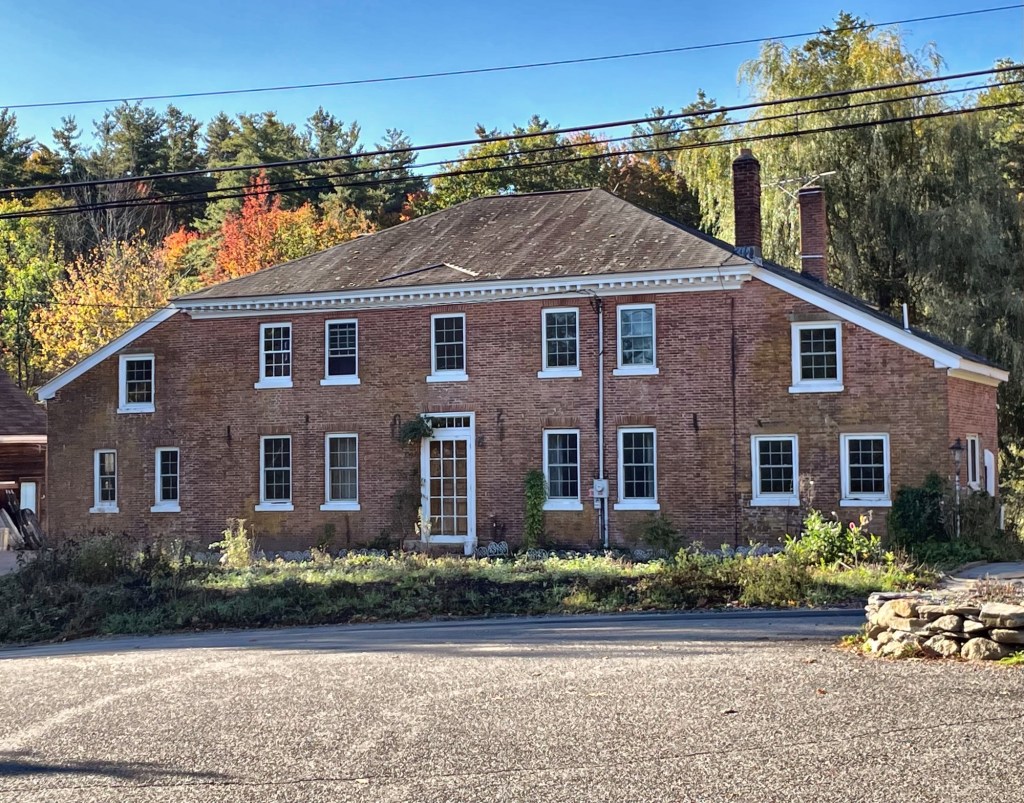
Auld-McCobb House // 1807

The Auld-McCobb House is set on a rocky ledge overlooking the absolutely charming downtown Boothbay Harbor, Maine. The brick, Federal-period double-house was built in 1807 for Jacob Auld and Joseph McCobb, two prominent local merchants. The two were engaged in a business partnership that included fishing, shipbuilding, and general mercantile pursuits, and were a dominant force in the local economy in the first quarter of the 19th century. The duo owned a good bit of land in town, eventually selling the five-acre Burnt Island to the Federal Government for a new lighthouse. McCobb married Auld’s sister in 1807, and it is thought that this is what necessitated the house’s construction at the time. The house is interesting, not only as a rare example of a double-house of the period, but also as one of the first (and only) brick homes in Boothbay Harbor.

Orin Witter House // 1821

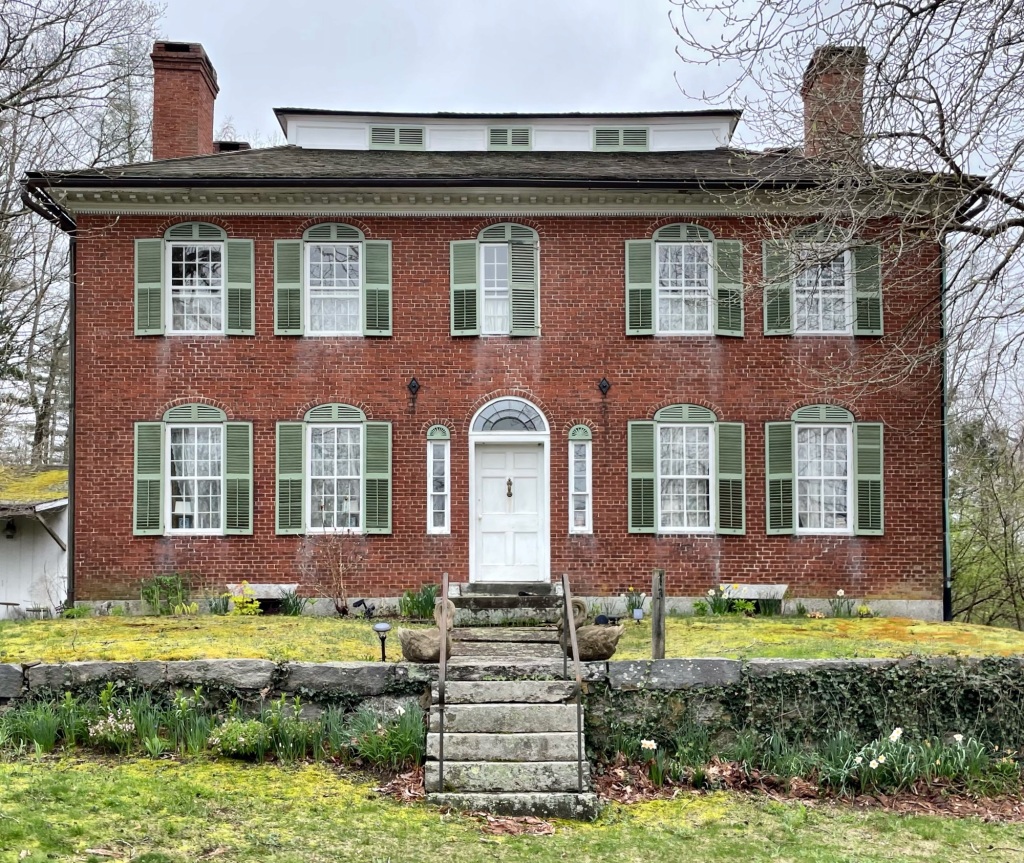
The Witter House of Chaplin, Connecticut was built in 1821 and owned by three generations of medical doctors all named Orin Witter. The Witter House stands on Chaplin Street and is among the finest Federal style residences in this part of the state. Orin Witter had the house built just before the town was incorporated in 1822 and would also serve as the town’s first Clerk. The Witter House is five bays wide, with paired chimneys at the ends of the hip roof. The centered entrance is flanked by arched sidelight windows and has a fanlight above. The fanlight detail is echoed by semi-elliptical fan louvers above each window. The roof has a monitor section at its center. Due to its architectural merit and state of preservation, the house was individually listed in the National Register of Historic Places.

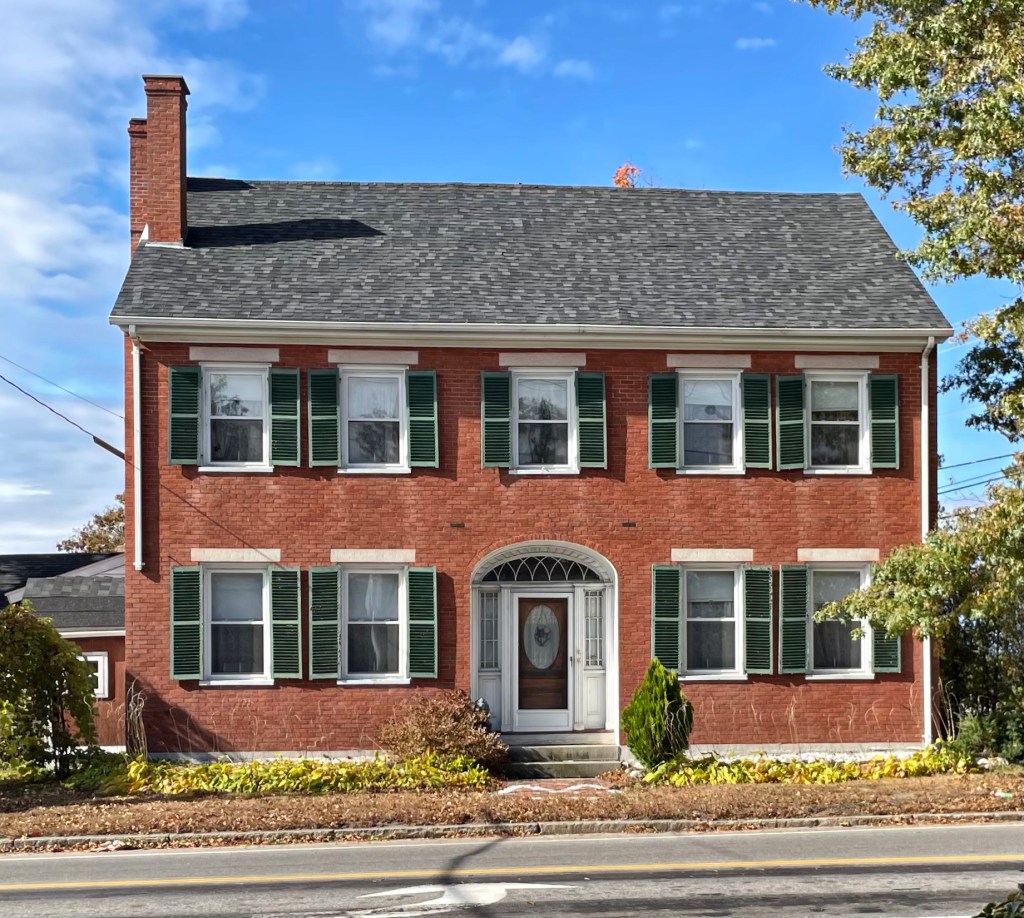
Lincoln-Chrysler House // c.1830

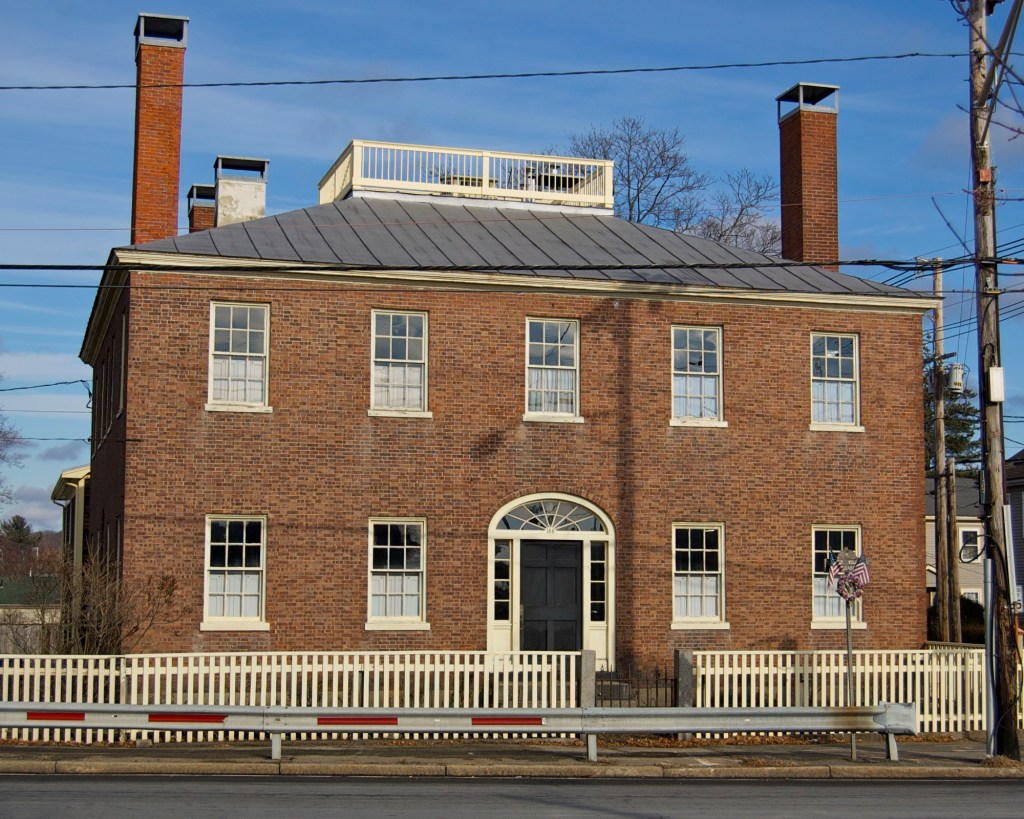
This charming brick Federal house sits on the main street in the quaint village of Chaplin, Connecticut. Due to its style, the house likely dates to 1830 as a late-Federal home as the village was seeing development. The original owner is not known, but the property was later occupied by Mason Lincoln in the mid-late 19th century. By the early 20th century, the property was owned by members of the Chrysler family, first by Mintin Asbury Chrysler (1871-1963), a botanist, mycologists and paleobotanist. The house was later inherited by Mintin’s son, Sidney Chrysler, who was a known puppeteer who converted some spaces in the property for puppet shows until his death in 1999.

Goodell-Bill House // 1828

One of the finest houses in the small town of Chaplin, Connecticut is this Federal manse, located right on the edge of the town center. The brick residence was built in 1828 by Isaac Goodell (1770-1856) who raised his family in the stately home. After Goodell’s death, the property was inherited by his daughter, Mary and her husband, Lester Bill. The house stands out for its painted brick walls, symmetrical facade with fanlight and sidelights at the entry, and the large Palladian window on the second floor.

Folger House // 1831

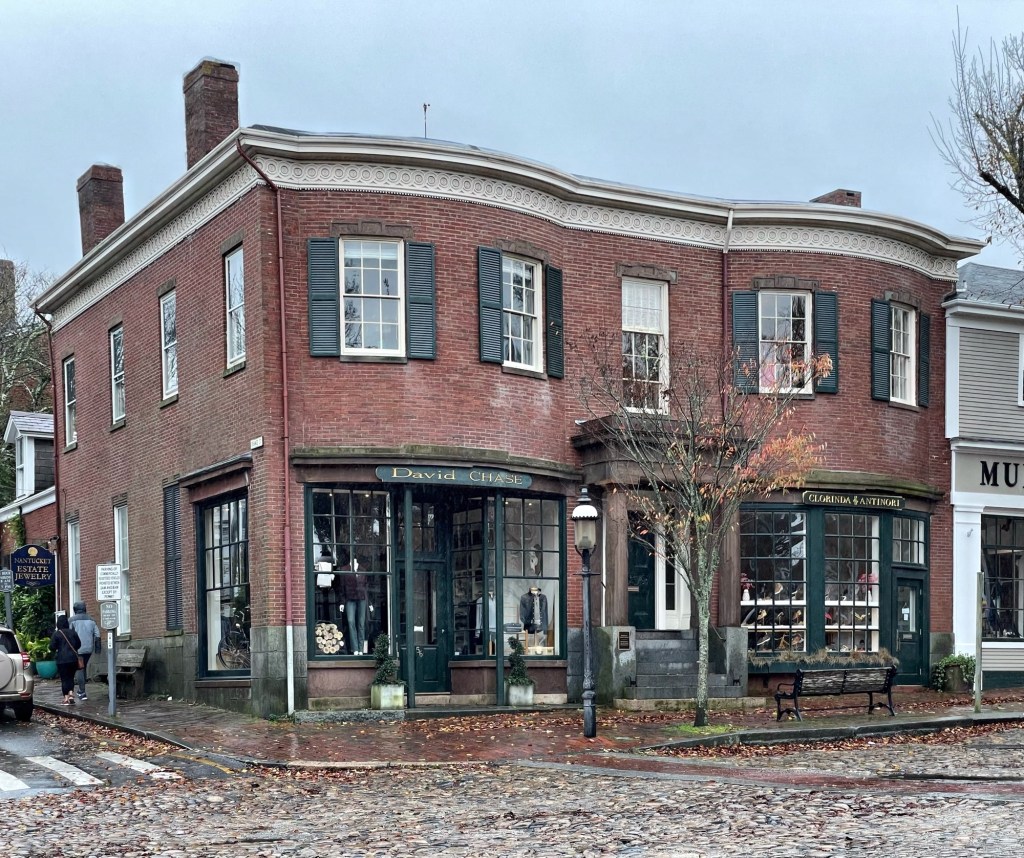
Located in the middle of the commercial Main Street on Nantucket, the 1831 Folger House stands as a fully developed example of the Federal style in masonry construction. The house’s double bow front, brownstone lintels and Ionic portico, guilloche frieze, and cast-iron railings are the finest of their type in the community. Although the house was turned into commercial use in the mid-19th century with the addition of storefronts and the removal of its original hip roof, it retains substantial architectural elements of a more decorated design than was customary even among Nantucket’s wealthiest merchants in this period. The house was built for Philip H. Folger, a merchant and it was inherited by his son upon Philip’s death in 1865.

Eddy-Cutler House // c.1806

Located next door to the Rebecca Maxwell Phillips House on State Street in Warren, Rhode Island the Eddy-Cutler House stands as possibly the finest brick Federal style building in the waterfront town. In July 1806, Benjamin Eddy purchased this house lot and began construction on his new mansion. Born in Warren in August 1772, he married Abigail Kelly in 1794 and began a career as a sea captain. Like many of the town’s wealthiest residents, Benjamin Eddy was engaged in the slave trade. Captain Benjamin Eddy was captain of at least three slave voyages, delivering 139 captives to the Charleston docks in June 1806 alone. In 1808, just before the “Act Prohibiting the Importation of Slaves” he purchased and imprisoned 176 Africans – the largest number ever carried on a Warren slave ship. Nineteen died during the return voyage. When he reached Charleston, South Carolina the remaining 157 people were sold into slavery. At the time, the sale would have returned nearly $33,000. He would return home to this mansion on money profited from human suffering, a story as American as apple pie. In 1871, the Eddy Homestead was transferred to Charles R. Cutler, a ship master and whaler who had many successful voyages to the Indian Ocean.

Bailey Homestead // c.1815

Located on a hill overlooking the Head Tide Village of Alna, Maine, this stately brick farmhouse has sat for roughly 200 years. According to old maps of the area, the property was occupied by the Bailey Family as far back as the land was surveyed in 1813. The property was owned by Ezra Bailey, who possibly built the house soon after as the village began to develop. By 1857, the property and its house were owned by I. H. Bailey, seemingly Ezra’s son, Isaac, who married his first cousin, Laura Palmer. The couple resided in the old homestead until they sold it in 1866, moving to Boston. The brick, Federal style house has a four bay facade with the entry door surrounded by a recessed arched relief. Above the door is a blind fan with sidelights.

Hezekiah Chase House // c.1820

In 1782, Stephen Chase (1740-1821) settled in present-day Unity, Maine, and built the first frame house there to establish a community. After Stephen’s death, his son, Hezekiah Chase (1774-1848) built this brick, Federal period home for his family, moving his father’s wood-frame house and adding it onto the rear, which remains there to this day. Hezekiah was a judge and was involved in town affairs ever since it was established. The bricks were made locally and were of fine quality. Hezekiah’s son George C. Chase (1844-1919) was raised here. He attended Bates College in its second class, and eventually became a professor of English there. In 1894 he became the second president of Bates College and oversaw a period of significant growth at the college. Chase became known as “The Great Builder” at the college. The old Chase House was listed on the National Register of Historic Places both for its architectural merit and its history and significance to the town and region.

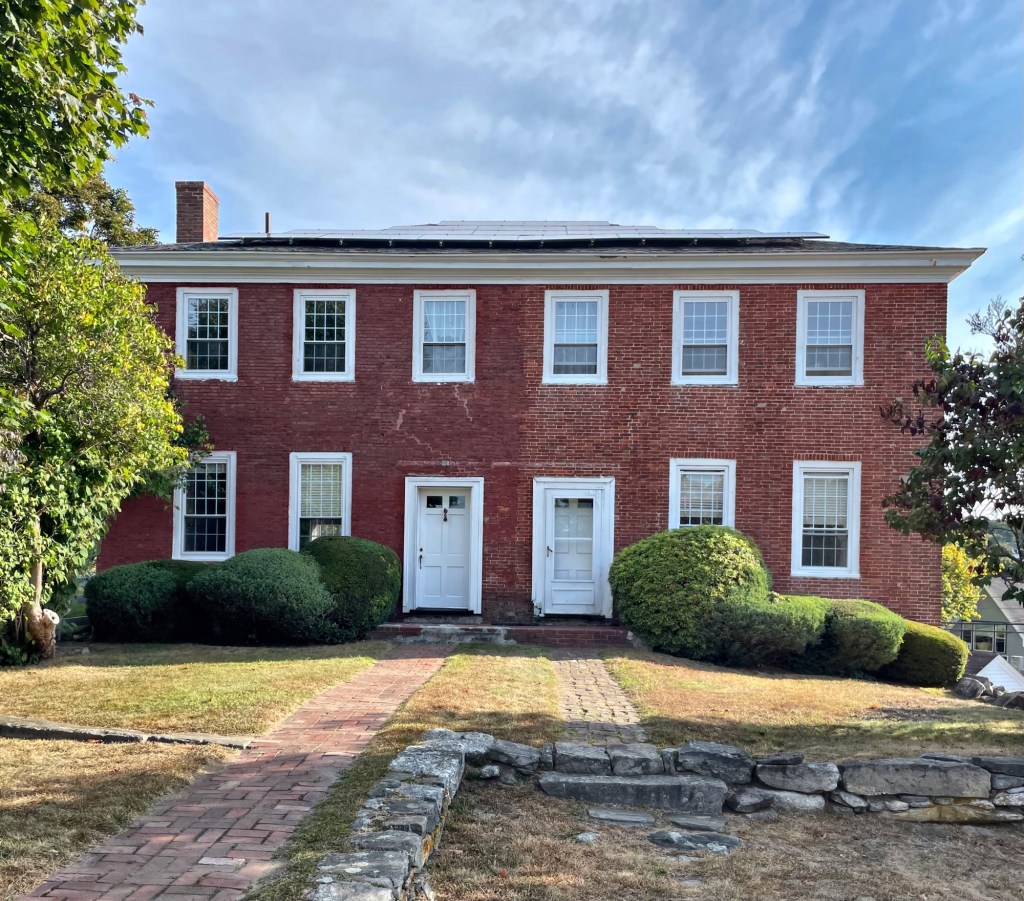
Lemuel Bartlett House // c.1813

When originally settled by Quakers, the town of Unity, Maine, was known as “Twenty-Five Mile Pond Plantation”. The name came from its being located on a pond, twenty-five miles from Fort Halifax in Winslow (creative, right?) The name was changed to Unity upon incorporation as a town in 1804. The town grew steadily through the first few decades of the 19th century and some wealthier residents began building homes. Lemuel Bartlett (1762-1834) built this house around 1813, which is a great, vernacular example of a Federal style residence in rural, central Maine. Lemuel was born in Plymouth, Massachusetts and fought against the British during the Revolution. After the war, he settled in present-day Unity around 1780 and became one of the original proprietors and land-owners here. He worked as a mason and farmer, and likely built this house himself. The property is now occupied by the Unity Historical Society.

Shapley Townhouses // 1815

The Shapley Townhouses in Portsmouth, New Hampshire sit on Court Street and were built around 1814-15, after the Great Portsmouth Fire of 1813 had destroyed the center of town. It was constructed to conform with the new Brick Law that required all new buildings in downtown Portsmouth to be built of “fireproof” brick. The paired townhouses are unusual in the city as a particularly well-preserved example of a Federal period double-house. The house was built by Captain Reuben Shapley, a ship’s captain and merchant. In about 1973, this building was remodeled into a temporary home and counseling center for troubled youth. Suffering from deferred maintenance and the direct proximity to the Strawberry Banke Museum, the Strawberry Banke Foundation purchased the double-house who rent out spaces inside to offices, providing a revenue stream to maintain and further showcase the history of the port town.