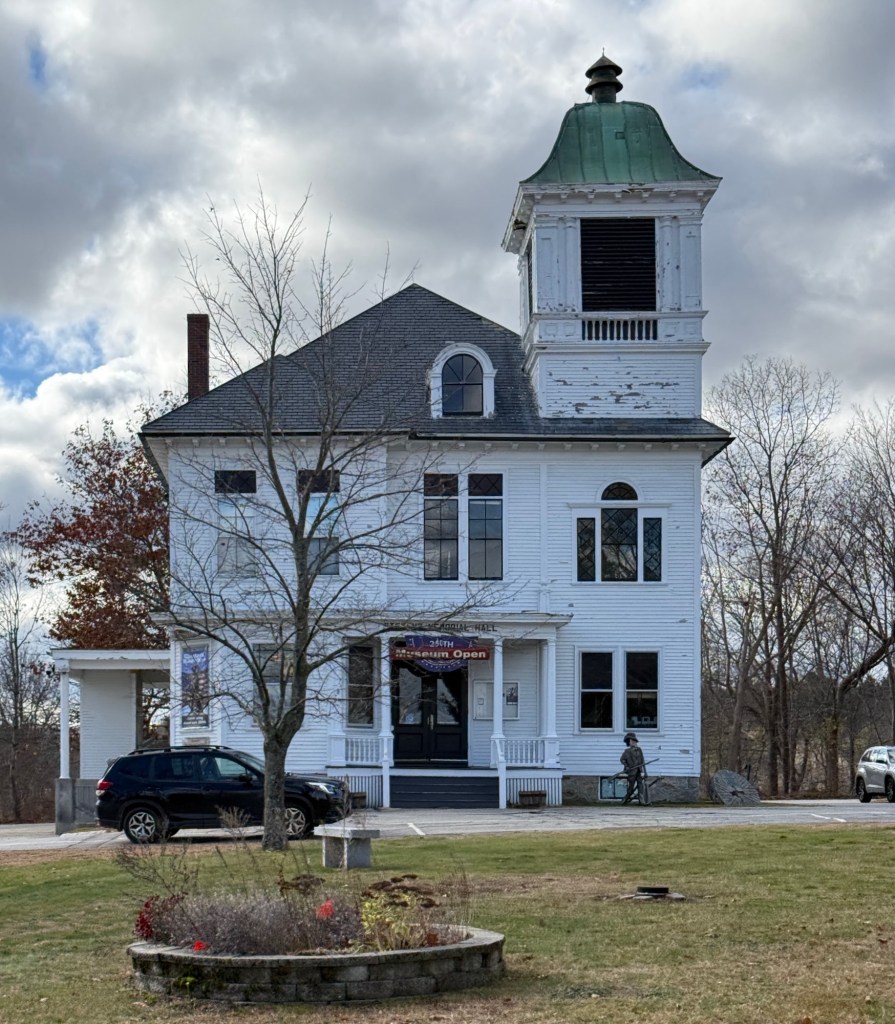
The small town of Chester, New Hampshire, was incorporated in 1722 but it wouldn’t be until 1728 that the community erected its first meeting house. The early meeting house served as the main civic and religious center for the village, under a single roof. The practice of early New England communities utilizing the Congregational meeting house for religious worship and conducting governmental functions was the standard, until members of minority faiths began to protest their taxes going to the maintenance and construction of Congregational meeting houses. The Toleration Act of 1819 was passed by the New Hampshire legislature and finally ended this practice by prohibiting towns, as corporate bodies, from raising public funds for the support of the gospel. Soon after this, other churches formed in Chester during the early 19th century but the town meetings continued to be held in the Congregational Meeting House, though it was rented for a fee by the selectmen. By the late 19th century, the town utilized an academy building for town meetings, and demand grew for a purpose-built town hall for the community, though little funds were raised to do so. That was until George Washington Stevens (1817-1908), a native of Chester, who saw great success in the Boston area in manufacturing, died and left his hometown funds for a new town hall. Architect, George G. Adams, was hired to furnish plans for the building, which blends the Queen Anne and Colonial Revival styles into a single eclectic design. Built in 1909 and opened in 1910, the Stevens Memorial Hall was utilized as the seat of the local government offices until 2000, when a former school nearby was converted to the Chester Town Hall. The structure is still owned by the town and possibly rented for events and town meetings.

