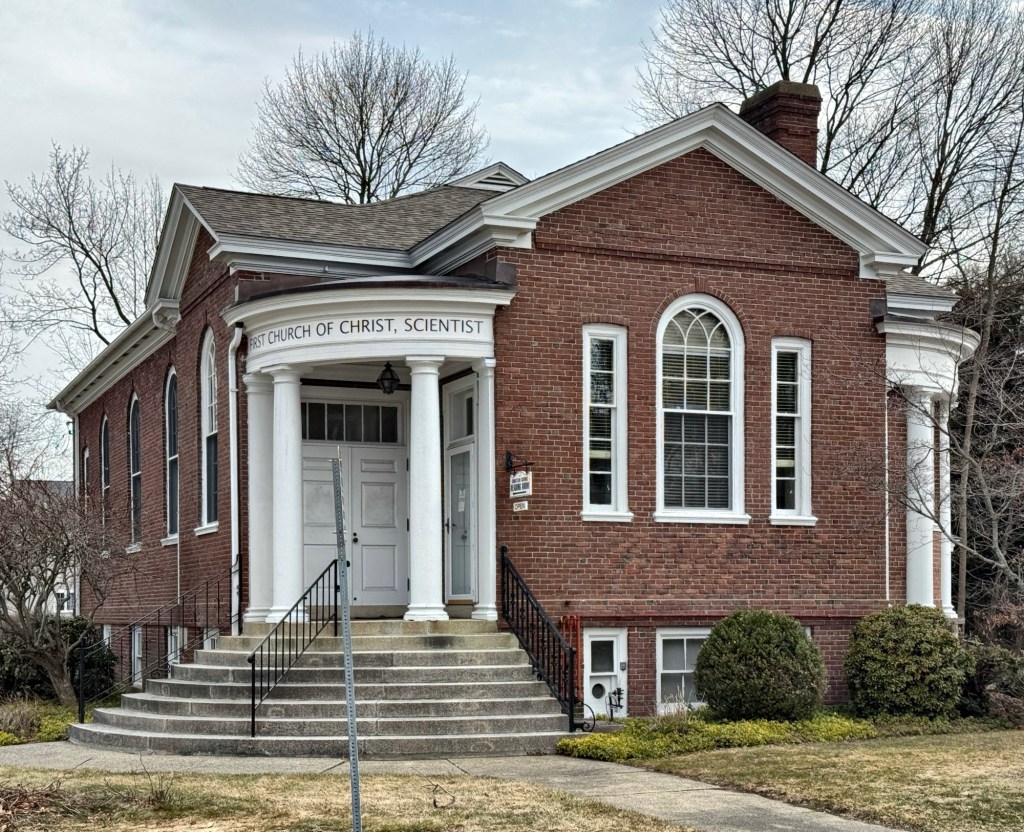
First Church of Christ Scientist, Sharon // 1928

Located on North Main Street in Sharon, Massachusetts, the community’s Christian Science Church was built in 1928 and is a great example of a diminutive chapel designed in the Colonial Revival style. Before it was completed, the Sharon Christian Science Society had been meeting and holding Sunday services in rooms at the Town Hall and other churches until funding was secured for their own house of worship. Customary of all Christian Science churches, the Christian Scientist in Sharon needed to have the building completely free of debt before being dedicated. The church was designed by architect Prescott A. Hopkins, who was likely the first person to receive a master’s degree in architecture at MIT before moving to Atlanta to became the first head of the Architecture Department at Georgia Tech. The building features a large Palladianesque window at the facade and twin curved entry porches at the facade.

Salem Christian Science Church – Witch Dungeon Museum // 1897

This Shingle-style church building on Lynde Street in Salem, Massachusetts, was built in 1897 as a satellite chapel for the First Congregational Society in Salem. The chapel was constructed from designs by the Boston-based architect Edward B. Stratton. From 1908 to 1979, the building was owned by the Christian Science Church and was eventually sold to private ownership in 1979, where it has since been home to the Witch Dungeon Museum. The building has retained much of its original design, including the large Gothic sanctuary window, tower, and decorative trusses at the gable. Sadly, the original shingles have been replaced by later siding.  

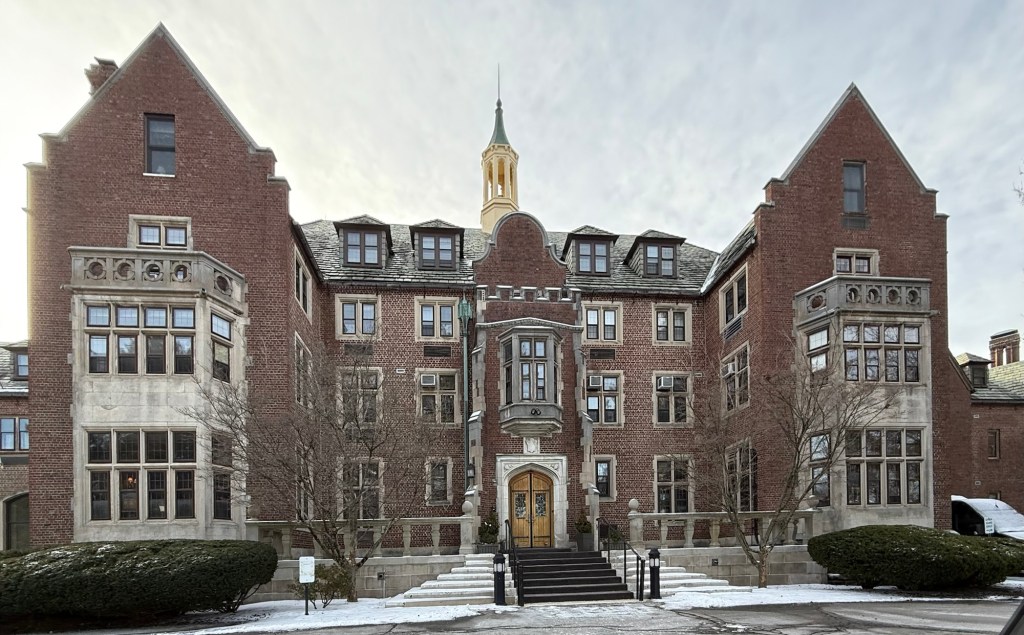
Chestnut Hill Benevolent Association Buildings // 1918

In 1915, Mary Longyear, a faithful follower of Mary Baker Eddy and the Christian Science faith, purchased the land from the Lyman Estate in Brookline, Massachusetts, and donated to the Christian Science Church. Planning began immediately to build a facility as a “temporary resort where those seeking relief through Christian Science may go to find practical assistance in overcoming their difficulties.” The need for a hospital/sanatorium was established by Mary Baker Eddy as early as 1906, and it would be over a decade before this need was filled. The complex was built in stages beginning in 1918 with this building, the main building, observation tower and a powerhouse designed by Clarence T. McFarland. The buildings were designed in the Tudor Revival style, blending in with the many country estates in this section of Brookline. The complex would train nurses and treat patients for over 100 years and remains an important institution into the 21st century.