Third Congregational Church of Chicopee // 1868

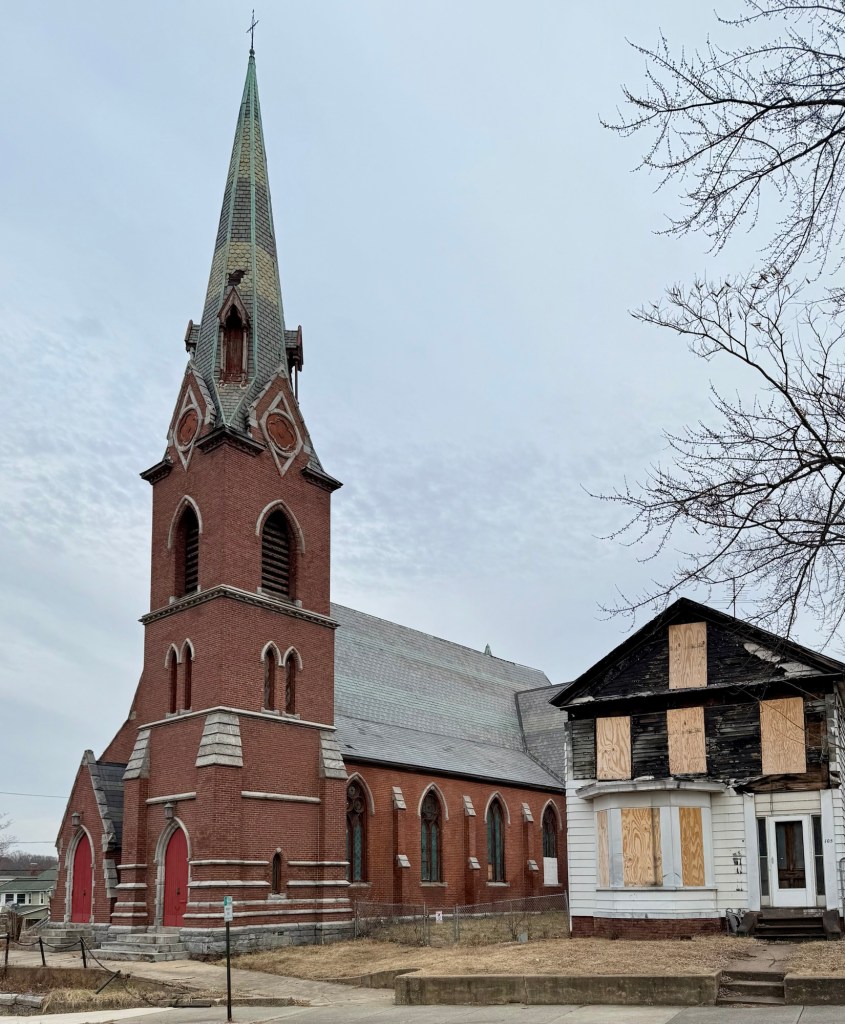
The Third Congregational Church of Chicopee was built on a prominent lot on Springfield Street in 1868, replacing the congregation’s first church there, which was outgrown. The present building was designed by Charles Edward Parker, a Boston-based architect, who was an expert in Gothic architecture. He would design the Chicopee City Hall just years later. The building is constructed of brick and atop a granite base and features lancet (pointed arch) doors and windows, a corner steeple, and steep gable end with large rose stained glass window. The interior is preserved as well. Due to shifting demographics in Chicopee in the early 20th century, the church merged in 1925 with the Central Methodist Episcopal Church, forming the Federated Church of Chicopee. The congregation eventually closed and the church has sat vacant in recent years, and was briefly listed for sale in 2024, 9,339 square feet for just $200,000.

West Cornwall Congregational Church // 1877

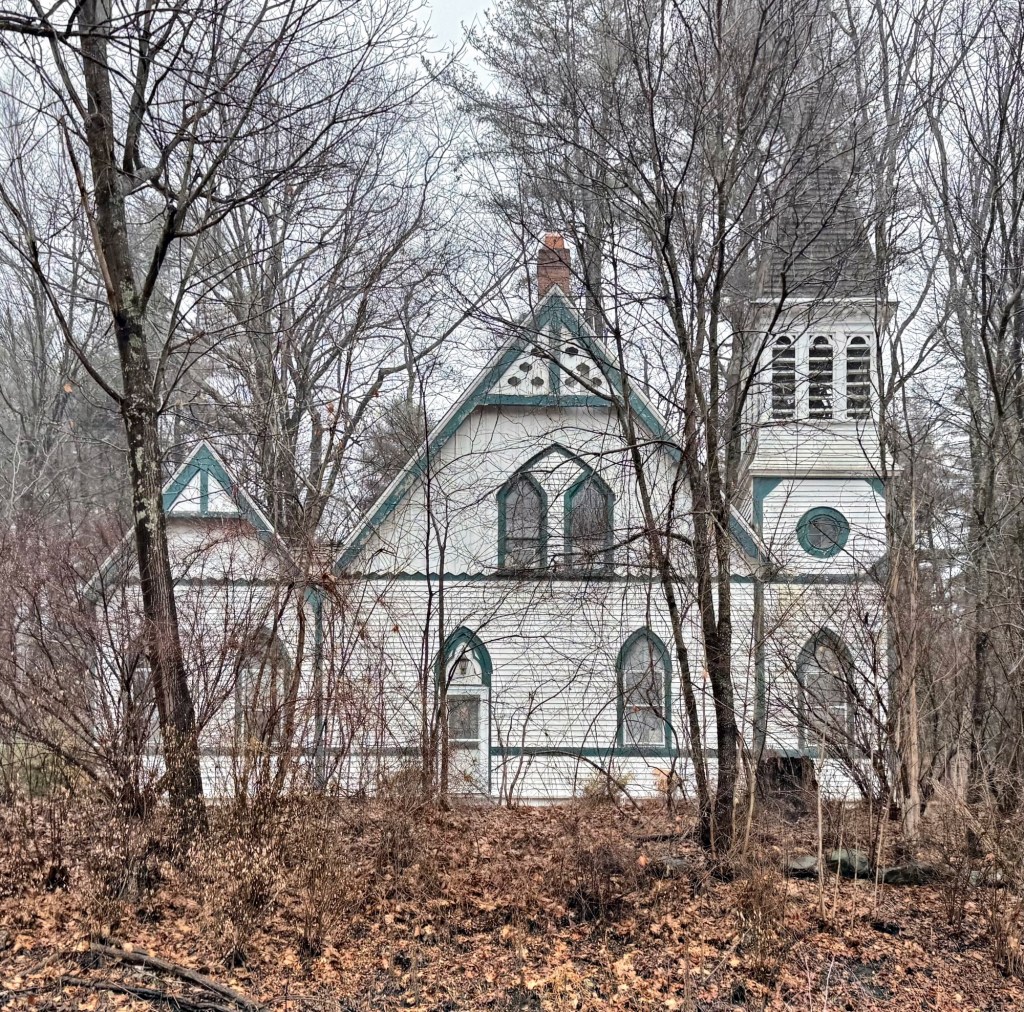
One of the few Gothic style buildings in the enchanting town of Cornwall, Connecticut is this large church-turned-residence in West Cornwall village. As West Cornwall developed in the second half of the 19th century into the largest district in town, residents here began to discuss the idea of building their own Congregational church, rather than travel to the central village church to attend services. In the 1870s, West Cornwall congregationalists raised over $4,000 to acquire a building lot and erect this fine church. Dedicated in January 1878, the wood-frame church is a rare example of the Victorian Gothic/Stick styles with clapboard siding, lancet (pointed arched) windows, a corner tower with belfry, vertical sheathing in the gables, and ornamental applied stickwork. The church closed in the 20th century and was converted to a private residence, and is presently for sale!

Old Swedish Lutheran Church, Newport // 1896

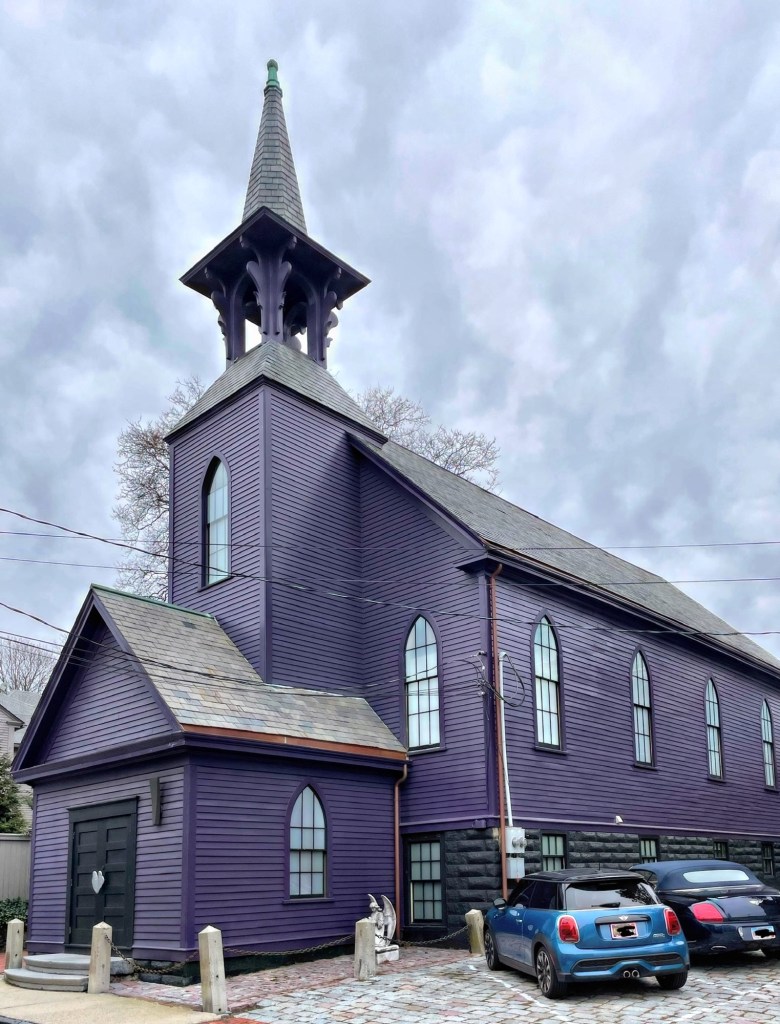
By the end of the 19th century, the summer colony of Newport, Rhode Island continued to see the erection of large summer cottages which required large staffs to maintain them. Scandinavian girls were preferred by the wealthy residents for maids and drivers, and beginning in the 1870s; they joined other ethnic groups, such as the Irish in establishing their own communities in the coastal city. In 1892, organized under the New York Conference of the Augustana Synod, a Lutheran Church for Swedish-speaking residents was established. A small lot on Corne Street was purchased and work began on this small wood-framed church. Completed in 1896, the church was designed by by architect James W. Smith in the Gothic Revival style. It has a central bell tower and a spire and the interior of the church originally had an hourglass pulpit. Gold and white decorations surrounded an oil painting of the risen and ascending Christ. In the 1950s, the congregation purchased land on Broadway in the north end of Newport and built St. Peter’s Lutheran Church. The Corne Street church was sold and is now a private residence.