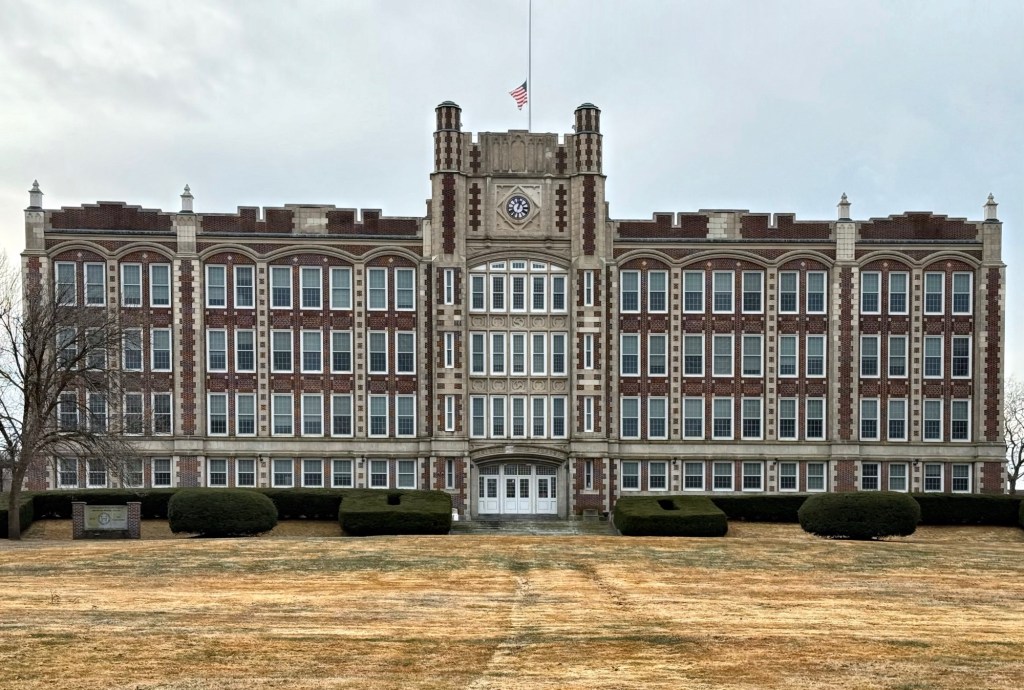
Old Chicopee High School // 1917

The Old Chicopee High School building is located at 650 Front Street, between the two major population hubs of Chicopee Center and Chicopee Falls and is one of the finest examples of Collegiate Gothic/Neo-Gothic Revival architecture in Massachusetts. The school building was constructed in 1917 from plans by architect, George E. Haynes as a central high school, a single building where pupils from all over the city could be educated. The population growth of Chicopee in the early decades of the 20th century necessitated additions and reworking of the spaces of the building, eventually outgrowing the building after WWII. In 1961, plans for a contemporary high school were completed and this building became a middle school for the City of Chicopee. Architecturally, the building stands out for its siting and high-quality design. The main facade features a central clock tower which contains the main entrance. The use of brick with cast stone trim and the castellated parapet add much dimension to the large building. The City of Chicopee have done a commendable job maintaining this important landmark.

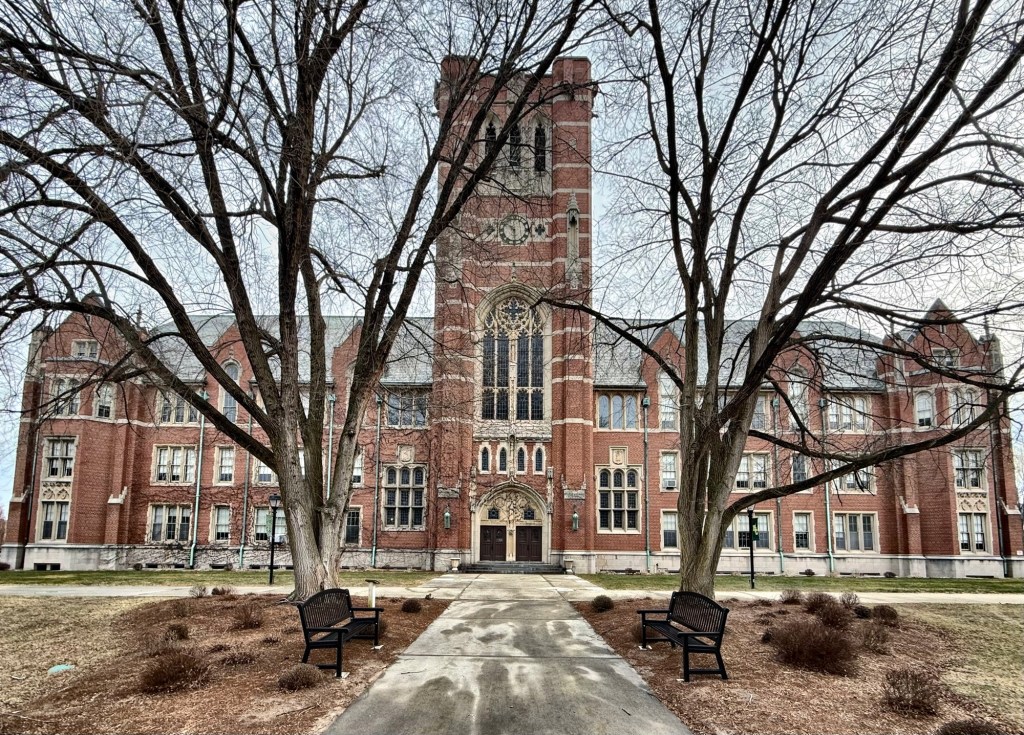
Administration Building – Elms College // 1932

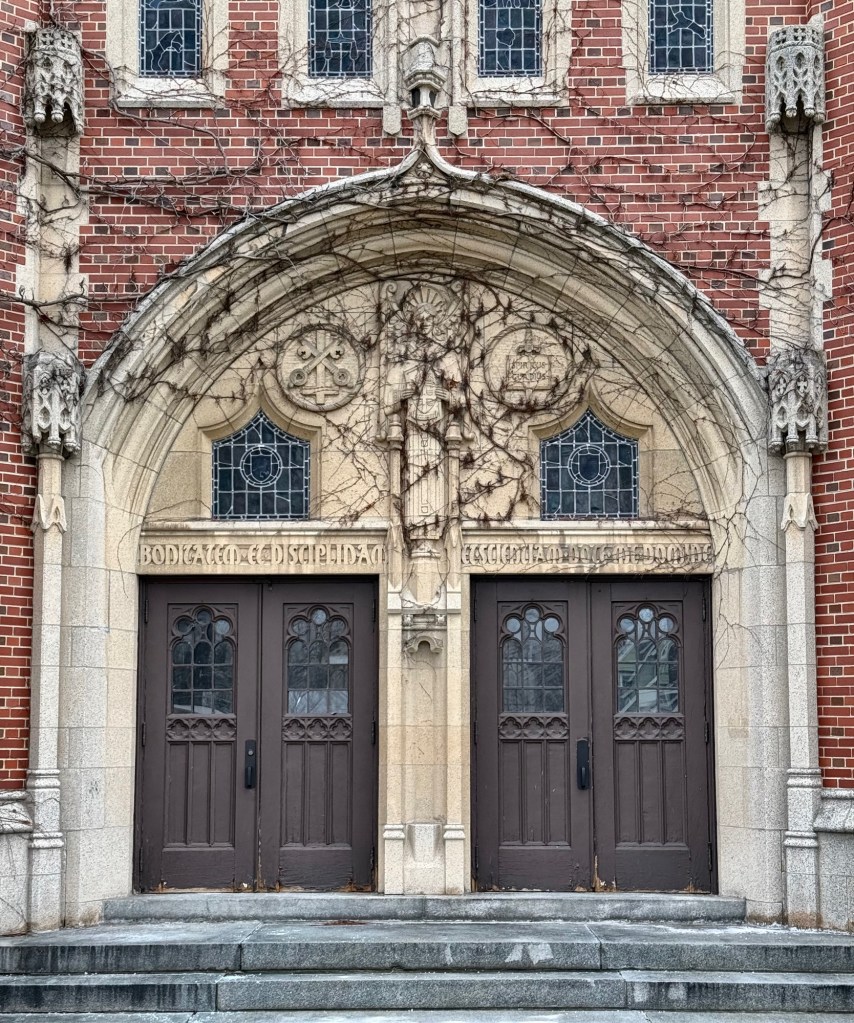
Elms College in Chicopee, Massachusetts began as the Academy of Our Lady of the Elms, a Catholic boarding school for girls established in Pittsfield by the Sisters of Saint Joseph in 1897. The academy was relocated to Springfield Street in Chicopee through the efforts of Bishop Thomas D. Beaven in 1899. The Academy provided elementary and secondary education with a Normal School component that prepared young women for careers in teaching. In 1924, Bishop O’Leary announced the intention to expand the school into higher education, creating a women’s college. The college charter was approved in 1928 and the Academy became the College of Our Lady of the Elms. Planning and construction of the Administration Building (later renamed Berchmans Hall in 1983) began immediately after the incorporation of the College in 1928. Designed by John W. Donahue, the official architect of the Diocese of Springfield at the time, Berchmans Hall is a landmark example of the Collegiate Gothic/Neo-Gothic style that proliferated higher education and ecclesiastical buildings in the early decades of the 20th century. Completed in 1932, the new building included offices, modern classrooms and laboratories. The back section contained a gymnasium in the basement and an auditorium on the main floor. The building remains the main building on the Elms College campus and serves as an important visual anchor to the school.

Yale University – Phelps Hall and Gate // 1896

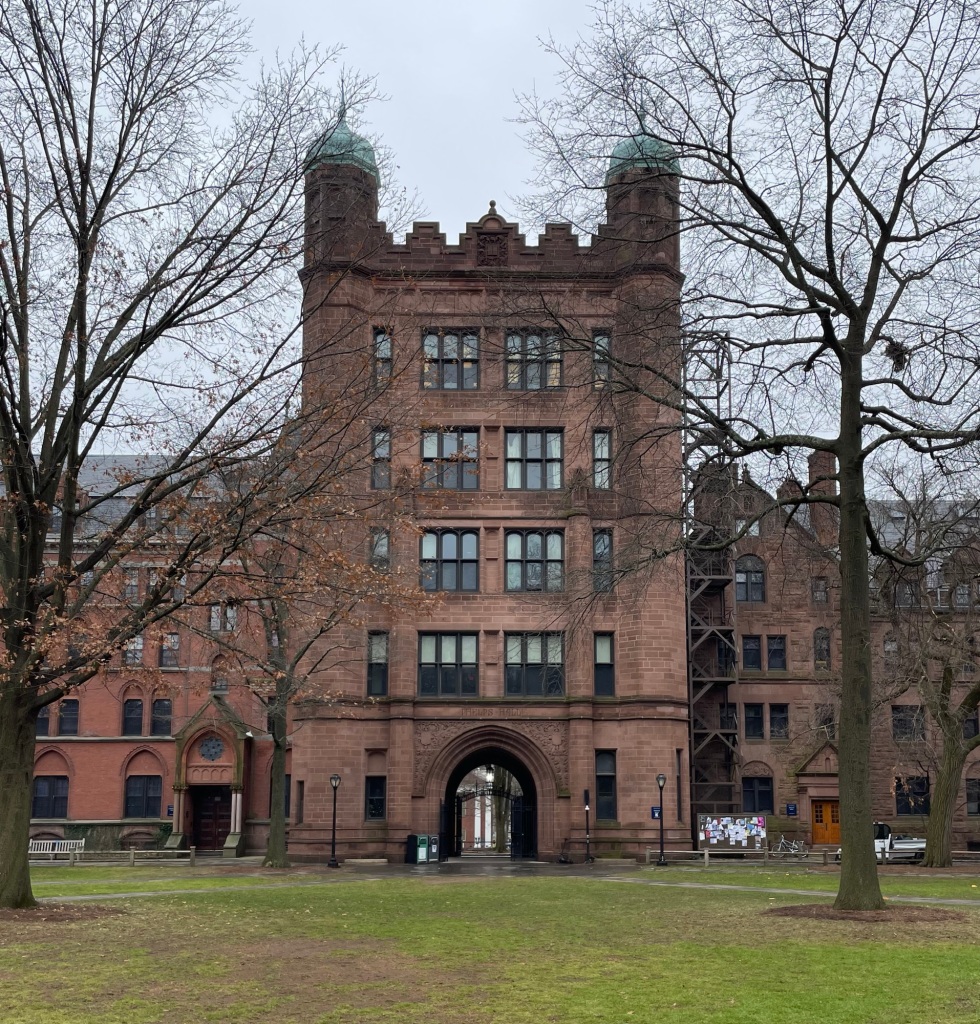
After Lawrance and Welch halls (previous two posts) were built on the eastern edge of Yale’s Old Campus, there was a small space between the two that needed to be enclosed to provide a true cloister for students, shielding them from the noise and ever-developing Downtown of New Haven. Architect Charles C. Haight designed the new hall to resemble a medieval gatehouse. The simple, tall rectangular mass has octagonal towers at each corner with copper domes on top and a crenelated parapet resembling an old English castle spanning between them. On the ground floor is the Phelps Gate, the main entrance to the Old Campus from the east. Its namesake was the late William Walter Phelps, an 1860 Yale graduate who served as a Congressman and as ambassador to Germany and Austria-Hungary. The building holds an important role in the annual commencement ceremonies, which begin in the New Haven Green and pass through to the Old Campus through this gateway.

Yale University – Bingham Hall // 1928

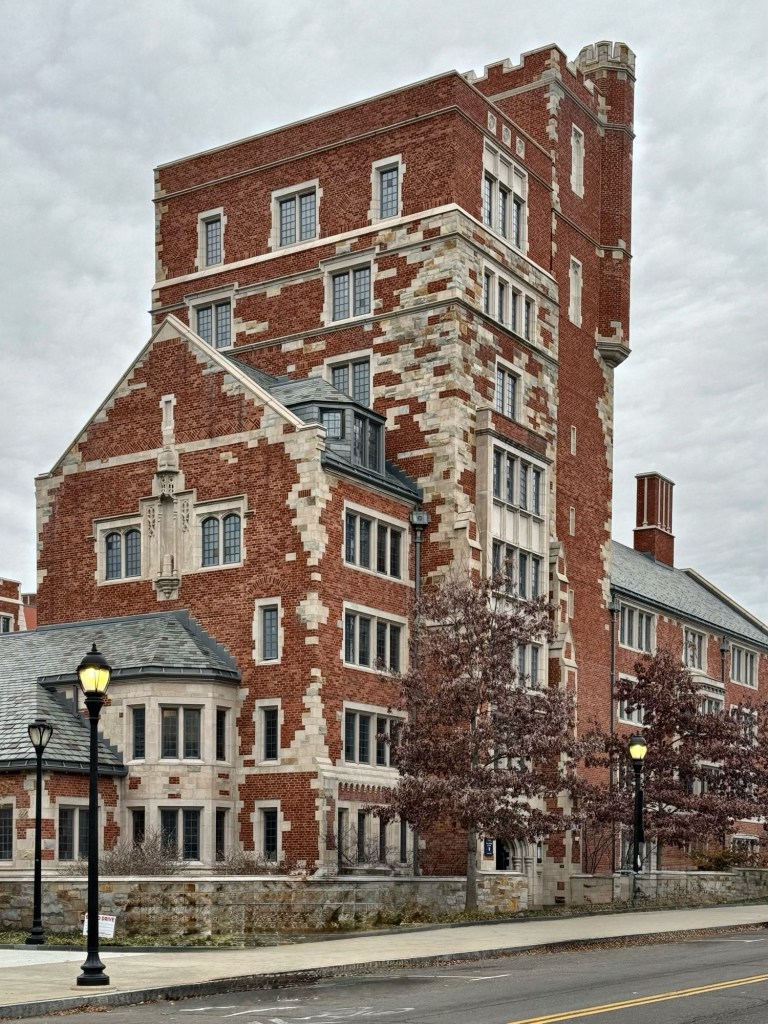
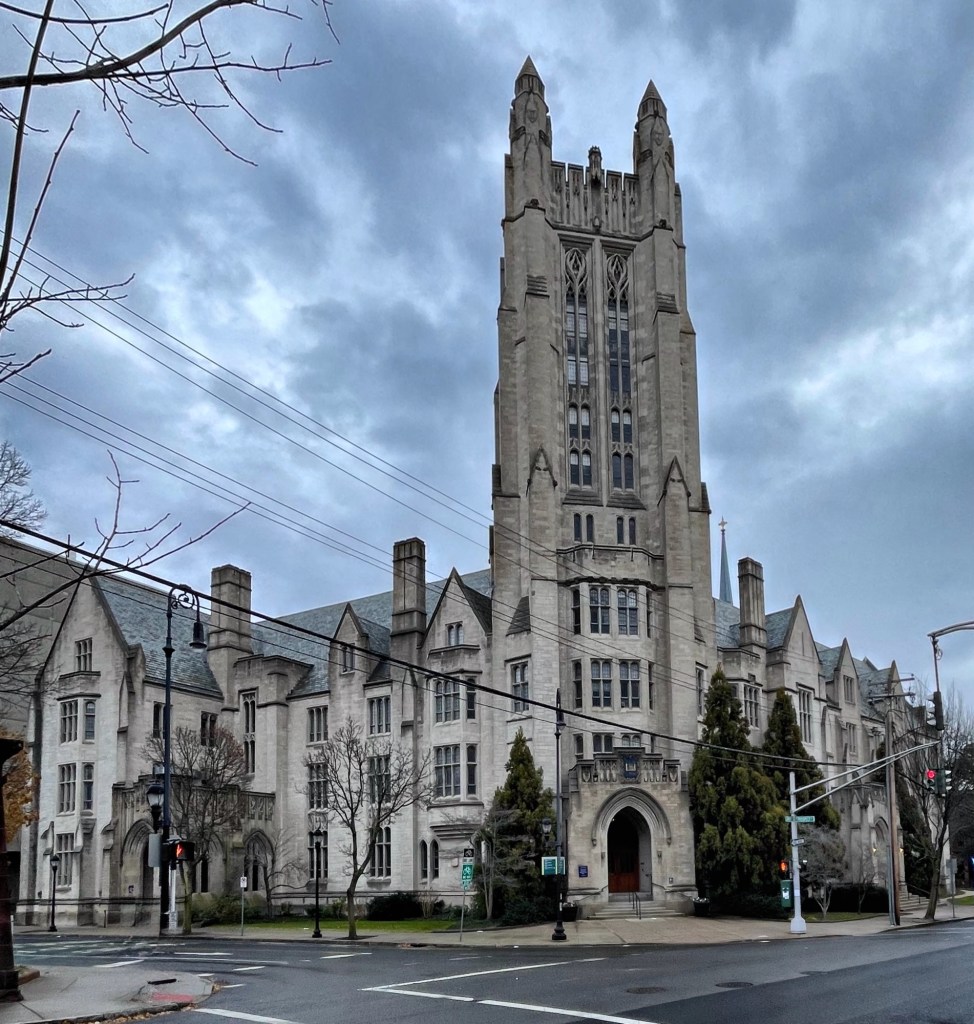
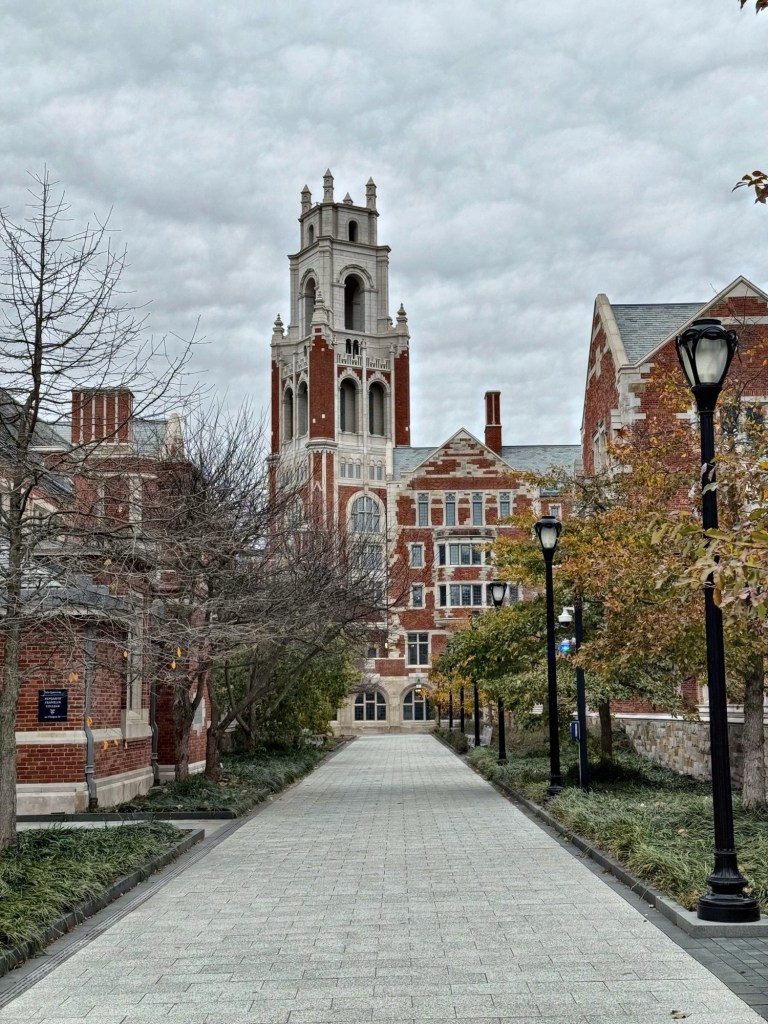
One of my (many) favorite buildings at Yale University is Bingham Hall, a monumental and landmark example of the Collegiate Gothic architecture style. Built in 1928, replacing the 1888 Osborn Hall (last post), Bingham Hall was constructed as an inward-facing freshman dormitory by architect, Walter B. Chambers, who had just overseen the completion of his first building at Yale, the Colonial Revival style McClellan Hall. Built of Longmeadow brownstone, Bingham Hall largely constructed from funds donated by the children of Charles W. Bingham (Yale, 1868), a Cleveland based businessman. The building stands five stories with a massive nine-story corner tower and helped solidify Yale’s iconic Collegiate Gothic architecture for the future buildings and growth as well.

Yale University – Vanderbilt Hall // 1894

Like many other buildings on campus, Vanderbilt Hall is named for its wealthy sponsors, but its foundation is one of family tragedy. One of Yale’s stunning Collegiate Gothic structures, the building is named after William Henry Vanderbilt II (1870-1892), who attended Yale in the early 1890s. William contracted typhoid fever from a water pump while touring the western United States and died during his junior year. His father, railroad tycoon Cornelius Vanderbilt, constructed Vanderbilt Hall in 1894 as a memorial to his son and donated it to the University. The highly prized Vanderbilt room, which is located above the archway, is apparently one of the finest residential spaces on the campus. Architect Charles C. Haight designed the building which enclosed the southern edge of the yard, created a gateway, and is one of the early architectural statement pieces for the campus in the Collegiate Gothic style. Haight would receive later commissions at Yale based on his work on Vanderbilt Hall.