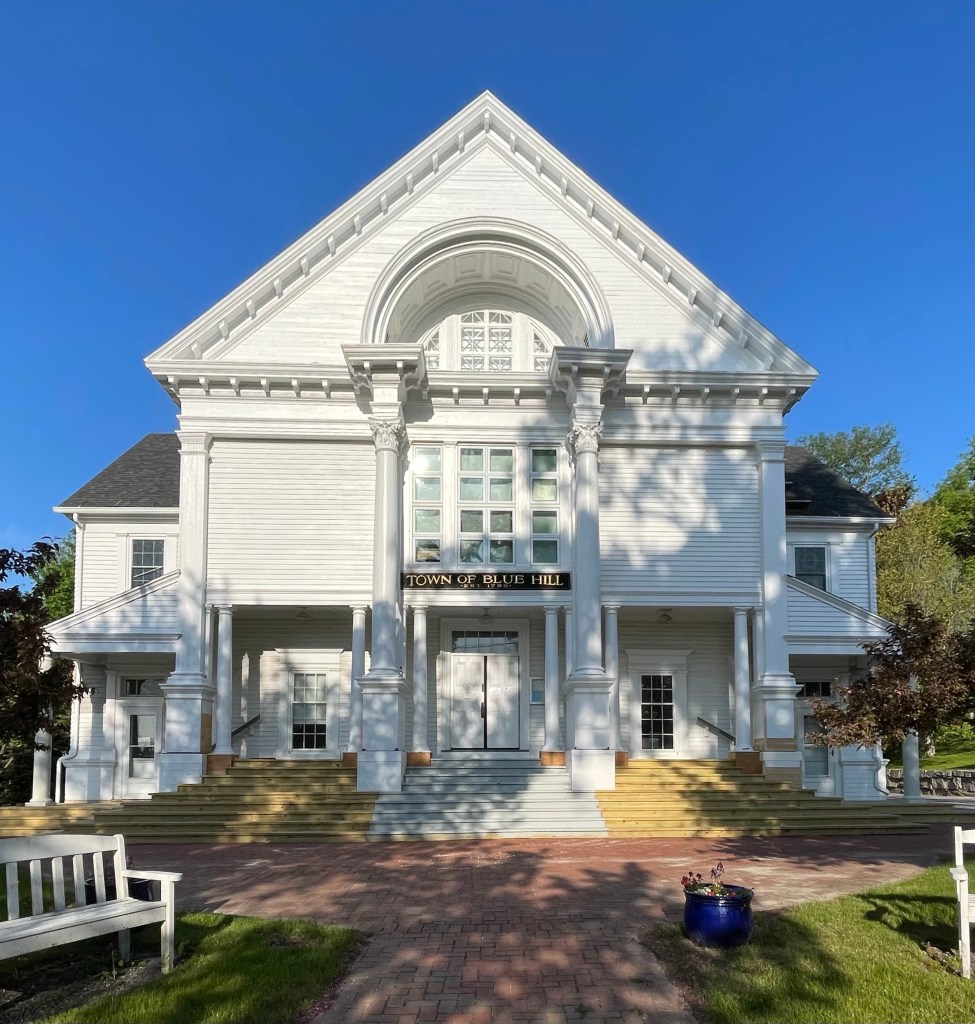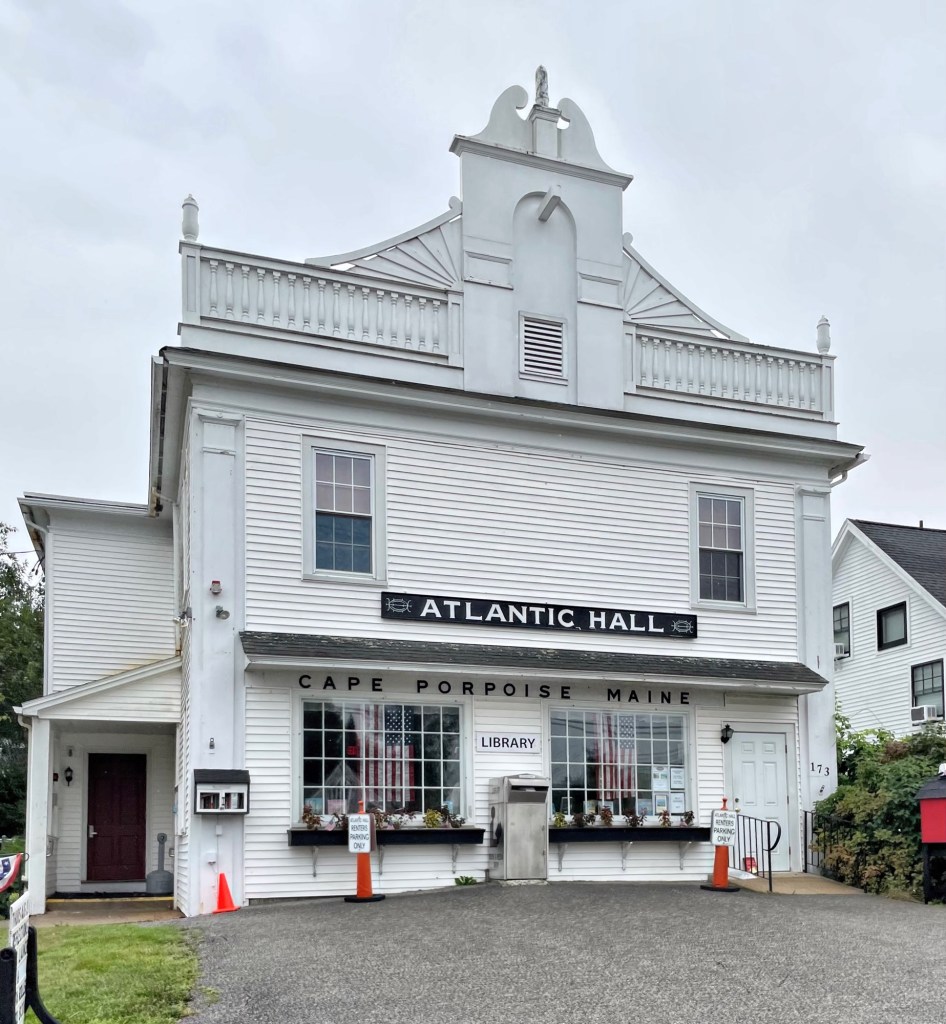
Blue Hill Town Hall // 1895

Blue Hill is a charming coastal town in Hancock County, Maine that retains so much of the charm that has been lost in many other coastal New England villages. Originally settled by the Penobscot Tribe, the town as we know it was incorporated in 1789 under the name “Blue Hill”, named after the summit overlooking the region. The town thrived early as a lumber and wood shingle exporter, later shifting to shipbuilding. The town was also noted for the quality of its granite, some of which was used to build the Brooklyn Bridge, New York Stock Exchange Building, and the U.S. Custom House at Norfolk, Virginia. In 1876, local quarries employed 300 workers. The town’s wealthy summer residents likely sought a new Town Hall for Blue Hill, as in the 1890s funding was acquired to erect a new building. It came as no surprise that George Albert Clough, an architect born in Blue Hill would furnish the plans for the new town hall. George was the son of Asa Clough an early settler and shipbuilder in town. He moved to Boston to work as an architect and later became the City of Boston’s first “City Architect” designing municipal buildings. For the Blue Hill Town Hall, he designed it in the Colonial Revival style, which remains well-preserved to this day.

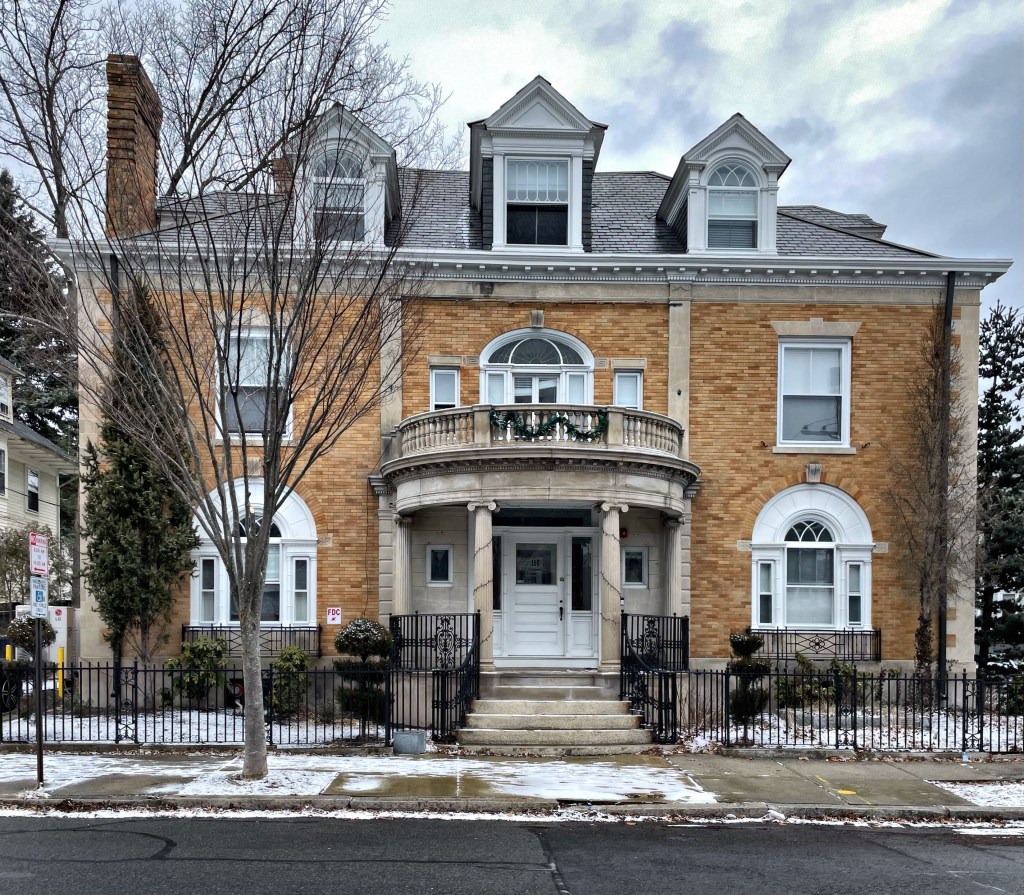
Sarah and John Tillinghast House // 1904

This stately yellow brick Colonial Revival sits on the edge of the College Hill neighborhood of Providence, and I couldn’t help but to take a few photos! This residence was completed in 1904 for Sarah and John Tillinghast in the later years of John’s life (he died less than two years of moving into this home). The house exhibits a large semi-circular portico with balustrade above, the portico is flanked and surmounted by Palladian windows with elliptical reveals. The house was recently proposed to serve as a suboxone clinic, but that was shut down by neighbors. It appears to be divided into residential units now.

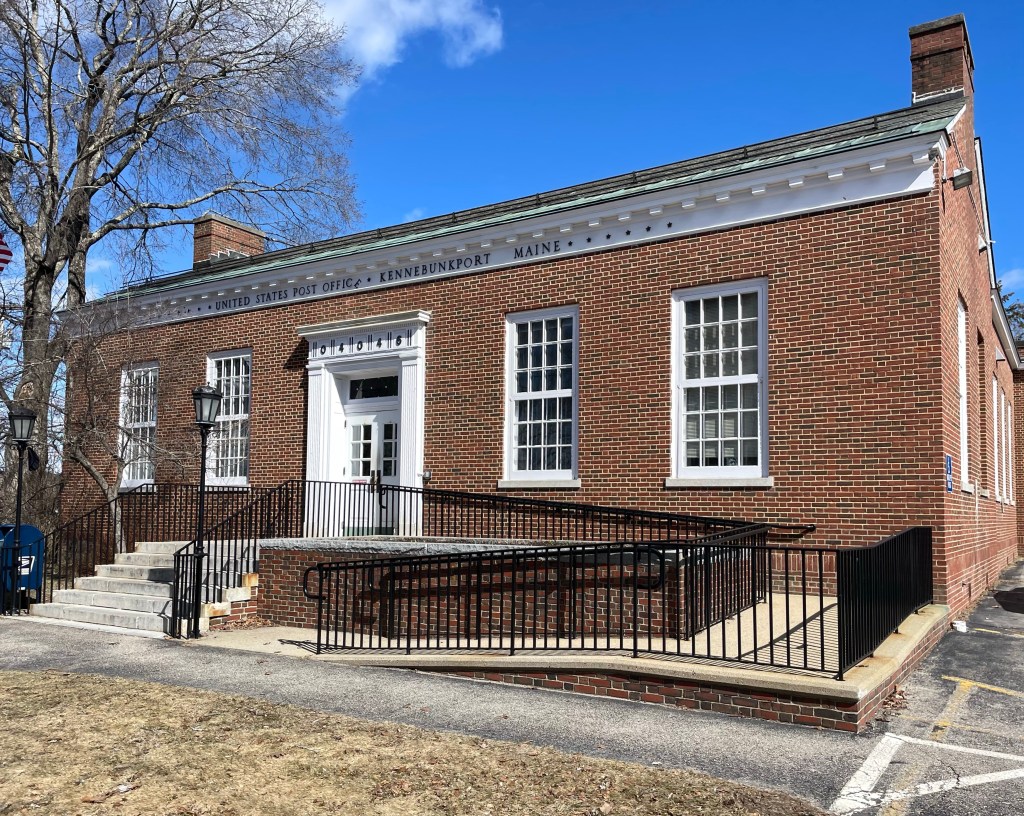
Kennebunkport Post Office // 1941

During the Great Depression, the federal government built over 1,100 post offices throughout the country as part of the New Deal’s Federal Works Agency. Many of the post offices funded and built in this period were designed by architect Louis Simon, Head of the Office of the Supervising Architect for the U.S. Treasury. Few architects had such a role in designing buildings nationwide than Federal architects who designed buildings ranging from smaller post offices like this to courthouses and federal offices. They really are the unsung designers who impacted the built environment in nearly every corner of the nation. As part of the Treasury Department Section of Fine Arts, artists were hired to complete local murals inside many post offices built in this period, depicting local scenes and histories of the towns they were painted in. In Kennebunkport, artist Elizabeth Tracy who submitted a preliminary sketch of her piece “Bathers” which was approved depicting a beach scene, though the townspeople had not been consulted. Unfortunately, the opinion of a vocal part of the Kennebunkport populace was highly negative to Tracy’s painting, largely due to the fact that her beach scene depicted people on a beach in adjacent Kennebunk, not Kennebunkport! Within a few years, the townspeople gathered funds to hire artist Gordon Grant to paint a satisfactory replacement mural in 1945. The new mural remains inside the post office.

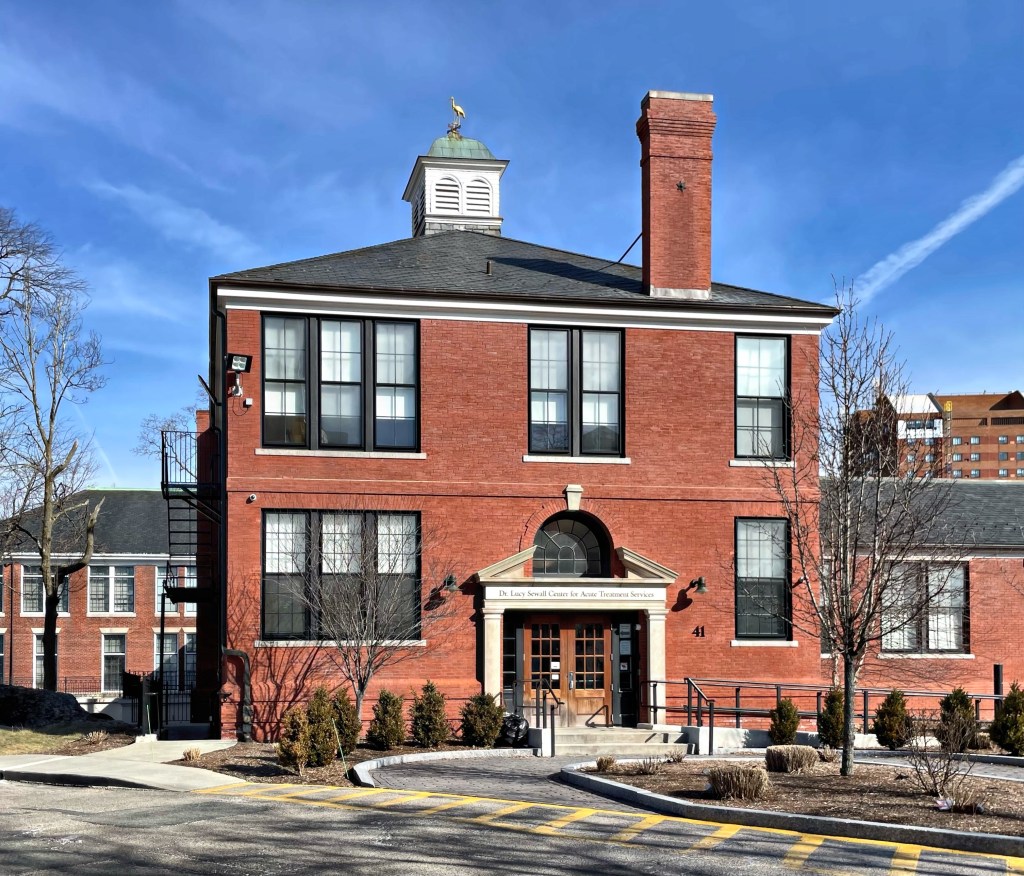
Dimock Center – Sewall Maternity Building // 1892

As the New England Hospital for Women and Children continued to grow in the decades following its founding in 1862, expanded facilities were needed to deal with increased patients along with new nurses and doctors to treat them. Land was acquired across from the Cary Cottage and Zakrzewska Building, and a second building campaign began to expand the facilities and grow the women’s hospital. The management of the hospital did not hire Cummings and Sears, but went with architect John A. Fox to furnish plans for a new maternity building. The Sewall Maternity Building was designed in the Colonial Revival style, a relatively modest example that features a unique broken pediment over the door housing a large window. In 1916, the building was expanded by an addition at the rear which enclosed a central courtyard, it was also designed by John Fox.

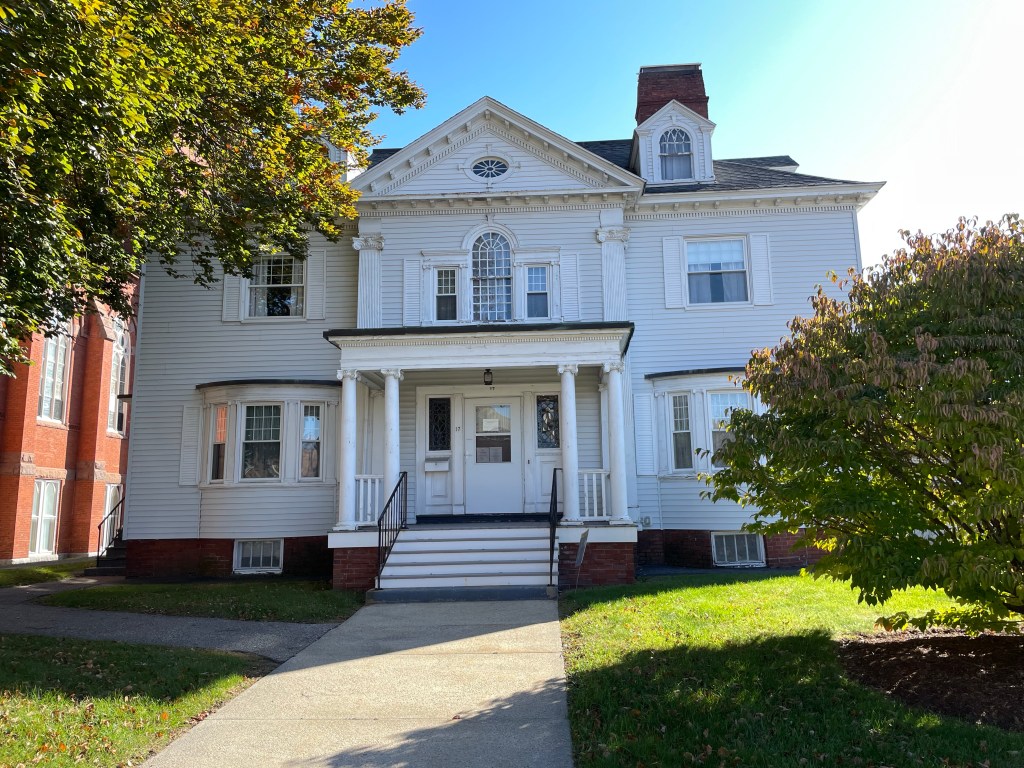
All Saints Parish House // 1893

As soon as the All Saints Church of Ware was completed, work immediately began for the parish house which was to be built nextdoor. It is not clear who was retained as the architect, but it could have been Patrick W. Ford, who designed the high-style Victorian Gothic church. The design is almost the complete opposite of the church, in that the parish house is of wood-frame construction, modestly scaled, and is Colonial Revival in style. The parish house features nice proportions with its symmetrical facade, pedimented central bay framed by pilasters and the large Palladian type window at the center.