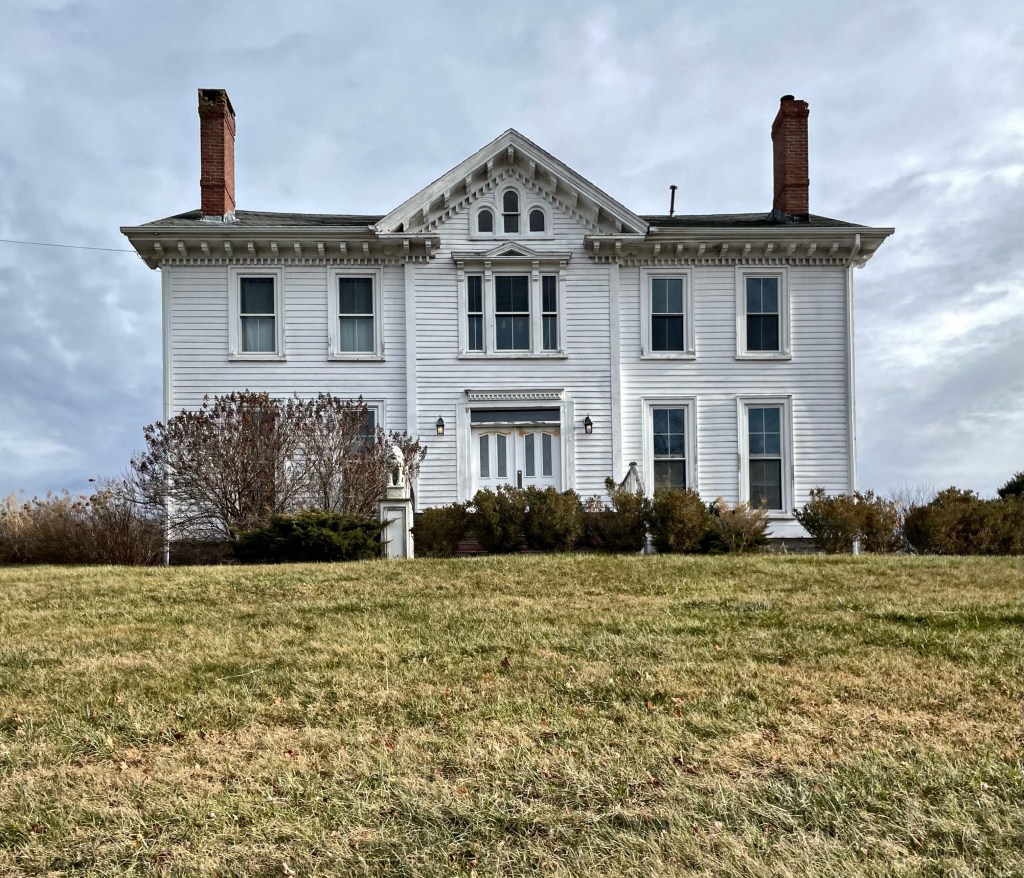
Church Farm // 1821

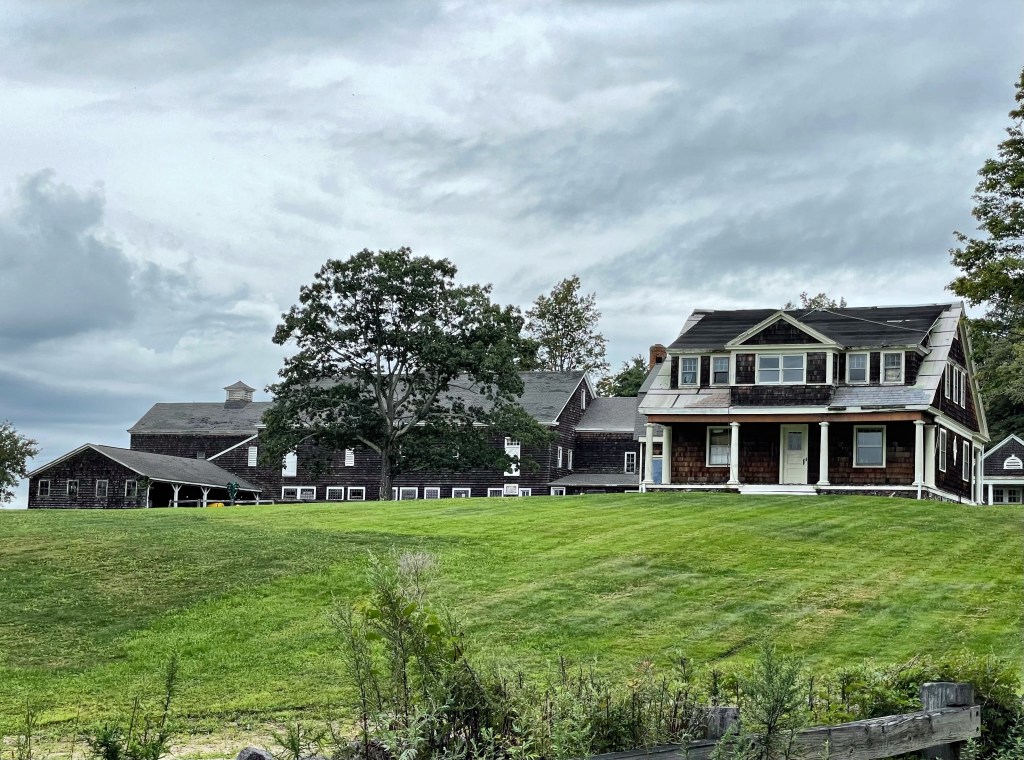
Here is your reminder that you can find amazing, high-style historic houses even on the most remote back roads in New England! This is Church Farm, located in Ashford, Connecticut, in the state’s Quiet Corner (northeast section of the state). The main part of the Church Farm house was built by Zalmon Aspinwall (1769-1844) and Mary Snow Aspinwall, his wife, in 1821; it is believed the house incorporates an earlier dwelling built in 1791 by Robert Snow in the ell. The Aspinwalls were a well-to-do Mansfield Center family, with more than 1,500 acres of land. Zalmon Aspinwall, who was related by marriage to the Snows, also held mortgages on several other Ashford farms. In the 1840s the house came into the hands of Lucinda Aspinwall Church (1807-1876) and her husband John Church. John was primarily a farmer, with 135 acres under cultivation in 1850, probably most as pasture and fodder for his 140 sheep, with which he raised wool. Subsequent generations of the Church Family retained ownership of this property Church Farm as the family homestead and country retreat. Servant rooms were added to the ell, and a large barn (said to be the second largest in Windham County) were built in the 1890s. The large Colonial Revival portico, added c.1930 to replace Victorian verandas, completed the house’s transformation into a country estate. The property was most recently gifted to the Eastern Connecticut State University Foundation, Inc., in 2007 by Joseph and Dorothy (Church) Zaring, and the house and grounds are maintained by the University.

Weir Farm Barn // c.1820

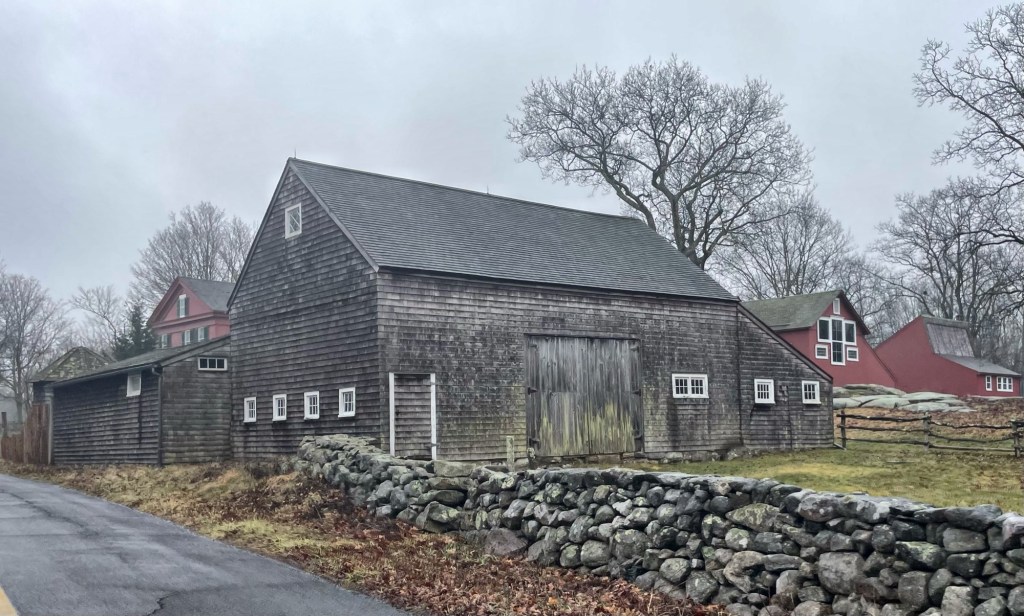
Weir Farm, later an artists retreat and studios, was once a fully operating farm, with horses, cows, oxen, chickens, vegetables, and numerous gardens. To artist Julian Alden Weir, farming was more of a hobby than an economic necessity, undertaken for aesthetic reasons. Weir’s romantic vision of the landscape extended to his use of oxen, carts, and hand tools instead of modern machinery available at the time. Over its long history the barn complex has housed a milking room, a carriage house/wagon shed, a garage, a tack room, an equipment and tool room, hay lofts, a corn crib, and stalls for donkeys, ponies and horses. The rustic barn is a typical “English-barn” built between 1815 and 1835 by The Beers’ family, who owned the property until 1880. Weir used the barn as a prominent feature in many of his paintings like “New England Barnyard” and “After the Ride.” It remains an important piece of agricultural and artistic significance to the now nationally recognized Historic Site.

Reuben Curtiss House // c.1840

The Reuben Curtiss House is a classic example of a Greek Revival farmhouse from the mid-19th century, located in Southbury, Connecticut. Local history states that a house built here by Israel Curtiss (1716-1795) who farmed the land with his large family. In 1798, Israel’s large estate was distributed among three of his sons, Joseph, Benjamin, and Reuben. This was complicated by the fact that in the same year, both Joseph and Benjamin died, leaving the entire estate to Reuben. From about 1840 and possibly until he sold the property in 1866, Reuben B. Curtiss ran an academy here, known as “Buck Hill Seminary for Boys.” It was a large operation, as suggested by the size of the addition and confirmed by the 1850 federal census. At that time there were 23 students in residence, ranging in age from 8 to 12, along with four adult supervisors. It was likely that the former farmhouse was expanded and the present 1840s Greek Revival block was added which now is the main facade.

Tranquility Farm – Superintendent’s Cottage and Creamery // 1894

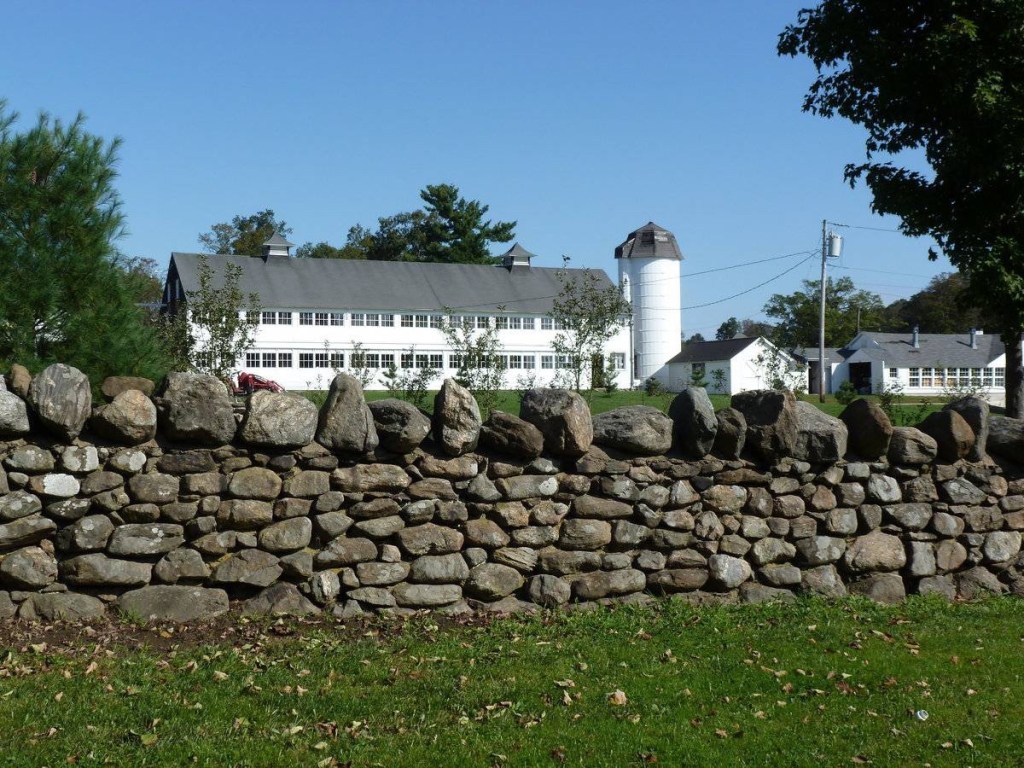
Any good gentleman’s farm needs a superintendent to actually oversee all the labor being done to harvest crops and take care of the livestock (because a millionaire owner cannot be burdened to deal with such mundane matters…) When John Howard Whittemore, a successful industrial-era businessman purchased an old farm in Middlebury, Connecticut to spend summers and time out of industrial malaise, he knew that along with a summer home for his family, he would need to build other structures on the 300-acres of rolling hills. The famed architectural firm of McKim, Mead & White was hired by Whittemore to design many of the buildings on the grounds, from the main house, to the superintendent’s cottage to a boathouse. The firm designed this superintendent’s cottage (which currently looks to be getting a new roof) and the creamery in the rear. Both are great examples of the Shingle style in modest, agricultural structures.

Tranquility Farm – Farmhouse and Barn // c.1840

Tranquillity Farm, spanning the rolling hills around Lake Quassapaug in Middlebury Connecticut, was originally a 303-acre model/gentleman’s farm developed by John Howard Whittemore, a successful industrial-era businessman in Naugatuck, and his wife Julia Spencer Whittemore. Whittemore was a major figure in Naugatuck, sponsoring a series of commissions of McKim, Mead & White for buildings in the city center. For his country farm estate, he again commissioned McKim, Mead & White to design a new country house, a farm superintendent’s house, boat house on the lake, and other outbuildings for a working farm. An older farm was purchased, which included a modest Greek Revival style farmhouse dating to the early-mid 19th century (seen here) and a large wooden barn. Both of these were kept and incorporated into the estate near the southern entrance to the property, possibly to harken visitors back to the charm of rural living. The sweeping landscape, featuring miles of distinctive stone walls lining the roads and crisscrossing the fields, was designed by Charles Eliot and completed by Warren H. Manning – both protégée of Olmsted.

Oliver Perry House // 1843

This imposing Greek Revival house is located in Southport and is one of a handful of the stunning Classically designed mansions near the waterfront. The house was built in 1843 for Oliver Perry a Yale Law School graduate who did not work in law, but became a successful merchant and businessman instead. Oliver H. Perry established his fortune as a shipowner and a merchant and was Treasurer and Director of the Southport National Bank. He was active in civic affairs and served as speaker of the house of the Connecticut General Assembly and commissioner to survey and settle the border dispute between Connecticut and New York. His Southport house is a stunning example of the Greek Revival style in the temple form with a two-story projecting pedimented portico supported by four Doric columns.

Bradley-Wakeman House // c.1815

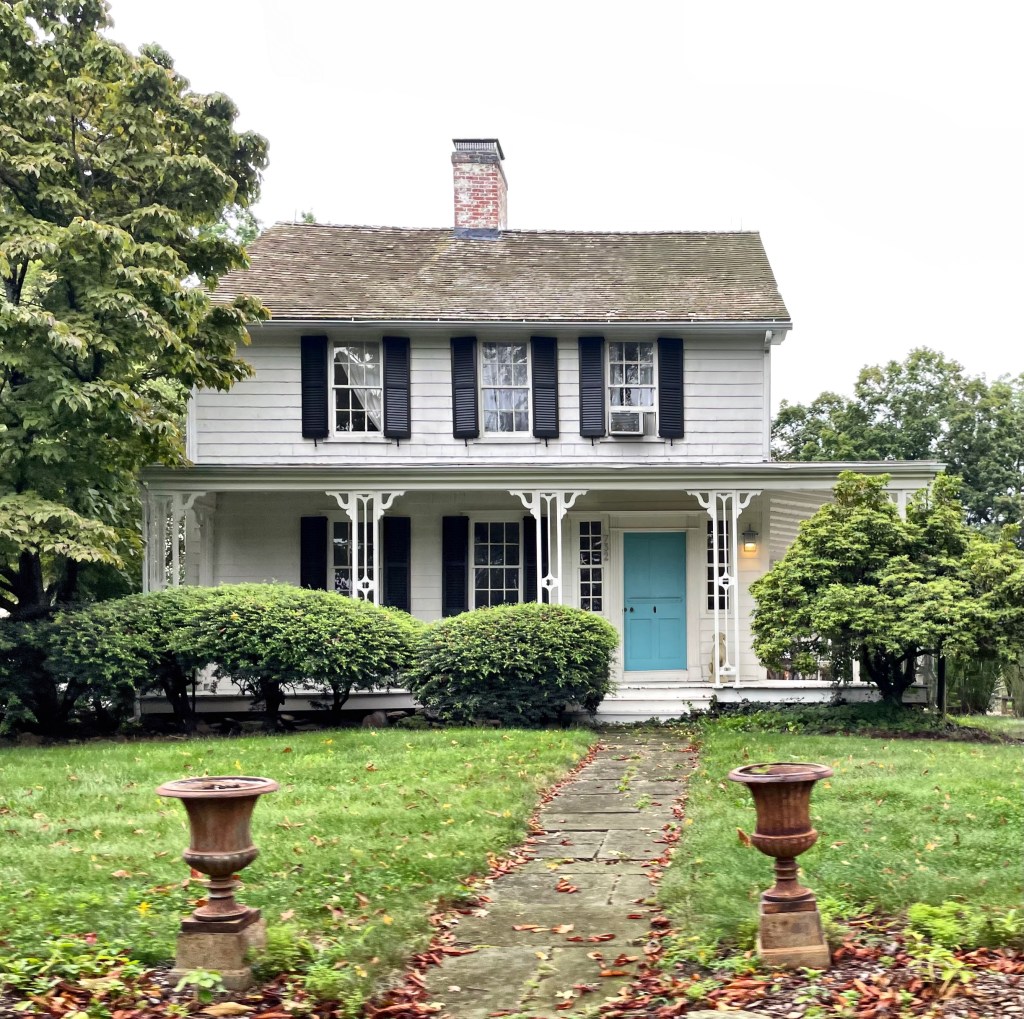
While the Greenfield Hill section of Fairfield, Connecticut has some of the grandest houses (old and new) in the state, there are some more average size homes that just ooze charm and curb appeal. This example on Hillside Road, dates to the 1810s and was seemingly built by Alban Bradley (1767-1832) on land inherited by him from his late father, Seth Bradley. The family farmed on the land from this Federal period farmhouse until it sold out of the family by Alban’s only son, Burritt in 1825. Burritt sold the farm to Zalmon Wakeman who farmed on the many acres of valuable land there. Sometime before his death before the Civil War, the house was “modernized” with Italianate-style porch, which is supported by delicate cut trelliswork. This is a great illustration as to how modest renovations which apply up-to-date decorative details can be done to historic properties without compromising the original structure or its architectural integrity.

Colonel Jacob Kingsbury House // pre-1815

Jacob Kingsbury was born in Norwich, Connecticut on July 6, 1756, to Nathaniel and Sarah Hill Kingsbury. On July 11, 1775, at the age of 19, he enlisted in the 8th Connecticut Regiment, which was part of the Continental Army in the Siege of Boston. Kingsbury remained in the Continental Army when it was reorganized in 1776, and he was promoted to sergeant and then was commissioned an ensign in Webb’s Additional Continental Regiment on April 26, 1780. He served until the Continental Army was disbanded on November 3, 1783. At this time, Jacob moved back home and appears to have had this house built, or moved back into his father’s home. He would later serve with the United States military on campaigns against British allies and Native tribes. During the War of 1812, Kingsbury was appointed to command the defenses of Newport, Rhode Island. He served as Inspector General for Military District No. 2 (comprising the states of Connecticut and Rhode Island) from April 8, 1813, to October 31, 1814. He was discharged in 1815, and moved back to Franklin to live out his final days. The original vintage of this house in unclear, but it appears to have been built before or shortly after his return to Franklin in 1815. After his death in 1837, the property was inherited by his son, Col Thomas Humphrey Cushing Kingsbury, who updated the old homestead with Italianate detailing including the replacement double doorway, bracketed and dentilled cornice, tripartite window in the gable, and 2/2 windows. What a cool blending of styles here!

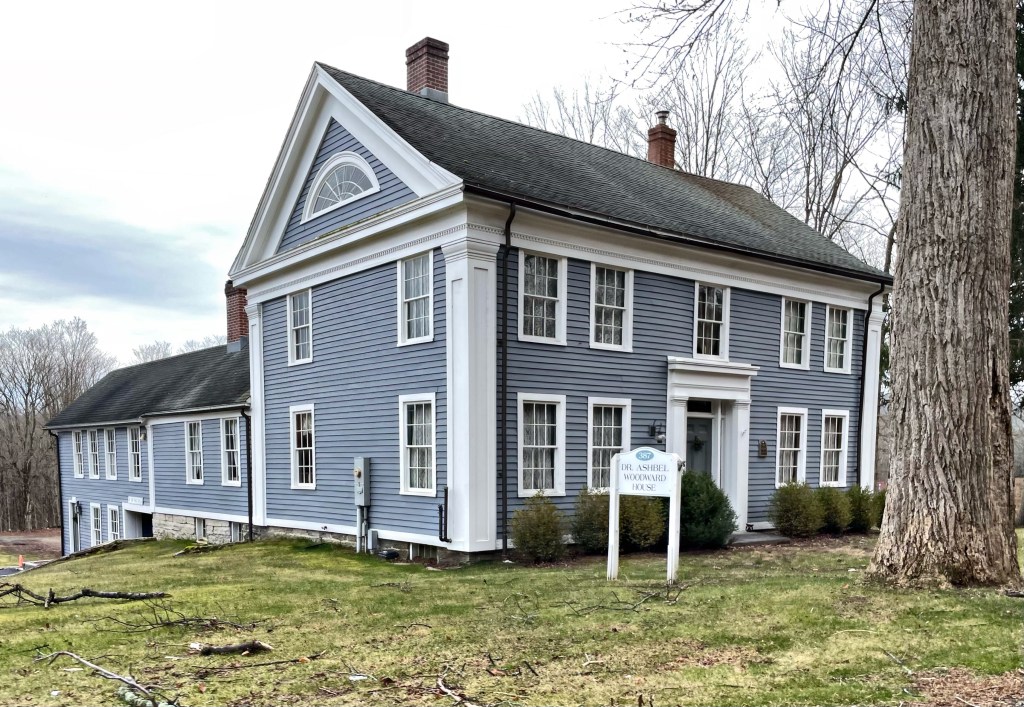
Dr. Ashbel Woodward House // 1835

The Ashbel Woodward House in Franklin, Connecticut was built in 1835, on land purchased by Doctor Ashbel Woodward, a prominent local physician, a year prior. Woodward, was a graduate of Bowdoin College, and he began practice in Franklin in 1829, serving as the town’s primary medical practitioner until his death in 1885. Though in his 60s at the outbreak of the Civil War, Woodward perhaps lent his greatest service to his country when he served as a battlefield surgeon and medical facilities inspector for the Union army. Besides his work in medicine, Woodward collected literature and numerous artifacts pertaining to Franklin’s past and eventually wrote a book detailing the town’s history. The Ashbel Woodward House is an excellent example of the Greek Revival architectural style in a five-bay form. Interestingly, there are semi-elliptical windows in the pediment gable ends on the side elevations, seemingly a nod to the Federal style that was waning out of style at the time. The property is in use today as a museum, documenting the life of Dr. Woodward and the people of Franklin, Connecticut.

Dr. Stephen Sweet House // c.1845

Connecticut has some of the most stately early 19th century homes in New England, from the larger cities to rural towns like this beauty in little Franklin, Connecticut. This dwelling was built in the 1840s for Dr. Stephen Sweet (1798-1874) a physician near the town green. It was built after his second marriage, after his first wife’s death. His second wife, Matilda, died in the home during childbirth at age 44, along with their son just days later. The house is an excellent example of the Greek Revival style, with a gable roof running parallel to the main street, central entrance and corners framed with pilasters and frieze band at the cornice. At the side of the house, which also fronts a street, the stately home commands the corner with a second entry (maybe for in-patients), and a pair of quarter-round windows in the pediment.