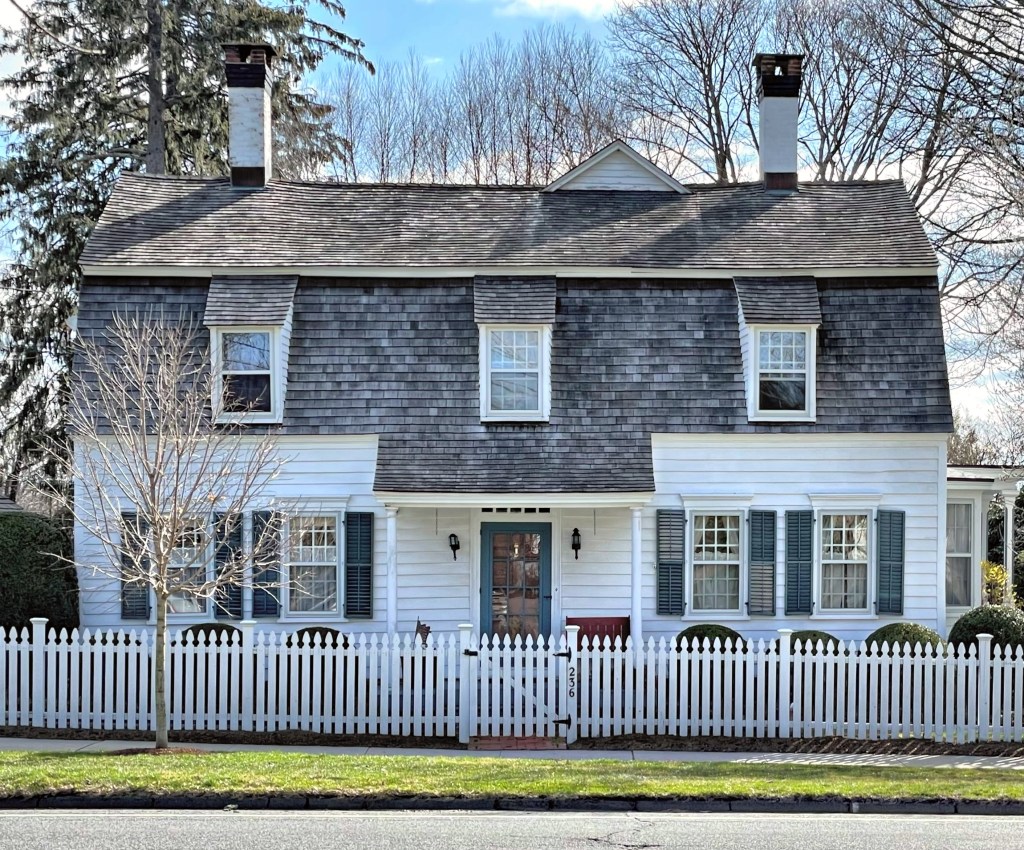
Rev. Thomas Hawley House // 1713


This old Georgian house was built in 1713 on the Proprietors Lot 5, on Ridgefield’s Main Street. Constructed for the first minister of Ridgefield, the home was originally occupied by 25-year-old Reverend Thomas Hawley (1689-1738) not long after his graduation from Harvard in 1709. In addition to being minister of the newly formed Congregational Church, Hawley (also spelled Hauley) also served as school teacher and town clerk. The house employs Dutch Colonial detailing from the gambrel roof to the extended portico over the front door, common in the Dutch colonies in the Hudson River Valley in New York.
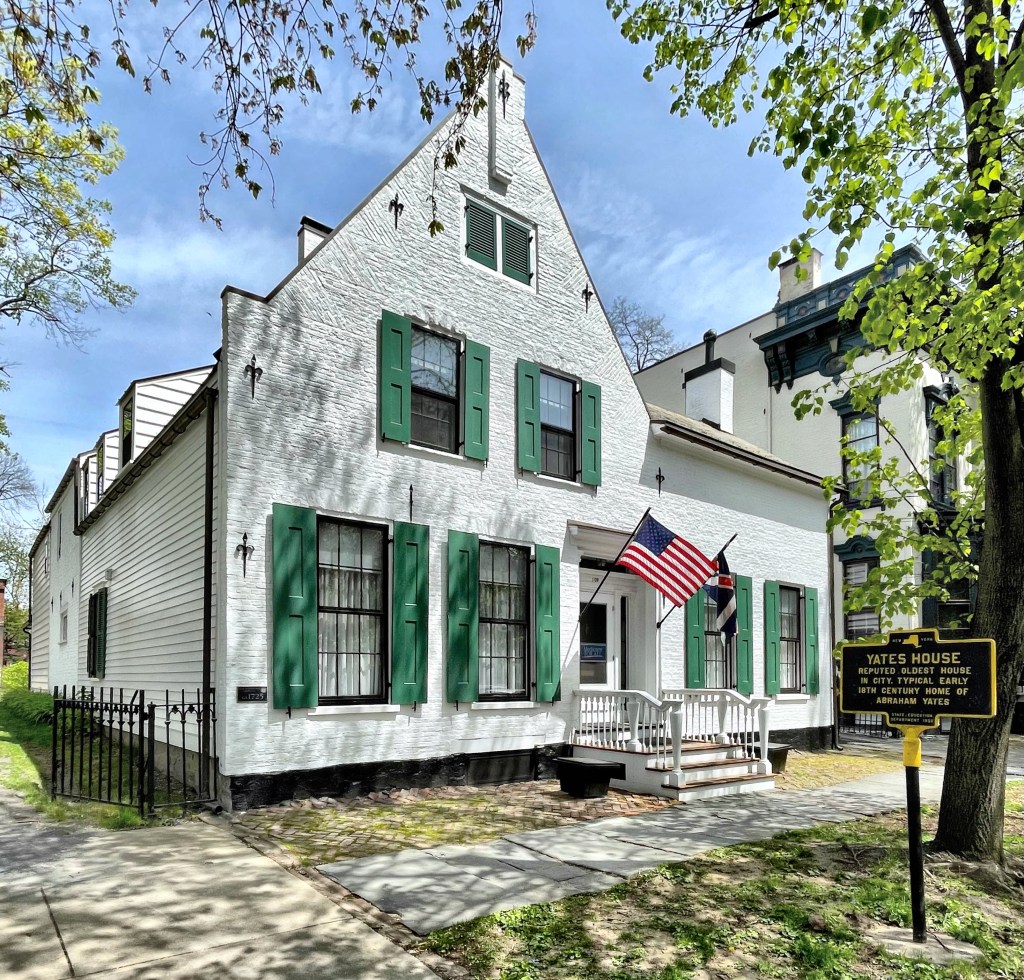
Yates House // 1730

Thought to be the oldest extant home in Schenectady, New York, the Yates House serves as an excellent example of Dutch-inspired architecture found in the days before the founding of the United States of America. The house, believed to have been constructed around 1730, is an example of Dutch Colonial architecture. Dutch Colonial architecture was clearly common in New Netherland, present-day New York. As a contrast with New England, which featured British-inspired Georgian architecture, the homes and buildings found in the New Netherland colony was unapologetically Dutch. The Yates House in Schenectady’s Stockade neighborhood features a Dutch gable end wall facing the street with interesting brickwork.

Dutch House // 1893

Located on the appropriately named Netherlands Road in Brookline, MA, this house was actually designed as a temporary structure as part of the 1893 World’s Fair, also known as the World’s Columbian Exposition or the White City, depicted in the great book, Devil in the White City. The Dutch House was constructed in 1893 by the Van Houten Cocoa Company of the Netherlands, as a display pavilion and cocoa house. It was located at one end of the Manufactures and Liberal Arts Building (the largest building ever constructed at the time). The Dutch House as we know of it today, was greatly inspired in design by the Franeker City Hall (c. 1591) in the Netherlands. While attending the World’s Fair, Captain Charles Brooks Appleton of Brookline be.came so captivated with the structure that after the Fair, he purchased the building and had it dismantled and transported to Brookline. By the early 2000s, much of the amazing carvings on the building had fallen off, until a new homeowner had them all restored from drawings and images of the building, to the iconic landmark we see today.