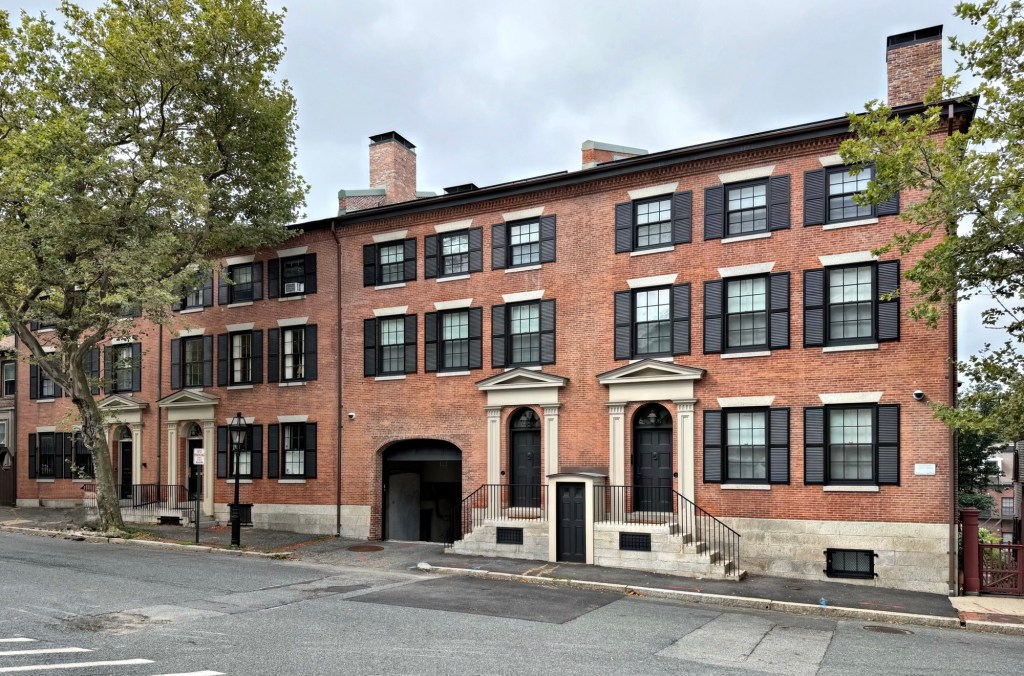
Ives Rowhouses // 1814

The Ives Rowhouses stand at 270-276 Benefit Street in Providence and are an important and intact example of a Federal period row from the early 19th century. These four, three-story brick rowhouses were built between 1814-19 as investment property for Thomas Poynton Ives, a successful local merchant and partner in the firm of Brown & Ives, who lived nearby on Power Street. Each of the houses has a three-bay facade with pedimented fanlight doorways. The one residence was significantly altered in 1948 by the massive archway for vehicular access at the rear. The houses stand out in Providence, as fairly uncommon rowhouses, which never took off quite like they did in Boston and other New England cities. The row is today neighbors with the National Historic Landmark Hopkins House.
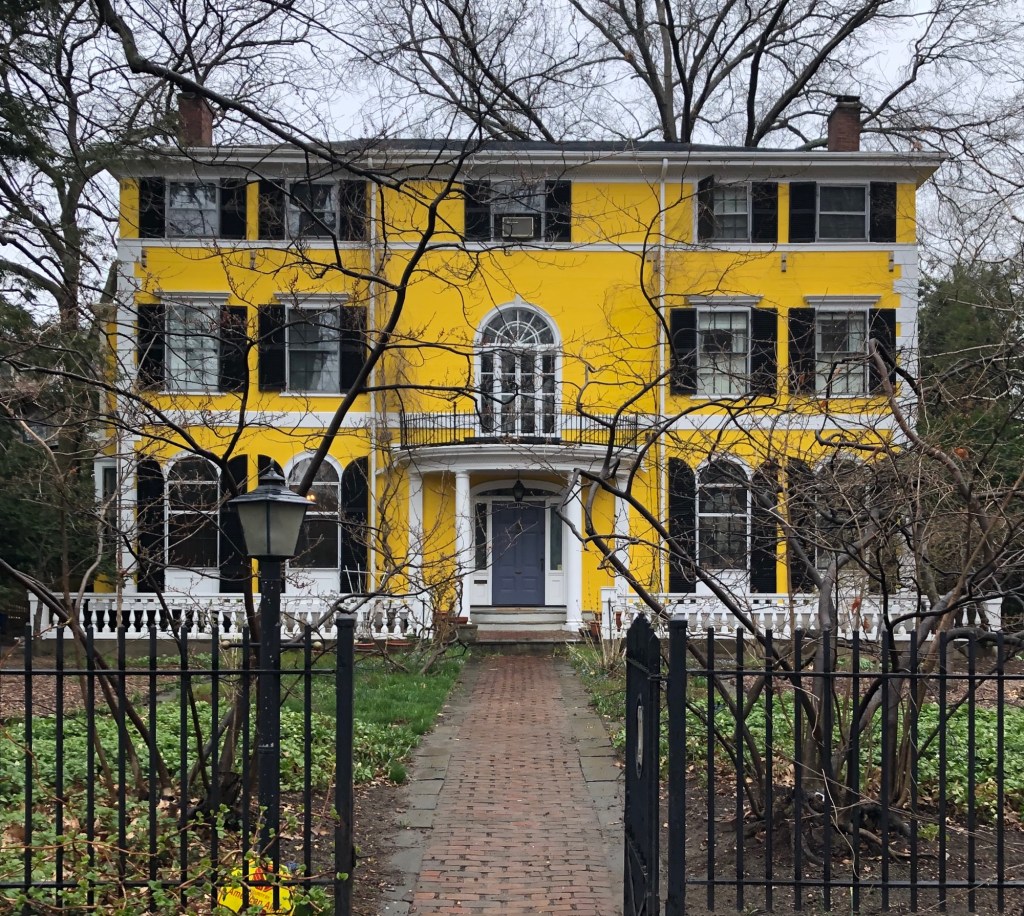
Charles H. Owens House // 1906

This stately house on Powell Street in Brookline, Massachusetts, was built in 1906 for Charles H. Owens, Jr., and his wife, Nellie. Charles was a “house decorator”, who built the house next door just two years earlier before moving into this larger home in 1906. Both houses were designed by the architectural firm of Loring & Phipps, who Owens likely collaborated on commissions with in his career. The house is 2 1/2-stories with a shallow hip roof and is an excellent example of an academic interpretation of the Colonial Revival style. The principal facade has flush board siding with round-arched windows on the first floor along with a squat fanlight transom over the center entrance.

Tapley Memorial Hall // 1930

Years after the Danvers Historical Society acquired the Jeremiah Page House, saving and relocating it to its present location on Page Street, the society began planning for a new facility to house its collections. After a successful fundraising campaign, the society solicited plans from local architect, Lester S. Couch, a partner in the firm, Little & Browne, and member of the historical society, to design the new memorial building. Designed in 1930 and completed a year later, the Colonial Revival style building is constructed of fireproof brick walls with a hipped roof. Two entrances are located on the side elevation facing the Page House, with pedimented surrounds and blind fanlight transoms. The building is notable for the use of slightly recessed arched bays, common in Federal and Federal Revival buildings. The Tapley Memorial Hall is still maintained by the society and can be rented out for functions.

Phinney-Bigelow House // c.1899

Before the turn of the 20th century, William L. and Elizabeth G. Phinney purchased a narrow house lot at the corner of Hawes and Chatham streets in the desirable Longwood neighborhood of Brookline. They then retained the young architect Thomas Marriott James, to design this massive Federal Revival style mansion. After William died in 1911, Elizabeth remained in the house until 1920, when it sold to C. Willard Bigelow a wool dealer and his wife, Ruth. The Phinney-Bigelow House is an exemplary Federal Revival style house on a narrow lot which takes full advantage of its boxy form. The slightly asymmetrical facade with Palladian window, limestone trimmings, and bold entrance are all great additions to the design.