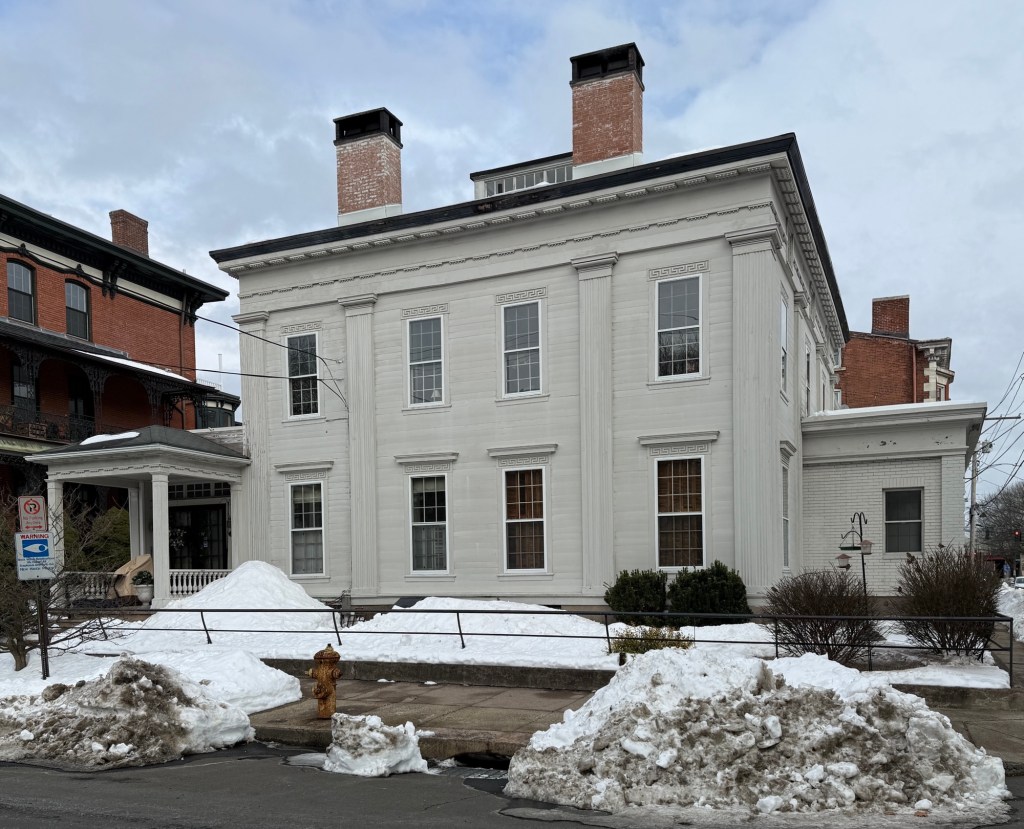
Elliott-Russo House // c.1835

Located at the corner of Wooster Place and Chapel Street in the iconic Wooster Square neighborhood of New Haven, this early Greek Revival style house is a physical landmark showcasing the evolution of the neighborhood in the 19th and 20th centuries. The residence was built around 1835 either for or purchased early on by Matthew Griswold Elliott (1805-1892), a businessman who later engaged in politics and became Vice President of the New Haven Savings Bank and a director of the New York and Hartford Railroad. In 1890, the property was purchased by Paulo “Paul” Russo, an Italian immigrant who was born in 1859, in Viggiano, Italy. His family moved to New York in 1869 and then New Haven in 1872. Paulo opened a small market in New Haven which became the first Italian-owned business in the state of Connecticut. In 1893, Russo became the first Italian to graduate from Yale Law School and he helped foster and grow the local Italian-American community around Wooster Square. After Paul Russo, Michael D’Onofrio, also of Italian descent, purchased the home and along with his wife, brothers, and friends, D’Onofrio transformed the building into a funeral home for over a decade before the house was converted to condominiums. The Elliott-Russo House is a landmark example of a hipped-roof, Greek Revival style residence with smooth flushboard siding, pilasters dividing the bays, and unique Greek meander motifs in the window lintels.
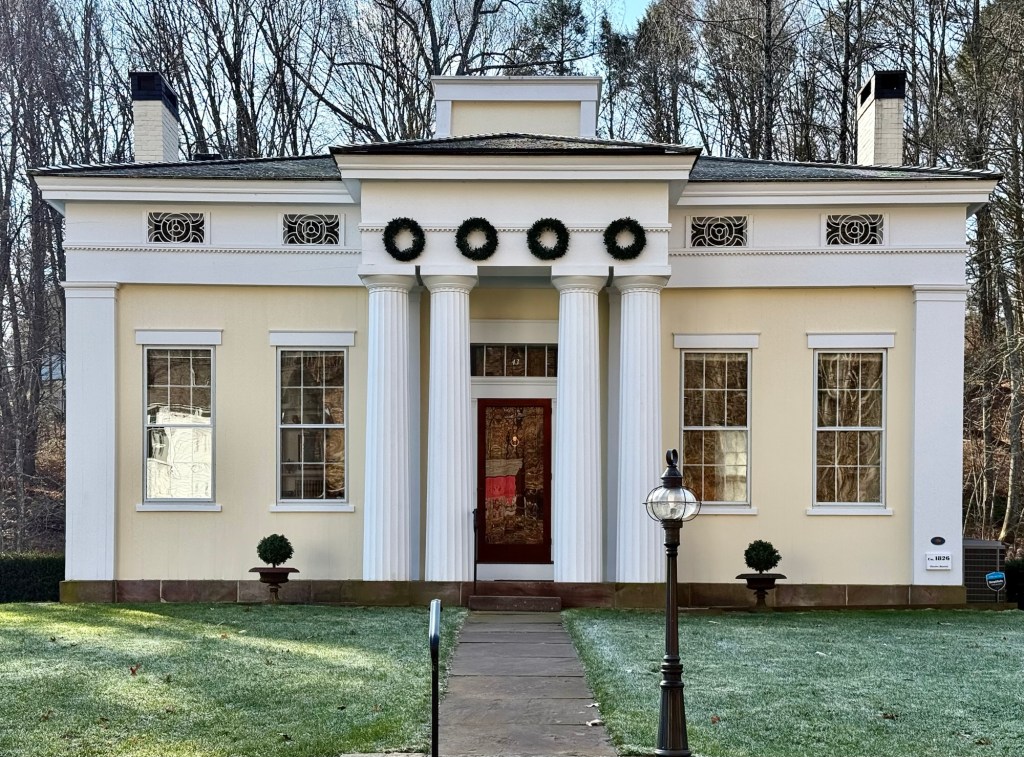
Charles Daniels House // c.1826

The Charles Daniels House in Chester, Connecticut, is a sophisticated and excellently proportioned and designed example of a single-family residence in the Greek Revival style. Features like the Doric portico, flushboarding and frieze windows are components of a skillful design that has been credited to architect Ithiel Town, but this is unsubstantiated. The home was built around 1826 for Charles Daniels (1799-1838), a gimlet manufacturer, who had his factory nearby. Charles died in 1838, and the property was inherited by his second wife, Abby Gilbert, who also remarried and lived here with her new husband, Clark N. Smith, and they resided here until the early 1900s. Later, the residence was owned by the adjacent mill company, and used temporarily as a storage facility. The location adjacent to the deteriorating factory threatened the significant Daniels House, so in 1978, architect Thomas A. Norton had the house moved a short distance away onto the present site. The house was listed in the National Register of Historic Places and has been preserved, inside and out, by later owners.

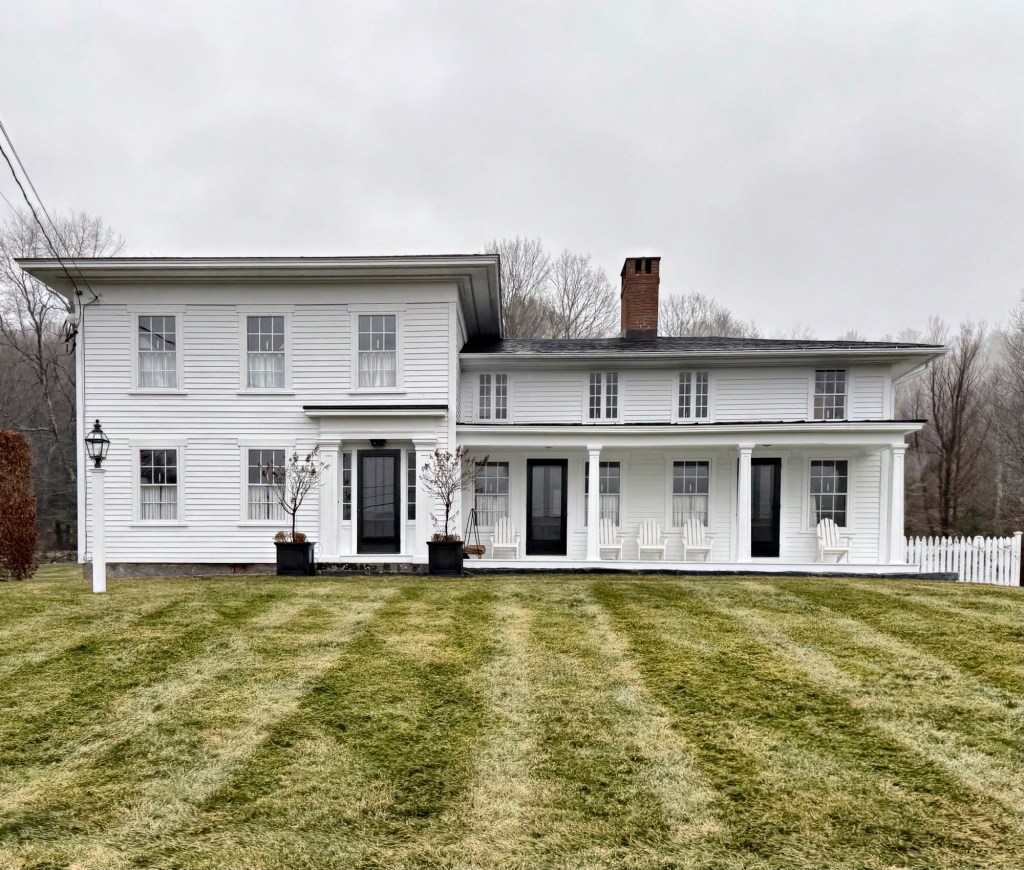
William H. Harrison House // c.1850

In about 1850, William Hopkins Harrison (1813-1878) purchased farmland from the Pierce Family of Cornwall, Connecticut, and built this stately Greek Revival style home upon it. The house was built around the same time as its neighbor, the Dwight W. Pierce House (last post), also an example of the Greek Revival style, but in a very different finish. The seven-bay residence has its main block at the end with a shallow hip roof and overhanging eaves, showcasing the emergence of the Italianate style form to come into popularity. The solidly Classical pilaster and entablature surround at the entry firmly places the house in the Greek Revival style.

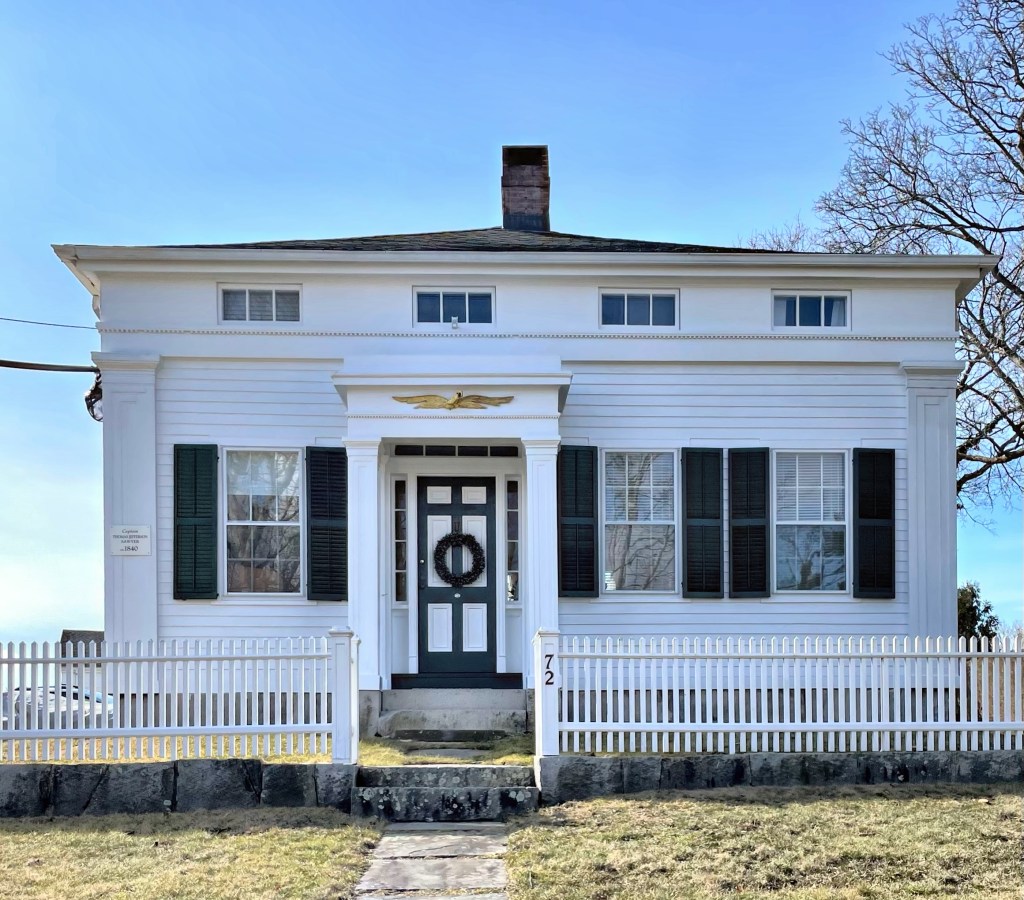
Thomas Jefferson Sawyer House // 1840

Thomas Jefferson Sawyer was born in 1807 in Groton, Connecticut as the tenth of 13 children of William and Prudence Sawyer. It appears that his parents were running out of names by the time they had ten children, so they named number ten after the then President of the United States, Thomas Jefferson. Thomas Jefferson Sawyer moved to Noank’s coastal village in 1840 and built this interesting Greek Revival house with an atypical hipped roof. Sawyer was a sea-captain who remained in Noank until his death and he was a very active member of the local Baptist church. The Sawyer House remains as a unique example of the Greek Revival style captains house, which the village is known for.