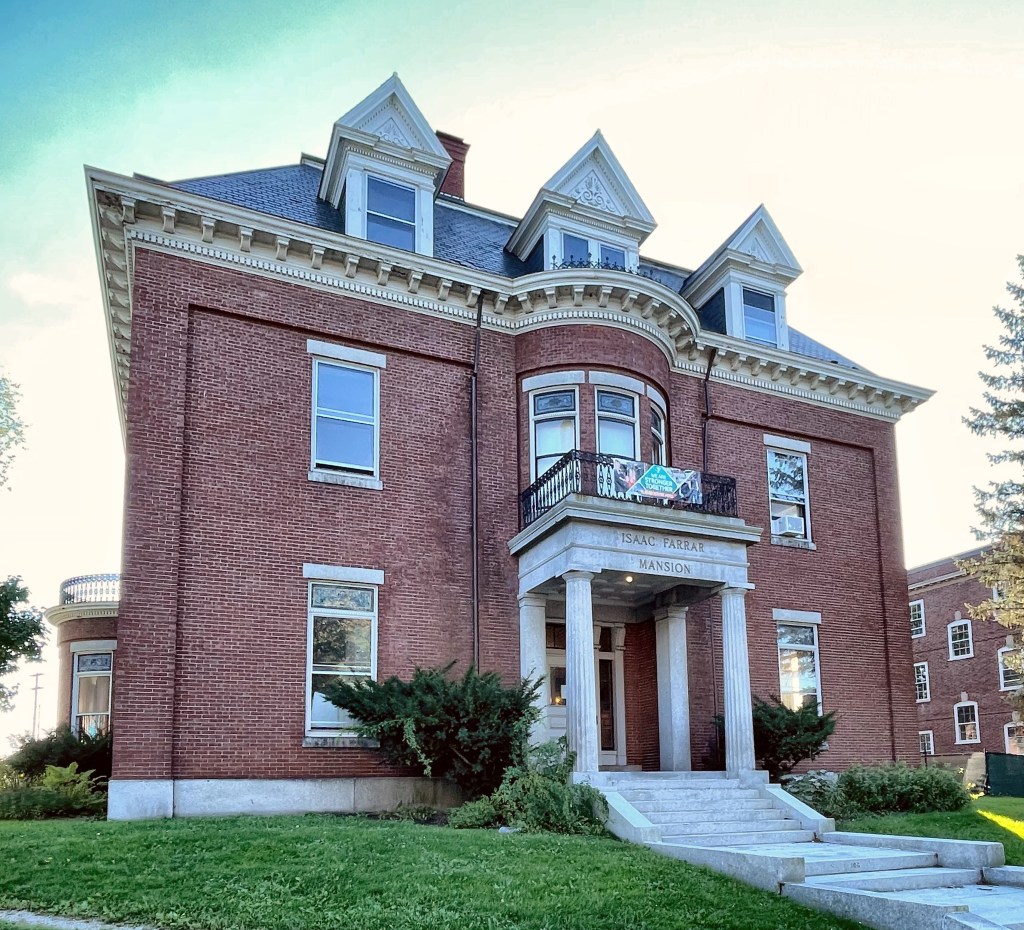
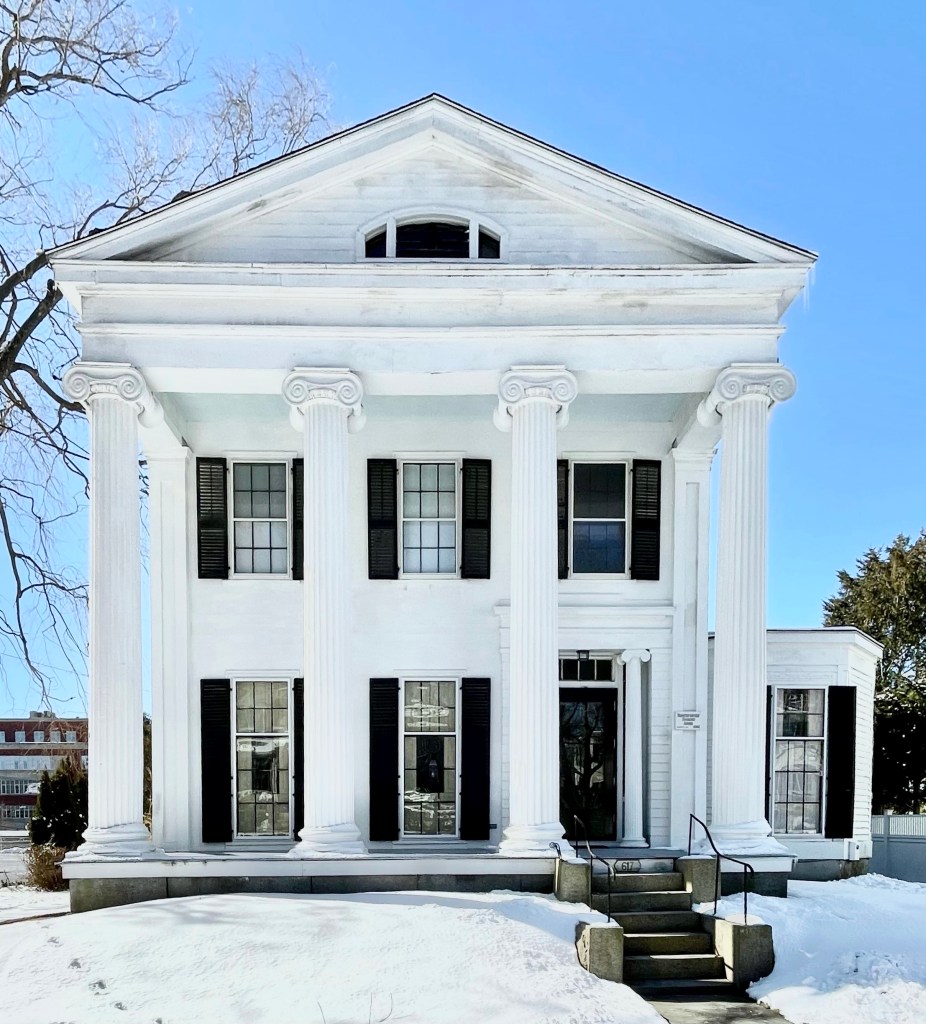
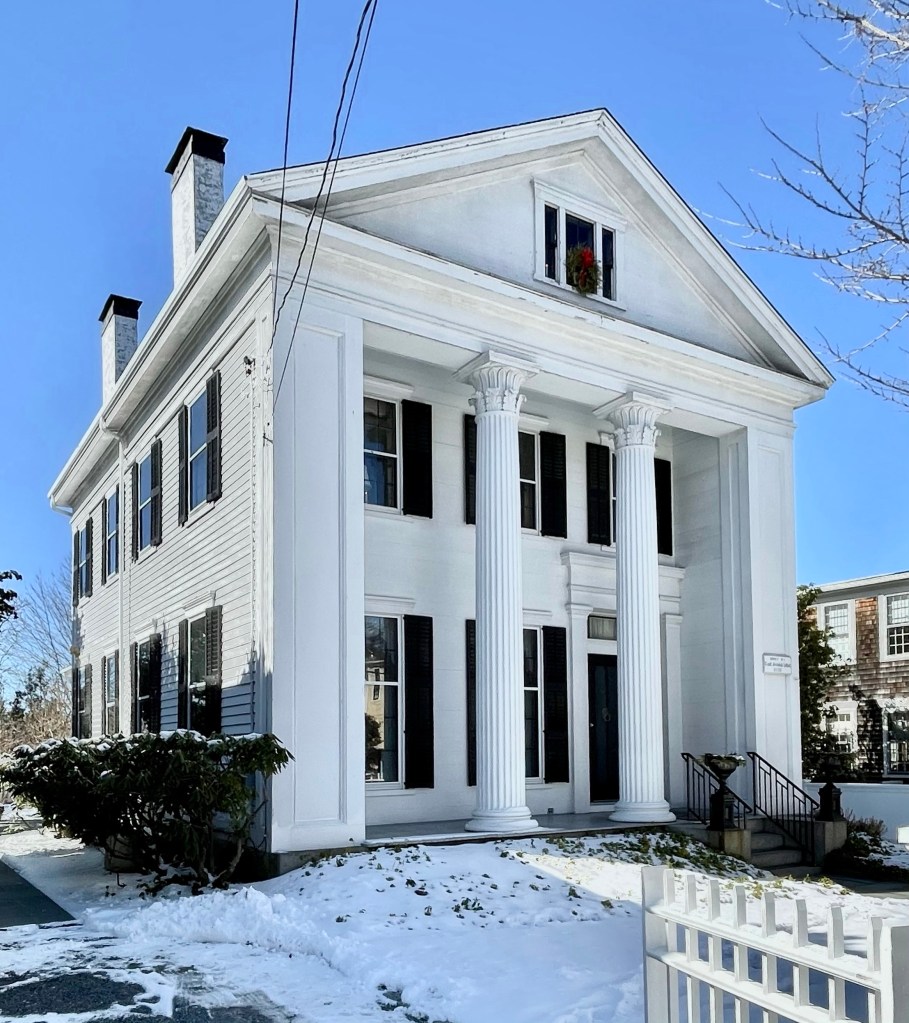
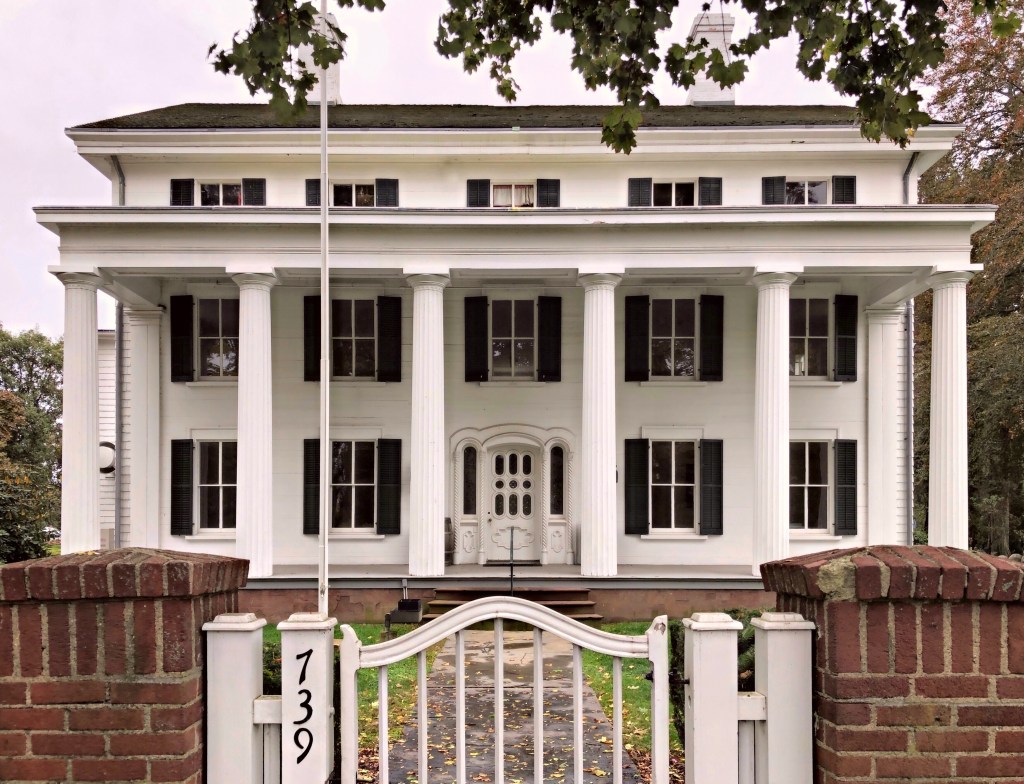
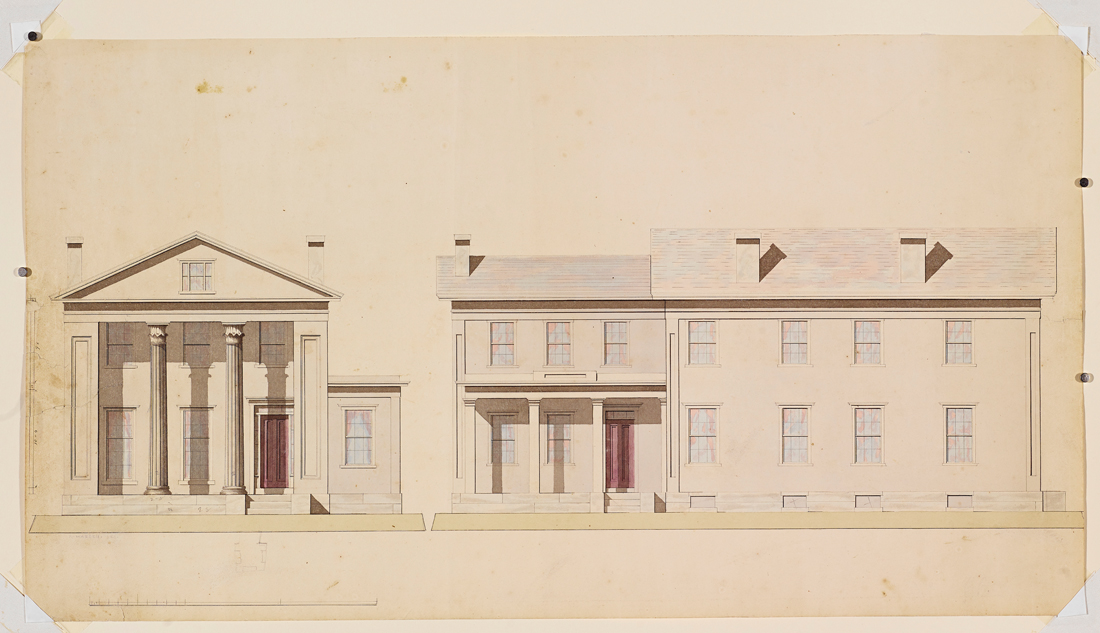
Isaac Farrar Mansion // 1836

The Isaac Farrar Mansion in Bangor, Maine not only looks gorgeous, it is significant as the one of the first known works of architect, Richard Upjohn. It is important because it shows that English-born Upjohn, who is best-known for launching the popularity of the Gothic Revival style in the United States, began his career by building in the Greek Revival style, the traditional style of the time. This mansion was designed for Isaac Farrar, a lumberman and merchant, and later, President of the Maritime Bank of Bangor. Charles B. Sanford, who lived in the house from 1865-1878, was proprietor of the Sanford Steamship Lines. The home had a few more subsequent owners until 1911, when it was acquired by the University of Maine Law School, which used it as a residency until 1929. It was soon after purchased the Bangor Symphony Orchestra, who renamed it “Symphony House”, and operated the Northern Conservatory of Music on the premises, also hosting the music branch of the Bangor Public Library. In 1972 the school closed, and the symphony sold the building the following year to the local YMCA, which now uses it as an exhibit and reception space. While some aspects of the house look to be from the early 20th century, it retains much of the Greek Revival design by Upjohn. Talk about a full history!

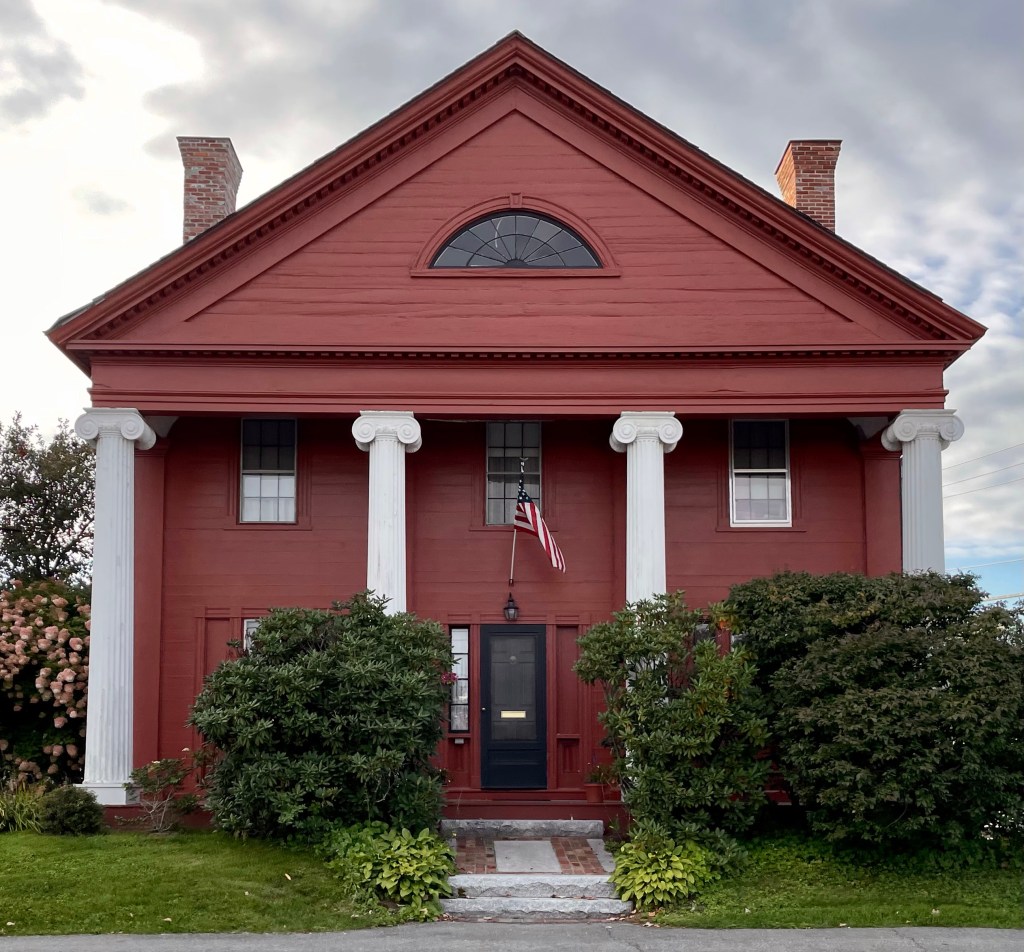
Peter Grant House // 1830

The this 1830 home in Farmingdale ranks as one of the first Greek Revival temple style residences in Maine. Situated on a rise overlooking the Kennebec River, the house reflects a dignity befitting the commercial success of its original owner, Peter Grant. Peter Grant was born in 1770 in Berwick, Maine. He was a fourth generation descendent of an earlier Peter Grant, born in Scotland in 1631, and one of 3,000 Scots taken prisoner by Cromwell’s army at the Battle of Dunbar. In 1650, he was sent as a convict laborer to the iron works in Lynn, Massachusetts, for a term of seven years. A number of the Grant family settled in Berwick, Maine, and from there, Peter, builder of this house, and his father, Capt. Samuel Grant, moved to Gardiner. Peter Grant soon involved himself successfully in land speculation and shipping in the area. In 1796 he and a group of associates, purchased a large tract of land along the west shore of the Kennebec River, which later became Farmingdale. Grant became sole owner of better than 200-acres of this land in 1800 and built a substantial house soon after. The original house was destroyed by fire and was replaced by Grant with the present house in 1830 six years before his death in 1836.

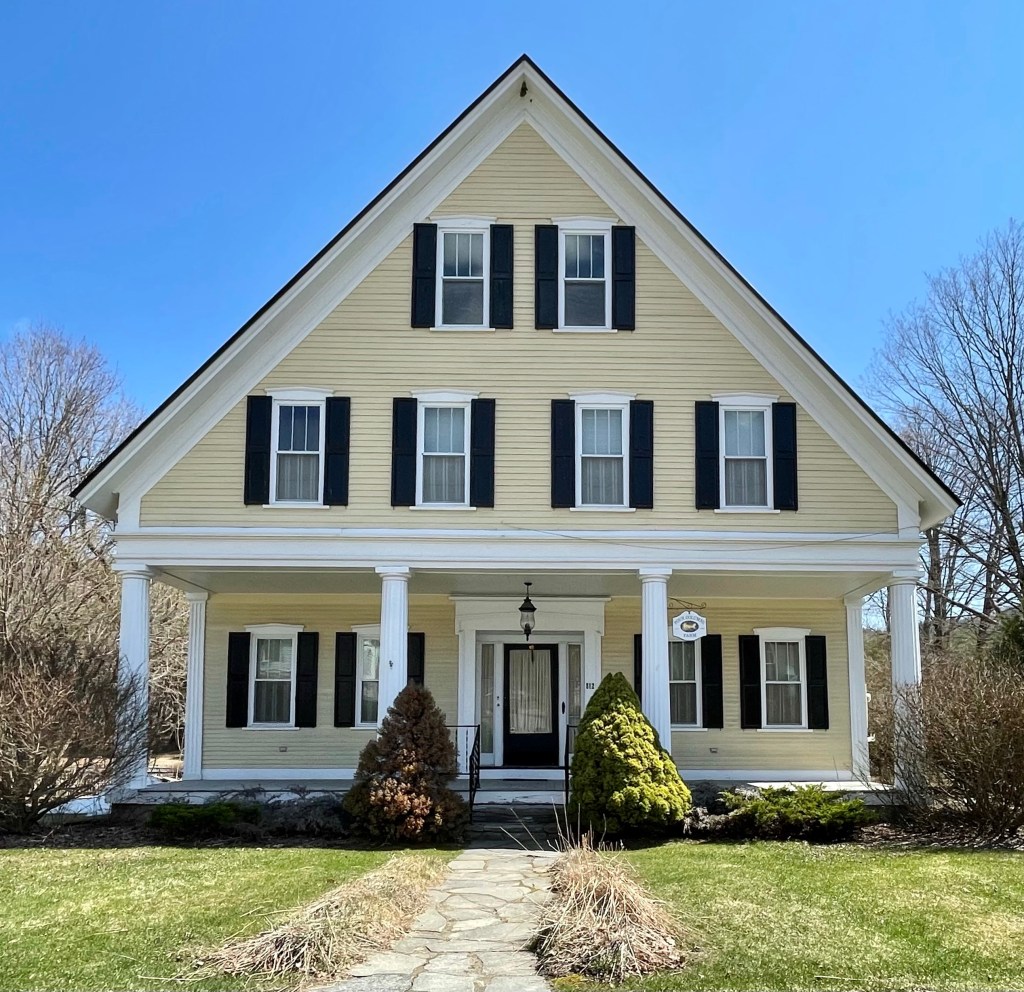
Levi F. Hartshorn House // c.1853

This Greek Revival home in Reading, Vermont was built around 1853 for Levi Fay Hartshorn, and is an excellent example of a vernacular Greek Revival house in Central Vermont. Levi F. Hartshorn moved to Reading, Vermont and opened up a store, also built this home for his family. It appears that Mr. Hartshorn gifted the village one of his shops to be used as a local library, before the present building was constructed.

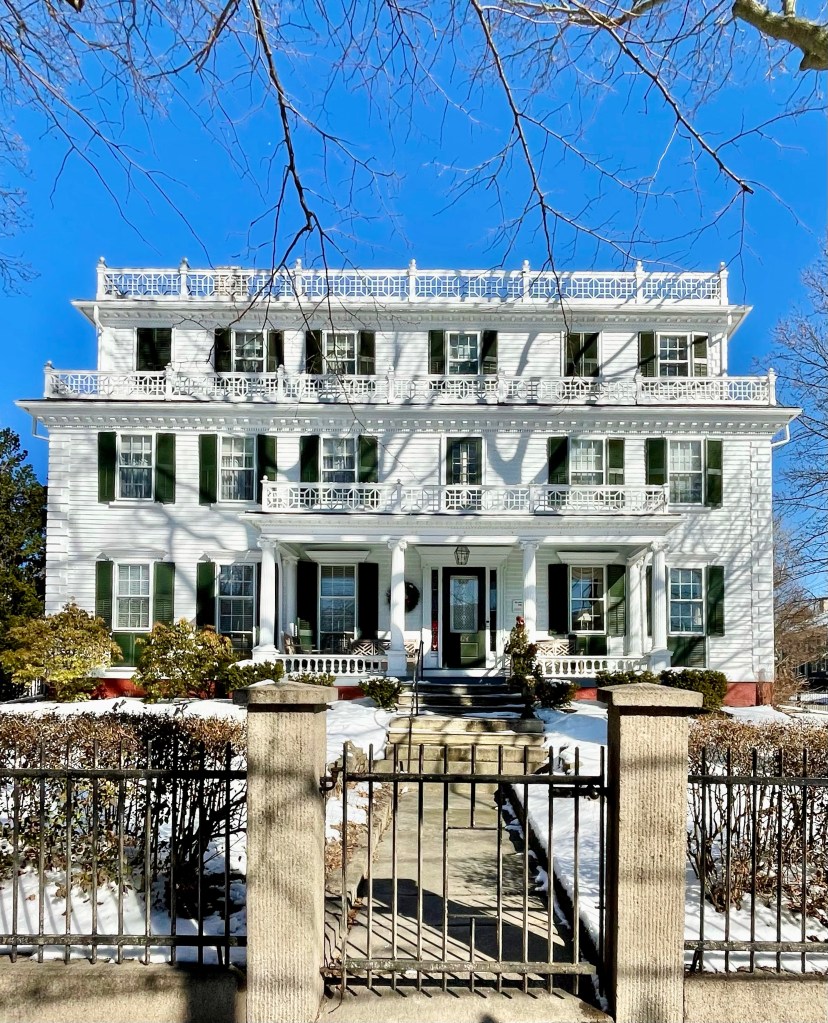
Bradford-Norris House // 1792

William Bradford (1729-1808), who would become Deputy Governor of Rhode Island from 1775 to 1778, came to Bristol to practice medicine by 1758. When he arrived, he rented Mount Hope Farm (featured before), before building a home in town. When the British Navy bombarded Bristol on October 7, 1775, his home was among the buildings destroyed. He afterward went aboard ship to negotiate a cease fire, saving what was left of the town. In 1792, he built a 2 1/2-story Federal style, boxy house on this lot, close to the street. The home was willed to his son Hersey, who resided there until the 1840s, when he mortgaged the house to Francis Dimond, who resided in a Greek Revival temple front home (also featured on here previously). He gifted the modest Federal home to his daughter, Isabella, possibly as a wedding gift upon her marriage to Samuel Norris, a sugar refiner. Mr. Norris and Isabella hired architect Russell Warren, who designed her father’s home nearby, to renovate the house in the spring of 1845, moving the house away from Hope Street. The house was given its third floor and additional bay, along with the ornate design which characterizes it to this day, including the Ionic porch and Chinese Chippendale balustrade. The house remained in the Norris family until 1942 and is now a B&B.

Francis M. Dimond House // 1838

Built in 1838, just three years after the Talbot House in Bristol, Rhode Island, (just two houses away), the Dimond House remains as the other of the two remaining Greek, temple-front homes in town. Like the Talbot House, this home was also designed by Russell Warren, but is unique as it is in the tetrastyle (with four columns) and utilizes the Ionic order with the capitals featuring volutes (scrolls). Additionally, a polygonal bay can be seen on the right side of the home. Images show that the bay features stunning lancet windows! The home was designed for Francis Moore Dimond (1796-1859), who was born in Bristol, and later traveled to the Caribbean and served for several years (1832-1835) as the United States consul at Port-au-Prince. It is entirely possible that Dimond was involved in the slave trade, but I wasn’t able to find more than a couple articles referencing his connections to the infamous DeWolf Family. From 1842 to 1849, Dimond was United States Consul to the Mexican port city of Veracruz. When he returned to Rhode Island, he promoted the Southern Pacific Railway and presided over its construction. He was elected lieutenant governor of Rhode Island in 1853. He became the governor of Rhode Island when Philip Allen, then Governor, resigned to become a Senator. He held the governor’s office just one year. He moved back to Bristol and lived out his final days at his home.

Josiah Talbot House // 1835

Anyone that has followed this account for a while knows at least one thing, I LOVE Greek temple-front homes. Designed by famed architect, and Bristol-native, Russell Warren, this 2-story, 3-bay, gable-roof Greek Revival house is one of the finest in the state. Its facade has a pair of fluted Corinthian columns, set in antis (where the side walls extend to the front of the porch). A simple side-hall entrance is framed by heavy Doric pilasters, supporting a broad, plain entablature, making this such a head-turning Greek Revival home. The walls are sheathed with horizontal flush boarding at the facade to give a smoother look and clapboards on the side and rear. The home was built for Josiah Talbot, a sea captain. The house is excellently preserved to this day, almost 200 years later.

Austin Perry House // c.1830

One of the nicest examples of residential Greek Revival architecture I have ever seen is the Austin Perry House (c.1830) in the Southport area of Fairfield, CT. Austin Perry (1798-1864) was a member of a prominent merchant family, holding businesses in Fredericksburg, Virginia, before returning to Southport to manage a general store. He retired in his forties and resided at this home until his death. His home is a balanced, symmetrical design with massive Corinthian columns surmounted by a carved anthemion motif ornamenting the gable pediment.

Burr Mansion // 1794

Originally built in 1775, the first iteration of the Burr Homestead, home of Thaddeus and Eunice Burr, which actually saw the marriage of John Hancock, President of the Continental Congress, to Dorothy Quincy. Thaddeus was the cousin of the famous Aaron Burr, Jr., who was the 3rd vice-president of the United States alongside Thomas Jefferson as President. Aaron Burr Jr. is best-known today through his portrayal in the popular play “Hamilton,” where he shoots Alexander Hamilton in a duel. The house was rebuilt in 1794 in its former location in Fairfield, Connecticut after a fire by the British in Fairfield destroyed the first. The home was willed to Thaddeus’ son General Gershom Burr, who eventually sold the mansion to Obadiah Jones. Mr. Jones updated the home by, ““taking out the dormer windows and lifting the roof, taking away the porch and building the broad veranda with its lofty massive fluted columns”. The home was eventually gifted to the Town of Fairfield and is presently maintained by the Fairfield Museum and History Center.

Milo M. Owen House // c.1840

Located on Main Street in Suffield, this Greek Revival home stands out for its perfect proportions, entry detailing, and the large 20th century porch. The home was likely built around 1840 for Milo Milton Owen (1811-1886), within a year of his marriage to Martha Alderman in 1839.

White Columns // 1853

The majestic Greek Revival house on Maine Street in Kennebunkport was built in 1853 for Eliphalet Perkins III, a member of the Perkins Family, one of the earliest families to settle in the area known today as Kennebunkport. Eliphalet apparently sold the home to his son, Charles, who moved in within the year with his new wife Celia Nott. The couple decorated the ornate home inside and out with furnishings still retained inside after the Kennebunkport Historical Society acquired the building in 1955. The home is now known as White Columns, and houses the First Families Museum. One interesting thing I noticed is the rounded arch windows in the pediment, an awareness to the Italianate style which took over in the 1850s-1870s throughout New England, though this home is quintessentially Greek.