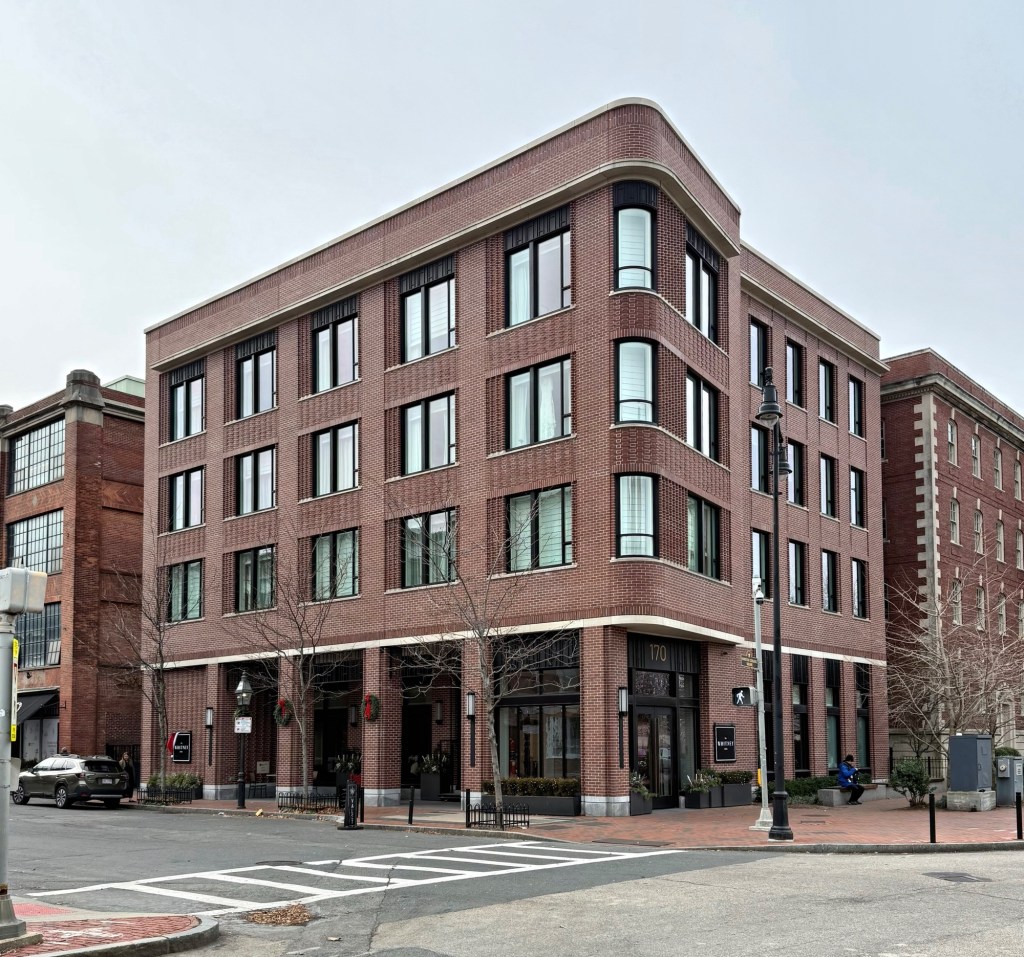
The Whitney Hotel // 2019

The Whitney Hotel on the iconic Charles Street in Beacon Hill, represents the best of contextual infill construction and good design. Completed in 2019, the hotel was built on an open lot adjacent to the 1909 Eye and Ear Infirmary Nurse’s Residence that sold in 2016. Developers hired Boston architectural design firm of Hacin to construct the new structure as an addition to the 1909 building. As the building is located within the Historic Beacon Hill District, a local commission closely reviewed plans to ensure the new building would blend old and new on the site, while being its own landmark on the prominent corner lot. The scale, massing, materials and rhythm of windows ties the 2019 contemporary wing with the 1909 building, while the brick layering styles, window types and unique rounded corner read clearly contemporary. The hotel is named after Henry Melville Whitney (1839-1923) a Boston politician and businessman who founded the West End Street Railway Company, which preceded the Metropolitan Transit Authority and today’s MBTA. The Whitney Hotel serves as an important visual anchor and entrance into Beacon Hill, enlivening the street and neighborhood through high-quality design.
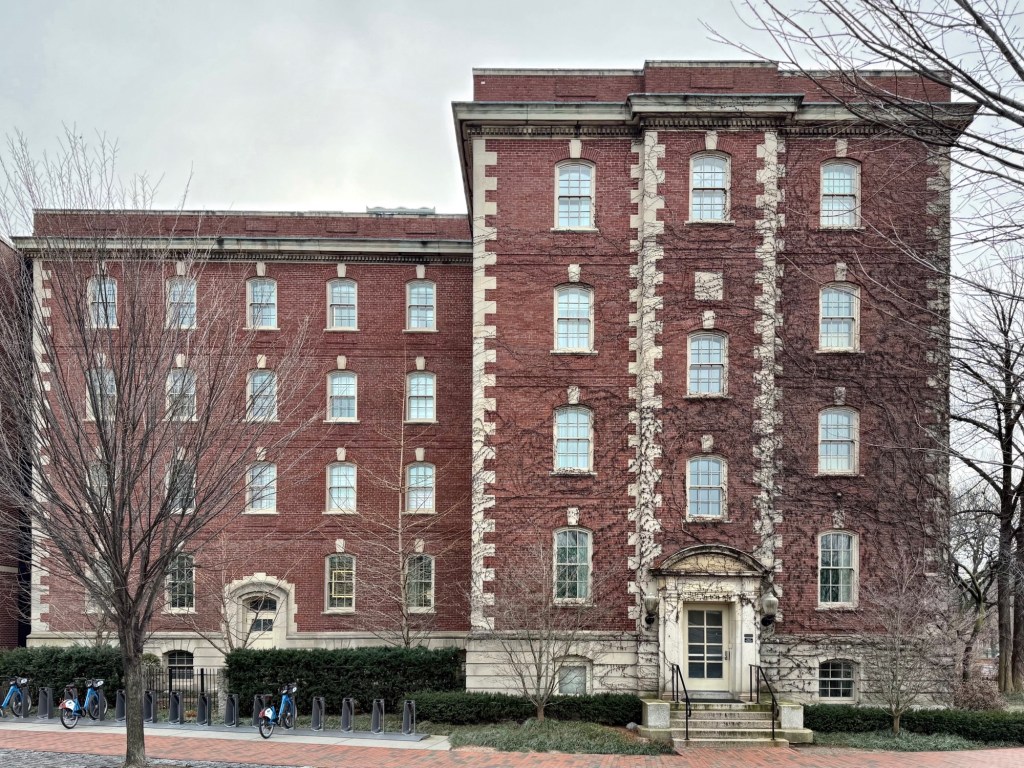
Eye and Ear Infirmary Nurse’s Residence // 1909

The Massachusetts Charitable Eye and Ear Infirmary (now Massachusetts Eye and Ear) began in 1824 by doctors, Edward Reynolds and John Jeffries II as a free weekly clinic they operated out of a rented room in Boston’s Scollay Square. At the time, Boston was an immigration destination for laborers arriving from Europe, among whom occupational injuries were common, but affordable medical care was scarce. With an increasing population and increasing medical needs, the clinic expanded rapidly. In 1849, a new clinic was built on Charles Street, just south of the West Boston Bridge (now Longfellow Bridge) from plans by Edward C. Cabot. As demand grew in the late 19th and early 20th centuries, the hospital sought expansion and built a new facility farther north on Charles Street, closer to Massachusetts General Hospital. The 1849 building was deemed excess and demolished, soon to be replaced by the current building on the site, the Nurse’s Dormitory. Built in 1909, this handsome, four-story brick and stone structure was designed by the office of Page and Frothingham in the Colonial Revival style, which contributes to the architectural character of Beacon Hill. The building provided much-needed residential space for nurses and other staff people who worked at the new Eye and Ear Infirmary a few blocks away. The building was later converted into an inn, the John Jeffries House (after one of the founders of the infirmary) until 2016, when the site closed and was converted into a wing of the new Whitney Hotel by Hacin Architects!

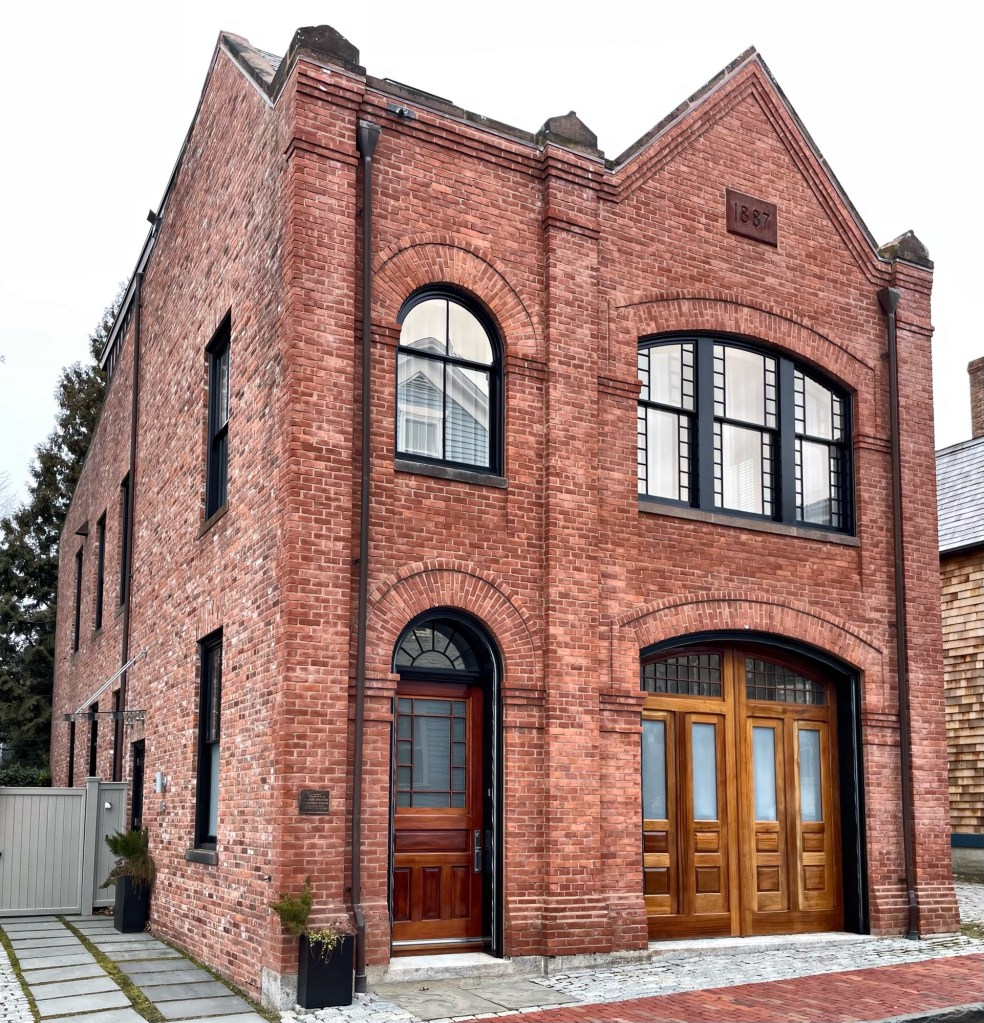
Newport Old Fire Station Hose No. 8 // 1887

One of the charming converted old fire stations of Newport, Rhode Island, can be found tucked away on Prospect Hill Street. This is Hose No. 8 Fire Station, built in 1887 by the City of Newport as a neighborhood station to battle fires in the dense network of streets and homes Downtown. The design blends Romanesque Revival and Victorian Gothic elements into a compact, two-story brick building. The station was closed in 1912 as the structure no-longer was compatible with larger fire apparatus and gasoline-powered trucks. The building would suffer from neglect and was crumbling, before being reconstructed, brick-by-brick, and restored by Hacin Architects of Boston as a private residence. The structure is essentially new on the interior but provides a significant preserved exterior that was long part of the eclectic streetscape of Prospect Hill Street.

Hooper Mansion // 1889

One of the finest Richardsonian Romanesque style mansions in America is this stunner at the corner of Beacon and Hereford streets in Boston’s Back Bay neighborhood. Built in 1889, the mansion was commissioned as a private residence for Robert Chamblet Hooper (1849-1908) and his wife, Helen Angier Ames Hooper. Helen’s father, Frederick Lothrop Ames one of the wealthiest men in Massachusetts and major benefactor to in the town of Easton, funded and oversaw construction of the Ames Free Library and the Easton Town Hall both by H. H. Richardson in his namesake Romanesque style. It was likely her family’s prevalence for the style that led to her own home in Boston’s Back Bay to follow suit. The firm of Andrews and Jacques are credited with designing the stately mansion which in 1889, cost over $100,000 to build. Robert Chamblet Hooper was treasurer and later president of the Constitution Wharf Company. A noted dog fancier, he was owner of “Judge” (also known as “Hooper’s Judge”), credited as the ancestor of the Boston Terrier breed. So we have the Hooper’s to thank for Boston’s iconic mascot! In 1913, the building transferred from the Hoopers to Mabel Slater, daughter of painter William Morris Hunt (and niece of architect Richard Morris Hunt) an eccentric widow and inventor. Mrs. Slater is credited with developing an ice-cooled refrigerator, a sleeping bag that doubled as a garment used by soldiers in World War I, and a doll head with movable eyes. Mabel routinely left open a rear door of the mansion in order to encourage the poor to find their way into the kitchen for shelter and food. She had a one-story ballroom built at the rear of the mansion in 1914. The house was converted into 6 condominium units in 2016 and restored at the exterior thanks to the architecture and design studio, Hacin.