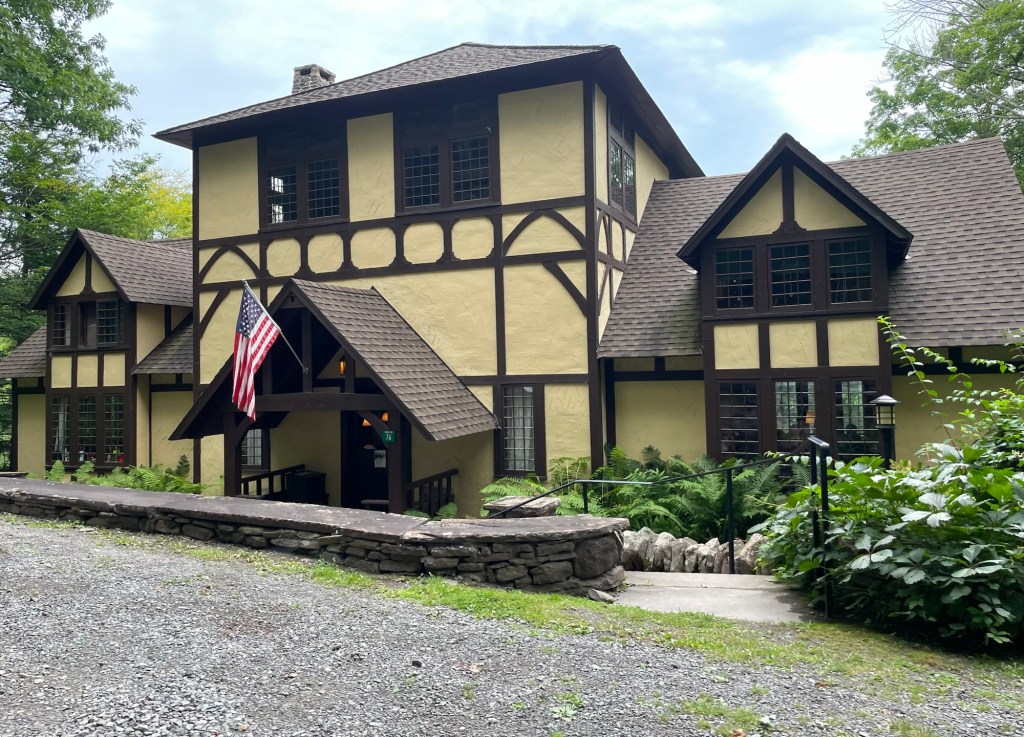
Onteora Park Library // 1906

Built in 1906, the Library at the Onteora Park summer colony in Hunter, New York, is one of the many architectural treasures in the development. Designed by George A. Reid, the Canadian artist, architect, and summer resident of Onteora Park, the Tudor-style Arts and Crafts building was constructed in 1906 and opened to a collection of over 1,500 books and a full-time librarian during the summer season. Built of wood-frame construction with stucco exterior finish and adorned by half-timbering, the building has been lovingly maintained and preserved by members of the community for over 120 years.
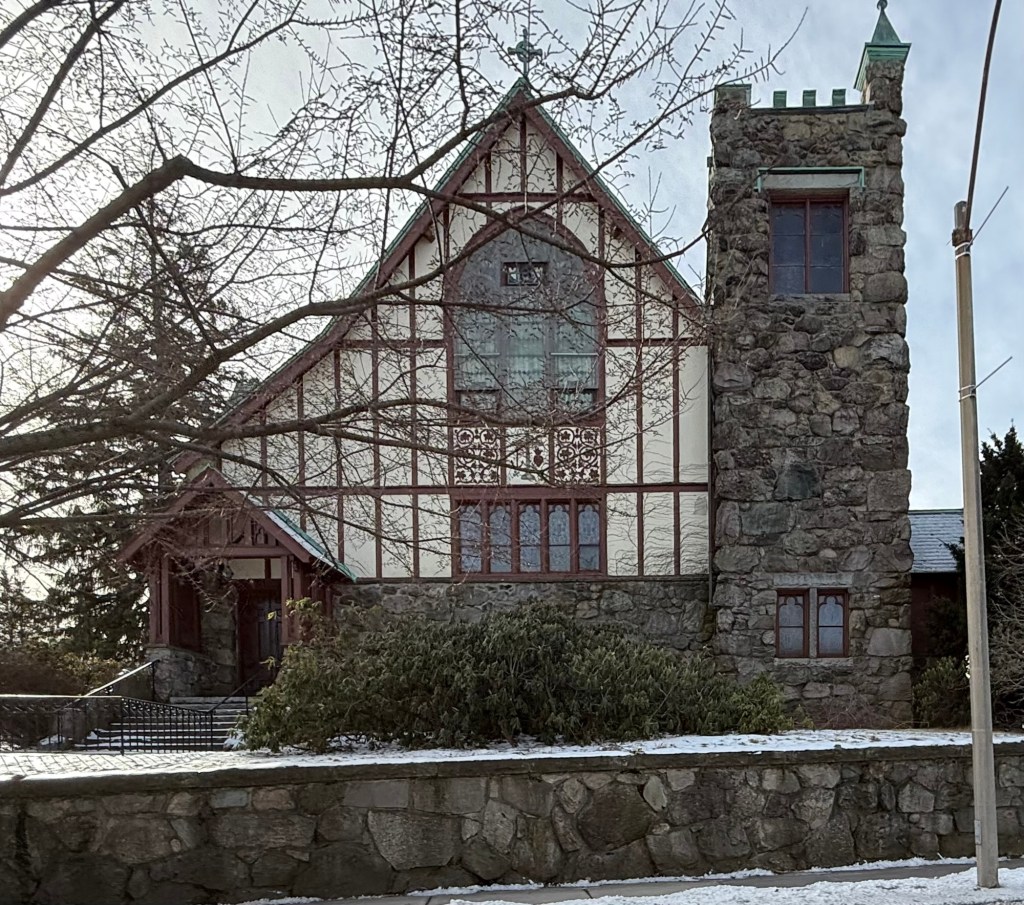
Saint Lawrence Catholic Church // 1896

The parish known today as Infant Jesus-St. Lawrence Church was established in 1898, two years after its original chapel building – shown here – was erected to serve as a mission church of St. Mary of the Assumption in Brookline Village. The St. Lawrence Church was built in 1896 on Boylston Street in the Chestnut Hill/South Brookline area of the town, built to serve a more local, well-off population in the area. The church (and the adjacent rectory) was designed by Franz Joseph Untersee, a Swiss-American architect, and Brookline resident, who designed many Roman Catholic churches throughout the eastern part of United States. The Neo-Gothic church building is built of wood and stone with stucco and applied half timbering. Besides the large stained glass window and applied ornament, the church is notable for its square, irregularly-laid granite tower with crenelation. The church remains active in the community and very-well preserved inside and out.

Rose and Howard K. Hilton House // 1900

Tudor Revivals may just be my favorite style of house. The interesting roof forms and gables, the use of stone, brick or stucco, and the presence of garrisoning and half-timbering in designs are always so charming. This enchanting Tudor Revival home in Providence, Rhode Island, was built in 1900 by local architect Howard K. Hilton (1867-1909) as his personal residence with wife Rose. He first worked in the office of H. W. Colwell and continued his training under Ellis Jackson joining him in partnership (Jackson & Hilton) and under the firm name was identified with the design of several churches, schools, hospitals and various other buildings in his native city before he retired in his final years. This home is very unique for its site on a narrow urban lot with the door at the side, brick first floor with jettying at the second floor of wood construction with half-timbering. While writing this, I noticed that there are also projecting gargoyles which serve as water spouts to send water away from the structure during rainfall events. Tudors are really the best!

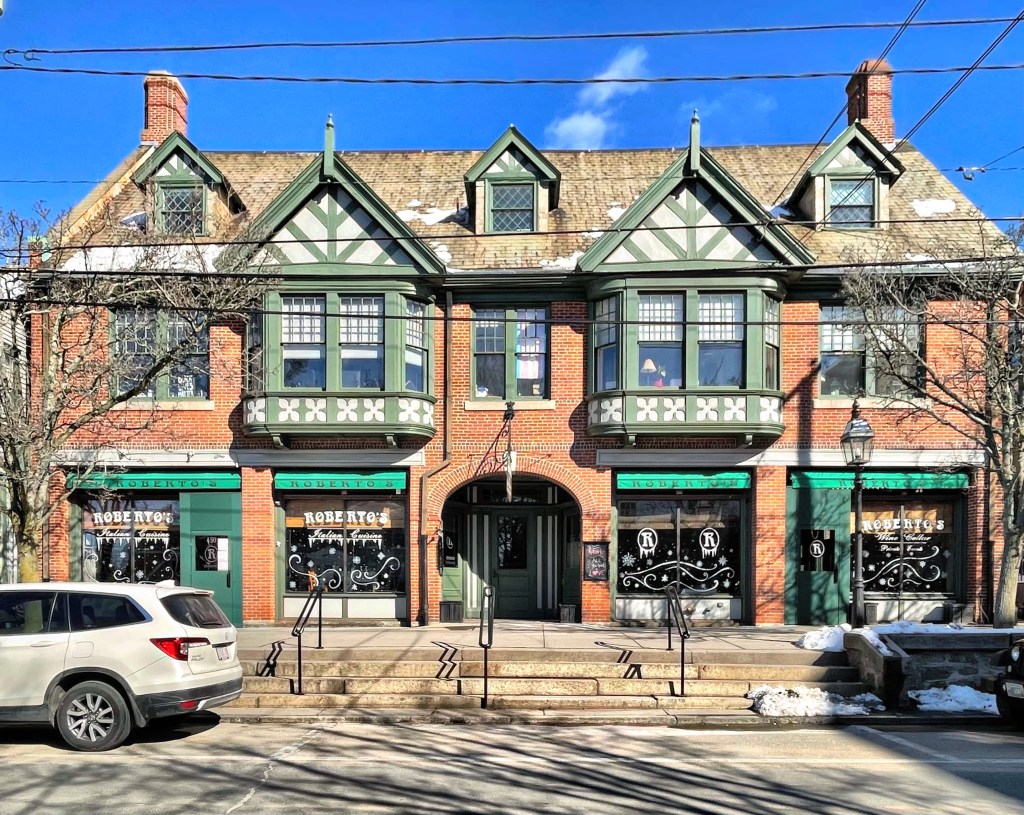
Bristol YMCA Building // 1899

In 1899, the Bristol Young Men’s Christian Association (YMCA) selected architect Wallis E. Howe to design this five-bay, gable-roof, Tudor Revival building as its headquarters. Architect Howe created a rich effect with red brick and white mortar in combination with Tudor half-timbers in green, and buff-colored stucco. The building is a rare example of the Tudor style in Bristol, but is one of the most successful in the state (in my opinion), due to its strong presence and massing working with the use of materials and colors. The large central archway led upstairs to a library and gymnasium for use by YMCA members, while the ground floor featured four small businesses. In 1967, a new entrance and lobby, was constructed, linking the original YMCA to the since abandoned Bristol Customs House and Post Office.