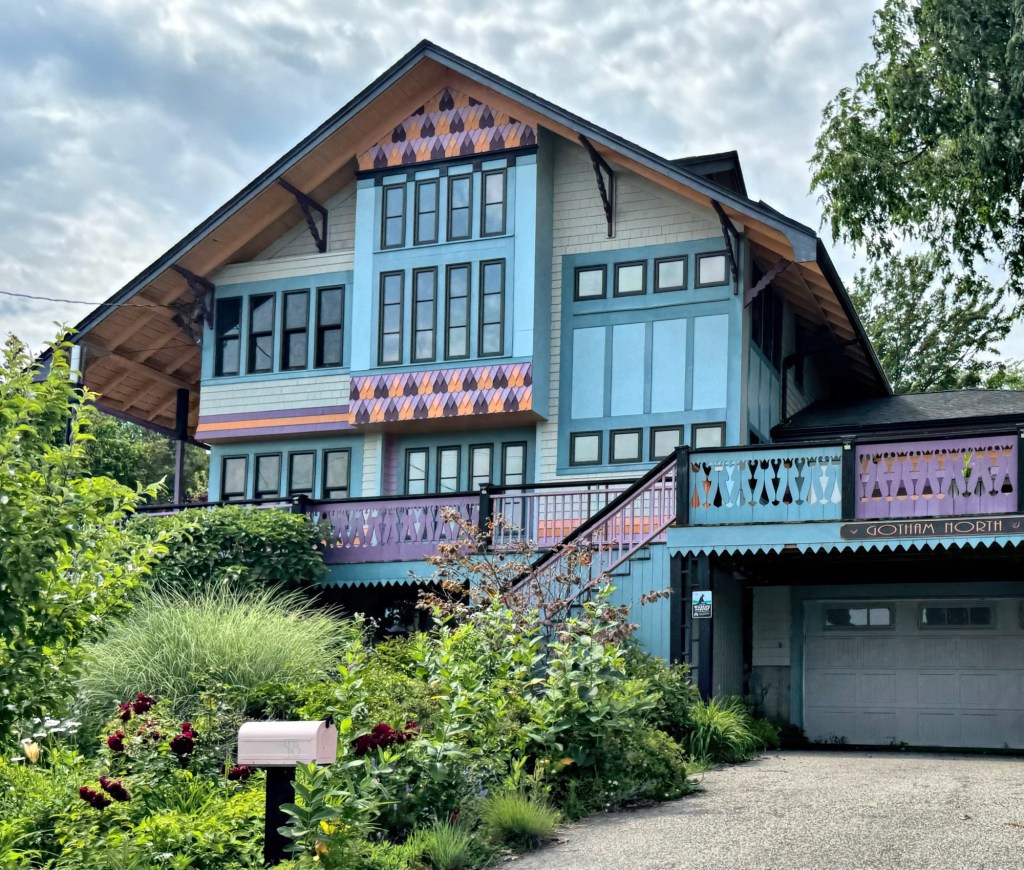
The most unique house in Hull, Massachusetts is this stunning (and rare) example of a Swiss Chalet, located on Vautrinot Avenue in the fashionable Hull Hill neighborhood, which is dominated by late-19th century summer cottages. The earliest owner of the house was George N. Faught (1831-1915), an artist and tailor who moved to Boston from Maine. George went into the tailoring business in Boston and did well for himself, eventually building (and possibly designing) this summer home for himself in Hull. Mr. Faught died in 1915 in his bed in Boston, and this property was sold at auction in 1917. After some insensitive alterations in the 20th century, the property was sold in 2011. The later owners restored much of the house, while modernizing it to meet their needs. It is a showstopper!
The house is privately owned and not open for tours.
One of the larger summer cottages on Hull Hill is the Miles Standish Cottage, which dates to around 1890. The cottage was built after the nearby Hull Yacht Club was completed in 1882, which was apparently the second largest yacht club upon its completion. Owner L. Miles Standish was the first owner and the eclectic Craftsman/Shingle style cottage has been lovingly maintained by all subsequent owners. The house appears to now have the name “Last Best Place”, which is very suitable!
Hull Hill is a relatively unknown enclave of summer cottages that sit on a rise overlooking Boston Harbor in the coastal community of Hull. The development of Hull Hill began in the 1870’s but became most active in the 1880’s and 1890’s. The land here was previously maintained as pasture and gardens by Hull villagers, but the land here was eventually sold and developed when the Hingham Water Company came to Hull in 1882. That same year, the railroad arrived which provided easier access to the town. This cottage on Andrew Avenue is one of the earliest summer residences built here, and dates to the late 1870s or early 1880s. The cottage was owned by Owen Augustus Galvin, a Boston lawyer, and his wife, Jane Sullivan Galvin. The unique cottage features a hexagonal section with a roof extending down to meet the wrap-around porch. The cottage exemplifies late 19th century cottage/resort architecture.
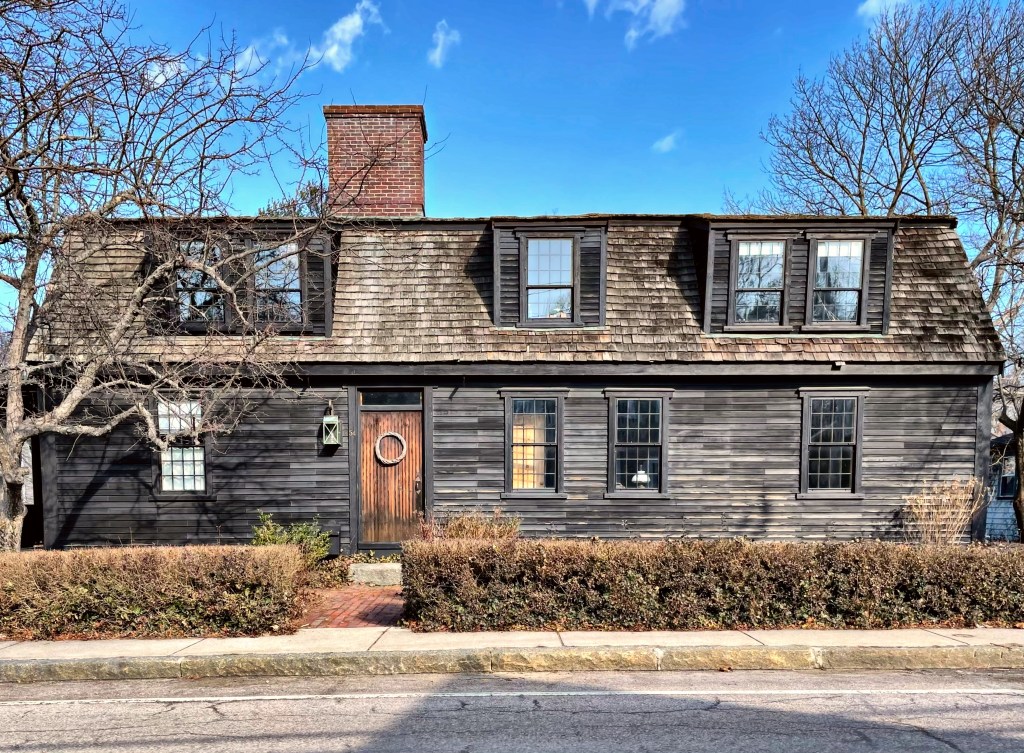
This gambreled Georgian cape house was built around 1744 and first occupied as a tavern. Local tradition holds that in this house, the town officials held meetings and managed governmental duties. After the Revolution, a new town hall was built and the tavern reverted back to its former use. It was occupied by Samuel and Olive Lovell until Olive’s death in the 1840s, she possibly ran the tavern alone for the thirty years she outlived her husband. The home is an excellent example of a pre-Revolutionary Georgian home, with a cedar shingle roof to top it all off!
One of the most stunning Georgian cape homes I have seen is this charming house in Hull, Massachusetts. Built in the mid-18th century, this house was acquired by Gideon Tirrell after the Revolutionary War. Gideon married Mary Loring, a descendant of John Loring, who built the home in my last post. The family appears to have occupied the home until the Cobb family acquired the house in about 1860, when Capt. Joseph Cobb and his wife, Eliza Turner settled here. He was the third “Keeper of the Lifeboat” from 1858-1876. In his role, he rowed out to sinking ships in the Boston Harbor and attempted to save any sailors still alive, often saving dozens of lives. The home was restored in the 1980s and remains one of the best-preserved in the town!
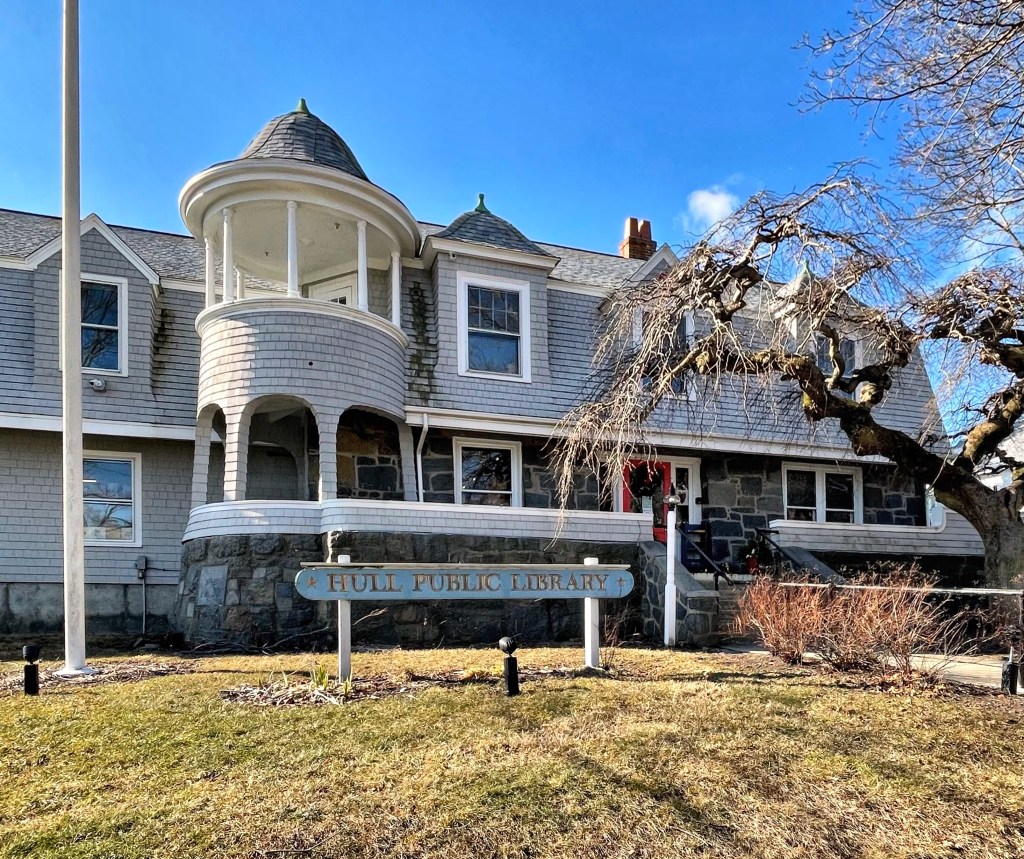
“We must not be Irish or African, or black or white. Not in America. We are gathering here … not to build up any petty community but to make the greatest nation and the strongest brotherhood that God ever smiled upon.”-John Boyle O’Reilly. This home (now the Hull Public Library) replaced the old Hunt House, which was the first parsonage of Hull, which was built around 1750. John Boyle O’Reilly, an Irish-American poet, journalist, author and activist bought the Hunt House in the 1870s and soon after demolished it as he felt it could not be salvaged. There are books about O’Reilly’s life story, so I recommend checking out his Wikipedia page. He constructed this house as a summer home by 1879, an excellent example of an early Shingle-style home. I cannot locate the architect, but am dying to learn! In the summer of 1890, O’Reilly took an early boat to his residence in Hull, Massachusetts from Boston. He had been suffering from bouts of insomnia during this time. That evening he took a long walk with his brother-in-law hoping that physical fatigue would induce the needed sleep.Later on that night he took some of his wife’s sleeping medicine and he apparently suffered an overdose of the medicine at this home, passing away at 46. Thousands of Bostonians mourned O’Reilly, and memorials were erected in the city, including the iconic 1896 John Boyle O’Reilly Memorial by Daniel Chester French.
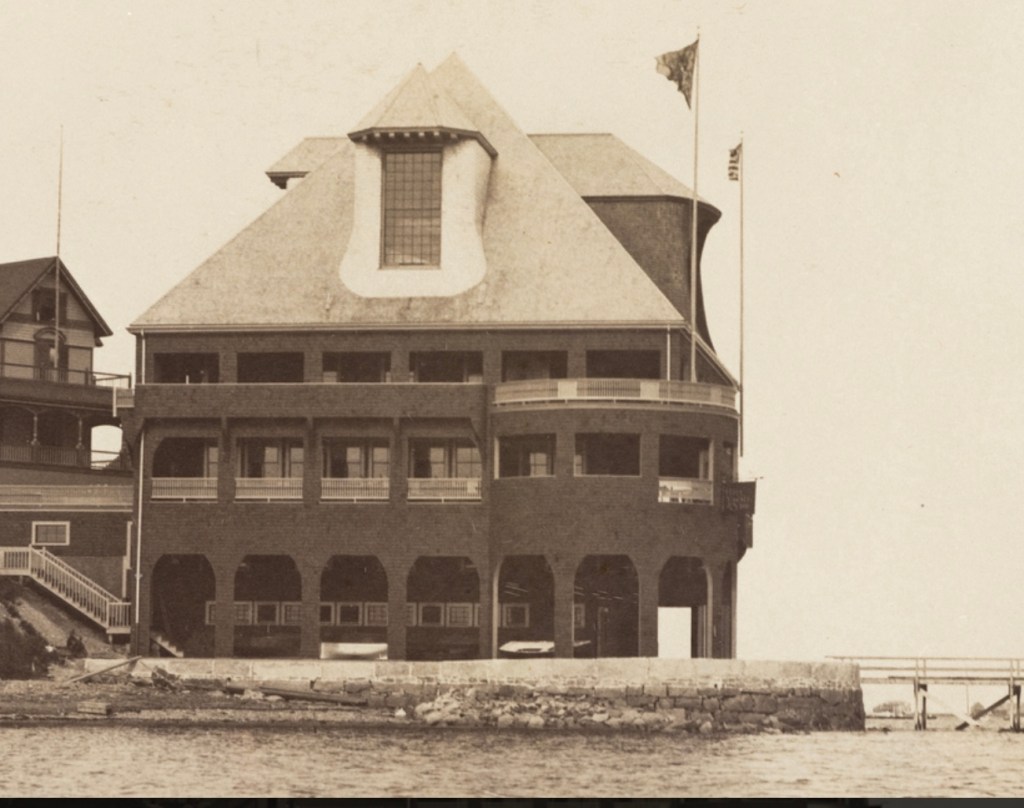
c.1891 image of second Hull Yacht Clubhouse, Stebbins Collection, HNE
In the Spring of 1880, thirteen Hull, Massachusetts, summer residents, who owned and raced small sailboats, met and decided to form a yacht club. The Hull Yacht Club was founded that same year. During the first two seasons there was no club house, sailing events were run from a private pier and dock and meetings were held at members homes. Even though they started with no club house, being close to Boston with plenty of deep, protected water, drew many new members. The first clubhouse here was constructed in 1882 and the club saw membership soar to over 500. The clubhouse was quickly deemed inadequate for the Boston-area elite and their massive sloops. The second Hull Yacht Club was completed in May 1891. The New York Times and Outing Magazine described the new club as one of the grandest yacht clubs in America, and at the time, it had the second highest membership in the country! The main club house was designed by architect S. Edwin Tobey, and stood four stories, with a 12 foot wide piazza on three sides covered by endless expanses of shingles. The third floor had billiard rooms and public and private dinning, committee room, reading room, wine room, The second floor housed three bowling alleys, and the first floor had lockers, showers, laundry, spar storage. The club merged a couple times over the subsequent decades, but suffered heavily due to the Great Depression, when the Gilded Age monies stopped flowing as freely. The club sold the massive shingled building to developers who sought to convert the building into a resort, but it was deemed a fire hazard and razed in the 1930s. The club erected a new, modest clubhouse near Point Allerton later.


 Buildings of New England
