East Blue Hill Library // 1920

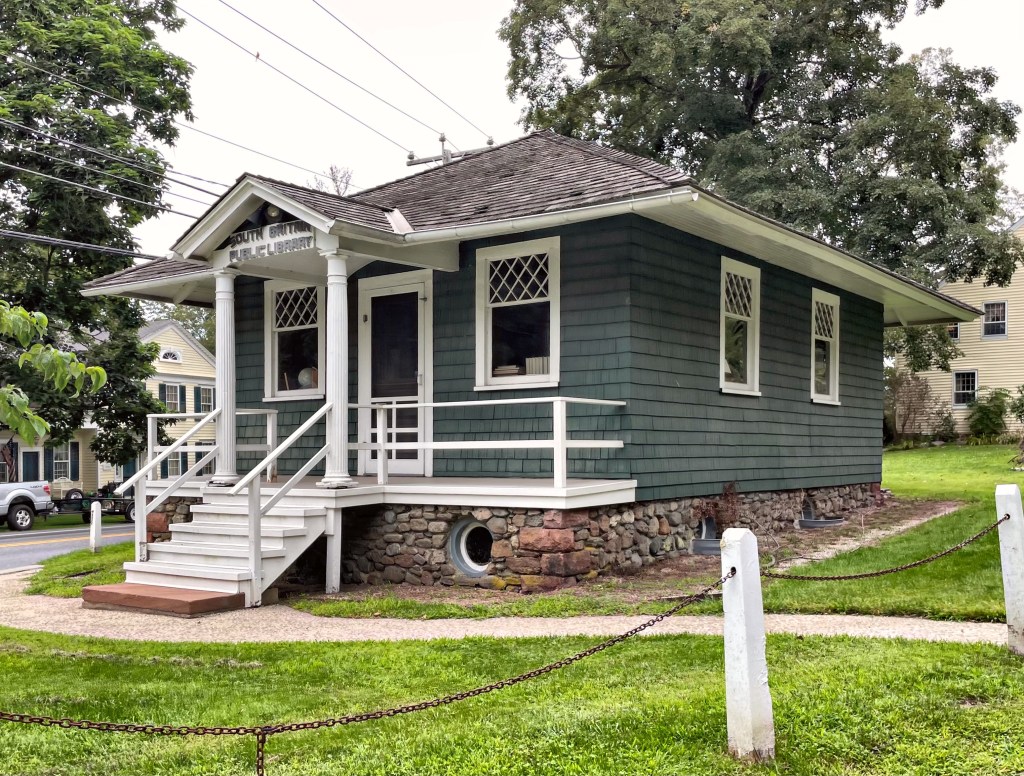
Every village needs a library, and East Blue Hill is no different! Without easy access to the main Blue Hill library, a group of “willing workers” amassed a collection of books with the hopes to donate to a future village library organization. A campaign to build the present building began in 1914 with the acquisition of land adjacent to the village post office, with major fundraising undertaken in 1917. The building, completed in 1920, was designed by John W. Merrow, a New York City theatrical architect and is an uncommon example of a small, Arts and Crafts style library in the state of Maine.

Friend Memorial Library // 1912

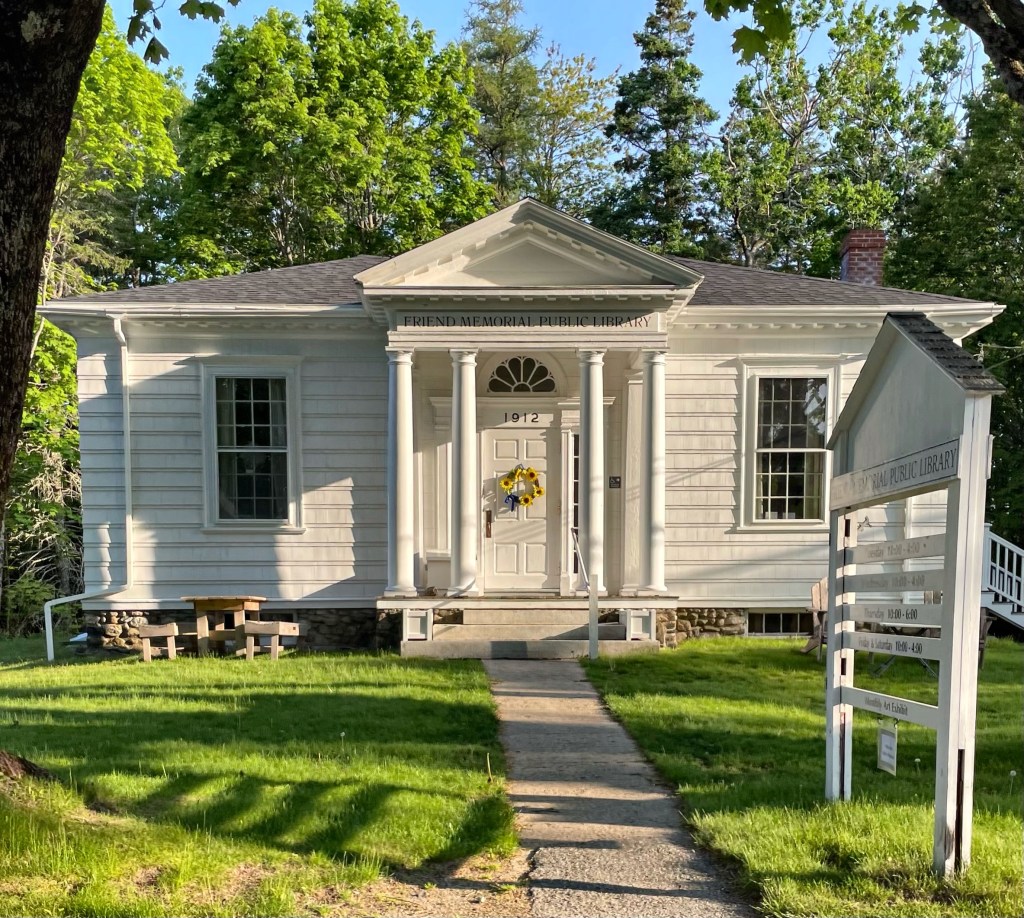
The Friend Memorial Public Library in Brooklin, Maine was built in 1912 on land donated three brothers in the Friend family. The brothers, Leslie, Robert and Victor Friend were born in Brooklin, but were raised in Melrose, Massachusetts. There, they made a fortune producing Friend’s Brick Oven Baked Beans. With their new wealth, the brothers had the bright idea of building a roller-skating rink for the enjoyment of the Brooklin community. As the need for a library overtook that of a roller rink, the brothers sought to cement their name in the town’s history by funding a new library building. The previous library was located in a small space in the IOOF Hall nearby (featured previously) and a new, purpose-built space for a library was a desire for the small community. William Nelson Wilkins, an architect of Magnolia, Massachusetts, and husband of Brooklin native Ella McFarland, was hired to furnish plans on the new building which was built in 1912 in the Colonial Revival style. In 1940, Katerine and E.B. White (author and summer resident), Owen Flye and others were instrumental in revitalizing the library, increasing the collections and hours of operations. About ten years ago, the library was restored and renovated inside by Elliott Architects.

Sedgwick Public Library // c.1915

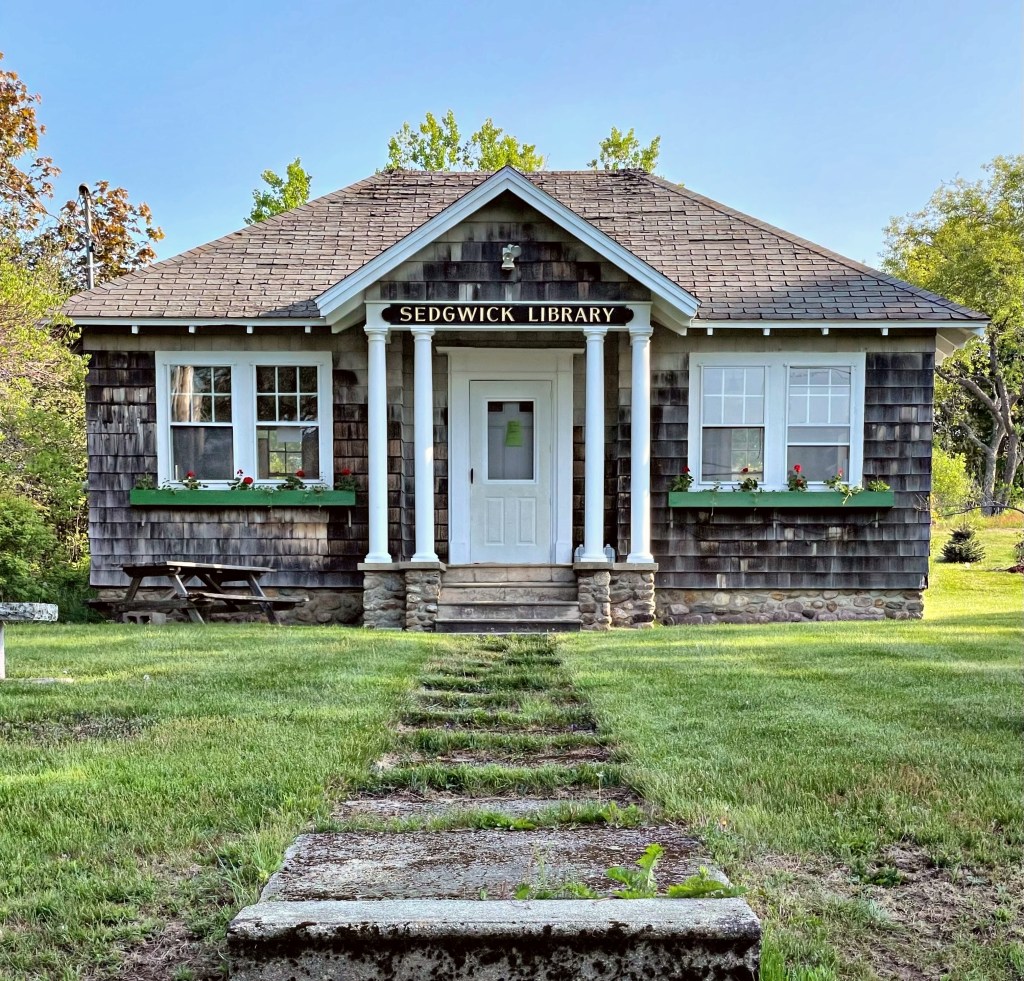
Nothing screams Maine architecture like weathered cedar shingles. The Sedgwick Public Library on Main Street was built in the early 20th century as a small village library to serve the small and seasonal population of the coastal town. The building is Craftsman in style in almost every feature. A broad hipped roof terminates with exposed rafters at the eaves, tuscan columns at the entry support the projecting portico, and a rubblestone foundation continues the composition of natural materials.

Young Men’s Library Association Building of Ware // 1881

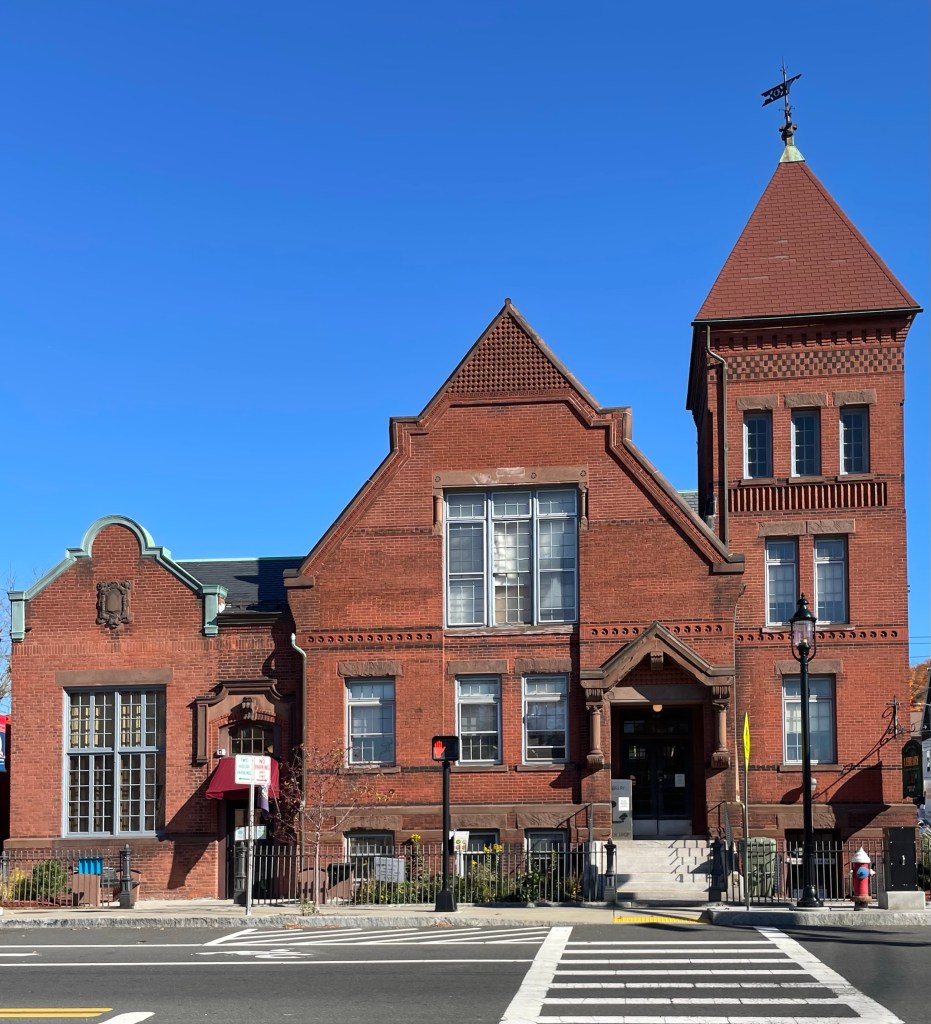
The first library in Ware, Massachusetts was organized in 1796. Operating on a subscribers system, books were lent out to those who paid the most at the time. The Society flourished for 26 years until it abruptly disbanded. In 1824, a second library was organized, called the Mechanics and Manufacturers’ Library, which was loosely managed by the manufacturing companies in town. In 1872, an act providing for the formation of library corporations was passed in Massachusetts. The Ware Young Men’s Library Association was the first to incorporate under the new law. They established a location in a commercial space in town until it was outgrown. In 1879, the present lot at the corner of Main and Church streets was donated by a local businessman. Funding was acquired and Springfield-based architect Eugene C. Gardner was hired to design the building. In 1923, an addition was built onto the side by architects Gay & Proctor in the Jacobethan Revival style, which blends well with the original Queen Anne building. The building remains home to the library and is the town’s public library.

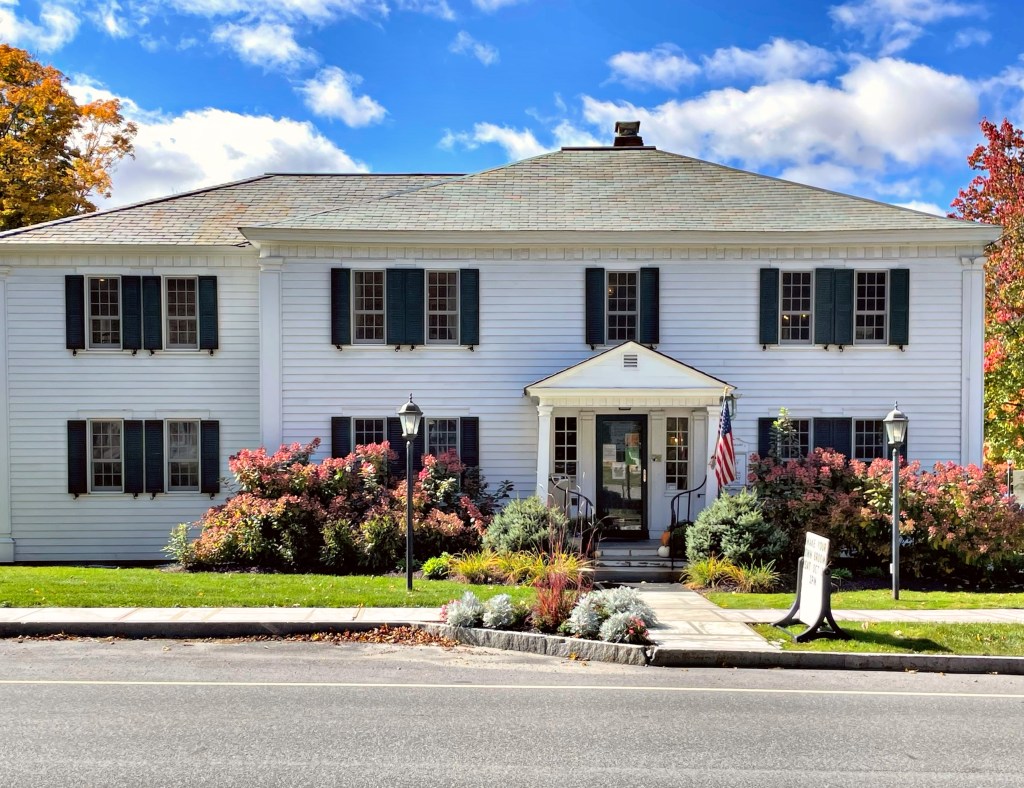
Dorset Village Library // c.1800

Dorset, Vermont is one of the most beautiful villages in New England and is often overlooked and rarely featured by “influencers” and blogs compared to nearby Manchester or Woodstock, which get all the love. This building in Dorset Village was built around 1800 and was constructed by John Gray, who kept a tavern here the early 19th century. The tavern was eventually sold out of the Gray family and was donated by Bernard G. Sykes to the Town of Dorset as the village’s library. It was originally known as the Sykes Memorial building so-named as a memorial to Bernard’s late parents, Lydia and Gilbert Sykes. The former tavern was renovated, giving it the Colonial Revival detailing and addition.

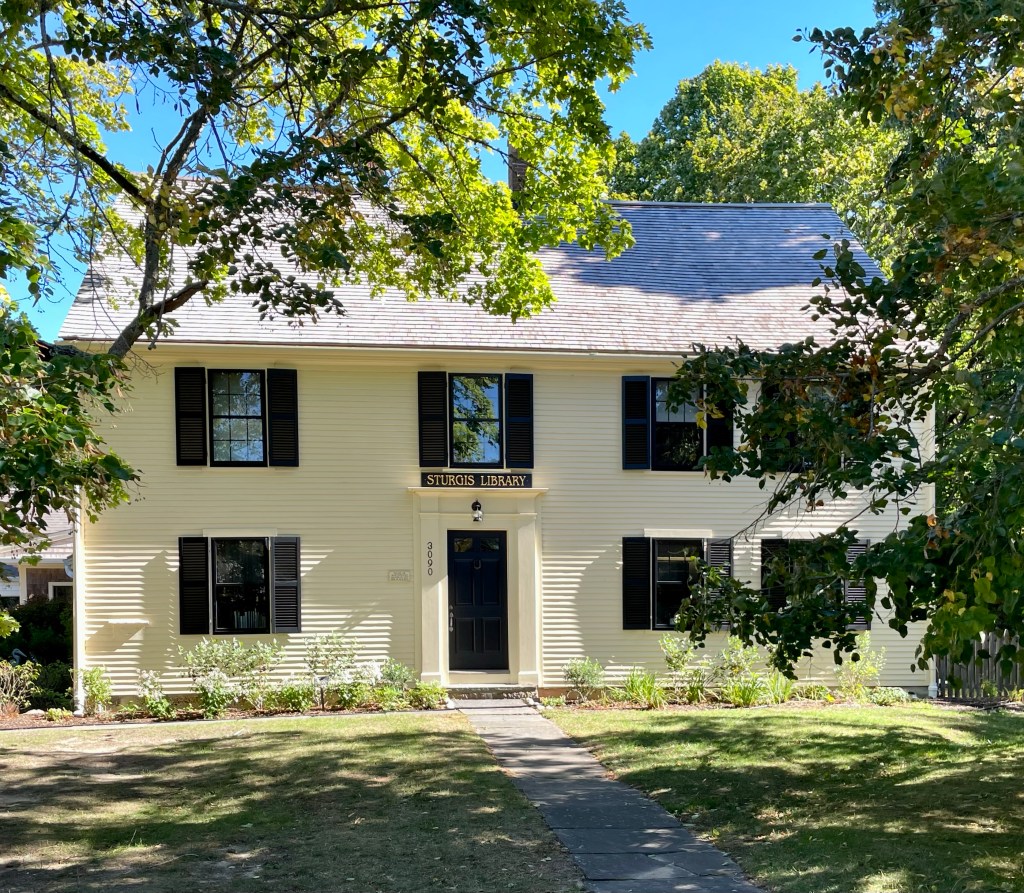
Sturgis Library // 1644

The original section of this building was the second dwelling house of Rev. John Lothrop (1584-1653), one of the first European settlers who settled in present-day Barnstable in 1639. The oldest part of this structure, built in 1644 (yes you read that correctly), is possibly the oldest extant house in the Town of Barnstable. The home was constructed as 21 feet long and 29 feet deep with a chimney on the west side of the house. Perhaps John Lothrop’s principal claim to fame is that he was a strong proponent of the idea of the Separation of Church and State (also called “Freedom of Religion”). This idea was considered heretical in England during his time, but eventually became the mainstream view of people in the United States of America, because of the efforts of Lothrop. His descendants today include six former presidents, Louis Comfort Tiffany (of the stained glass fame), J. P. Morgan, Clint Eastwood, Henry Wadsworth Longfellow, and many more recognizable names! The house was eventually owned by Isaac Chipman in the 19th century, and he modified the house close to its current conditions, adding on numerous times.

Captain William Sturgis, a mariner, businessman and politician, who was born in the house, purchased the property in 1862 from the heirs of Isaac Chipman. Sturgis left $15,000 along with this property in a trust to be gifted to the people of Barnstable for a public library. The library opened in 1867 in his honor, with 1,300 books. As the old Lothrop House is incorporated in the building, it makes the Sturgis Library the oldest building housing a public library in the USA. A great claim to fame for this town!


Gregg Free Library // 1907

The Wilton Public and Gregg Free Library is the public library for the town of Wilton, New Hampshire and is among the town’s most grand architectural designs. The library was the gift of David Almus Gregg (1841-1928), a native of Wilton who owned a successful building parts business in Nashua manufacturing doors, window blinds, and window sashes with his father, David Sr., who lived in the home featured previously. Gregg was significantly involved in the design and construction of the building, providing the highest quality building materials and contractors to the project, which was estimated to cost $100,000 when completed in 1907. The architectural firm of McLean and Wright was commissioned to design the building, who completed it in the Classical Revival style, like many of their other library designs in New England.

Frederick E. Parlin Memorial Library // 1894

The Frederick E. Parlin Memorial Library is arguably the most architecturally significant building in the City of Everett, Massachusetts. Constructed of buff brick, sandstone and terracotta, it displays characteristics of the Richardsonian Romanesque style including the main entrance set within a recessed arch at the base of a square tower with arched openings. In 1892, Albert Norton Parlin, a local businessman, donated to the City of Everett the Pickering Estate, his birthplace and familial home, to be torn down and a library erected on the parcel in memory of his son, Frederick E. Parlin, who died in 1890 at the age of eighteen. Albert Parlin gave to the City an additional $5,000 to aid in the building of the Frederick E. Parlin Memorial Library. The original 1894 library as well as a 1911-1912 addition were designed by local architect John Calvin Spofford who positioned the building to face a small triangular park. By the 1940’s, the building was outgrown, but it wasn’t until 1982 that a plan was set in motion to renovate the original building and to construct an addition. Childs, Bertman, Tseckares was chosen to draw up the architectural plans, and ground was finally broken in the spring of 1990. With construction of the new addition, the building is almost three times its original size and handicapped accessible, all with an appropriate, Post-Modern design.

Rockport Carnegie Library // 1907

Rockport’s Town Hall opened in 1869. In the year that followed, a series of concerts and lectures—including one by Mark Twain—raised $250 to establish a town library. The town members accepted the donation and approved matching funds for the project in 1871, and a space was allocated in the town hall for the library. This space was quickly outgrown as the town continued to grow, and the townspeople clamored for more books. In the early 1900s, members of the town began negotiating with Andrew Carnegie, who was giving libraries to towns that could not afford them. In 1903, a town meeting accepted Carnegie’s offer to provide $10,000 to build a free public library building for Rockport and the town acquired a lot for the new building. Rockport’s Carnegie Library was built in 1907. The structure is built of locally quarried granite with Classical Revival detailing. The building functioned as a library until the fall of 1993, when additional space was needed and the town converted an old school to serve as the new building. The old Carnegie Library in Rockport was converted to a private home.

Hathaway Memorial Library // 1895

One of the smallest and most charming public library buildings in New England is the Hathaway Memorial Library in Assonet Village, in Freetown, Mass. The building was constructed in 1895 from funds donated to the town by Florence E. Hathaway as a memorial to her late father, Guilford Hathaway. For the early years of the library, there was no hired librarian, so Florence staffed the building on Thursdays, and two others alternated on Saturdays, to serve the community. By the turn of the 20th century, the postmaster’s wife was hired as the librarian, and given an office in the small building. Little town libraries just make me smile, they are so inviting and cozy!