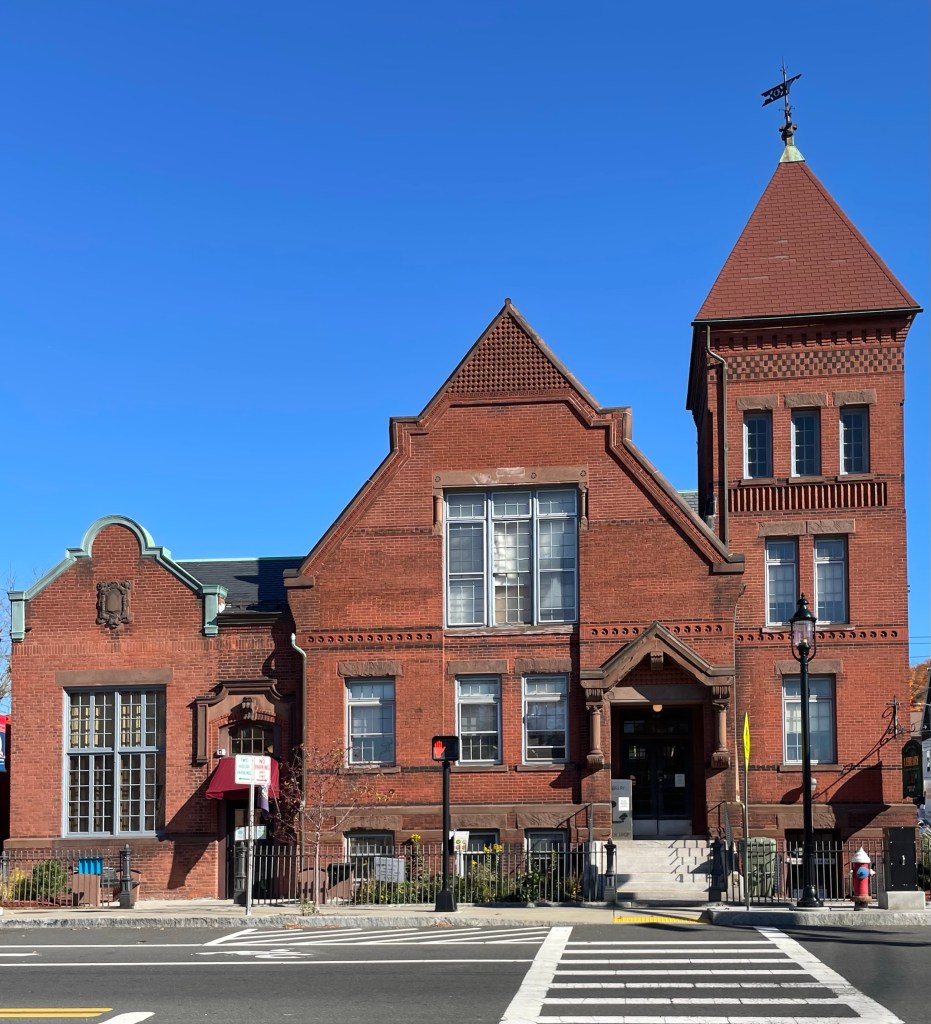
In his will, lifelong Chaplin, Connecticut resident William Ross (1833-1908) bequeathed his hometown funds to erect its first purpose-built public library. As planning began, his widow, Emily Jones Ross donated even more to fund a building fitting of her late husband. The Queen Anne/Romanesque Revival style library is built of pressed brick with granite trim and features a prominent rounded corner bay of cedar shingles. The masonry work was done by George E. Snow but I could not locate the architect. The town outgrew the library and moved it into a new building nearby, selling the William Ross Public Library to a private owner, who appears to be renovating it now.
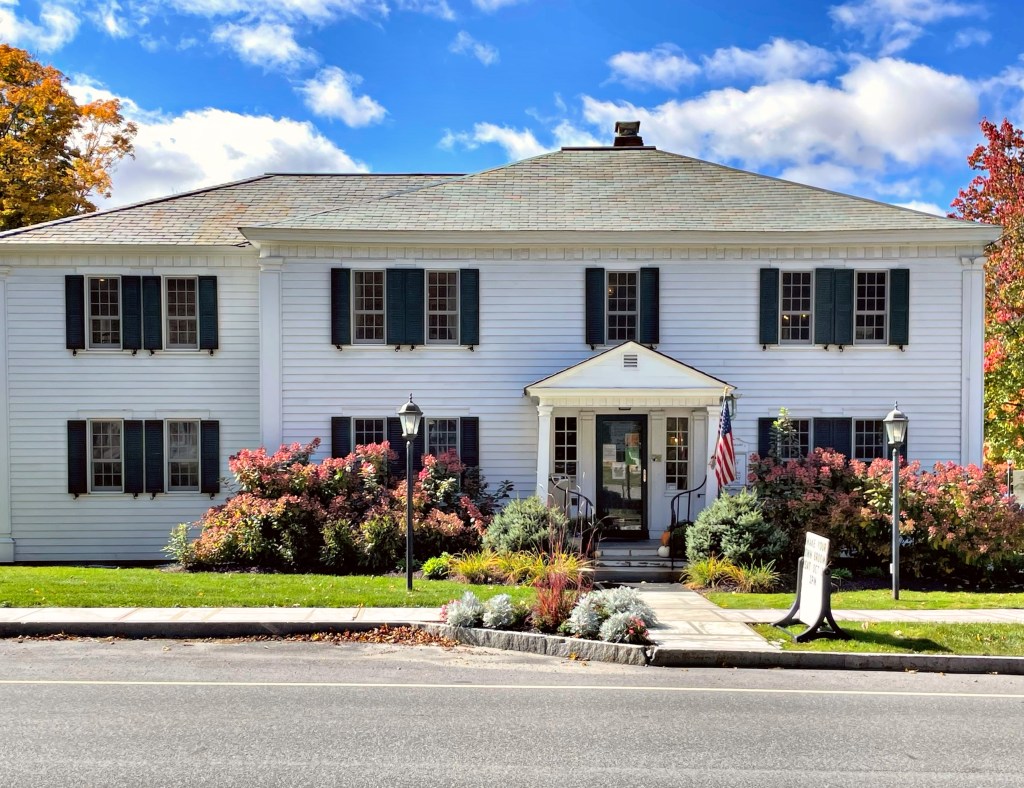
Methodists established a small congregation in Eastford, Connecticut by 1826, and by 1831, a new meeting house was built in the center of the village. The meeting house was used jointly by Methodists and Universalists, each having the right to occupy it half the time. By 1847, Methodists here were able to erect their own church, this building, in the Greek Revival style. Originally, the building had two doors on either side of a center window in the façade. There was a steeple and, rare in those days, a pipe organ in the sanctuary. In 1916, the church joined with the nearby Congregational church, requiring them to sell the building ten years later. The town of Eastford bought the structure for $200 in 1926 for use as a town hall. In 1934, the Civil Works Administration provided funds to renovate the building with the town library being installed in a portion of the basement along with town offices and a vault. Town meetings were held in the former sanctuary space upstairs. When the space was outgrown for town offices, a new building was constructed elsewhere and this building transitioned to solely library use. The renovation project was paid for by money bequeathed by Wilmer Glenn, a New York stockbroker who spent summers town. He donated funds in memory of his late wife, Ivy. The present-day name of the building came to be the Ivy Glenn Memorial and the library moved into its new spacious home in 1972.
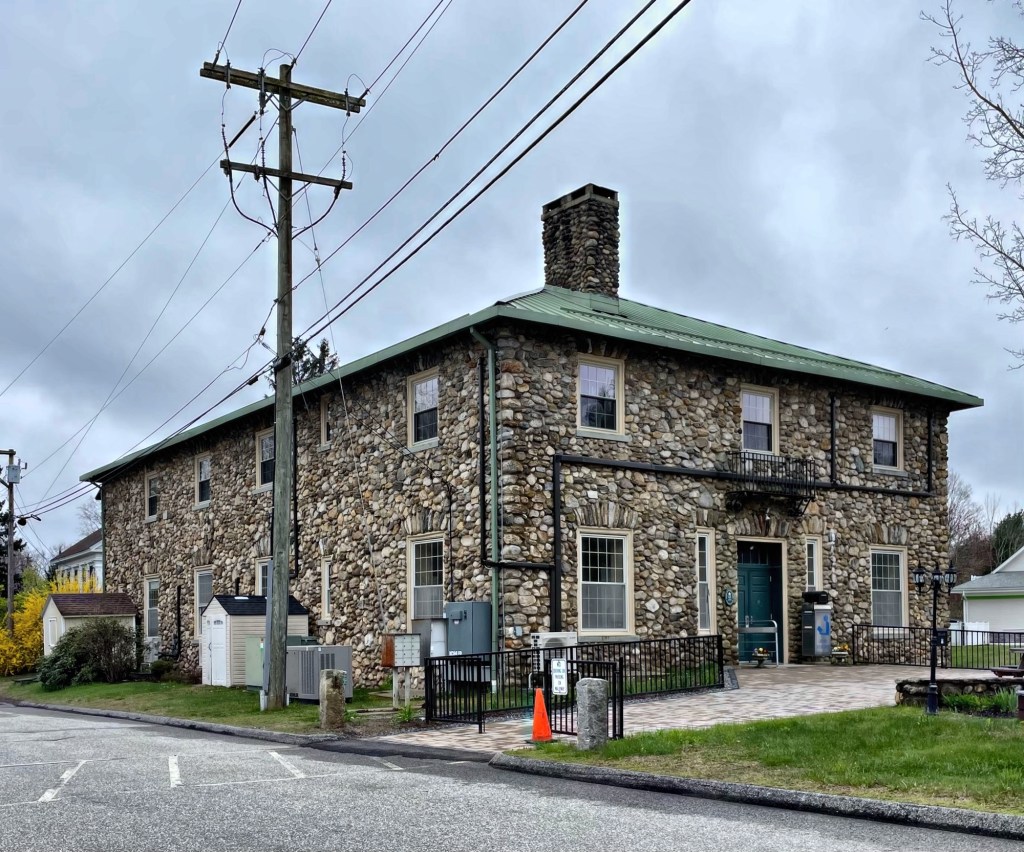
In the 1840s, Archibald Babcock (1780-1862) from Ashford, Connecticut, went west to engage in the California Gold Rush to seek his fortune. He did well and upon his return, moved to Charlestown, Massachusetts and began purchasing property for redevelopment. Upon his death in 1862, Mr. Babcock bequeathed $3,000 to the Town of Ashford start a “free” library there. For the next 60 years the library was located in a variety of private homes and country stores in town until the 1920s when this stone structure was built to house the town hall and library. Construction was made possible by a gift from Charles Knowlton, whose family had lived in the area since the 18th century. When built, it featured a number of modern innovations, including electrical service (generated on site), and steam heat. In addition to town offices and the library, the building also has an auditorium which is used for town meetings. Architect Herbert Loud furnished plans for the building which is rustic Arts and Crafts in style with randomly laid fieldstone walls with wide mortared joints. The roof eaves show exposed rafter tails below the shallow hipped roof.
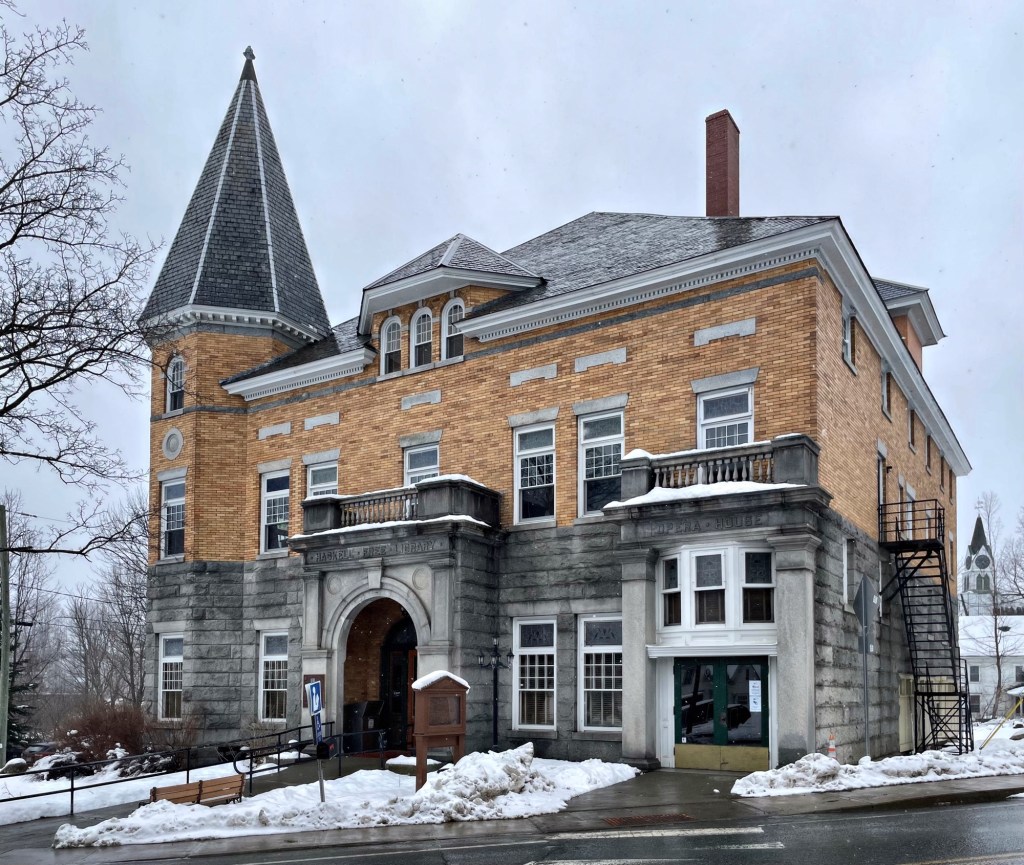
How many buildings do you know of that straddle two countries?! Well, here is one of the most iconic buildings in Vermont, the Haskell Free Library and Opera House of Derby. The building was gifted to the villages of Derby Line, Vermont and Rock Island, Quebec, by Martha Stewart Haskell and her son, Horace Stewart Haskell, who wanted to leave their mark on the town. The building was designed by James Ball of Rock Island, Quebec and is a high-style structure comprised of both a library and opera house for residents. Designed in a eclectic mix of Romanesque Revival and Classical Revival, there is a lot to look at from both countries! Some of the outstanding features of the building include the structural and ornamental use of granite, stained glass windows imported from Scotland, ornate fireplaces and rich woodworking on the library interior, and one of the most elaborate opera house interiors in a completely preserved condition in Vermont.
Arguably the most beautiful building in Mansfield, Massachusetts is the Soldier’s Memorial Library in the center of town. Constructed in 1901, the Soldiers’ Memorial Library is a well-preserved example of 19th century High Victorian architecture with Shingle style elements, designed by the prominent Boston architectural firm of Peabody & Stearns. In as early as 1896, the idea of constructing a building as a memorial to the soldiers who died in the Civil War had prominent local members of the community. In 1898, a relatively new resident in town, Mrs. Elizabeth Noble, donated a parcel of land for the building with the stipulation that the first floor was to be used as a library and the second floor as an “audience room”, banquet room, and kitchen for the use of the G.A.R. The architects created one of their most significant civic buildings with an interesting juxtaposition of Gothic elements with Shingle style details. The Gothic lancet window and door surround blends surprisingly well with the use of rubblestone on the first story with buttresses and shingle siding above which give the building a fortress-like appearance.
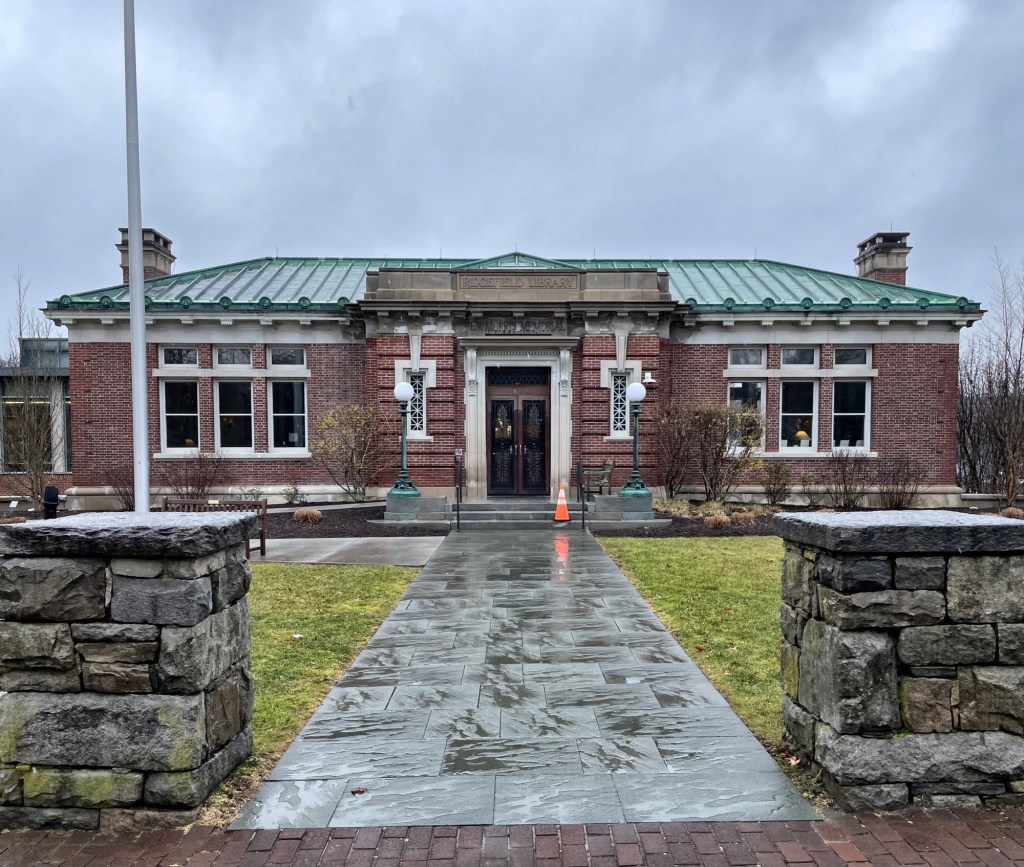
The Ridgefield Public Library is an intriguing Beaux Arts style building from the turn of the 20th century. Built in 1901, the brick structure replaced the Smith Tavern, a 1798 frame structure built by Amos Smith right on Main Street. In 1900 the Smith Family sold the property to James N. Morris who had this library built in memory of his wife, Elizabeth, donating it to the town. Architect Raleigh G. Gildersleeve is credited with the design which is comprised of a one-story building constructed of brick with cast stone trim details and ironwork at the door. The library was given later additions, which are recessive in location and detailing to let the original building shine, as it should!
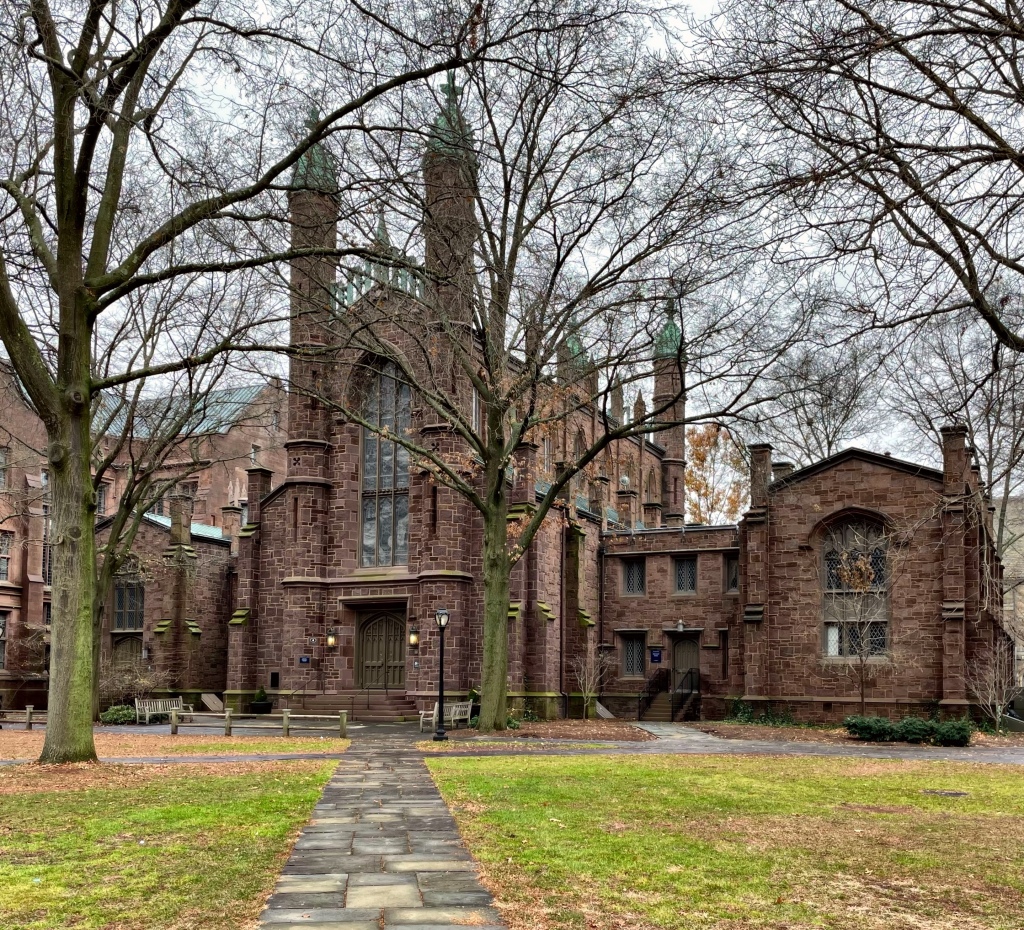
One of the most architecturally significant college buildings in the United States, Dwight Hall was designed to house the growing book collection of Yale College as its library. The former Yale College Library, now Dwight Hall, represents a significant shift in Yale’s campus architecture from Georgian and Federal brick buildings to the Gothic mode which the campus is largely known for today. Dwight Hall was designed by local architect Henry Austin with the guidance of esteemed architects Ithiel Town and Alexander Jackson Davis, both experts in early high-style Gothic buildings in America. The design, to me, resembles the 1443 King’s College Chapel in Cambridge, England. The structure is constructed of brownstone from Portland, Connecticut, and it is composed of a central block with two smaller flanking wings on either side connected by smaller linking spaces. At the yard facade, two octagonal towers with domed copper roofs rise, flanking a large, pointed lancet arch window that extends above the doorway. The library was outgrown fairly quickly, necessitating an annex next door and eventually collections were transferred to Sterling Memorial Library in 1930, the Old Library was converted to a chapel and community service building and is known as Dwight Hall.
One of the few libraries in Maine built in the Tudor Revival style can be found in the quaint coastal town of Gouldsboro. This library was built in 1907 from plans by Maine architect Frederick L. Savage after members of town sought a community space where they could meet and check out books. The small one-story building sits upon a tall fieldstone foundation and with a stuccoed exterior above. The entrance consists of a single door flanked by sidelight windows topped by an elliptical hood, above which sits within the half-timbered gable front. The small library was in operation until 1956. It reopened briefly in 1990, but closed again. It is owned by the West Gouldsboro Village Improvement Association. Historic library buildings are the best!
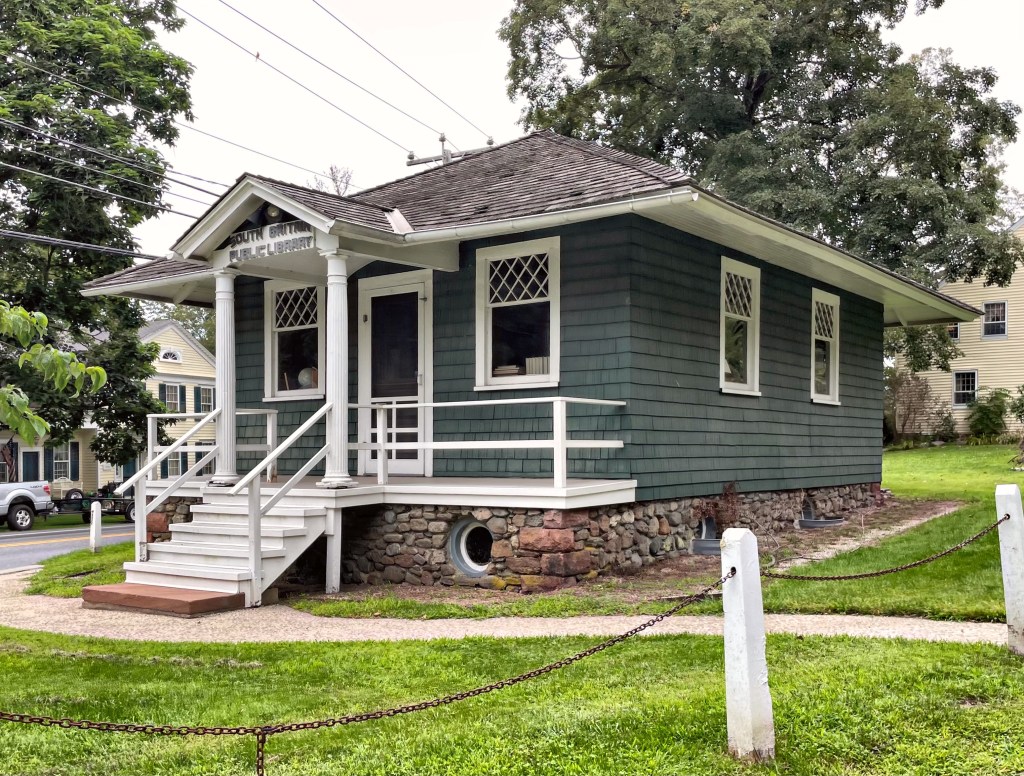
Historic library buildings might just be my favorite building type in New England. This charming example is the former South Britain Public Library in Southbury, Connecticut. The library was constructed in 1904 and blends Shingle and Arts & Crafts styles with the shingled walls atop a raised rubblestone foundation with a pyramidal roof with broad overhanging eaves with exposed rafter ends. The library was outgrown and rather than add onto the small building on its lot, a new library was built in 1969. The former library is now maintained by the Southbury Historic Buildings Commission and is operated by the Southbury Historical Society as a local history and genealogy research center.
Every village needs a library, and East Blue Hill is no different! Without easy access to the main Blue Hill library, a group of “willing workers” amassed a collection of books with the hopes to donate to a future village library organization. A campaign to build the present building began in 1914 with the acquisition of land adjacent to the village post office, with major fundraising undertaken in 1917. The building, completed in 1920, was designed by John W. Merrow, a New York City theatrical architect and is an uncommon example of a small, Arts and Crafts style library in the state of Maine.
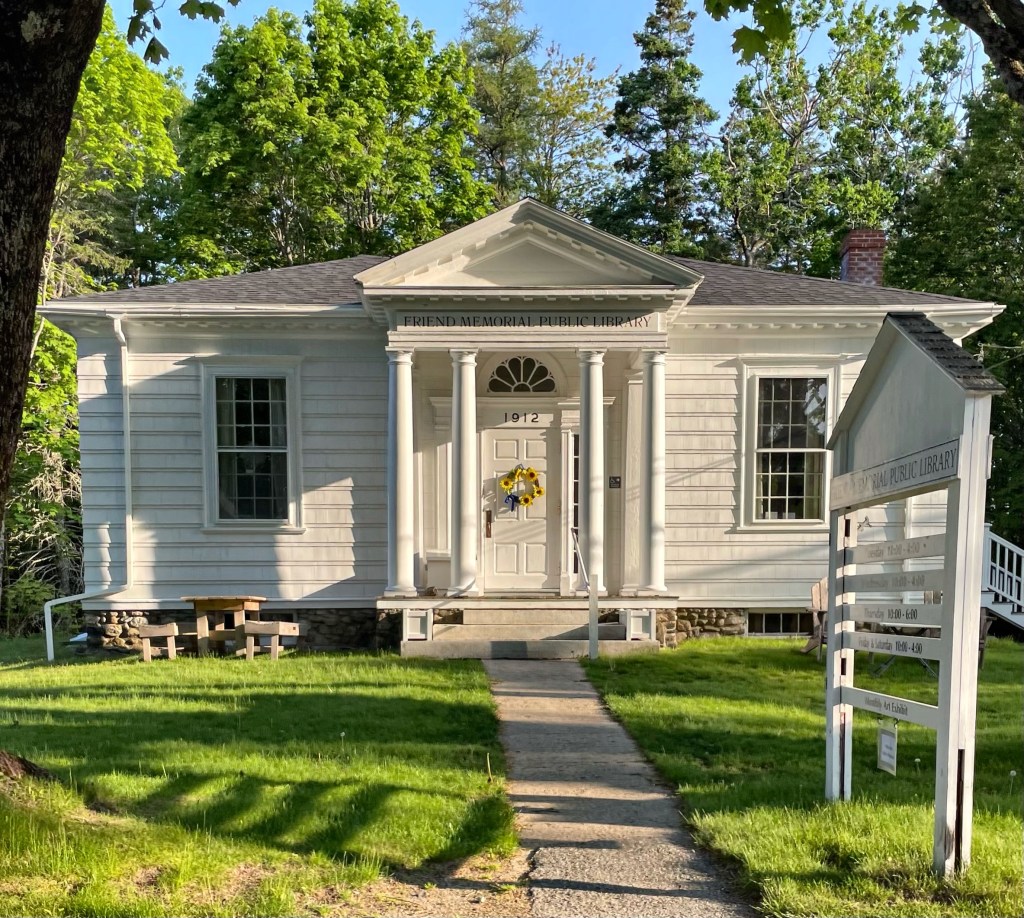
The Friend Memorial Public Library in Brooklin, Maine was built in 1912 on land donated three brothers in the Friend family. The brothers, Leslie, Robert and Victor Friend were born in Brooklin, but were raised in Melrose, Massachusetts. There, they made a fortune producing Friend’s Brick Oven Baked Beans. With their new wealth, the brothers had the bright idea of building a roller-skating rink for the enjoyment of the Brooklin community. As the need for a library overtook that of a roller rink, the brothers sought to cement their name in the town’s history by funding a new library building. The previous library was located in a small space in the IOOF Hall nearby (featured previously) and a new, purpose-built space for a library was a desire for the small community. William Nelson Wilkins, an architect of Magnolia, Massachusetts, and husband of Brooklin native Ella McFarland, was hired to furnish plans on the new building which was built in 1912 in the Colonial Revival style. In 1940, Katerine and E.B. White (author and summer resident), Owen Flye and others were instrumental in revitalizing the library, increasing the collections and hours of operations. About ten years ago, the library was restored and renovated inside by Elliott Architects.
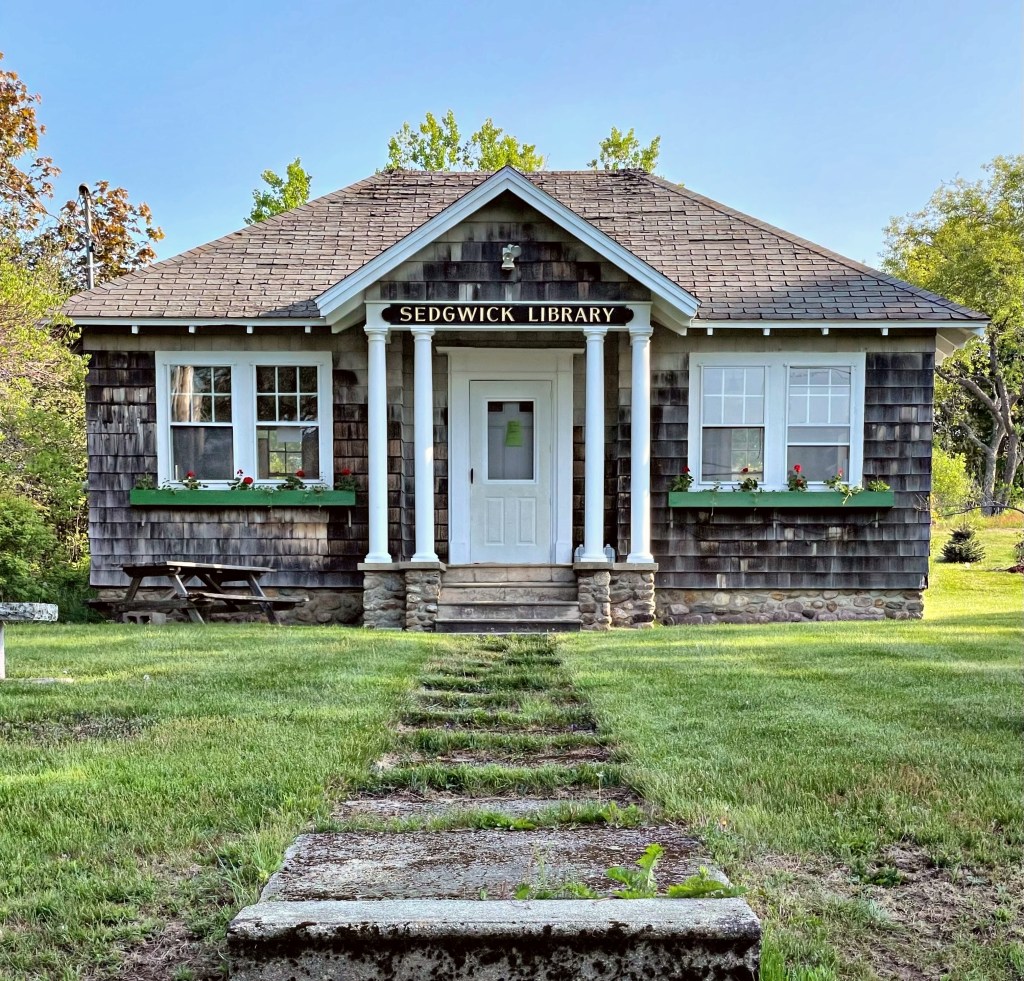
Nothing screams Maine architecture like weathered cedar shingles. The Sedgwick Public Library on Main Street was built in the early 20th century as a small village library to serve the small and seasonal population of the coastal town. The building is Craftsman in style in almost every feature. A broad hipped roof terminates with exposed rafters at the eaves, tuscan columns at the entry support the projecting portico, and a rubblestone foundation continues the composition of natural materials.
The first library in Ware, Massachusetts was organized in 1796. Operating on a subscribers system, books were lent out to those who paid the most at the time. The Society flourished for 26 years until it abruptly disbanded. In 1824, a second library was organized, called the Mechanics and Manufacturers’ Library, which was loosely managed by the manufacturing companies in town. In 1872, an act providing for the formation of library corporations was passed in Massachusetts. The Ware Young Men’s Library Association was the first to incorporate under the new law. They established a location in a commercial space in town until it was outgrown. In 1879, the present lot at the corner of Main and Church streets was donated by a local businessman. Funding was acquired and Springfield-based architect Eugene C. Gardner was hired to design the building. In 1923, an addition was built onto the side by architects Gay & Proctor in the Jacobethan Revival style, which blends well with the original Queen Anne building. The building remains home to the library and is the town’s public library.
Dorset, Vermont is one of the most beautiful villages in New England and is often overlooked and rarely featured by “influencers” and blogs compared to nearby Manchester or Woodstock, which get all the love. This building in Dorset Village was built around 1800 and was constructed by John Gray, who kept a tavern here the early 19th century. The tavern was eventually sold out of the Gray family and was donated by Bernard G. Sykes to the Town of Dorset as the village’s library. It was originally known as the Sykes Memorial building so-named as a memorial to Bernard’s late parents, Lydia and Gilbert Sykes. The former tavern was renovated, giving it the Colonial Revival detailing and addition.
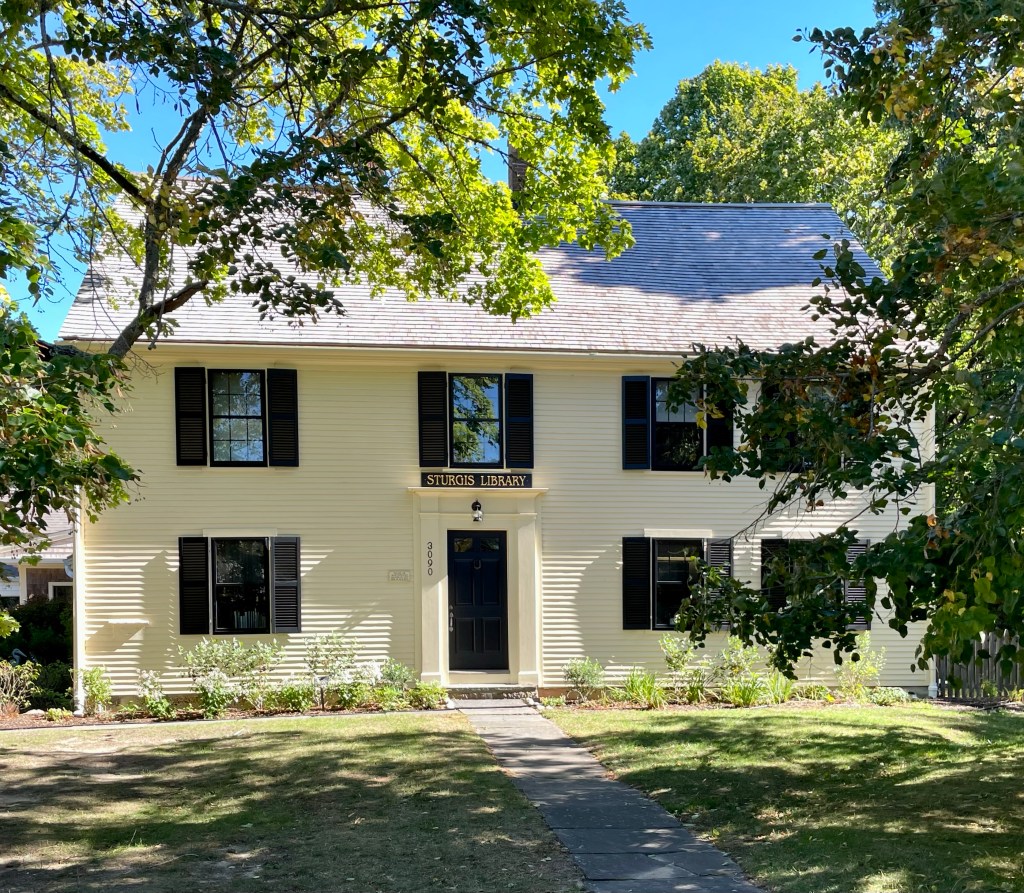
The original section of this building was the second dwelling house of Rev. John Lothrop (1584-1653), one of the first European settlers who settled in present-day Barnstable in 1639. The oldest part of this structure, built in 1644 (yes you read that correctly), is possibly the oldest extant house in the Town of Barnstable. The home was constructed as 21 feet long and 29 feet deep with a chimney on the west side of the house. Perhaps John Lothrop’s principal claim to fame is that he was a strong proponent of the idea of the Separation of Church and State (also called “Freedom of Religion”). This idea was considered heretical in England during his time, but eventually became the mainstream view of people in the United States of America, because of the efforts of Lothrop. His descendants today include six former presidents, Louis Comfort Tiffany (of the stained glass fame), J. P. Morgan, Clint Eastwood, Henry Wadsworth Longfellow, and many more recognizable names! The house was eventually owned by Isaac Chipman in the 19th century, and he modified the house close to its current conditions, adding on numerous times.
Captain William Sturgis, a mariner, businessman and politician, who was born in the house, purchased the property in 1862 from the heirs of Isaac Chipman. Sturgis left $15,000 along with this property in a trust to be gifted to the people of Barnstable for a public library. The library opened in 1867 in his honor, with 1,300 books. As the old Lothrop House is incorporated in the building, it makes the Sturgis Library the oldest building housing a public library in the USA. A great claim to fame for this town!