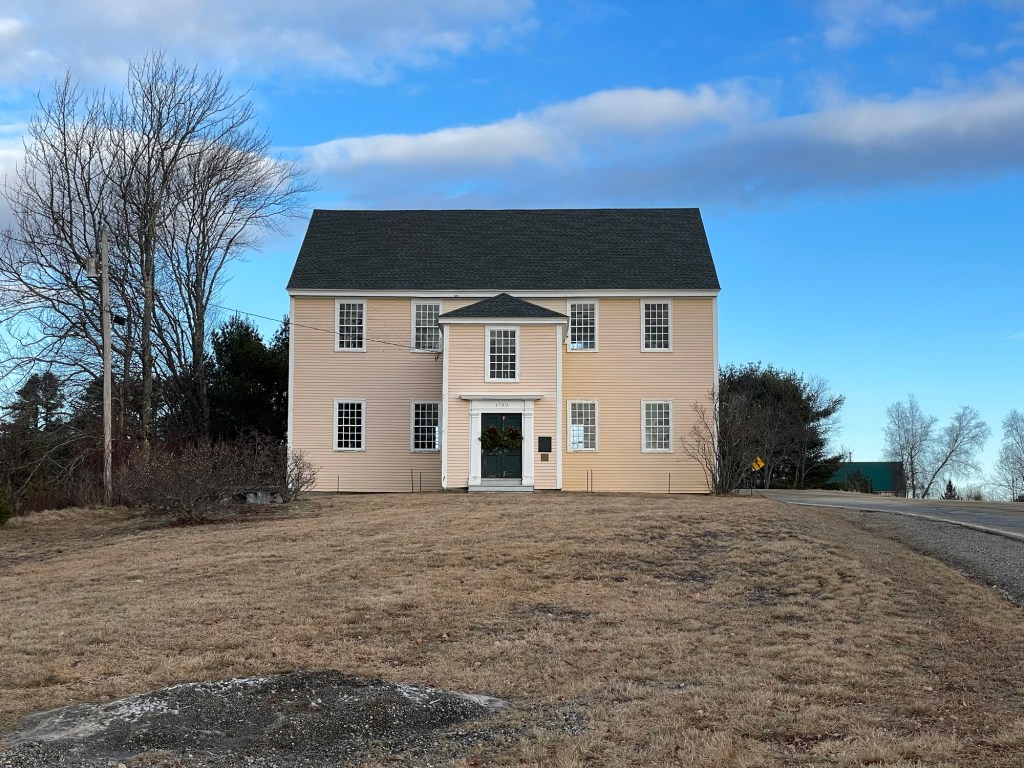
Alna Meetinghouse // 1789

The Alna Meetinghouse in Alna, Maine was built in 1789, and incorporated in 1796 as a Congregational church. The 40′ by 52′ foot building is one of the finest examples of a traditional New England meetinghouse in the state of Maine and Regular church services were held here until 1876. In recent years the building has been used for Town Meetings. Unlike many of the other meetinghouses of this period, the Alna meetinghouse has only one door. This door leads into a vestibule that contains the stairway to the gallery. The original box pews are still in place, as is the original pulpit with a sounding board hung from the ceiling. The building remains well-preserved and sits right on the side of the road!

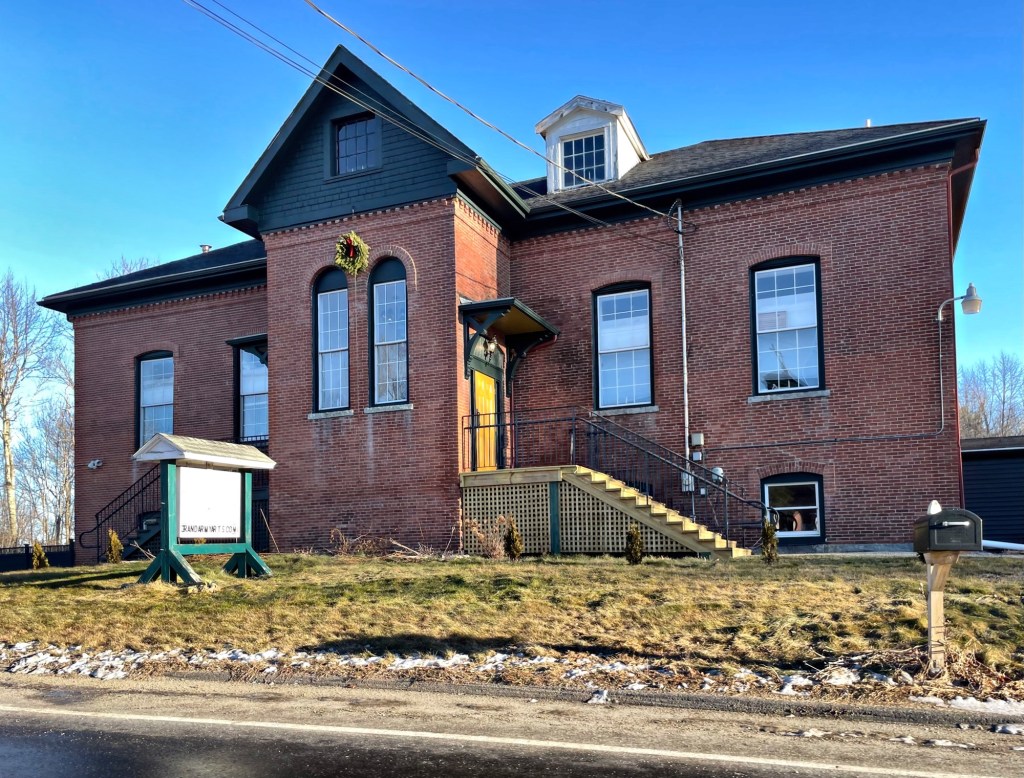
St. Denis Catholic Church // 1838

Believe it or not, this church in rural Whitefield, Maine is the second oldest Catholic Church in New England! As Irish and French Canadian families settled in this part of Maine in the early 19th century, Catholic churches were needed to provide worship space for those families. The church community of St. Denis began in 1818 when Father Dennis Patrick Ryan, an Irish immigrant serving at St. Patrick Church in Newcastle (the oldest Catholic Church in New England), moved to Whitefield to serve the influx of Irish Catholics and soon founded the church. Fr. Ryan oversaw the construction on a wood-frame structure built on this site. As more Catholic families settled here, a more permanent building was needed, and between 1833 and 1838, the main portion of the present brick church building was constructed around that original church. The tower was added in 1861, and the stained glass windows also date from later in the 19th century following the growth and prosperity of the church and its members. The St. Denis Parish House was constructed across the street in 1871 and is a lovely Romanesque style building.

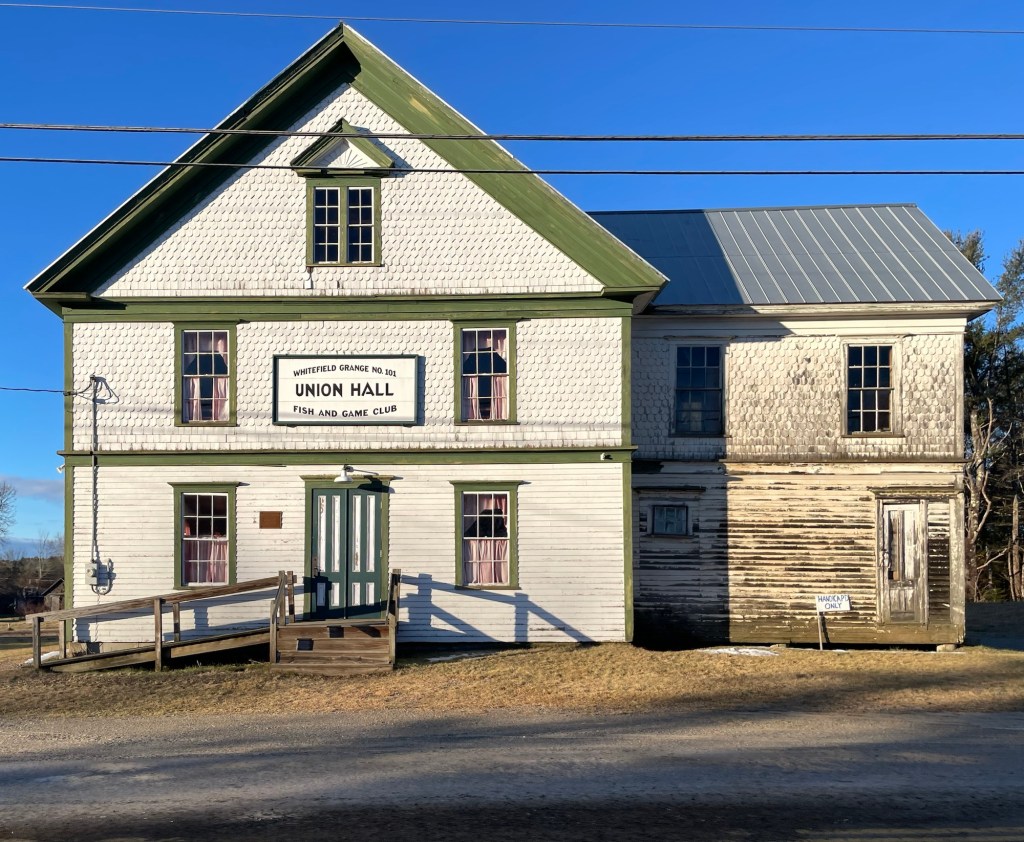
Whitefield Union Hall // 1900

Finding a Grange Hall in Maine are almost as common as finding an old church, they are everywhere! Located the next town over from Jefferson, Maine’s Willow Grange Hall, the town of Whitefield has an equally charming example. The National Grange of the Order of Patrons of Husbandry was established in 1867 to advance methods of agriculture, as well as to promote the social and economic needs of farmers in the United States. Communities all over built grange halls where farmers and residents could meet and discuss prices, trade, and share tips for larger crop yields. The Whitefield Union Hall was built in 1900, primarily under the auspices of the Whitefield Fish and Game Club, but with design input from the local Grange chapter, which contributed funds to its construction and was also a tenant. It was until 1919 the only public hall with a stage in southern Whitefield, playing host to dances, meetings of fraternal and social organizations, and other community events. The hall was managed by an association of the two organizations until 1947, and by the Fish and Game Club after the Grange chapter merged with another in 1969. The club closed down in 1974, and the hall is now managed by a union consortium of village community groups. The building is listed on the National Register of Historic Places.

Bunker Hill Baptist Church // 1889

The Second Baptist Church of Jefferson, Maine, was organized in 1808 and originally rented a schoolhouse for its services. After eighty years of cramped-quarters, the members of the church had enough funds to erect their own purpose-built church, this stunning edifice on Bunker Hill Road, in West Jefferson. The congregation broke ground in 1889 and the church was dedicated in January of 1890. Apparently, the belfry was originally at the center of the roof, but the heavy bell required a new steeple to be built at the corner, in its present configuration. This well-preserved church building was a treat to stumble upon when driving through the town.

Jefferson Willow Grange Hall // c.1901

Grange Halls have long been vitally important buildings in agricultural towns all over New England and are becoming threatened due to shifting development patterns and dwindling membership. The National Grange of the Order of Patrons of Husbandry was established in 1867 to advance methods of agriculture, as well as to promote the social and economic needs of farmers in the United States. Communities all over built grange halls where farmers and residents could meet and discuss prices, trade, and share tips for larger crop yields. The Willow Grange Hall in Jefferson, Maine was built in 1901 and is a vernacular building which remains a community meeting hall to this day.

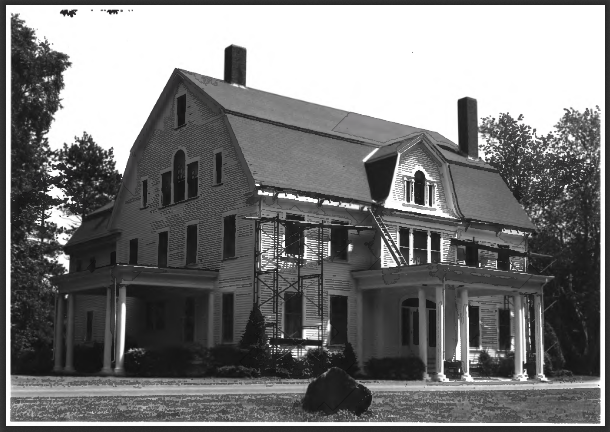
Dr. F. W. Jackson House // 1903

One of the largest Colonial Revival style homes I have ever seen is located in the unassuming small town of Jefferson, Maine. Built in 1903 on the northern shore of Damariscotta Lake, the house stands three-and-a-half stories tall with a broad gambrel roof and clapboard walls. The house was built for Dr. Fred W. Jackson in the Colonial Revival style by relatively unknown Waltham, Massachusetts-based architect Samuel Patch. Dr. Jackson studied medicine and for several years practiced his profession in Providence, Rhode Island. There, he built up a large medical practice and accumulated property, later marrying into a wealthy family. This house in Jefferson was the family summer estate, and Frederick was said to have owned 1,000 acres and laid out bridle paths, gardens, and landscapes in the vast estate. Across the street, a massive gambrel-roof barn was built to house his livestock as part of his gentleman’s farm.