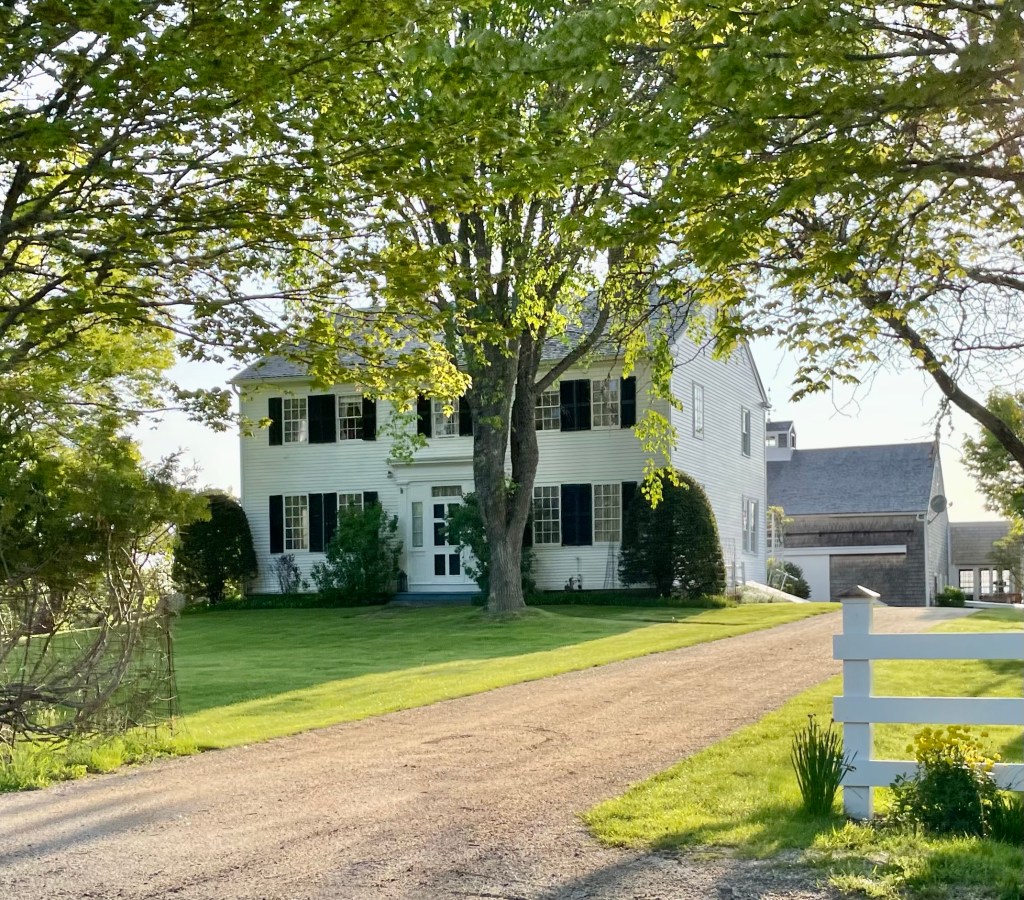
Thomas Lord House // 1847

This 1847 Greek Revival home sits in Blue Hill Village, Maine and it was built by and for local architect and builder Thomas Lord (1805–1880), who is credited with bringing the classical motifs seen in Greek architecture to Blue Hill. Mr. Lord had little formal education, spending much of his youth grinding bark at Ellsworth, sailing and working on his uncle’s farm. When he was 22, he apprenticed himself to a carpenter and began working for George Stevens in the shipbuilding yards of Blue Hill. From 1828 to 1880, Thomas Lord worked on 83 vessels, 84 dwellings, 12 school buildings, 14 meeting houses, 10 stern moldings and figureheads, 250 coffins and many barns and sheds. Lord is especially known in the area for his churches, including remodeling the First Baptist Church of Blue Hill in 1856. Just before building the house, Thomas married Matilda Carlton (1811-1898) and the couple had three children while living in the home. When Thomas died in 1880, Thomas Lord’s elder son, Roscoe Granville Lord took up residence here, where the 1900 census lists him as a painter. The home remains extremely well preserved and is one of the finer homes in the village of Blue Hill.

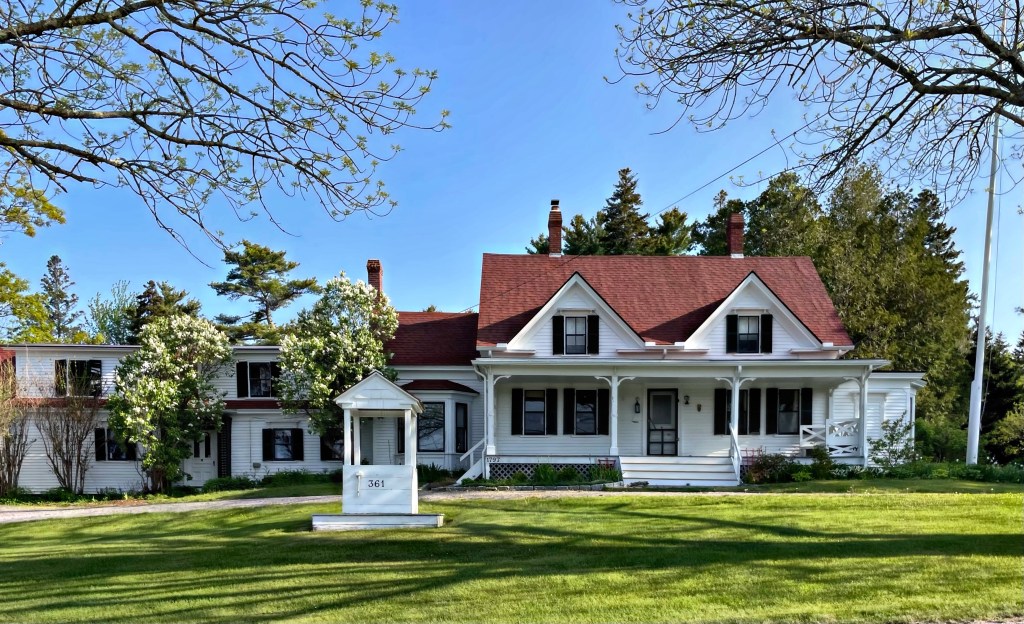
Judah Chase House // c.1840

In the early 19th century, the town of Blue Hill, Maine, thrived as a shipbuilding and maritime trade center in New England. One of the town’s sea captains, Judah Chase, had this Greek Revival home built for his new family in about 1840. Just before this, Captain Chase had a brig built in town in 1834, he named it the Thomas M. Lyons. As owner and captain, Judah was hired to haul a shipment from Havre, France to the United States. On the route, gales battered the ship of the coast of the Isle of Jersey, and the ship capsized, the crew survived, but this event may have delayed the building of his home in Blue Hill!

Radnor Cottage // c.1907

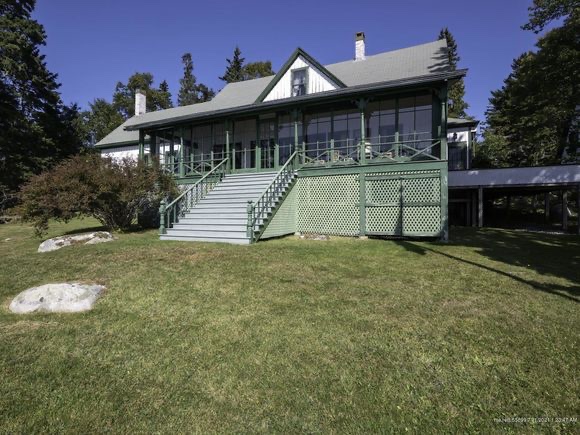
The historic summer cottages for middle-class summer residents of Maine have little written about them, but oh are these little cottages beautiful!! This is Radnor Cottage, a charming waterfront dwelling in the Haven Colony in Brooklin, Maine. The summer colony is comprised of a dozen quaint cabins (most historically without running water) for those of more modest means that wanted to escape the city for peace and tranquility on Maine’s rocky coast. The colony was developed in the late 19th and early 20th centuries as a respite for academics and more who did not want to flaunt their credentials or social prestige. This home was purchased a few years ago and the inside looks like it’s never been altered! This is a dream home!

Amen Farm // c.1850

Can I get an “Amen”?! Amen Farm was built in the mid-19th century on 47 acres in Brooklin, Maine, overlooking the Blue Hill Bay and Acadia National Park in the distance. The Cape house, like many on Blue Hill peninsula, is modest and was enlarged by telescoping ells as space was needed. The house was long owned by the Bowden Family who farmed the land, later adding a small gas station to the side of the road (since removed). Later owner, Joseph “Roy” Barrette (1896-1995) likely helped give the home its name. Barrette got his first look at Maine in 1919 from a ship, when he was a deck-hand on an 800-ton coal barge, hauling West Virginia coal from Norfolk to Portland. He had bought this farm in 1958 and was looking forward to his retiring years, which he intended to spend in a library of some 3,000 volumes and indulging his hobbies as a gardener, a gourmet, and a connoisseur of fine wines. John Wiggins, associate editor of The Ellsworth American newspaper, impressed by Barrette’s garden, his literary tastes, and his writing style, persuaded him to write a column, which he called “The Retired Gardener.” He wrote many essays and three books from this home in Brooklin where he never fully retired. Roy died in 1995 and the property was eventually listed for sale in 2019. The house is undergoing some work and landscaping upon the time of the photos.

E. B. White House // 1795

The coast of Maine has long been a refuge for those looking for an easier way of life and access to natural splendor. One of the more well-known residents of Maine was author E.B. White, who lived on this farm in Maine for 48 years. The estate sits on 44-acres and was built in 1795 for William Holden by Captain Richard Allen, a local housewright. The property was purchased by E. B. White in 1933 as a summer residence, but it became a full-time home where he and his wife, New Yorker editor Katharine Angell, raised sheep, geese, chickens, pigs, even spiders all with a historic barn and tire swing. Sound familiar? It is from this house that he wrote the iconic children’s book, Charlotte’s Web (and Stuart Little) among others. White was a private person, and despite his internationally famous books, he did not advertise the location of his home while he was alive. In 1977, he convinced an interviewer to report that “he lives in ‘a New England coastal town’, somewhere between Nova Scotia and Cuba“. Katharine died in 1977, and E. B. in 1985. The property was inherited by their son, who summered there for years. The most recent owners, Robert and Mary Gallant of South Carolina, who have summered there for the past 30 years and preserved the house immaculately, selling it a few years ago.

“Reach View” // 1797

Reach-View has been home to members of the Currier family and their descendants since the late 1700s. Richard Currier (1773-1837) first built a small home on land he bought in 1797 from his future father-in-law, Rev. Ebenezer Eaton, one of the original proprietors and settlers of the future town of Sedgwick, Maine. In 1799, Richard married Abigail Eaton, daughter of Ebenezer and Abigail Herrick Eaton. They lived together in Reach View until Richard died in 1859. Richard willed Reach View to their unmarried son Ebenezer “Eben” Eaton Currier, who lived there with his mother until her death in 1870. He was responsible for rebuilding much of the house after 1864. Eben’s sister would later purchase Reach-View and add the piazza (porch), bays, and interior detailing. The home remains a true family estate in the sleepy coastal town of Sedgwick.

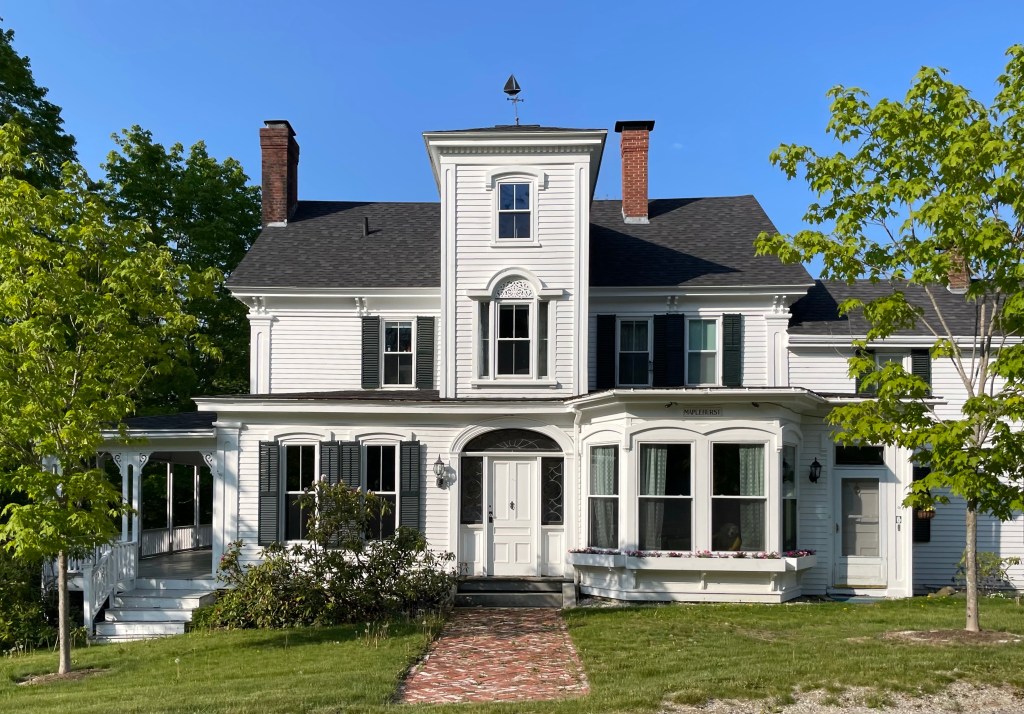
“Maplehurst” // 1837

Wyer Groves Sargent (1810-1900) was a descendant of the famous Sargent and Choate families and at the age of seven, arrived to the sparsely developed town of Sedgwick, Maine in 1817 with his parents. Twenty years later, Wyer has this house built in 1837. The original house was a one-story Cape house with a central chimney and an ell connected to a barn. He worked in the village of Sargentville in the town of Sedgwick as a merchant, operating a store, and traveling extensively to buy and sell goods along the New England coast. Operating a lucrative business allowed him to expand his outdated and cramped home in 1868 to the current configuration. It was then known as Maplehurst. Wyer raised the house and extended the front by adding a floor beneath it. When Wyer died in 1900 the house went to his daughter Martha Spooner. Martha sold it to Dr. Frederick Sweet. Last known, the home is still owned by Dr. Sweet’s great-granddaughter.

Luther G. Philbrook House // c.1850

This stately mansion on Main Street in Sedgwick, Maine, was built in the mid-19th century as one of three adjacent, near-identical homes. This house was purchased by Luther Groves Philbrook who appears to have “Victorianized” the formerly modest five-bay residence. He added a central tower, porch, and side addition. The home recently was listed for sale and has been decaying for years, here’s to hoping this old home gets restored.

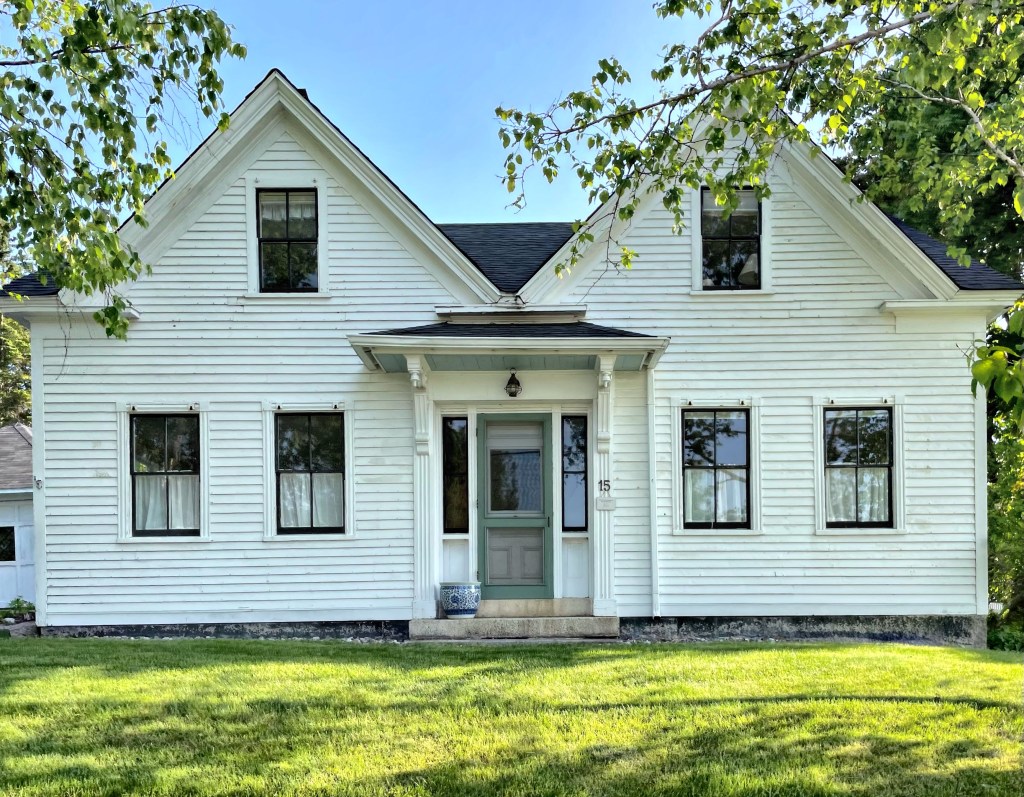
Dr. Hagerthy House // c.1860

Dr. Rufus Hagerthy (1859-1933) was born in Surry, Maine to father, Daniel Hagerty (sic) a naturalized citizen in 1871 who hailed from County Kerry, Ireland and mother, Carrie. Rufus went to Bowdoin College where he completed his study of medicine in 1884. He moved back to Sedgwick, Maine and married Jane C. Holden (1861-1896), the couple lived in this home, which served as a home-base for Dr. Hagerthy to make house calls by horse or sleigh (depending on the weather). Dr. Hagerthy was eventually wealthy enough to get involved in real estate, and developed Byard’s Point in Sedgwick in 1909, the town’s first sub-division.

Juniper Ledge Cottage // 1889

Ellen Kemble (Bartol) Brazier was born in New York City in 1844, the eldest of four children of Barnabas and Emma Bartol. Her father had many business interests in sugar refining and the family was able to travel the world from his wealth and success. The family spent most of their time in Philadelphia, but like many of the city’s wealthy residents, they often summered elsewhere. Ellen Bartol married Joseph Harrison Brazier in 1866 and they had two children. When her father Barnabas died, Ellen inherited some of his remaining fortune and as a part of high society, she had a summer cottage in Kennebunkport built. Working with Maine architect John Calvin Stevens, she oversaw the designs of Juniper Ledge, this gorgeous, eclectic shingled residence in the Cape Arundel summer colony. Ellen would summer at the cottage until her death in 1925, but before she died, she joined her daughter in the 1910s and 1920s at Women’s Suffrage events and fundraisers, helping to pass the 19th Amendment, allowing women the right to vote in the United States. Ellen is buried in the West Laurel Hill Cemetery in Philadelphia next to her husband, not far from her parents.