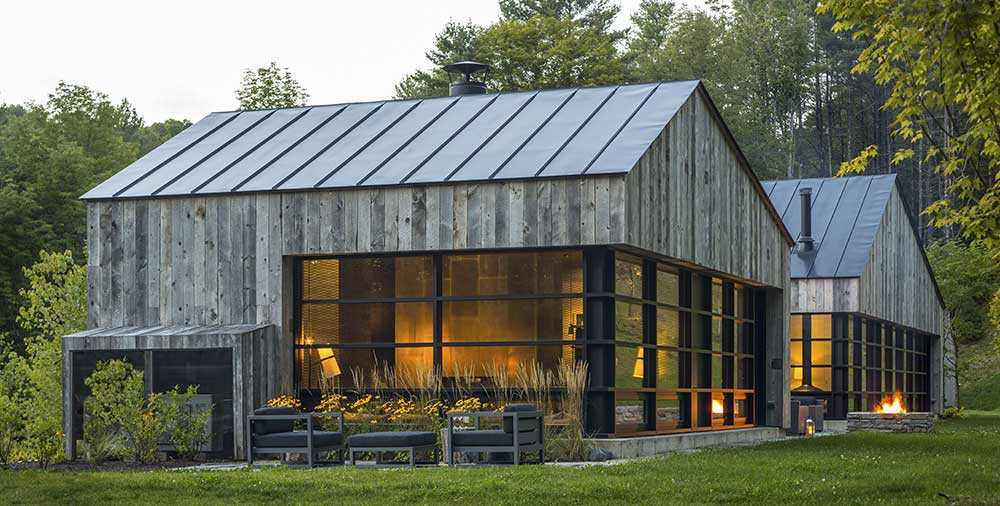
In researching historic buildings in the tiny Vermont town of Pomfret, I was stunned to find images of this stunning Modern design in the town. Designed by the Birdseye Design Firm based out of Richmond, VT, “Woodshed” was completed by 2017 and serves as both a guest house and entertainment space for the main residence down the road. From the firm’s website, “The project is conceptually inspired by the vernacular woodshed, a familiar and iconic element in the Vermont landscape. The residence is composed of two asymmetric gable roof forms, akin to the traditional woodshed, connected by a central entryway”. The common thought on new construction is typically bland and “cookie-cutter” McMansions or boxy apartments, but this project is a testament to thoughtful Modern design found in even the smallest towns in the region!
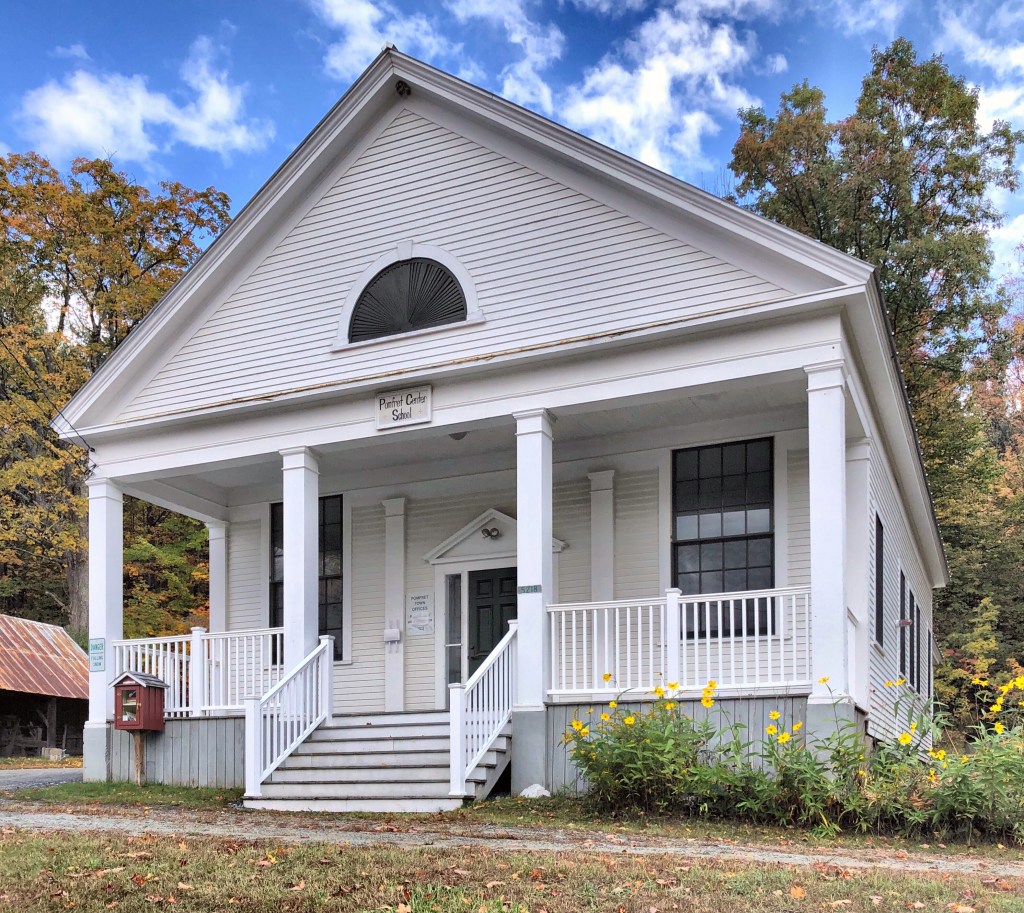
Located across the street from the Congregationalist Church (now Town Hall) in Pomfret Center, the Methodists in Pomfret Vermont built this church building just a couple years after their neighbor was completed. Replicating the Greek Revival style seen across the street, the building showcases a templed form with projecting portico, as an excellent vernacular example of the style. Similar to its neighbor, this church was sold to the Town of Pomfret in the 1880s, modernized in the early 20th century, and converted to a district schoolhouse.
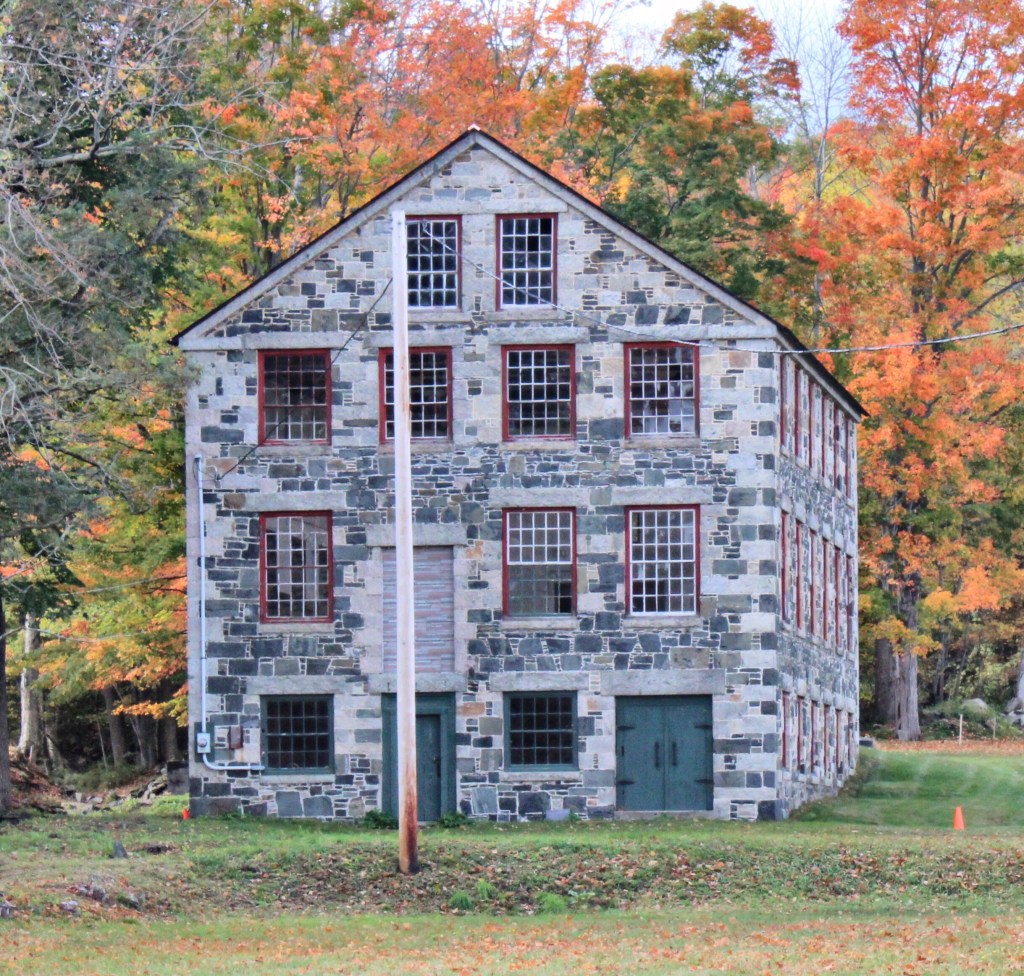
Located across the street from the main collection of remaining Shaker buildings in the Enfield Shaker Museum campus, this historic stone structure stands as a lasting remnant of the workspaces built for the active Shaker community there. Once part of a larger group of structures that once stood here (the machine shop being the only extant), including a tannery, blacksmith shop, animal sheds, and broom shop, this stone structure shows the significance of rural industry in Enfield. This structure was built in 1849 and was water powered. Stone Machine Shop was powered by a nearby stream and mill pond. Water flowing through the stream would enter into the mill’s head race, move across several water wheels, and exit through the tail race before being dumped back into the stream
This 1819 building was originally located next to the first dwelling house on the present location of the Great Stone Dwelling in Enfield Shaker Village. The Shakers moved this structure to its current location in 1834 to make room for their new stone dwelling house. The building was primarily used as a school building for the Shaker children, but was soon converted to a tailor’s shop after the boy’s and girl’s schools were joined into one room. In Shaker communities throughout the United States, it was customary for Shaker tailors to create the clothing for the men of the community. A brother’s standard uniform consisted of a great coat, dress coat, waistcoat, and trousers.
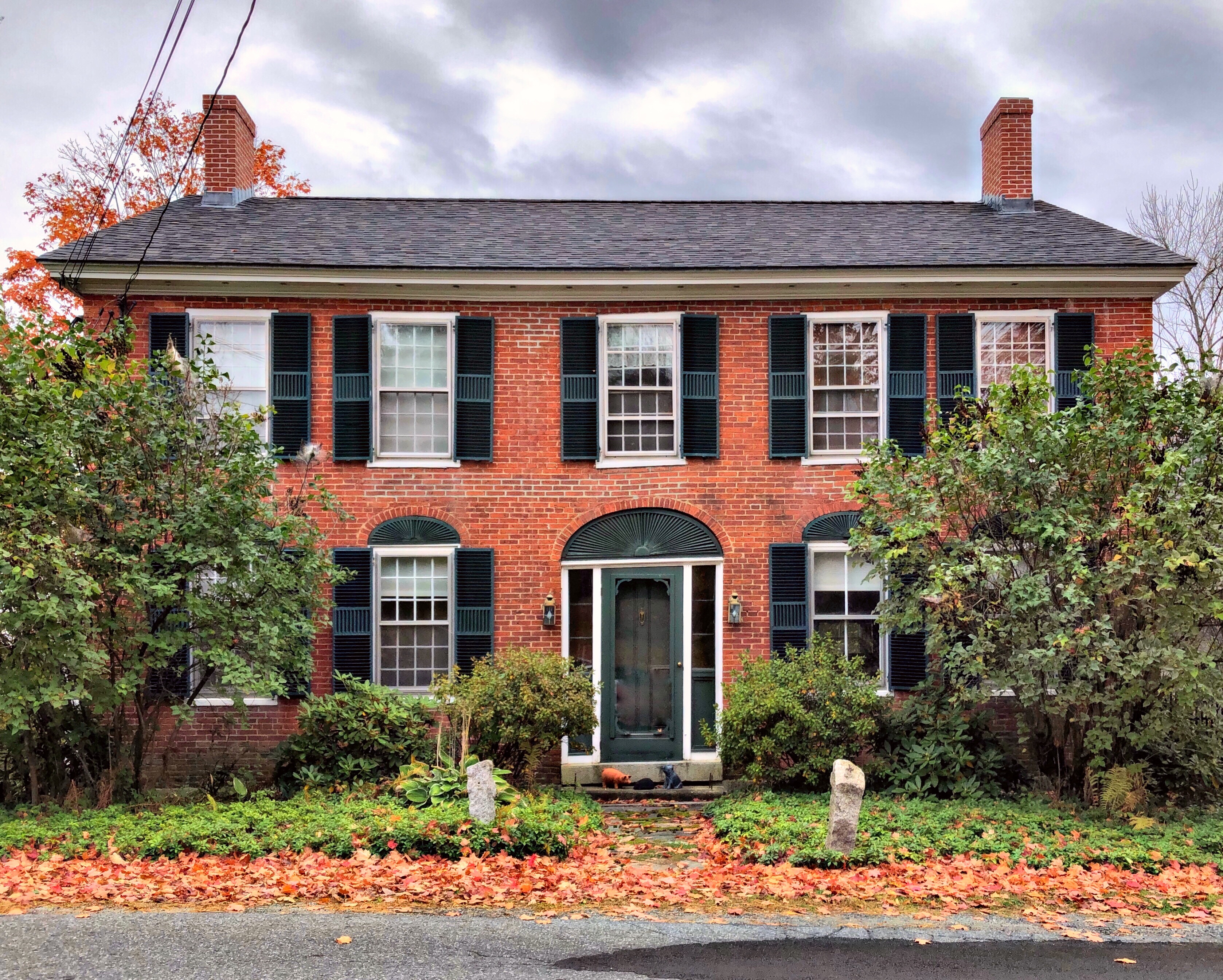
In New England, brick houses are more scarce for the simple fact trees are everywhere, brickyards were not. As towns and cities developed all across the region, some towns found they had a lot of clay in their soil, perfect for the manufacturing of brick. In Thetford, a man named Hezekiah Porter was the first to start a brickyard, manufacturing bricks for construction projects around the area. By the 1820s, a couple brick houses were built in the Thetford Hill area of town including the Hosford House, one of the earliest. Thomas Turner, a builder constructed the Hosford House and this home nearby for his own use, both utilizing Porter’s bricks. This fine Federal home was likely a great advertisement for Turner’s building skills.
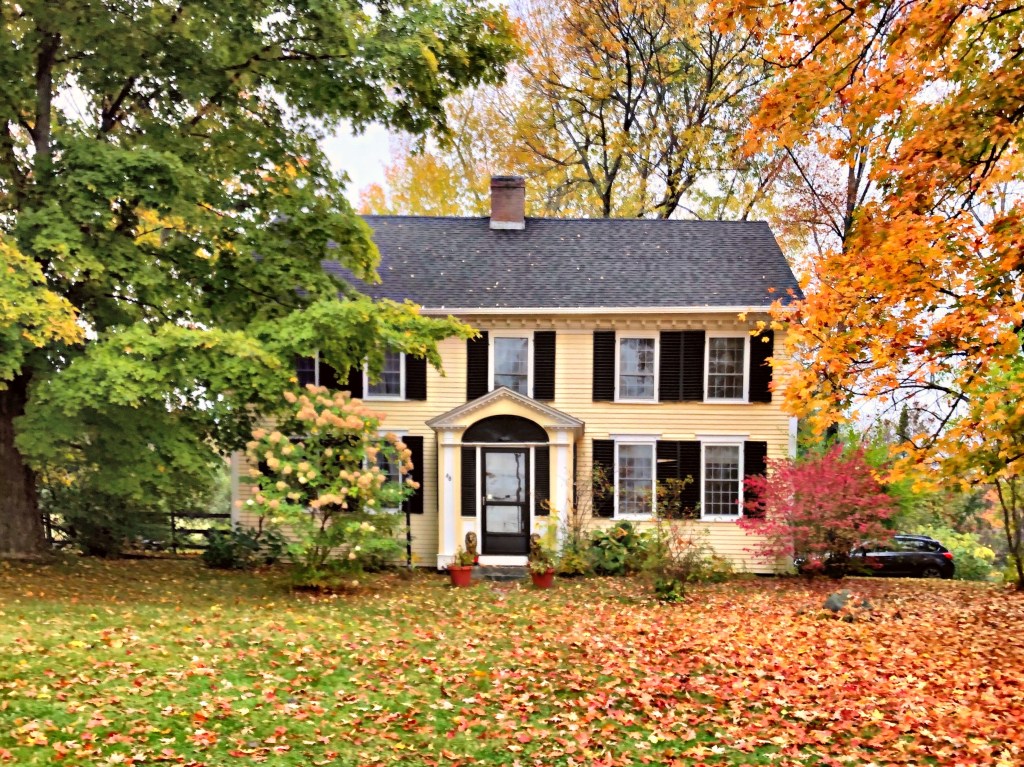
Burton Hall was constructed in 1845 as a boy’s dormitory for Thetford Academy on a lot given by Orange Heaton (who lived nearby), just north of the original Academy Building. The structure was named Burton Hall in memory of Asa Burton, one of the Academy’s founders. The structure was sold by the Academy by about 1860 for $200, to a J.H. Huntington, who moved it across the street to its present site to replace his house which had burned the year prior. In the late 1930’s, Dwight Goddard, the owner of the home at the time, gifted the building back to the Academy since which time it has been known as Goddard Hall.
Fun Fact: Buildings historically were much more likely to be moved than demolished as the cost of building materials was much more than labor. Today, the opposite is true so many developers and owners prefer to demolish.
Is there anything better than a brick Federal style house?
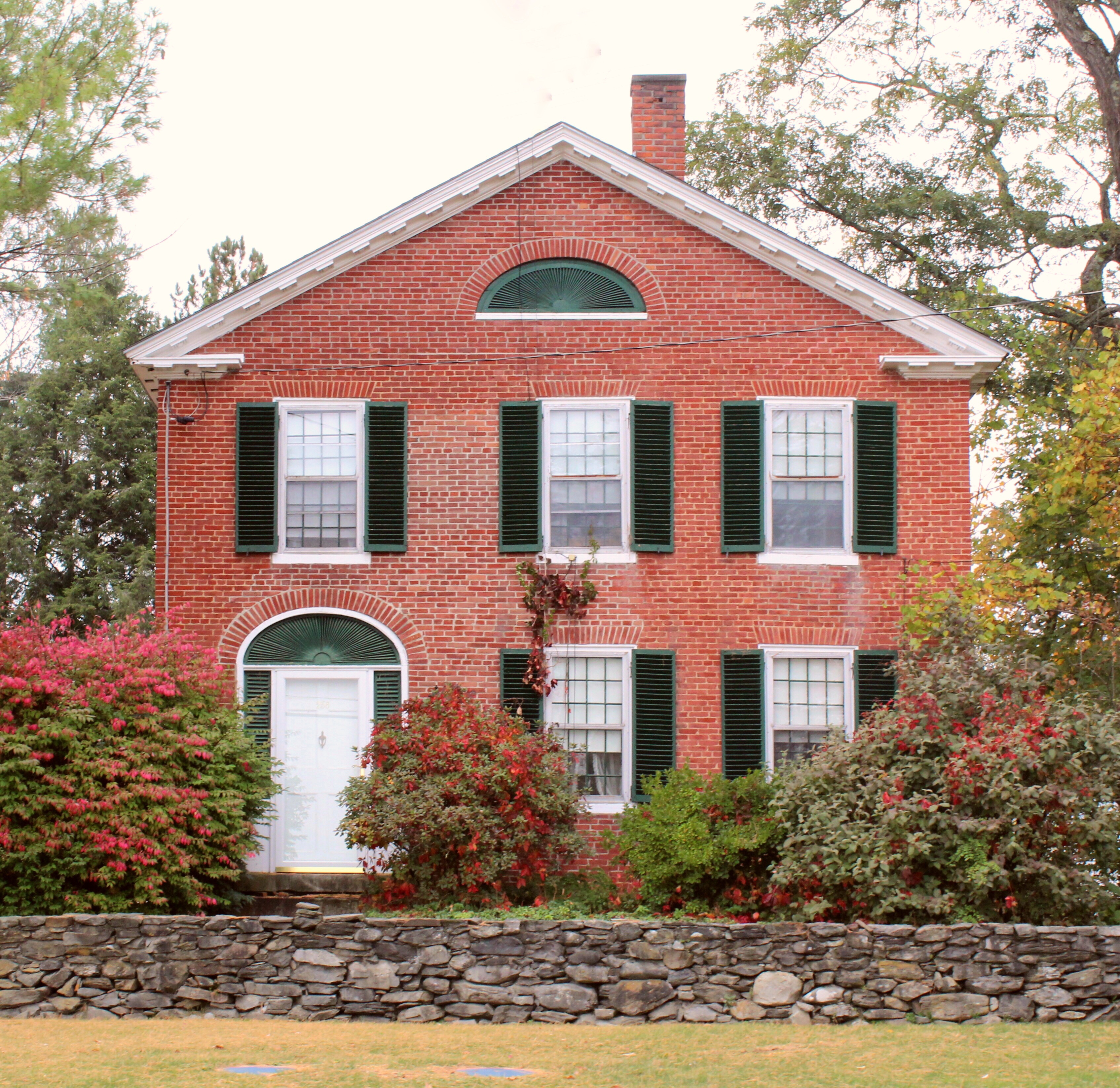
This house in Thetford, Vermont was built for Heman Hosford in 1821 from bricks produced by Hezekiah Porter, who established the earliest known brickyard in Thetford. Hosford sold the house to Enoch Slade in 1837 and it remained in the Slade Family for over seven generations. He became a prominent citizen of Thetford, was a surveyor and for many years justice of the peace, and in the latter part of his life was generally known by the title of “Squire Slade.” He was a supporter and trustee of Thetford Academy, in which his children and grandchildren were educated. He was a member of the Congregational church and an earnest supporter of the principles of the Republican party. The brick gable front home features a louvered sidelights and fan over the front door and in the gable.
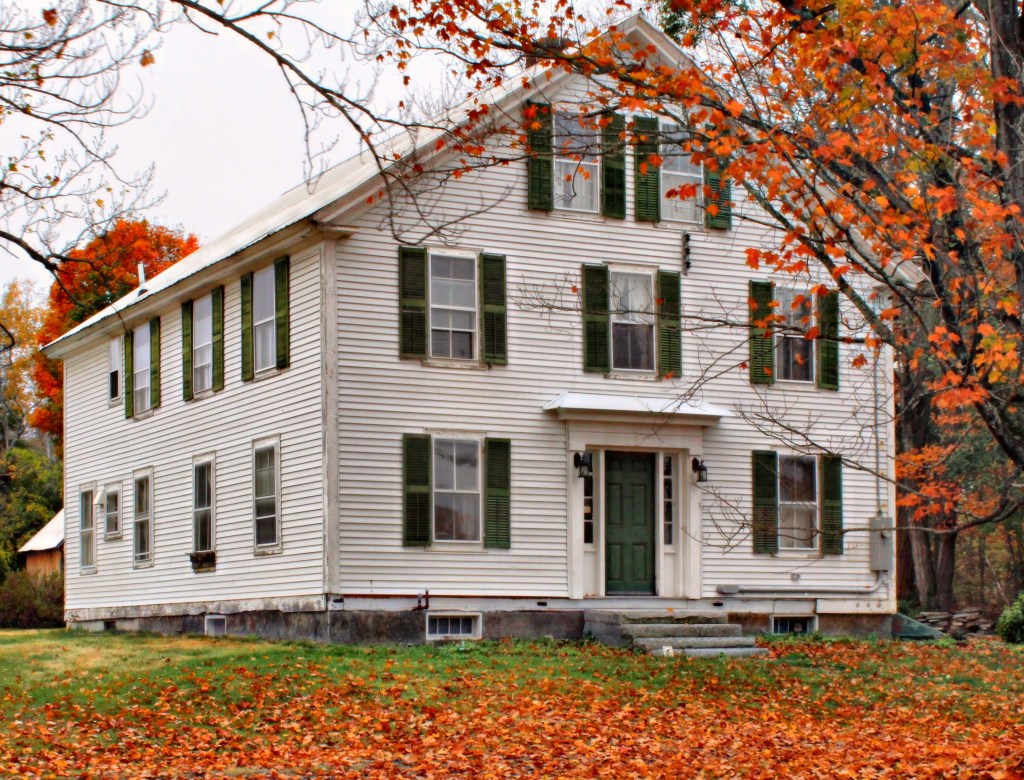
This transitional Federal house in Thetford was built around 1795 for an Isaac White. The house was later owned by Orange Heaton (who’s name perfectly fits the color of the leaves in the photo). The design is refined, yet stately with the enclosed, gabled, projecting entrance porch. Louvered panels and an elliptical louvered fan frame the door.
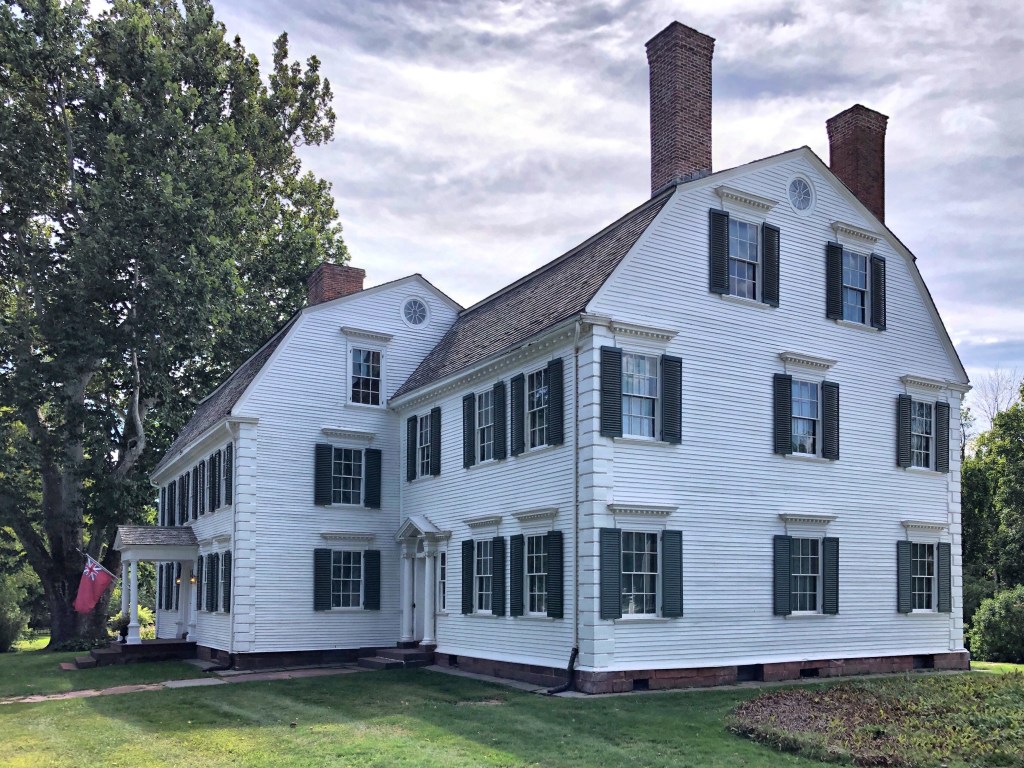
Set back from tree-lined Main Street in Suffield, the Phelps-Hatheway House is but one of many handsome eighteenth and nineteenth century homes in the town. The house began construction sometime between 1732-1762 as a modest gable-roof Georgian home built by Abraham Burbank. In 1788, the home was purchased by Oliver Phelps. at the beginning of the Revolutionary War, Phelps joined the Continental Army and fought in the Battle of Lexington. He left service in 1777 and, relying on his experience as a merchant, became Massachusetts Superintendent of Purchases of Army Supplies, a Deputy Commissary of the Continental Army. He was introduced to Robert Morris, the great financier of Revolutionary times. He supplied troops and received commendation from George Washington for his efforts. After the war ended, he became a prominent businessman and was elected to the Massachusetts Senate in 1785 and served on the Governor’s council in 1786 (Suffield was still a part of Massachusetts at this point).
Upon returning, Phelps hired architect Asher Benjamin (when he was in his early 20s!) to redesign the home into a gambrel roof mansion and construct numerous additions to make the house a suitable home for a wealthy, sophisticated man such as himself. Phelps was a principal in the Phelps and Gorham Purchase of six million acres of land in upstate New York, making him one of the nation’s largest landowners. Phelps lived here until 1802, when he moved to Canandaigua, New York, to more closely oversee the development and sale of his holdings. Phelps or his heirs sold the house, which was purchased by Asahel Hatheway and it remained in the Hatheway family for a century. It is now owned by Connecticut Landmarks and operates as a house museum.
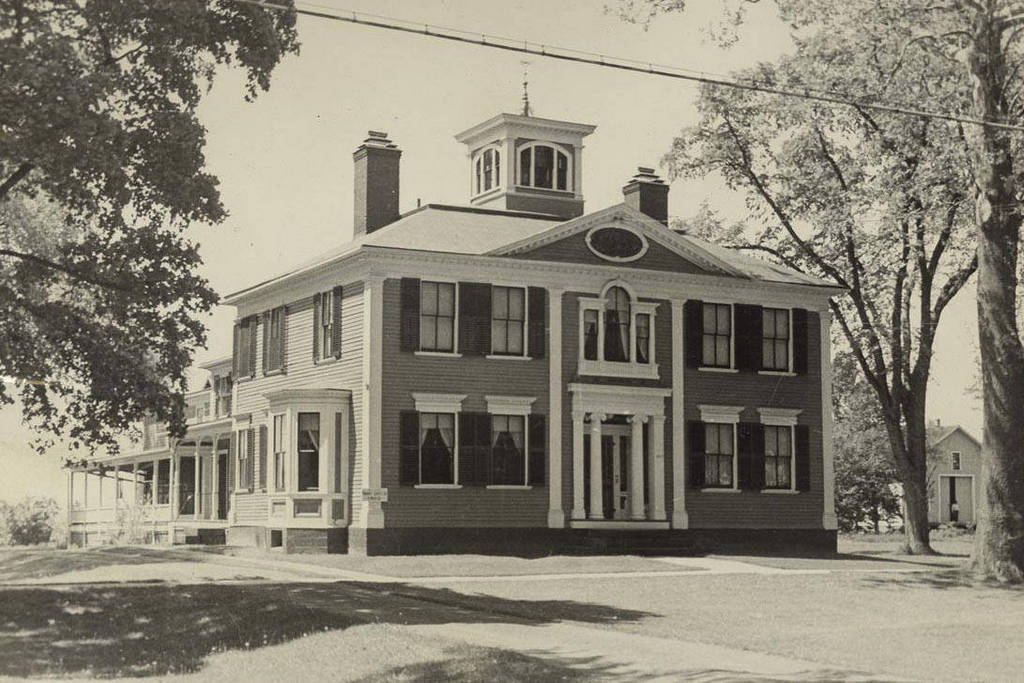
One of the (many) grand homes on Main Street in Suffield is this Federal style home built in 1800 for a 21-year-old Thaddeus Leavitt. Like his father, Thaddeus was a merchant with a store in Suffield, and was known by the title Colonel, meaning he probably served in the local militia after the Revolutionary War. Immediately after the home was completed, Thaddeus got married and moved into the home with his new wife, Jemima Loomis. They lived happily in their mansion until Thaddeus’ death in 1828 and his wife’s death in 1846. The home was altered in the 1850s with Italianate features including a belvedere and bay windows, which lasted into the 20th century. The home was recently restored back close to original conditions with the removal of the belvedere at the roof.



 Buildings of New England