Payson-Fettyplace House // 1845

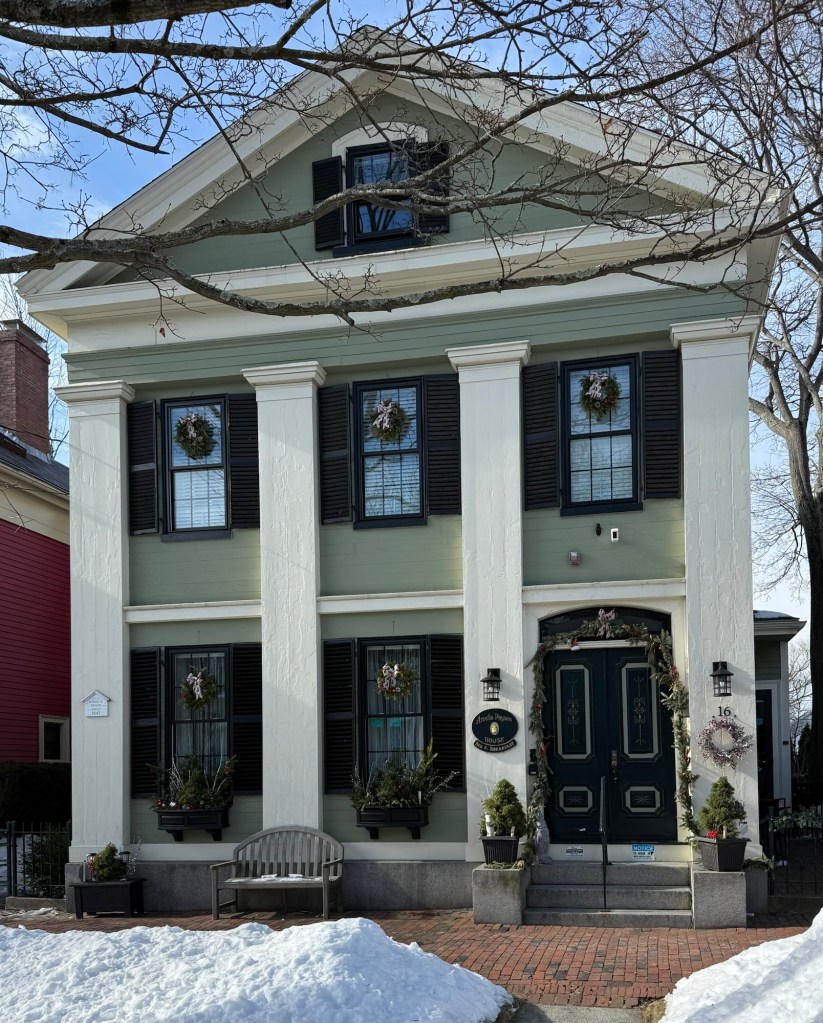
Behold, one of the finest, and well-preserved Greek Revival style homes in Salem. This is the Payson-Fettyplace House on Winter Street, built in 1845 with its gable facing the street to create a pediment, a wide entablature and cornice, and pilasters on the flushboard façade, which together make the building read more like a Greek temple than a residential home. The residence was built for Edward H. Payson, a bank officer, and his wife, Amelia, who lived in the home for only two years before moving into a larger residence across the street just two years after this house was completed. The property was sold to a Carleton Dole of Maine and again sold in 1850 to Thomas J. Fettyplace. The Fettyplace family were based out of Marblehead and many of them relocated to Mobile, Alabama, to make money in the cotton and shipping industry in the South. Thomas purchased this home in Salem for his mother who spent her final years here until 1861. After the Civil War, the Fettyplace brothers would move back north and this home remained in the family until 1912. The house is now a bed & breakfast known as the Amelia Payson House, named after the original owner.

Blue Hill Inn // c.1830

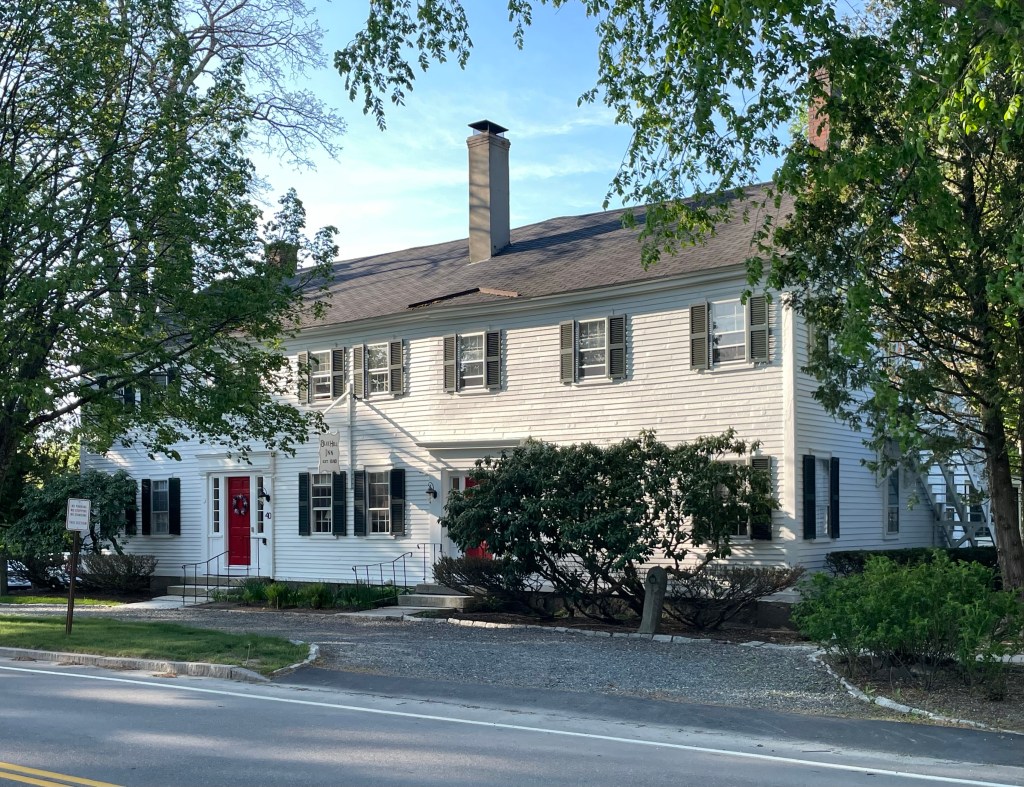
The major part of this structure in Blue Hill, Maine was built as a house around 1830 by Edward Varnum Stevens. Stevens started an inn in his home likely after his marriage to wife, Susannah Hinckley. When Edward died in 1857, the property was acquired by Haskell W. Hinckley in 1858, who was possibly Susannah’s brother. Hinckley was a sea captain and his wife, Fanny Hinckley operated the hotel here for 50 years, known as the Blue Hill House. The hotel became a social center for the community and became a gathering place for many. The structure, now known as the Blue Hill Inn, continues to welcome visitors today. The elongated Federal/Greek Revival style house is excellently preserved inside and out, and guests can stay in one of the 11 gorgeous suites inside, which take you back in time.