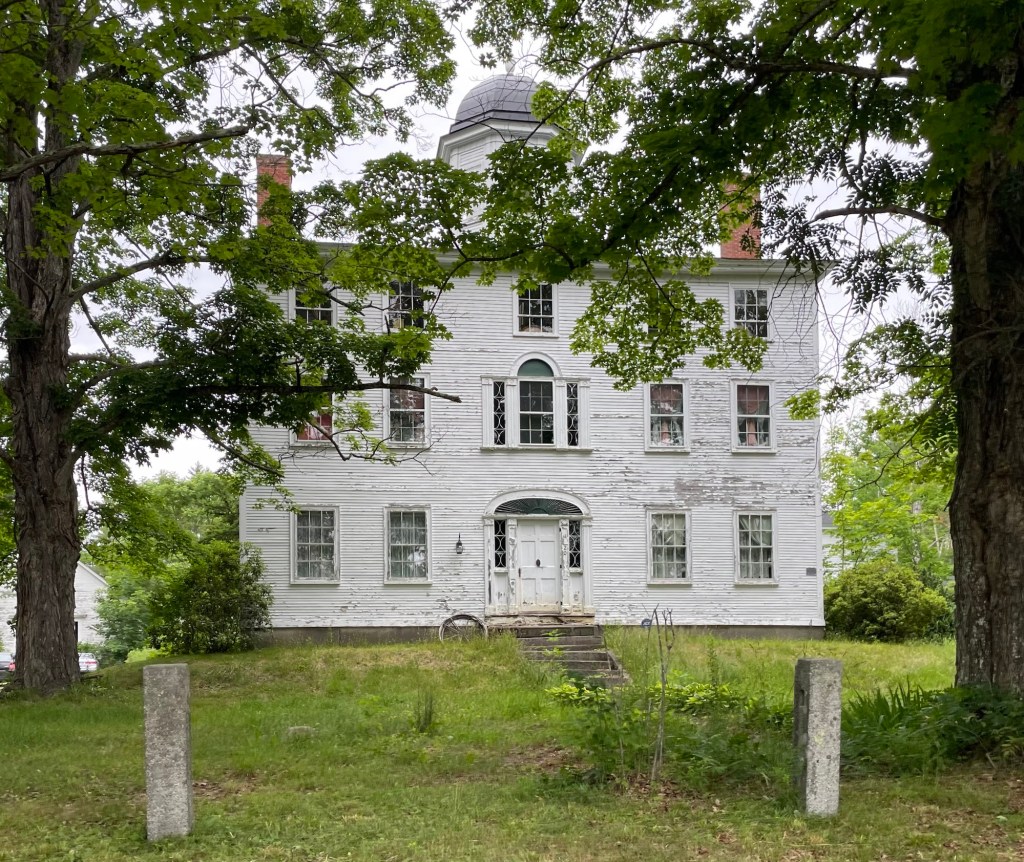
Lord Mansion // 1822

Isaac Lord (1772-1838) was born in Maine, but would spend much of his time transforming the small town of Effingham, New Hampshire. Isaac married the love of his life, Susanna Leavitt in Exeter in 1793 and the couple moved to Effingham, living and working in a tavern he built. Isaac prospered as an innkeeper, merchant, farmer, and entrepreneur, becoming Effingham’s wealthiest citizen, making the village he owned buildings to be called Lord’s Hill in his name. From 1818 to 1822, Isaac and Susanna lived in Portland, but he was ridiculed for “having money but no culture”. Growing tired of the city, he decided to return to Effingham. Mrs. Lord found the village too quiet and longed for the social life to be had in Portland, Maine. To convince his wife to remain with him, Isaac promised her a mansion that rivaled the homes in wealthy seaports like Portland and Portsmouth and began working on his mansion in Effingham in 1822. After years, the massive estate was completed, but Susanna remained in Portland. A heartbroken Isaac moved into the large mansion and continued business until his death in 1838. The Isaac Lord House consists of a three-story main block with a grand cupola on its roof and a three story ell to its rear. Stables and a carriage house are also on the lot today. I would do anything to see the inside of this beauty!
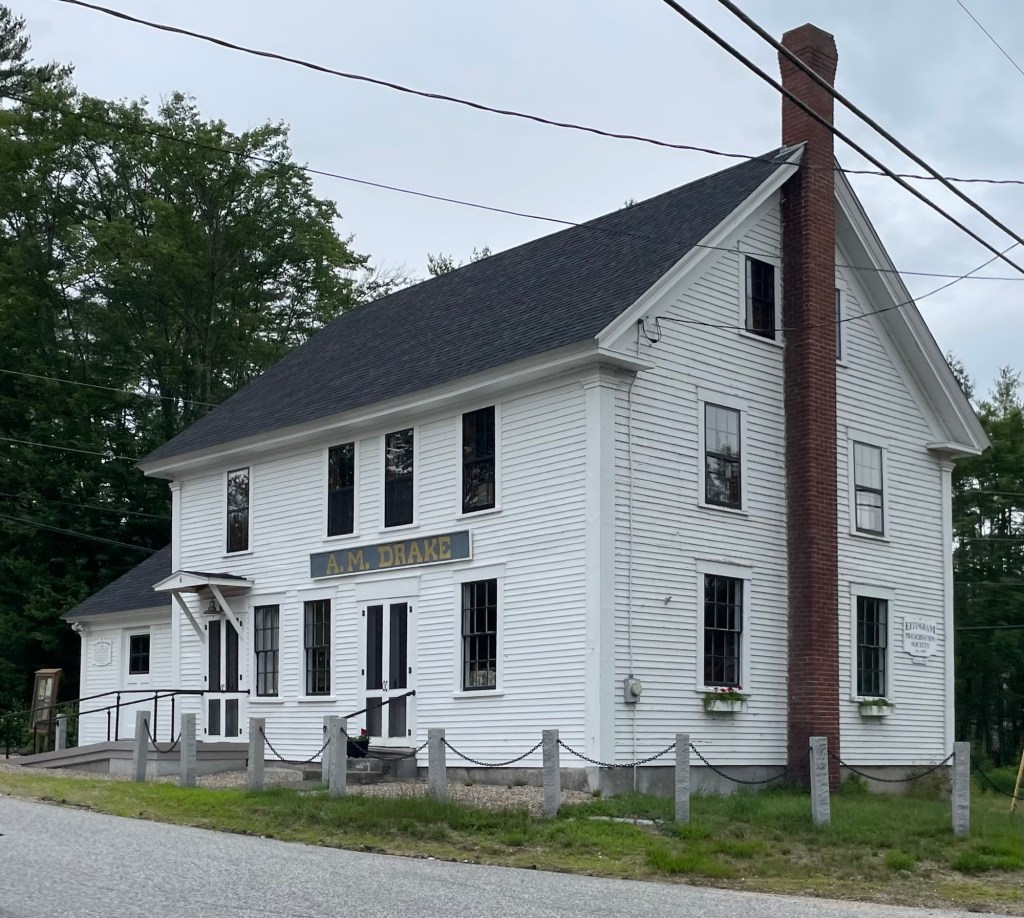
Drake Store // c.1816

The Drake Store is a vernacular, early 19th century commercial building located in the center of Effingham, New Hampshire. According to local sources, the building was erected around 1816 by Weare Drake, an original settler of the town at age 78, and his 23-year-old grandson, Thomas Parsons Drake. The store sold provisions and was home to a post office, when Thomas Drake served as the town’s postmaster. Within a few years, the store fell into disuse and the building was fitted up as an academy known as the Carroll Literary Institute. Due to insufficient enrollment, in the 1850’s, it was again occupied as a store by Alexander Mellen Drake (hence the sign) and changed hands several times before being purchased by Grange No. 313 in 1913, operating as a grange hall for local farmers. The building was given by the Grange to the Town in 1994 and purchased from the Town for $1 by the Preservation Society in 2002. The Preservation Society has been restoring the building through capital campaigns and grants and the old store shines once again!

Amos Chase House and Mill // 1836

The Amos Chase House and Mill are located in Weare, New Hampshire, on the banks of the Piscataquog River. The house is oriented facing the road, while the mill is behind it, on the bank of the river. The mill is the only surviving 19th-century mill building in Weare. The house was built about 1836 by Amos Chase, as was a mill. That mill burned in 1844; the present mill was built by Chase as a replacement a few years later. This mill was the only one in the town to survive the New England Hurricane of 1938, although its waterwheel was washed away. Amos Chase was a tool manufacturer and one of several members of a locally prominent family operating small mills in the town. His son later used the mill in the manufacture of baskets. The large Greek Revival style home has all the hallmarks of the style, from the pediment facing the street, to the pilasters at the entrance and corners.