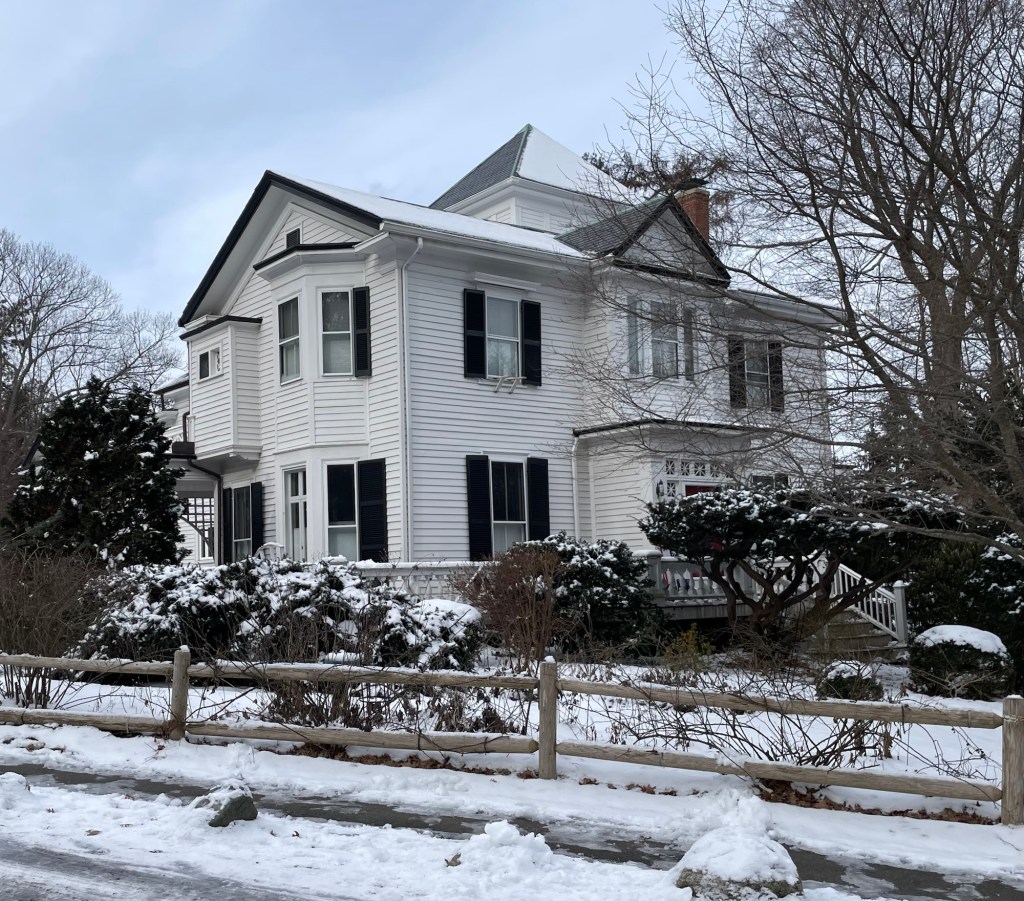
Sudbury Aqueduct Waste Weir Control House // 1878

The Sudbury Aqueduct was constructed between 1875 and 1878 and runs for 16 miles from Framingham, Massachusetts to the Chestnut Hill Reservoir in Boston, and was in use for almost 100 years. It was designed to carry water from the watershed of the Sudbury River to Boston and its surrounding communities, supplying the ever growing metro area with fresh drinking water. Along the route, meter and control houses were built along with the Echo Bridge, to guide the running water to Boston for distribution all over the city. City architect of Boston, George A. Clough designed many of the structures along the route including this waste weir structure in Newton Centre. The weir was known as “Clarks Waste Weir” as it was built on the edge of land owned by Charles P. Clark. The aqueduct was taken out of regular service in 1978 but remains an emergency backup. Much of the aqueduct’s route is open to the public as an unimproved walking trail.

Charles H. Bennett Cottage // c.1868

Another of the charming gingerbread cottages in Newton Centre built on Charles Davis’ “Mount Pleasant” estate is this charmer. Like the Charles Davis rental cottage on Pleasant Street nearby, this home was rented by Mr. Davis to tenants briefly before it was purchased by George A. Rollins who later sold the property to its longest owner, Charles H. Bennett, a Boston stockbroker. The house is one of four near-identical gingerbread cottages developed by Davis, all retain their decorative bargeboard trim and porch detailing. This one may be my favorite!

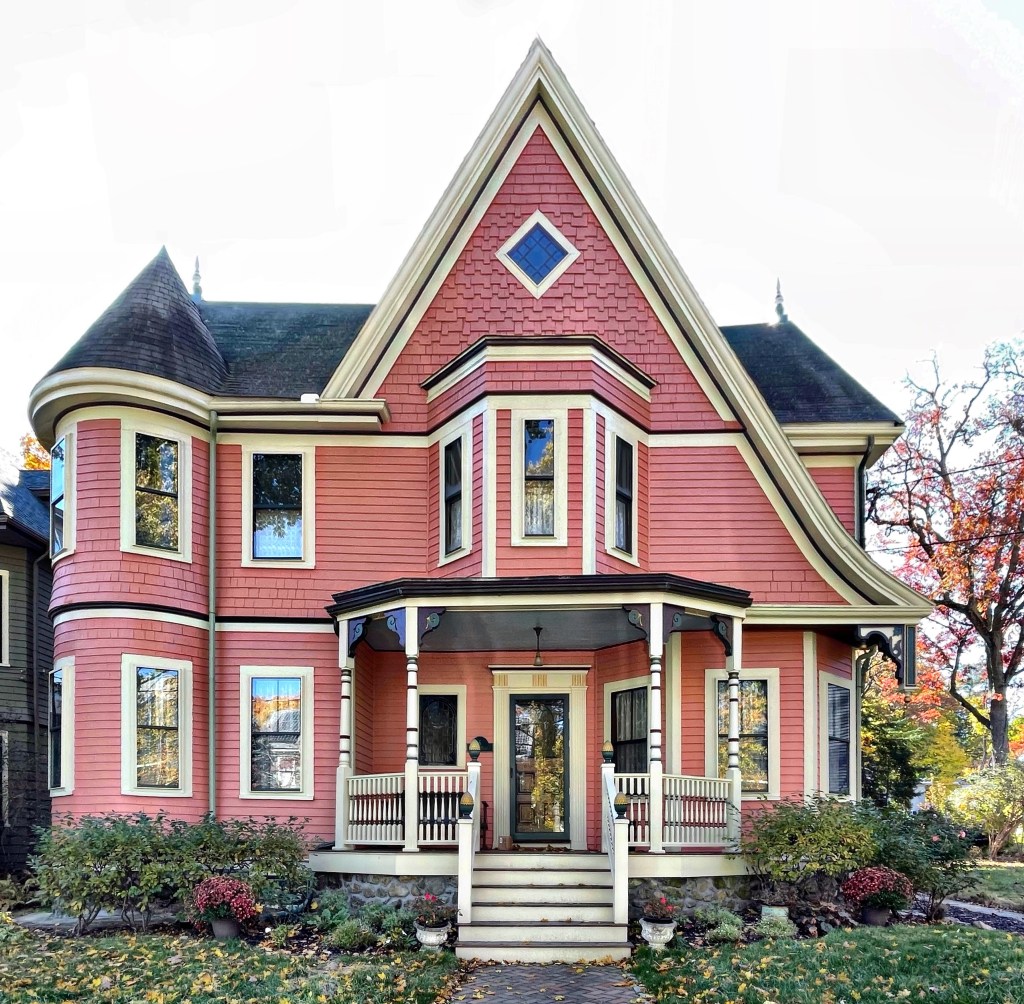
Charles S. Davis Cottage // c.1868

When wealthy Boston manufacturer Charles S. Davis began subdividing his suburban Newton Centre estate, “Mount Pleasant”(last post) in the 1860s he was extremely particular on the dwellings and residents that would be his new neighbors. He sold off some parcels to friends and affluent members of the community and he also built some small gingerbread cottages – like the house seen here – for rent. This Victorian Gothic gingerbread house was rented to provide Mr. Davis with some additional income. It was eventually sold off to a private owner and has been meticulously preserved ever since.

Mount Pleasant Estate // c.1856

One of the surviving old estates in Newton is Mount Pleasant, one of the oldest in Newton Centre. The home was originally built in the 1850s by Roswell Willard Turner, who acquired large land holdings in Newton Centre. The large property was eventually purchased by Charles S. Davis, an associate of the Boston piano manufacturing firm of Hallett & Davis. As Newton Centre developed, he enlarged his own home in the 1860s, and sold off his holdings, developing the surrounding area with charming Gothic Revival cottages on Mount Pleasant, the hill upon which his property gained its name. His own home was enlarged and includes elongated additions, a tower with hipped roof, and arched windows.

Kistler House // 1893

In 1852, Beacon Street in Newton was extended westward from Chestnut Hill through Newton Centre. The village’s suburban development accelerated through the activities of real estate developers as the city became connected to Downtown Boston by roadways and rail. This home was built in 1893 for Andrew and Ann Kistler. Andrew Kistler worked as a leather dealer in Boston, and commuted into the city daily. The Kistler House is an excellent example of Colonial Revival with some added oomph.

Ms. Grace Weston House // c.1898

At the end of the 19th century, much of Boston’s suburban communities saw rapid development where country estates and farmhouses were razed and their properties laid out for residential development. This house in Newton was built around 1898 as a late Queen Anne and it has so many details and intricacies. The earliest known owner was Grace M. Weston who was mentioned often in local newspapers as an expert on antiques.

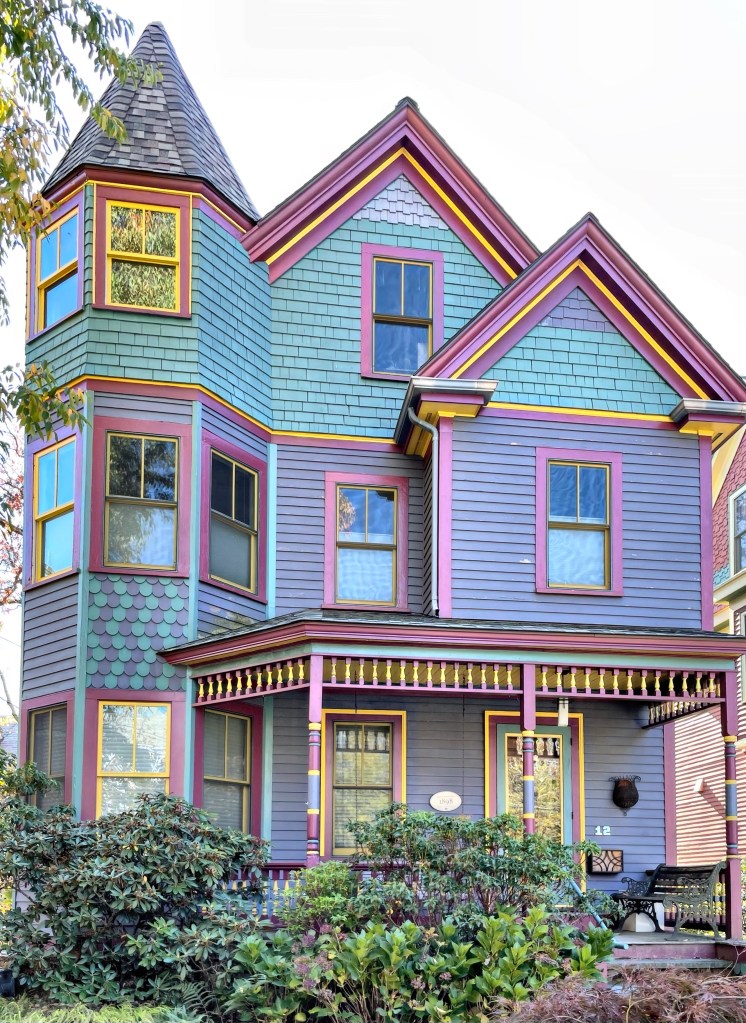
T. C. Sullivan House // 1898

Behold this Queen Anne painted lady in all her glory! This home was constructed in 1898 as a late Victorian addition to Newton’s built landscape. The home’s earliest known owner was a T. C. Sullivan, who left the property to his family upon his death. The house is painted some pretty bold colors, which does an effective job at highlighting the many architectural details and intricacies in the design, but the home would have never been painted like this historically. A little history lesson: the “painted lady” trend took off in San Francisco when after WWII, disinvestment in the urban core led many Victorian homes there to be demolished, altered and covered with siding, and many were painted gray with war-surplus Navy paint (battleship gray). In 1963, San Francisco artist Butch Kardum began combining intense blues and greens on the exterior of his Italianate-style Victorian house. His house was criticized by some, but other neighbors began to copy the bright colors on their own houses. Kardum became a color designer, and he and other artists / colorists began to transform dozens of gray houses into Painted Ladies. By the 1970s, the colorist movement, as it was called, had changed entire streets and neighborhoods. This process continues to this day. The trend took off all over the United States as urban centers saw re-investment and gentrification. While not historically appropriate, the Painted Ladies can really make people happy and show pride in ownership.

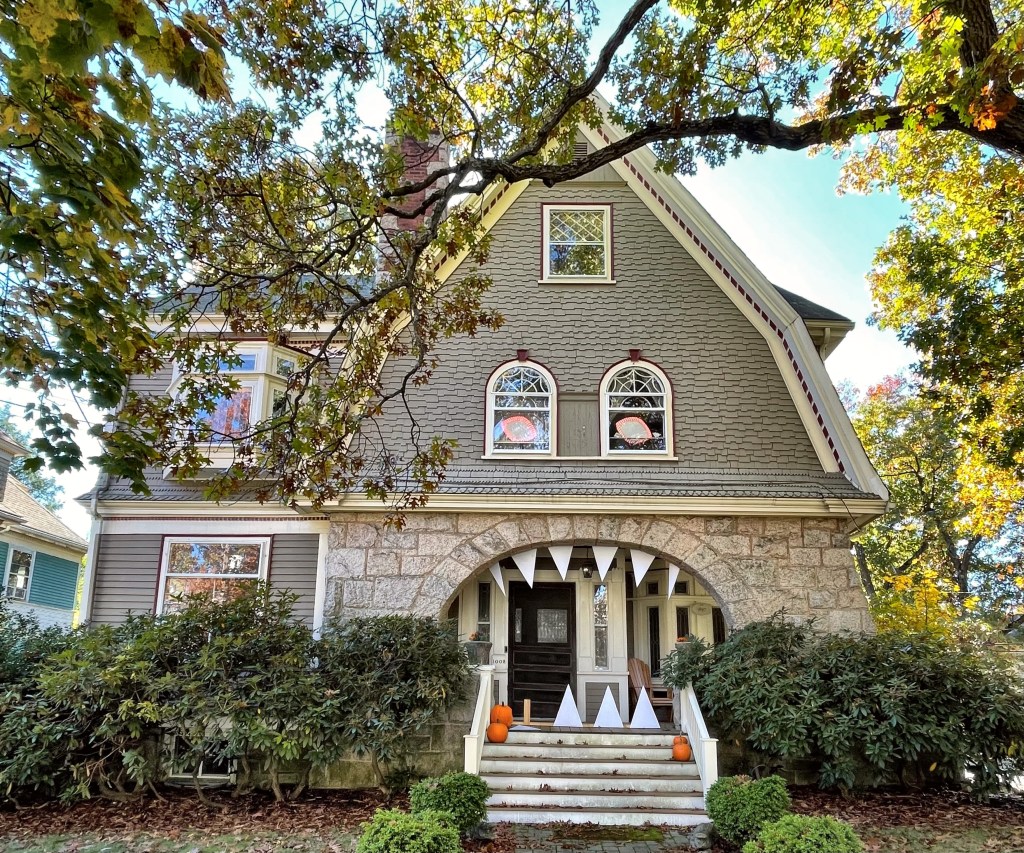
Barrows-Goddard House // 1898

Happy Halloween! To celebrate I wanted to feature one of the more creatively decorated houses in the Boston area, which blends spookiness with architecture! This is the Barrows-Goddard House, so named after its first two owners. The house is located in Newton and was built in 1898 as an eclectic Queen Anne/Shingle style home. The original owner was Joseph Barrows, who developed the property and sold it within a year, relocating to a new home on a less busy street. The property was owned next by Christopher Goddard, an insurance agent with offices in Boston. Architecturally, the gable roof of the main block is intersected by an over-scaled gambrel cross-gable clad in patterned cut wood shingles. The focal point of the design is the Syrian-arched entrance porch of coursed, dressed fieldstone which this time of year, eats trick-o-treaters!