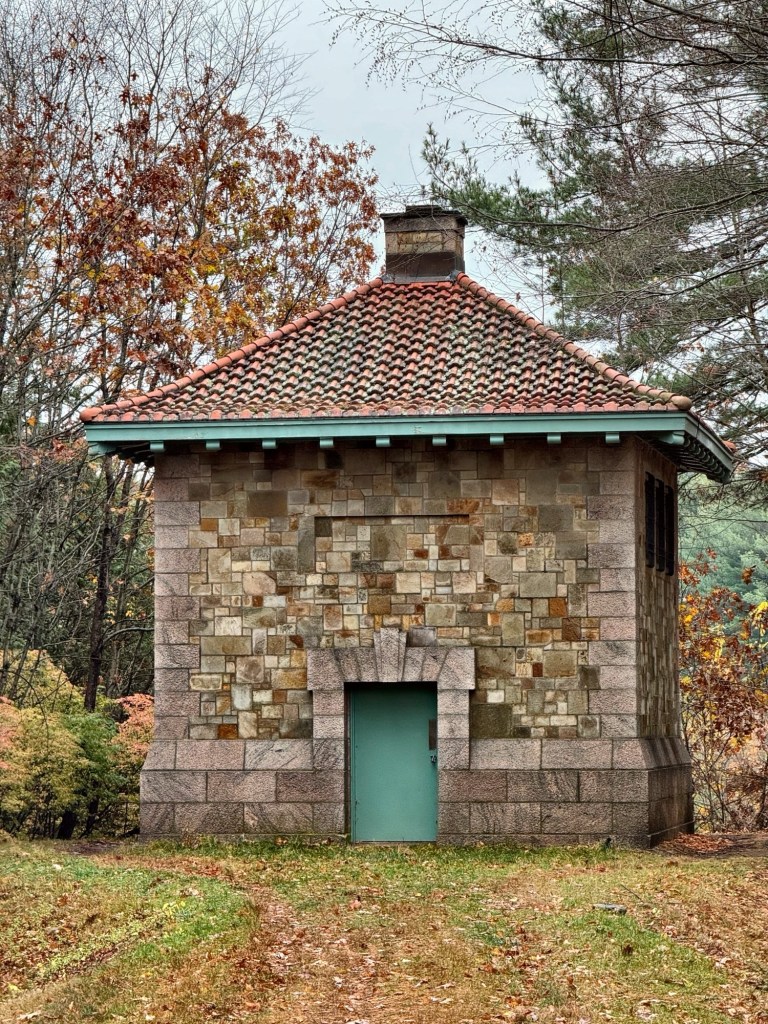
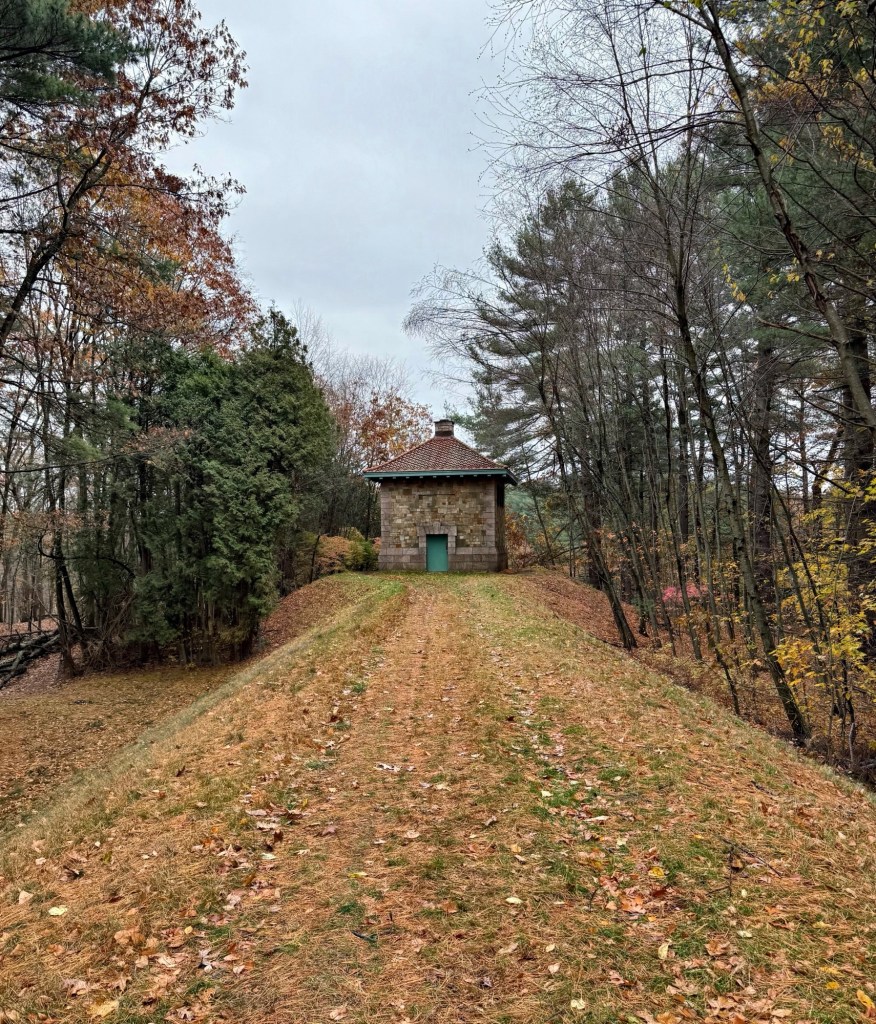
Happy Hollow Siphon House, Weston Aqueduct // 1903

The Weston Aqueduct was designed to deliver water from the Sudbury Reservoir in Framingham to the Weston Reservoir in Weston, Massachusetts. Built between 1901 and 1903, the aqueduct was designed to provide water to the suburbs north of Boston. All of the buildings that shelter the aqueducts above-ground elements, including this structure in Wayland, were designed by the architectural firm of  Shepley, Rutan and Coolidge, with landscaping along the route and at the reservoir designed by the Olmsted Brothers, landscape architects. This siphon house, known as the Happy Hollow Siphon House was built in 1903 and was an important part of the aqueduct system, as it transferred water through varied elevations using gravity and pressure to move the liquid without a pump. The aqueduct route is now a long, linear path and remains owned by the Massachusetts Water Resource Authority.
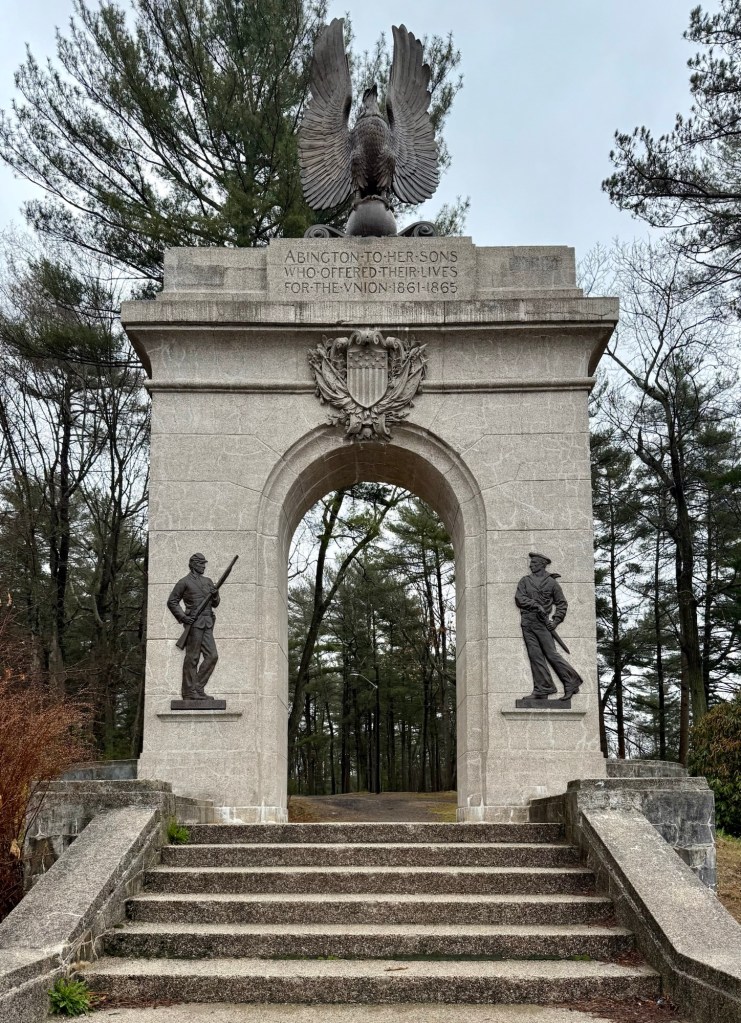
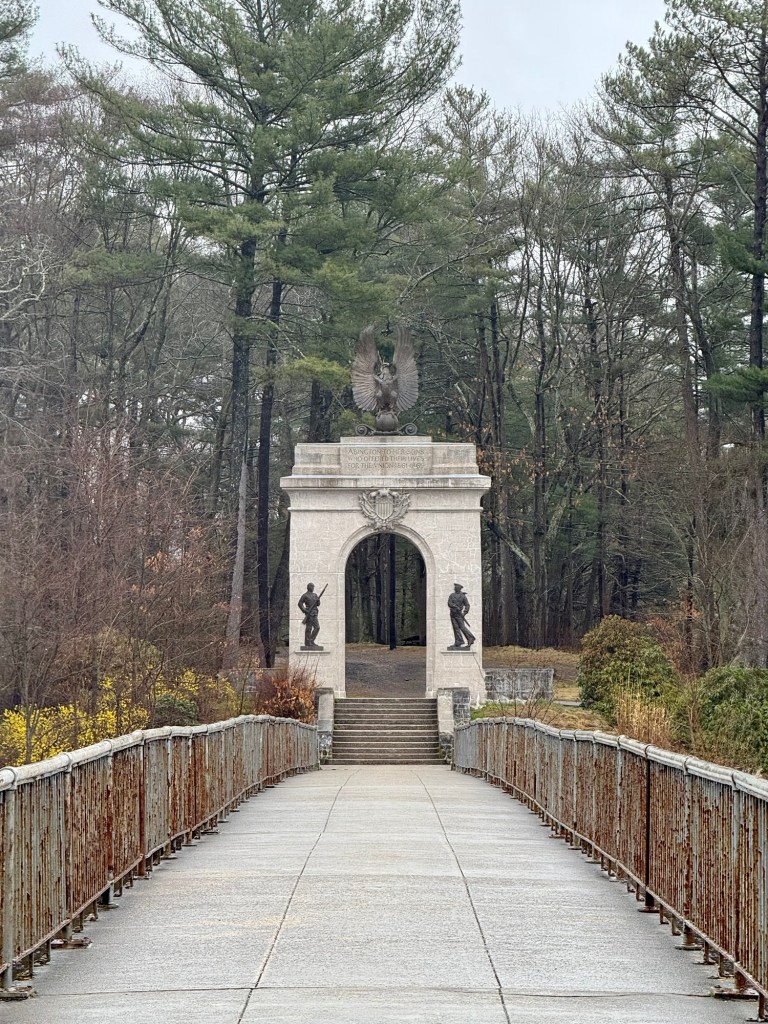
Island Grove Park Memorial Arch // 1912

The Abington Memorial Arch and Bridge at Island Grove Park was dedicated on June 10, 1912 as part of the town’s bicentennial observances. The Grove had been a popular meeting place for the Massachusetts Anti-slavery Society, with William Lloyd Garrison, Wendell Phillips, Abby Kelley Foster, and Lucy Stone among the many prominent reformers who spoke there. Abington resident and Civil War veteran, Capt. Moses Arnold, donated a large marker in 1909 to commemorate the abolitionist meetings at Island Grove, this act led the local GAR Post to begin planning a Civil War Memorial Bridge and Arch for the community. The 17-acre park is comprised of a peninsula jutting into Island Grove Pond, a 35-acre body of water which was created by impounding the Shumatuscacant River in c. 1700 for industry. The area has a significant history, first as an industrial site, then as an amusement park, before it became the wooded park it is now. The Memorial Arch and Bridge serves as the main entrance to the park, and was designed collectively by architect, J. Williams Beal, landscape architects, the Olmsted Brothers, and sculptor, Bela Pratt. The municipal park is a beloved local landmark and host to many events.

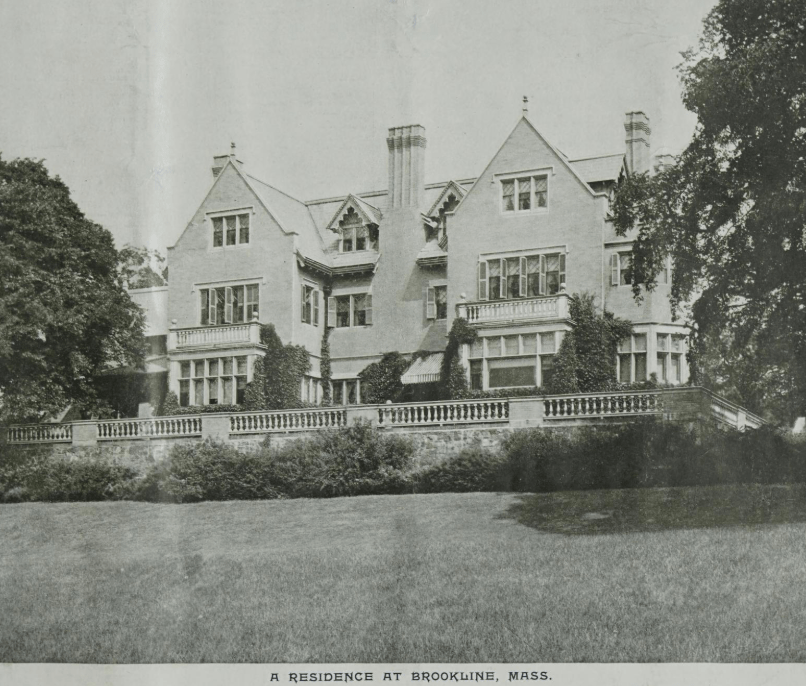
John G. Wright Mansion // 1907-1967

John Gordon Wright (1843-1912), was a Boston wool merchant who purchased farmland on this site in the 1890s and hired architects Chapman & Frazer, to design this stone mansion as an estate house. He previously moved into an earlier wood-frame home on the site and a decade earlier, had the architects design his carriage house and stable, which survive today as the Soule Recreation Center. The stone Tudor Revival style mansion house was massive and featured in national periodicals when completed. The estate was beautified by landscaping designed and laid-out by the Olmsted firm. In 1942, the property was purchased by the Rivers School (now located in Weston) and converted into classrooms and administrative offices for the private school. When the school moved to Weston, the Town of Brookline in 1961 bought property for recreational purposes. Sadly, in 1967, the mansion house burned down, but the carriage house and gate lodge remain as lasting remnants of a once great Brookline estate.

Lighthouse Inn // 1902

In the 1890s, Charles Strong Guthrie and wife Frances Amelia Lampson Guthrie began vacationing at Pequot Colony, a resort community in New London, CT, with considerable social cachet and popular with wealthy New Yorkers like themselves. Charles Guthrie was an industrial mogul who served as President of the Republic Iron and Steel Corporation. In 1901, the couple acquired 12-acres of land overlooking the Long Island Sound, and hired renowned Summer home architect William Ralph Emerson to design a mansion with the Olmsted Brothers commissioned to design the site and landscaping. Upon completion in 1902-03, the estate became known as “Meadow Court”, taking its name from the six-acre wildflower meadow overlooking the Sound. The home was a landmark in the Mission/Spanish Revival style, which became popular in the early 20th century, coinciding with other architectural revivals. Charles Guthrie died prematurely in 1906 at age 46, and not long after, Frances began spending summers on Long Island. In the 1920s, she sold off some of the land to a developer, who constructed more modest summer cottages, and sold the mansion, which soon after re-opened as the Lighthouse Inn. The summer hotel flourished through the mid 20th century, boosted by great management and luxury events. A fire in 1979 destroyed some of the building, but it was restored. It closed in 2008 and sat vacant until recently, when a new owner has begun the long process of restoration, looking to restore the light back to the Lighthouse Inn.

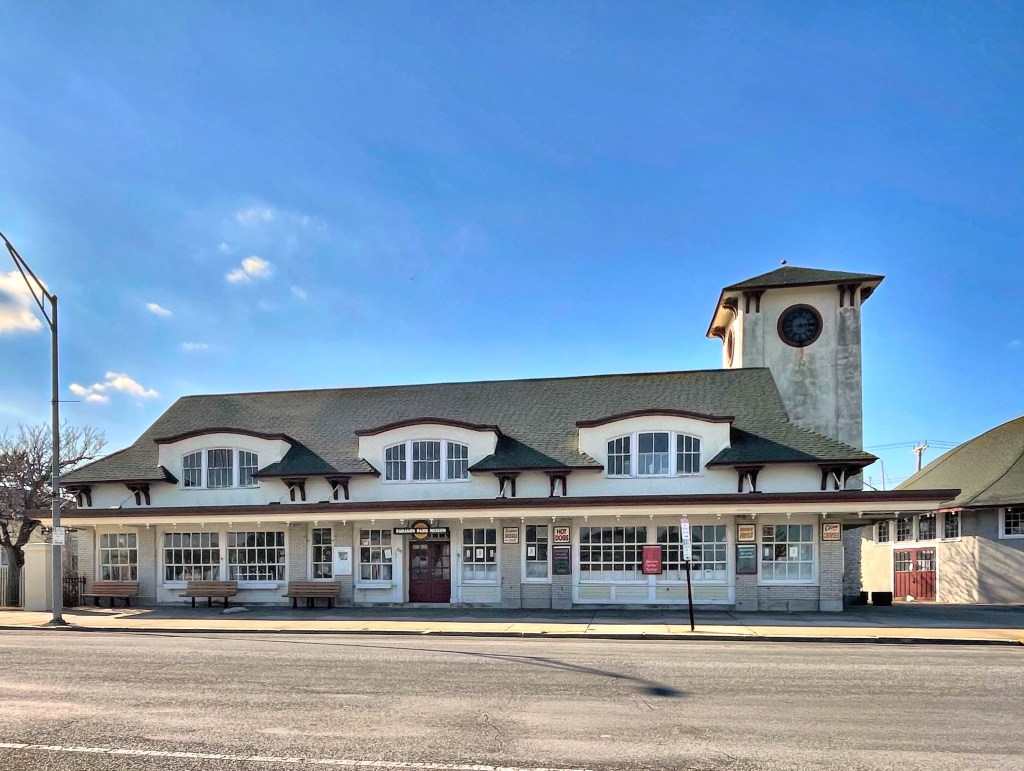
Nantasket Beach Waiting Room // 1903

The area of Nantasket Beach in Hull was in the late 19th century, a hotbed of taverns, thievery, and brothels. To counter this, the Metropolitan Park Commission of Greater Boston acquired about 25 acres at Nantasket, which included roughly one mile of shoreline extending north from Atlantic Hill in 1900. The initial appropriations provided for only minimal facilities, such as a bathhouse and a few incidental buildings, one of which was a waiting room for those arriving or departing from the new railroad station (since demolished) at the beach. The MPC hired the Olmsted Brothers landscape architects to design the paths and landscaping for the new park, and they worked with architects Stickney & Austin who designed many of the early buildings. Stickney & Austin designed this stucco-clad building with clock tower to provide shelter from the elements and summer sun for visitors of the reservation. The building is a blending of the Arts and Crafts and Spanish Revival styles, both common at the beginning of the 20th century. The building now houses the Paragon Park Museum, after they relocated the Paragon Park Carousel next door to this building.