Old St. Stephen’s Church – Barker Playhouse // 1840

The old St. Stephen’s Episcopal Church in Providence’s Fox Point neighborhood is an architecturally distinctive Greek Revival style church building located on charming Benefit Street. The church had its beginnings in 1839, when the newly established congregation called on 29-year-old Francis Vinton to serve as their first pastor. The congregation funded this small church which broke ground in 1840, and before it was completed, Rev. Vinton resigned as Rector. The building, built of stone and covered in stucco, once had a spire and belfry above the main entrance. The congregation grew over the next decade and it was soon realized that a larger and more central church should be built for members, many of whom were wealthy residents with mansions surrounding Brown College. In 1860, the parish purchased a lot on George Street, and hired architect, Richard Upjohn to design the new church in the Gothic style. For reasons of location, and possibly social class, twenty-two men and women remained here at the less fashionable church and formed a new parish, the Church of the Saviour. The smaller, mission church with its stucco walls, remained until the property was sold in 1932 to house the Barker Playhouse, reputed to be the oldest continuously operating little theatre in the United States.
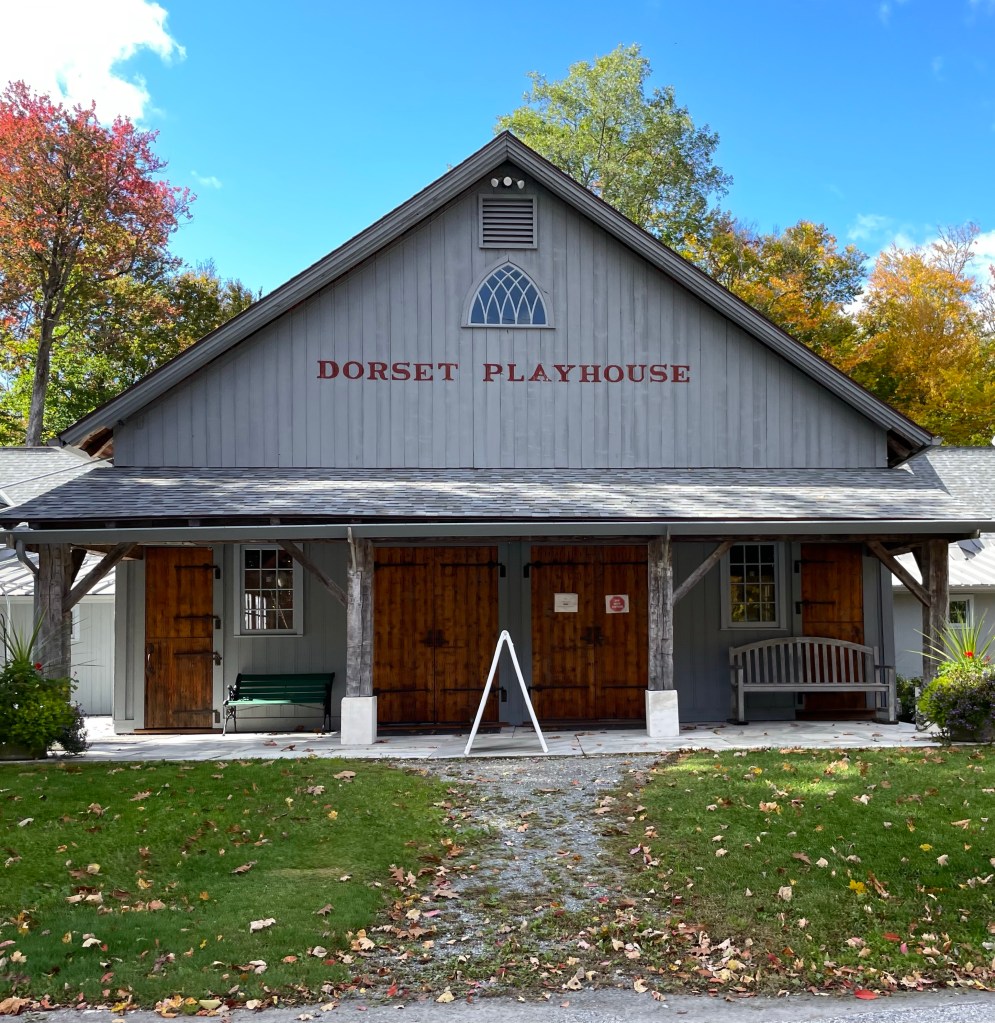

Dorset Playhouse // 1929

During the spring of 1927, Mr. and Mrs. Edward Goodman, devotees of the performing arts, were able to interest a number of Dorset residents in producing a play. In April 1927, a three-act play entitled ’39 East’ was presented in the Dorset Town Hall for the benefit of the PTA and was received with great enthusiasm. From this, a movement took off. Many summer residents and artists in town formed a group, the Dorset Players, who would continue performances for the town. They realized that the space in Town Hall was not suitable nor permanent enough for the goals of the group. May Goodman purchased land at the edge of the village and the group held two years of performances in nearby towns to gather funding to erect a playhouse. Ernest West, a member, offered two barns on his property in town and it, plus one more barn, were incorporated into the new playhouse. The auditorium was built so that the weathered sides of the barn boards were on the inside and hand hewn timbers 12 by 12 inches were used to achieve a rustic effect which draws many favorable comments from those visiting the Playhouse. It remains a cultural center of the town and greater region to this day.

The Breakers – Children’s Cottage // 1878

While the Breakers Mansion in Newport is one of the most opulent buildings in the United States, a tiny cottage on the grounds always gives me feelings of whimsy. Predating the larger mansion by two decades, this cottage was constructed on the grounds of the original Breakers House, owned by Cornelius Vanderbilt, which was destroyed by fire in 1893. The cottage was built as a children’s playhouse around the time the original Breakers mansion was built in 1878. The Boston architectural firm of Peabody and Stearns built the mansion and adjacent cottage for Pierre Lorillard IV, a New York cigar manufacturer and millionaire. The Queen Anne Revival style elements, including the half-timbering and shingles and asymmetry, were in keeping with the style of the original Breakers, and complimented it well. My favorite part of the cottage is the open porch facing the ocean, which has four wooden posts, carved in the shape of figures from Dutch folklore, a sort of caryatid, supporting the roof. The house contains a living room and kitchen separated by a huge red brick chimney, which would be maintained by servants for the children while they play.