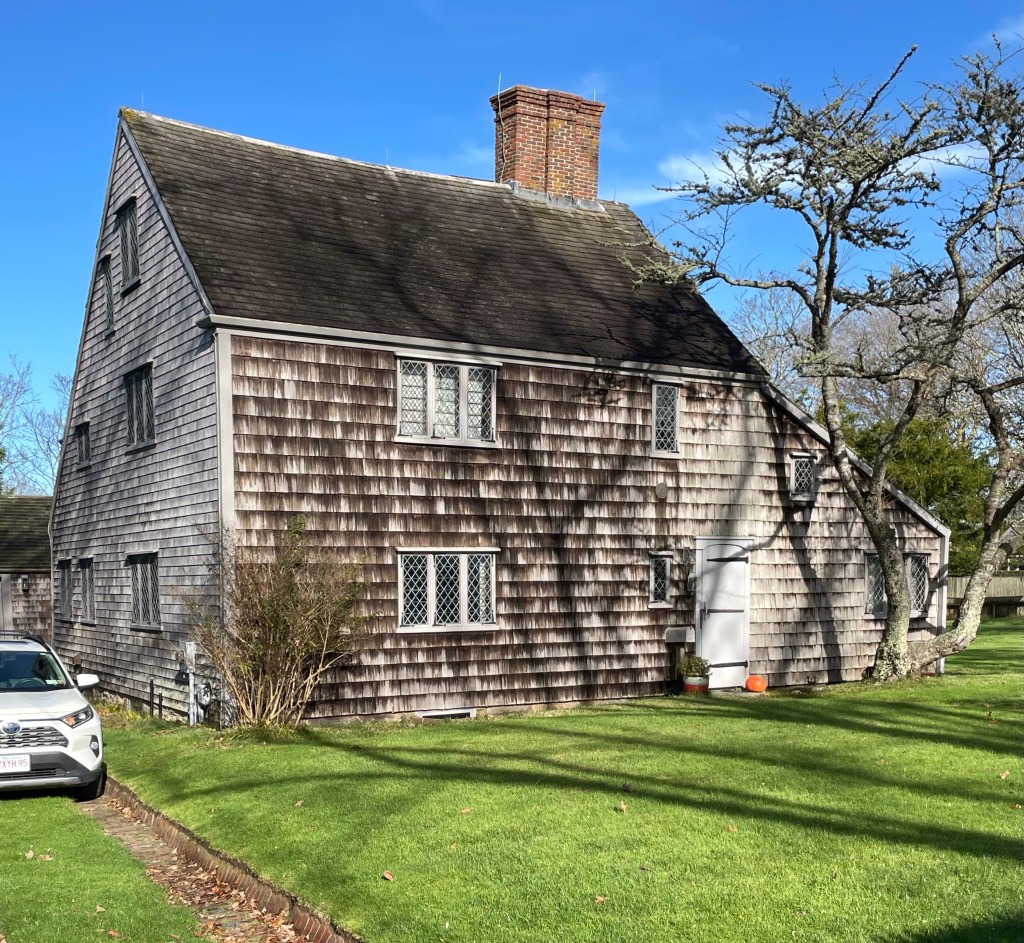
Israel Putnam House // c.1648

The General Israel Putnam House in Danvers, Massachusetts, was built circa 1648 by Lieutenant Thomas Putnam on farmland that then consisted of 100 acres. In 1692, his youngest son, Joseph Putnam, lived here, inheriting the property over his half-brother, Thomas Putnam, Jr. (1652-1699), causing friction within the family. During the infamous witch trials and hysteria in Salem Village, Joseph Putnam was one of two people who took notes during the examinations of the first three to be accused of witchcraft in 1692 – Sarah Good, Sarah Osborne, and Tituba. From that point forward, he was one of the most outspoken opponents of the proceedings, which put him in direct conflict with most of the Putnam family, especially that of his half-brother Thomas. Fearing accusations against him by his half-brother, Joseph was said to have kept horses saddled at all times, ready to escape at a moment’s notice. He was never accused, though Thomas Putnam was responsible for the accusations of 43 people, and his daughter was responsible for 62. In 1718, Israel Putnam, the son of Joseph Putnam, and later Commander of the colonial troops at the Battle of Bunker Hill, was born in this house. It is the only extant structure with direct ties to Commander Putnam. During the Battle of Bunker Hill, Putnam is thought to have ordered William Prescott to tell his troops, “Don’t fire until you see the whites of their eyes.” This command has since become one of the American Revolution’s notable quotations. It was given to make the best use of the low ammunition stocks that the troops had. The Putnam House remained in the family into the 20th century, and due to highway and commercial expansion, the property now sits in the middle of a cloverleaf intersection of two highways. The house was given by the Putnam family to the Danvers Historical Society in 1991, but as of 2020, the Putnam family once again owns the property. The house is not holding up well and I could not locate plans for restoration or preservation of it online. This house deserves to be preserved.

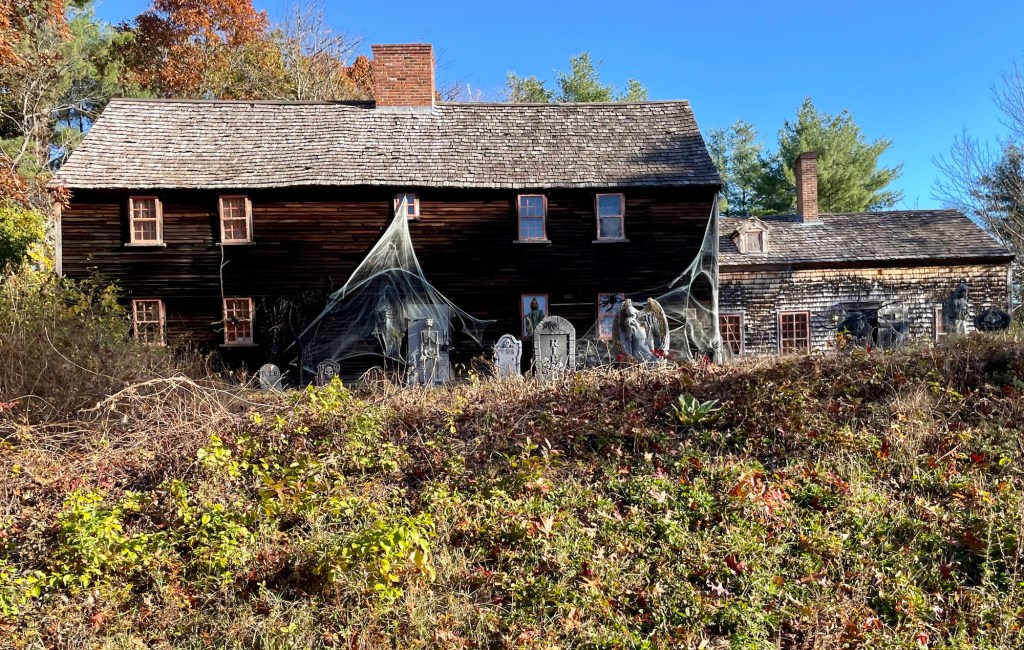
Dickinson–Pillsbury House // c.1700

The Dickinson-Pillsbury House is believed to be over 320 years old and is significant as a well-preserved example of a First Period house in good condition. Located on Jewett Street in Georgetown, Massachusetts, the house was seemingly built before 1700 by James Dickinson Sr. or James Dickinson Jr. and was inherited by Samuel Dickinson (1754-1841). The house is notable for being the home of War of 1812 veteran and inventor Paul Pillsbury, who purchased the property about 1801. His inventions included devices for pegging shoes, milling bark off tree sections, and stripping kernels from ears of corn. Paul Pillsbury and his wife Elisabeth Frink had a family of seven sons and one daughter. Paul Pillsbury was also the uncle of abolitionist Parker Pillsbury and the great-uncle of attorney Albert E. Pillsbury who drafted the bylaws of the NAACP. What an incredible family! The house is well-preserved and a great example of a First Period residence from the 17th century.

Sgt. John Smith House // c.1690

According to local historians, this historic saltbox house was built around 1690 by John Smith, a volunteer Sargent in the Fairfield Trainband (a band of citizens trained as soldiers to supplement the regular army) or Militia. The position involved training, strategizing, storing military weaponry of the town, and being responsible for the preparedness of the community in the event of an attack by Native tribes, Dutch, or French forces. The house was later renovated in the Colonial Revival style, but has since been restored closer to its original design as an early First Period saltbox.

Richard Gardner Homestead // pre-1688

In 1690, Richard Gardner Jr. (1653-1728) received the land and dwelling house from his late father Richard Gardner (1622-1688) who was born in England and settled in Nantucket by way of Salem upon his death. The primitive, First Period home was occupied by subsequent generations of the Gardner family, and altered and expanded to fit the growing needs and wealth of the family. By 1840, the house was owned by George C. Gardner, a whaling captain and descendant of Richard Gardner. The original home was located on what is now Lowell Place, just off Main Street, and the Gardner Homestead was converted to a carriage house for the more modern George Gardner Home. By 1927, Ms. Gladys Wood purchased the deteriorating and heavily altered structure, and moved it to its current location on Main Street. Ms. Wood hired architect Alfred Shurrocks, who summered on the island and was restoring the Jethro Coffin house nearby, to restore the former Gardner Homestead, but this one was all based on conjecture and historical precedent. The home looks much like a 17th century saltbox and has stood the test of time.

Jethro Coffin House // 1686

Here it is… The oldest house in Nantucket! The Jethro Coffin House dates to 1686, and when it was built, Nantucket’s English population totaled several hundred, and the native Wampanoag outnumbered them by at least three to one. The home was built seemingly as a wedding gift from twenty-three-year-old Jethro Coffin (1663–1727) to his new sixteen-year-old wife Mary Gardner (1670–1767). The marriage merged two of the old Nantucket families and was built on Gardner family land out of lumber transported to the island from Exeter, New Hampshire, where Jethro’s father, Peter Coffin, owned timberland and a saw mill. The First Period house has small windows of small panes of glass as the material was shipped from England at high cost. The large central chimney would heat the entire home on cold winter nights. Mary and Jethro sold their Nantucket dwelling to Nathaniel Paddack in 1708 and moved to Mendon, Massachusetts, when Jethro inherited property there. By the late nineteenth century, the house was abandoned (for some time it was used as a barn) and had fallen into disrepair. A Coffin family reunion held on the island in 1881 renewed interest in the property and off-island members of the family bought the old Coffin House. The Nantucket Historical Association acquired the house in 1923, and four years later, Historic New England), commenced an extensive reconstruction in an attempt to return the house to its historic appearance. It remains a location of pride for residents and visitors to the island to this day.

John Palmer House // c.1683

In 1682, John Palmer acquired a small piece of land in Marblehead, soon after building this First Period home. The house is said to have framing timbers made of English walnut, salvaged from a sailing vessel off shore, with one timber formerly a mast and still displaying rope marks. The house was willed to his son after his death, who built a larger home soon after nearby. This house was “modernized” with double-hung windows which likely replaced the smaller, diamond pane casement windows typical in homes of this period.