High Ridge Manor // 1893

Edward Payson Dutton (1831–1923) was a prominent American book publisher who founded the E. P. Dutton bookselling company in 1852 in Boston, Massachusetts. The business sold fiction and non-fiction, and within a short time expanded into the selling of children’s literature. In 1864, he opened a branch office to sell books in New York City and in 1869 moved his company’s headquarters there and entered the book publishing business. The company did very well, allowing Edward and his wife, Julia the means to build this large summer “cottage” in Ridgefield, Connecticut to escape the rustle and bustle of New York City. The couple purchased the lot in 1893 and appear to have built it soon after. High Ridge Manor is a stunning example of the Queen Anne and Shingle styles of architecture with its asymmetrical plan, continuous shingle siding with rubblestone foundation and chimney, gambrel roof, and towers.

Cheesman Mansion // 1887

Timothy Matlack Cheesman was born in New York City in 1824, a son of physician, John Cummins Cheesman. Following in the footsteps of his father, he graduated in 1859 from the College of Physicians and Surgeons, now known as Columbia University Vagelos College of Physicians and Surgeons. Timothy served as Surgeon in the 7th Regiment NY National Guard in 1853 and upon the start of the Civil War, he mustered into US service April of 1861 as a Surgeon. In the late 1880s, like many other wealthy New Yorkers, Dr. Cheesman and his wife, Maria, decided to build a country home in Ridgefield, Connecticut. They chose nearly 30 acres on the east side of East Ridge, an area that was being touted as “Prospect Ridge” for its view. Dr. Cheesman was ill with Bright’s disease and and may have been seeking the clean air of the country climate to help his health or at least as a place to rest. Sadly, he died one year later in 1888, and did not get to fully enjoy his country retreat. He was 63 years old. His widow Maria continued to use Matlack (the house’s name) until her death in 1903. In 1922, the estate was acquired by the Holy Ghost Fathers, who set up a school for new members of the order who would get their initial training to be priests or brothers there. Declining membership and costs required them to sell the campus, which was acquired by the Town of Ridgefield in 1971. Matlack is now the centerpiece of a large housing complex for the elderly in town and is managed by the local housing authority.

Weir Farm Barn // c.1820

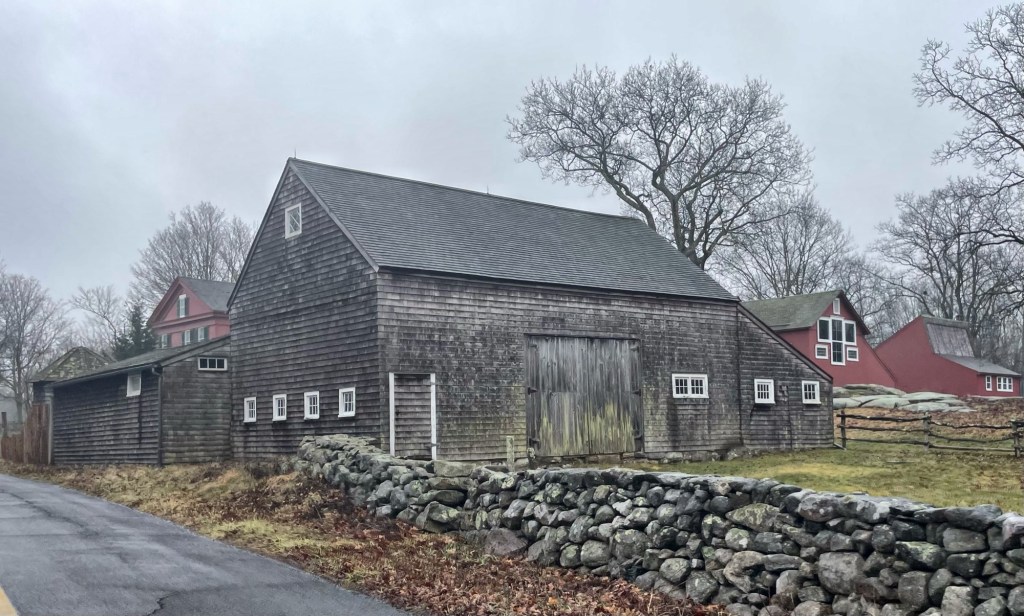
Weir Farm, later an artists retreat and studios, was once a fully operating farm, with horses, cows, oxen, chickens, vegetables, and numerous gardens. To artist Julian Alden Weir, farming was more of a hobby than an economic necessity, undertaken for aesthetic reasons. Weir’s romantic vision of the landscape extended to his use of oxen, carts, and hand tools instead of modern machinery available at the time. Over its long history the barn complex has housed a milking room, a carriage house/wagon shed, a garage, a tack room, an equipment and tool room, hay lofts, a corn crib, and stalls for donkeys, ponies and horses. The rustic barn is a typical “English-barn” built between 1815 and 1835 by The Beers’ family, who owned the property until 1880. Weir used the barn as a prominent feature in many of his paintings like “New England Barnyard” and “After the Ride.” It remains an important piece of agricultural and artistic significance to the now nationally recognized Historic Site.

Weir Farmhouse // c.1780

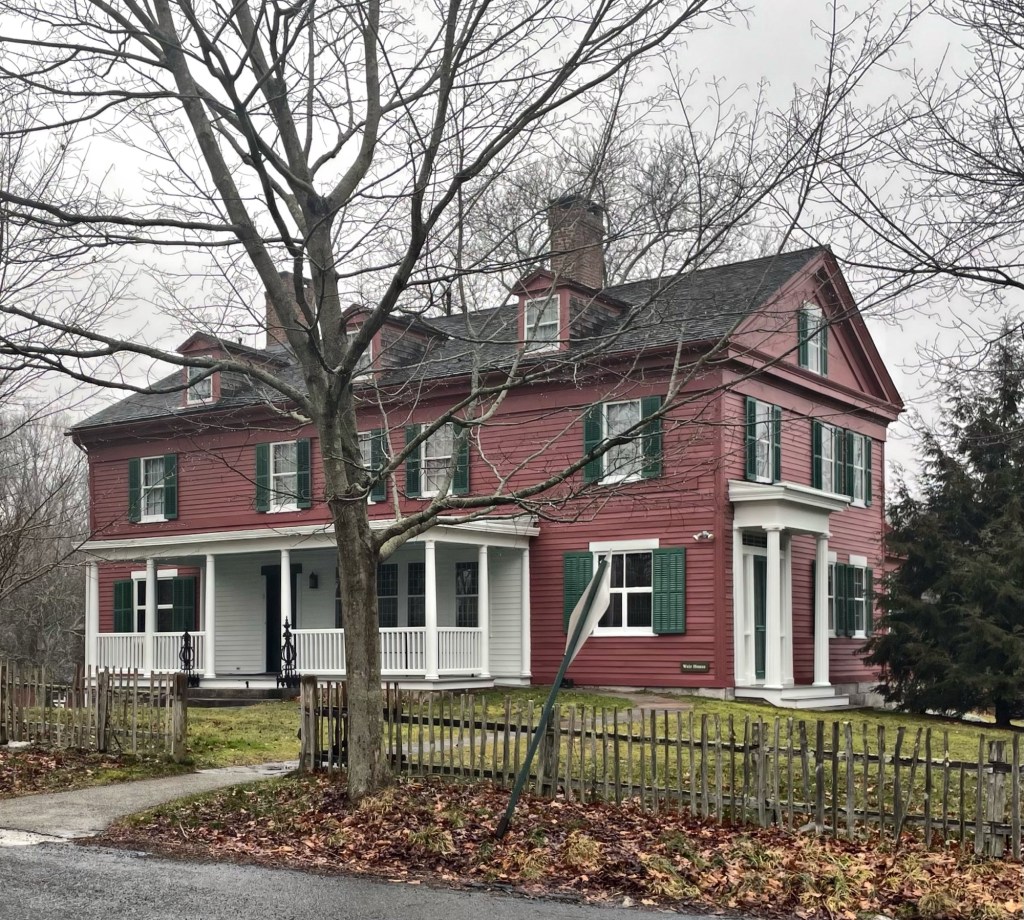
Impressionist painter, Julian Alden Weir was looking to build a home in New York’s Adirondack Mountains when Erwin Davis, an art dealer, offered him a farm in Ridgefield, Connecticut, for a painting he owned plus ten dollars. After a visit in 1882, Weir agreed and acquired the 153-acre farm. The old farmhouse, which dates to the 1780s, and was modified in the Greek Revival style before Weir’s ownership and expanded and renovated again during its time as an artist’s retreat. The house was often filled with family and friends as a popular artistic retreat for Weir’s closest friends, including: Childe Hassam, Albert Pinkham Ryder, John Singer Sargent, and John Twachtman. Weir’s daughter Dorothy Weir, a noted artist in her own right, took over management of the property following her father’s death in 1919. Sculptor Mahonri Young would build a second studio at Weir Farm after the couple married in 1931. The Weir Farm site was designated as a National Historic Site in 1990, but prior to its permanent protection, Weir Farm had been subdivided for housing development in the late 1980s. The Trust for Public Land worked to reacquire the divided land through close to 2 dozen transactions, preserving the site for generations to come.

Benedict House // c.1740

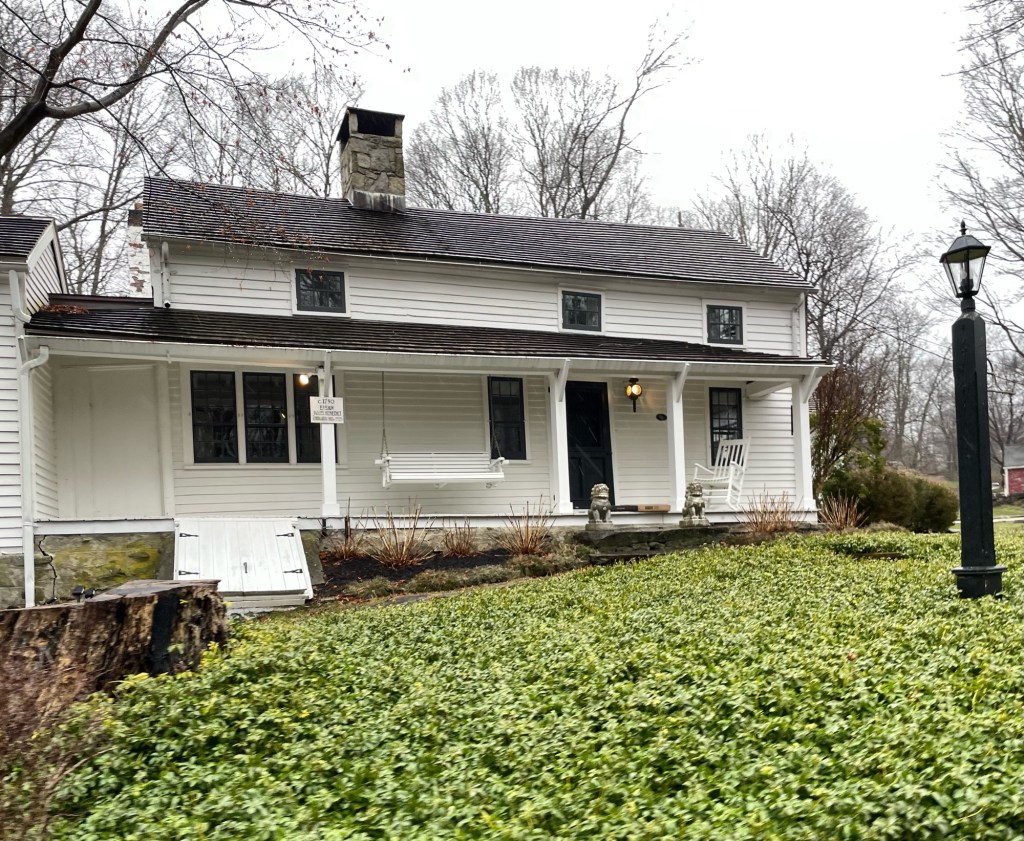
The Benedict House in Ridgefield, Connecticut is a stunning Colonial-era cottage that was once the home of a cobbler, who had his shop on the property. The Benedict family, headed by James Benedict, Sr., were original proprietor settlers of Ridgefield. This house and shop have been attributed to James’ son James Benedict (1685-1762), who owned the land and was a shoemaker and deacon of the Congregational Church. Ensign Benedict was also a fence viewer, a term new to me. Fence viewers had power to make and enforce rulings regarding escaped or trespassing livestock, the location of fences, and, above all, maintenance of fences. With fences so crucial to keeping livestock where it belonged, loose boards and rotting posts were big concerns. The fence viewer could even compel a property owner to pay for needed maintenance or repair conducted by a neighbor if he or she failed to keep up their fence properly. The property left Benedict family ownership in 1848, and it was later extensively restored by renowned architect Cass Gilbert, who bought the property in 1920. Cass Gilbert also restored a few other Colonial-era houses in town. It was later the home of Robert and Mildred Wohlforth, both writers of note and six-decade residents of Ridgefield.

Ridgefield Town Hall // 1896

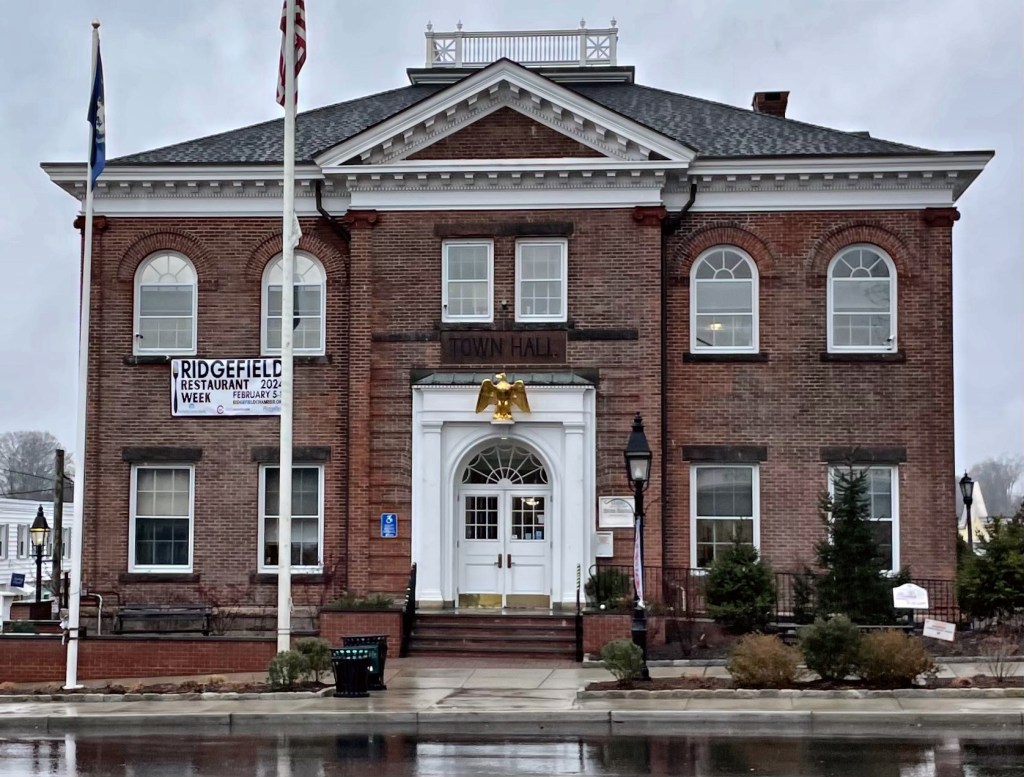
Ridgefield, Connecticut was settled in 1708 when 24 families from Long Island purchased land from Chief Catoonah of the Ramapo tribe. The Fundamental Orders adopted by Connecticut in 1639 directed would-be settlers, able to support a minister, to establish a settlement, build a Congregational church and farm the land. This is exactly what was done in Ridgefield, beginning in 1708. The original 24 proprietors received 7½-acre home lots drawn by lottery, with a 25th reserved for the minister. The lots were located up and down Main Street from a Common where a Meeting House was built. The town grew and for much of its three centuries, was primarily comprised of old farms. By the late 19th century, spurred by the connection of the railroad, Ridgefield was “discovered” by wealthy New York residents, who assembled large estates in town, a trend that has only picked up in the 21st century! Population growth and a large fire on the town’s Main Street in 1895 necessitated a new Town Hall building. The present Town Hall building was constructed in 1896 from plans by architect Philip Sunderland. Colonial Revival and Romanesque in style, the two-story brick building features a pedimented central bay also containing the entrance with fan light transom, round arched windows, brownstone trim, and narrow pilasters of brick. The building houses town offices today.