Harriswood Crescent // 1889

Harriswood Crescent was built in 1889-90 at the height of Roxbury’s development as a streetcar suburb which coincided with the electrification of the streetcar lines in Boston. The area of Roxbury in which the Crescent is located, known at the time as Boston Highlands due to its rocky terrain and steep grades, was an extremely desirable residential location. As land values raised, middle and upper-class families looked for varied housing types that fit their demands. Seen as a great investment of the family estate, the heirs of wealthy businessman Horatio Harris (1821-1876) redeveloped lots on one side of a rocky park for fine townhouses, which were named Harriswood Crescent. The name was probably chosen for its historical associations with Boston’s Tontine Crescent and the great Georgian crescents of London and Bath in England. Architect J. Williams Beal designed the row, which was one of his first commissions upon returning to Boston in 1888 after employment as a draftsman at McKim, Mead & White and a long study in England to view architecture. Built at 15 separate units, the row of Tudor style houses is among the only of such developments in Boston, and New England at large.
Peleg Eddy House // c.1895

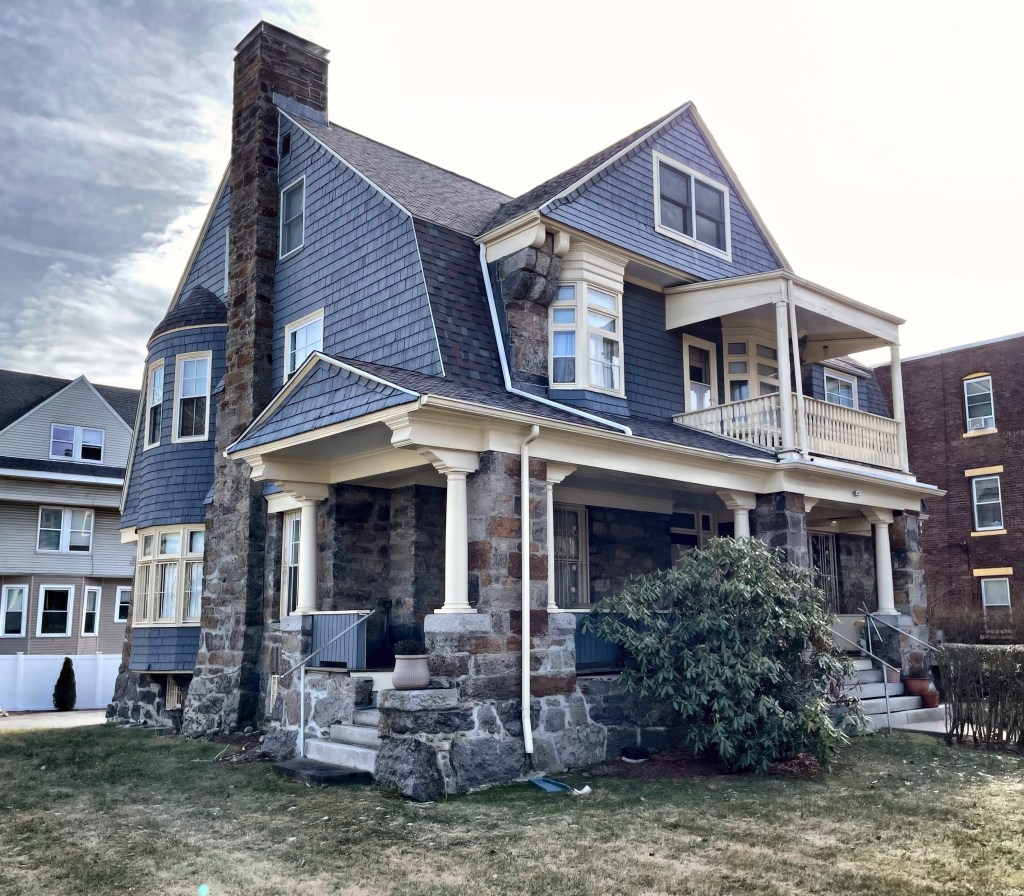
Roxbury is not well-known for its Shingle style architecture, but this example might change that! This dwelling was built around 1895 by the heirs of Horatio Harris on family land that was subdivided for house lots at the end of the 19th century. The expansive Harris estate was developed, largely on speculation and included some amazing single family homes, rowhouses and multi-family dwellings. This Shingle style home appears to have also been built on speculation and was owned by the Harris heirs for some time. The property was occupied for some time by Peleg E. Eddy and his wife Caroline in the earliest years of the house’s existence. I could not locate the architect, but it could be estimated as a design by J. Williams Beal, a local architect who was commissioned to design the nearby Harriswood Crescent development for the Harris family. The design features a Roxbury puddingstone first floor and chimney which contrast elegantly with the shingle siding.

Henry A. Thomas House // 1870

People don’t explore Roxbury enough! The neighborhood is full of amazing architecture with buildings in a great state of preservation and some waiting for the overlapping vinyl siding to be removed. This restored beauty sits perched above the road and is one of the best examples of a Second Empire merchant’s home in Roxbury. The house was built around 1870, within a year of owner Henry A. Thomas purchasing the lot here for $4,800. Mr. Thomas owned a boot and shoe retail store in Downtown Boston for years. The lot was later subdivided and stucco apartments were built to the side, notable at the time when Roxbury began to really densify with housing construction in the early 1900s.

Doris Bunte Apartment Tower // 1967

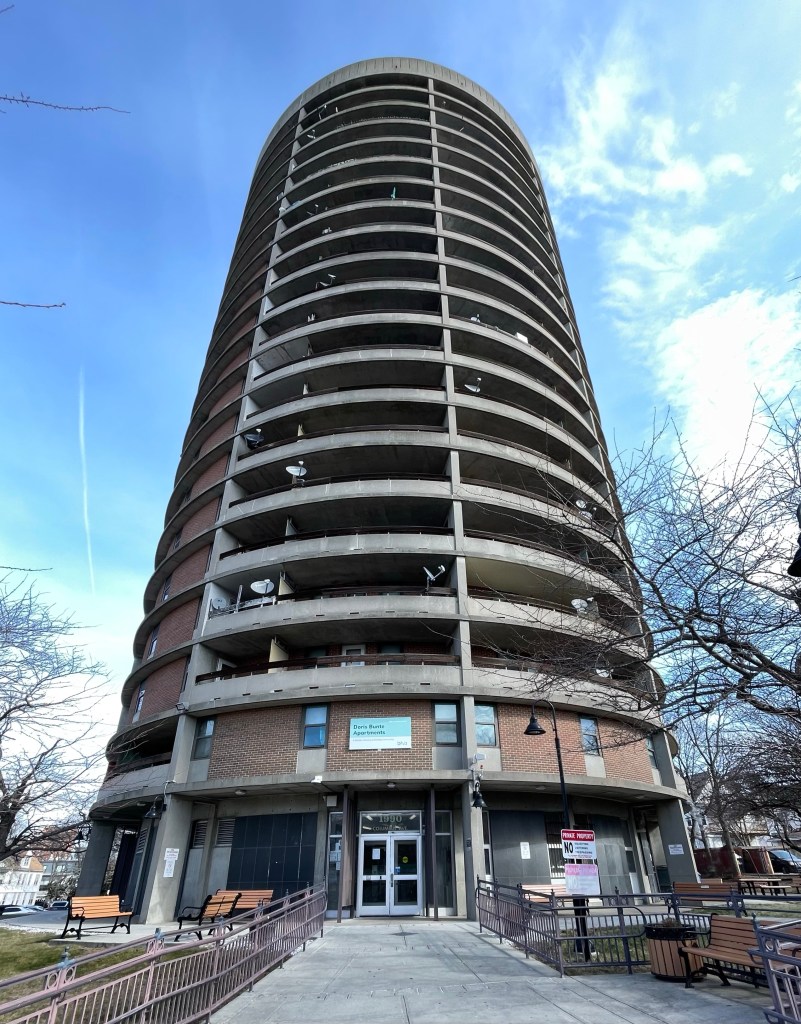
In the second half of the 20th century, parts of Boston saw disinvestment by private property owners as well as local and state government. With people leaving Boston for the suburbs, the hemorrhaging of tax revenue led urban planners to go big and institute ‘Urban Renewal‘ policies and planning to demolish what they believed to be substandard housing and invest in Modern apartments and car-oriented developments. The triangular shaped new community was as comprehensive as any urban renewal district in the region; indeed of the ten General Neighborhood Renewal Plans created by the BRA in 1961, Washington Park was the most self contained Urban Renewal District in the city. It included new police and fire stations, a courthouse, two public libraries, a shopping mall, a health center, elementary school and five garden style housing developments totaling almost 2000 apartments or townhouses. At its completion in 1975, $70.4 million had been invested to build the new community of which $31. 3 million came from the federal government. Part of this massive undertaking was the construction of elderly housing, which resulted in this 20-story cylindrical tower at the southernmost edge of the Urban Renewal area. The tower was constructed between 1967 and 1970 and was designed by Boston-based architectural firm Richmond & Goldberg, led by Isidor Richmond and Carney Goldberg. Apartments were “integrated” with with 70% Black and 30% White residents, all with private balconies and an emergency pull-chain system in kitchens and bedrooms for the elderly residents. As far as mid-century apartment towers go, this one is pretty interesting and unique. The building was renovated a few years ago and renamed the Doris Bunte Apartments. In 1969, Buntè was nominated to the Boston Housing Authority board, making her the first female public housing tenant to serve. In 1972, she was elected to the Massachusetts House of Representatives, becoming the first woman of color to serve in the Massachusetts legislature, and the first female to serve in the House leadership in 68 years. While there, Buntè helped found the Black Legislative Caucus and the Caucus of Women Legislators.

Howard House – St. Mary of the Angels Rectory // c.1867

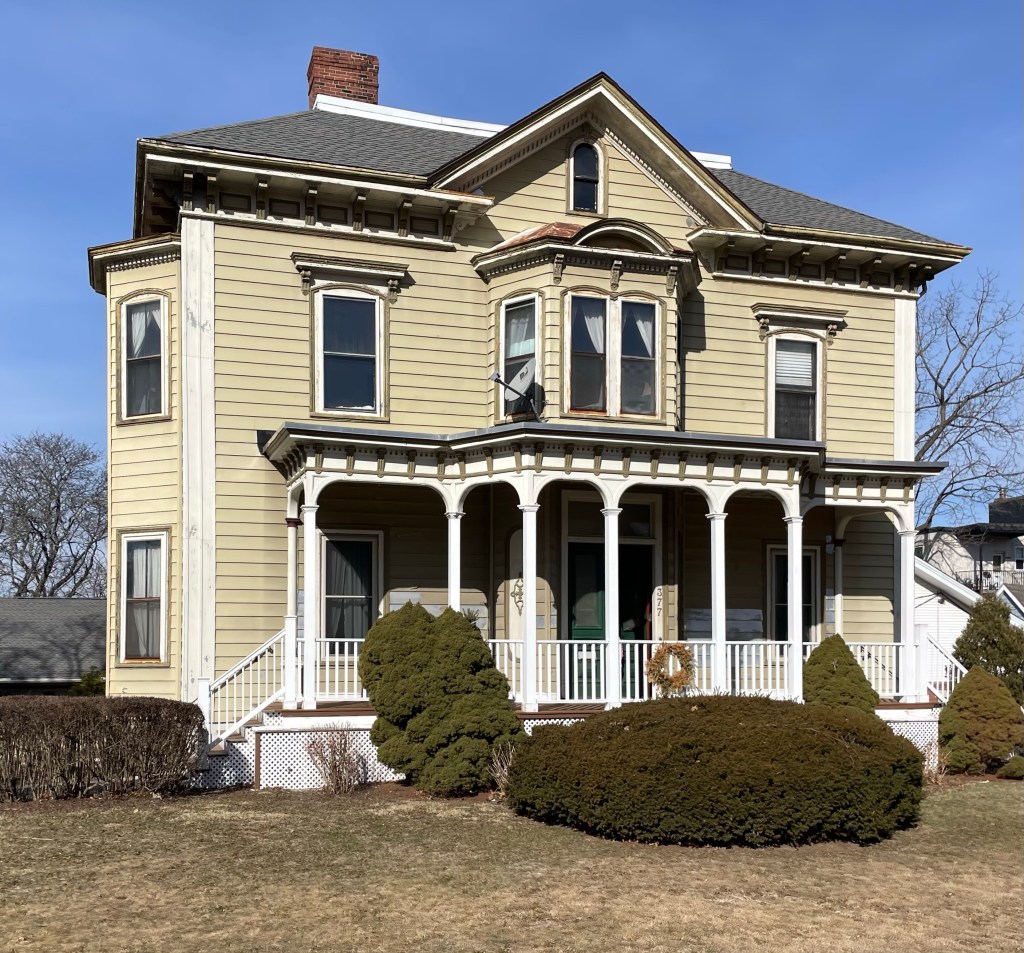
Moving north from the Stonybrook section of Jamaica Plain, Boston, I explored around Roxbury, an area often overlooked by tourists, but has a lot of history and great buildings with rich stories! This old Victorian-era house was built around 1867 for Joseph W. Howard and his wife Lillie about the time of their wedding. The large Italianate style mansion was built in a period and location where wealthier Boston merchants could build large mansions with space in the inner suburbs of the city. The area remained fairly bucolic until the turn of the 20th century when housing development really picked up in Boston’s neighborhoods. By this time, owner Samuel Shuman sold his property on the busy corner lot to the Roman Catholic Archdiocese of Boston. In 1907, construction of the basement church on the site of the former Shuman Estate began. The original plans called for building a larger, upper church at a later date. However, due to a number of factors over the years, the upper church was never built. After WWII, Roxbury saw a demographic change and the church is largely home to a Black and Hispanic congregation to this day. The former Howard House is still owned by the Archdiocese as the rectory.