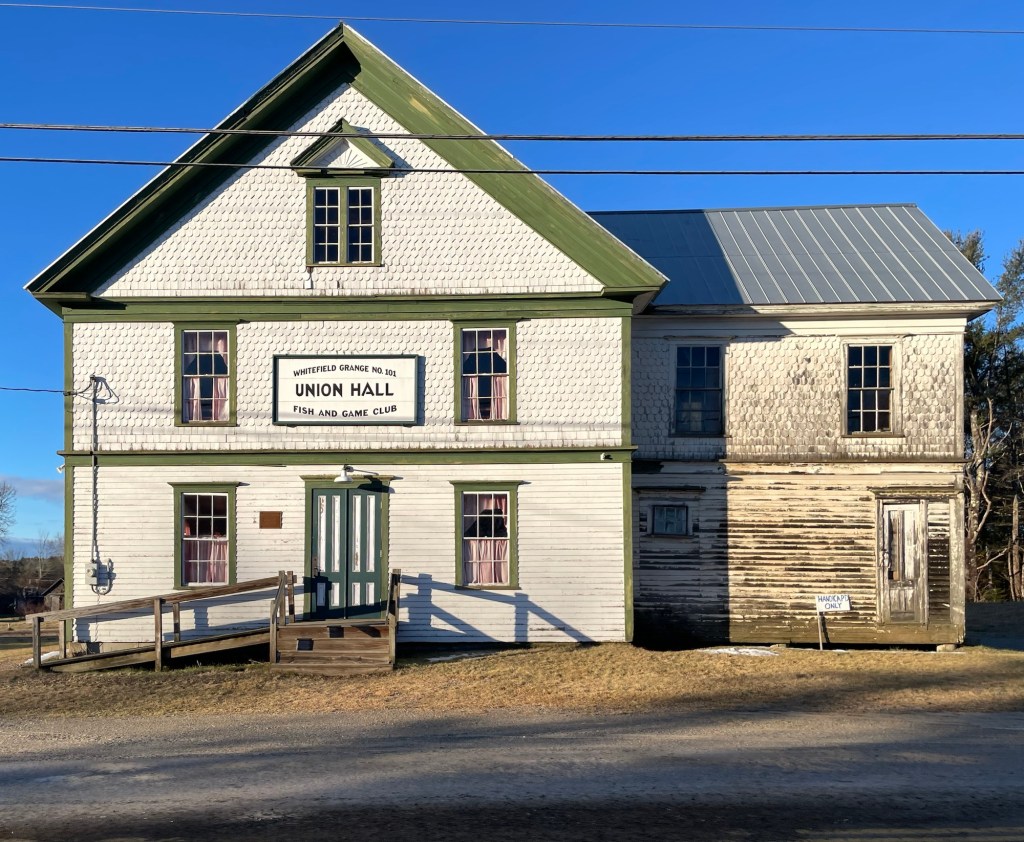
Whitefield Union Hall // 1900

Finding a Grange Hall in Maine are almost as common as finding an old church, they are everywhere! Located the next town over from Jefferson, Maine’s Willow Grange Hall, the town of Whitefield has an equally charming example. The National Grange of the Order of Patrons of Husbandry was established in 1867 to advance methods of agriculture, as well as to promote the social and economic needs of farmers in the United States. Communities all over built grange halls where farmers and residents could meet and discuss prices, trade, and share tips for larger crop yields. The Whitefield Union Hall was built in 1900, primarily under the auspices of the Whitefield Fish and Game Club, but with design input from the local Grange chapter, which contributed funds to its construction and was also a tenant. It was until 1919 the only public hall with a stage in southern Whitefield, playing host to dances, meetings of fraternal and social organizations, and other community events. The hall was managed by an association of the two organizations until 1947, and by the Fish and Game Club after the Grange chapter merged with another in 1969. The club closed down in 1974, and the hall is now managed by a union consortium of village community groups. The building is listed on the National Register of Historic Places.

Jefferson Willow Grange Hall // c.1901

Grange Halls have long been vitally important buildings in agricultural towns all over New England and are becoming threatened due to shifting development patterns and dwindling membership. The National Grange of the Order of Patrons of Husbandry was established in 1867 to advance methods of agriculture, as well as to promote the social and economic needs of farmers in the United States. Communities all over built grange halls where farmers and residents could meet and discuss prices, trade, and share tips for larger crop yields. The Willow Grange Hall in Jefferson, Maine was built in 1901 and is a vernacular building which remains a community meeting hall to this day.

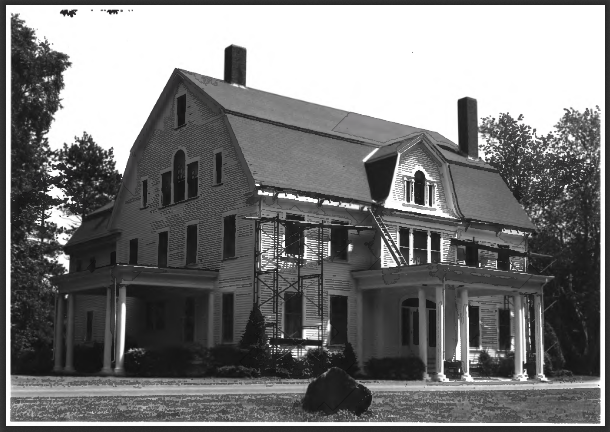
Dr. F. W. Jackson House // 1903

One of the largest Colonial Revival style homes I have ever seen is located in the unassuming small town of Jefferson, Maine. Built in 1903 on the northern shore of Damariscotta Lake, the house stands three-and-a-half stories tall with a broad gambrel roof and clapboard walls. The house was built for Dr. Fred W. Jackson in the Colonial Revival style by relatively unknown Waltham, Massachusetts-based architect Samuel Patch. Dr. Jackson studied medicine and for several years practiced his profession in Providence, Rhode Island. There, he built up a large medical practice and accumulated property, later marrying into a wealthy family. This house in Jefferson was the family summer estate, and Frederick was said to have owned 1,000 acres and laid out bridle paths, gardens, and landscapes in the vast estate. Across the street, a massive gambrel-roof barn was built to house his livestock as part of his gentleman’s farm.

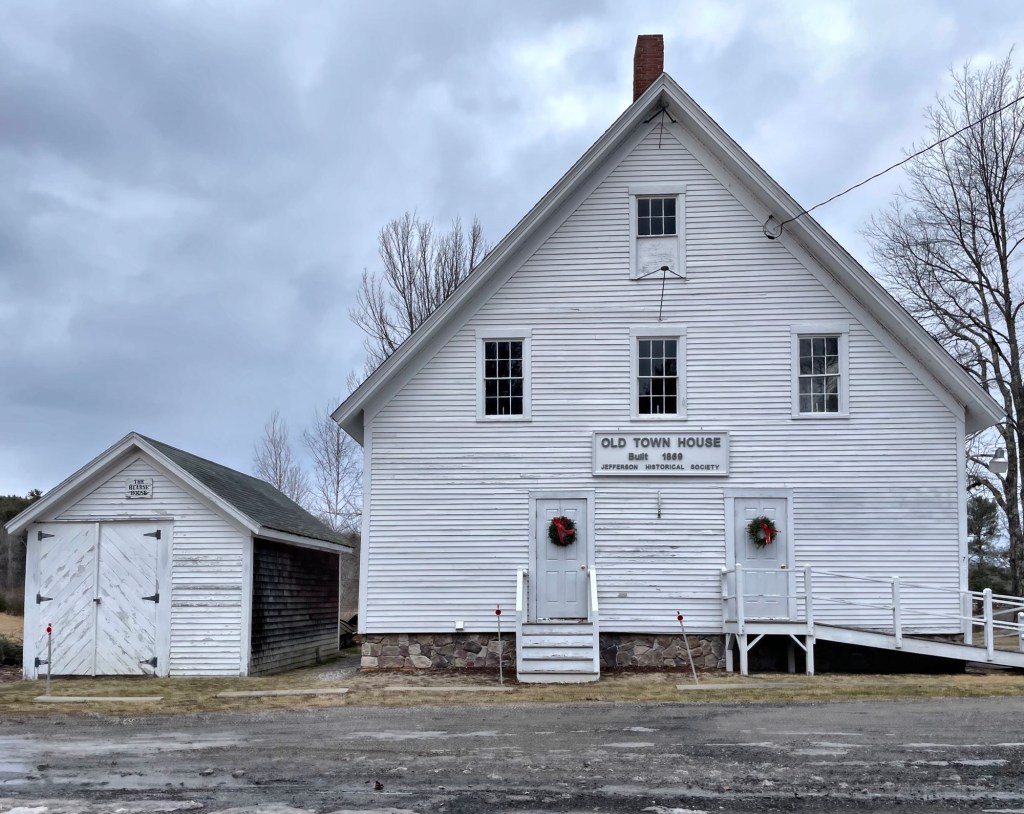
Jefferson Town House and Hearse House // 1869

Following the conclusion of the French and Indian War in 1763, much of the un-colonized land in central Maine began to see development. The Ballstown Plantation was settled in the 1760s and today includes two separate townships created from it, Jefferson and Whitefield, Maine. Jefferson was initially settled by emigrants from the coastal towns of Boothbay and Woolwich in the years just prior to the Revolution and incorporated in 1807, named after Thomas Jefferson, then President of the United States. A Town House was built in 1828 and was eventually outgrown and a new structure was funded in 1869. This is the second Jefferson Town House and like in many rural towns, it served many purposes. The building was used for town meetings, a high school, and was sometimes rented to fraternal organizations (talk about Mixed Use)! The outdated building was no longer needed by the town in the 1970s and a new building was erected closer to the center of town. This building was subsequently rented to the Jefferson Historical Society, who have restored the building, and the historic hearse house next door. The vernacular civic building will hopefully be preserved for another 150 years!

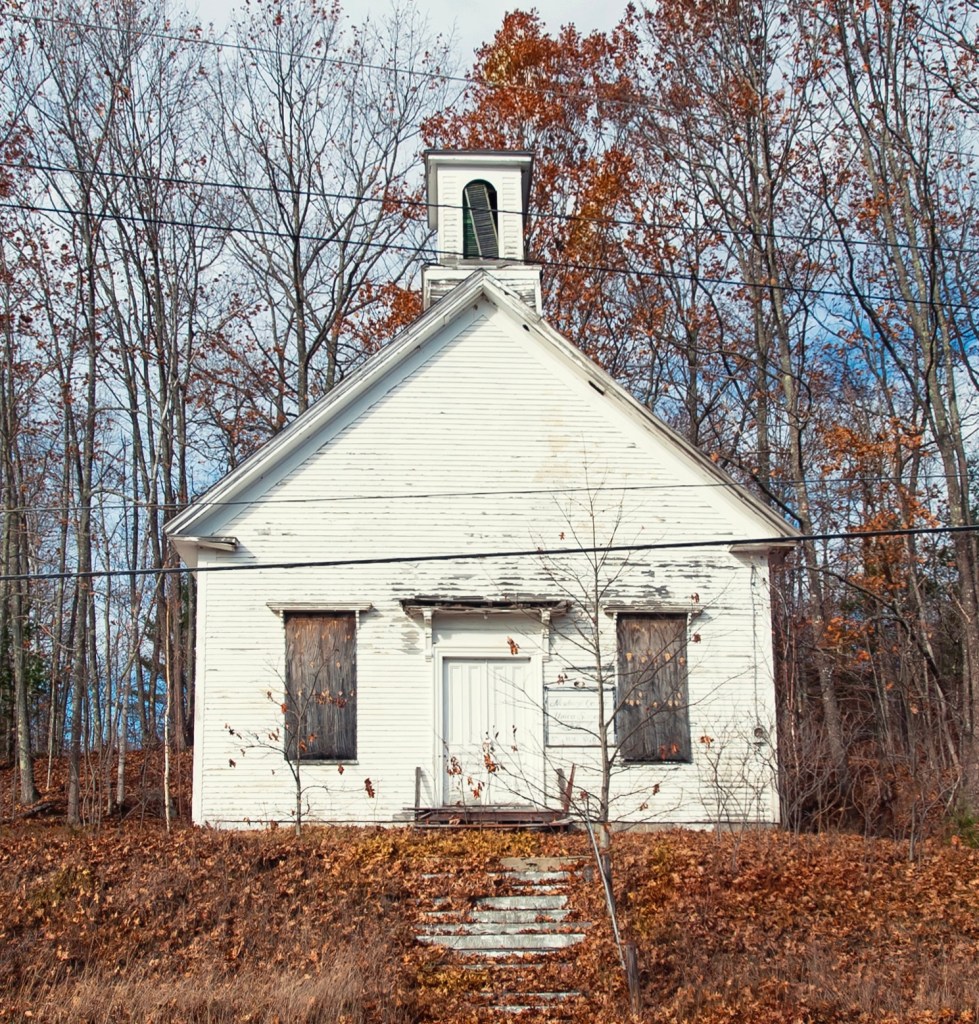
Newburgh Center Union Church // 1878

Image courtesy of Amy Higgins

The Newburgh Center Union Church was built in 1878 as a non-denominational religious building for the small, rural town of Newburgh, Maine. At this time, the small town had just over 1,000 residents and it was not economically feasible for each congregation to build its own meeting house. The vernacular Greek Revival/Italianate style church building was eventually the house of worship of a local Pentecostal congregation, but that too appears to have disbanded. The building has been falling into disrepair, so hopefully it will be preserved.

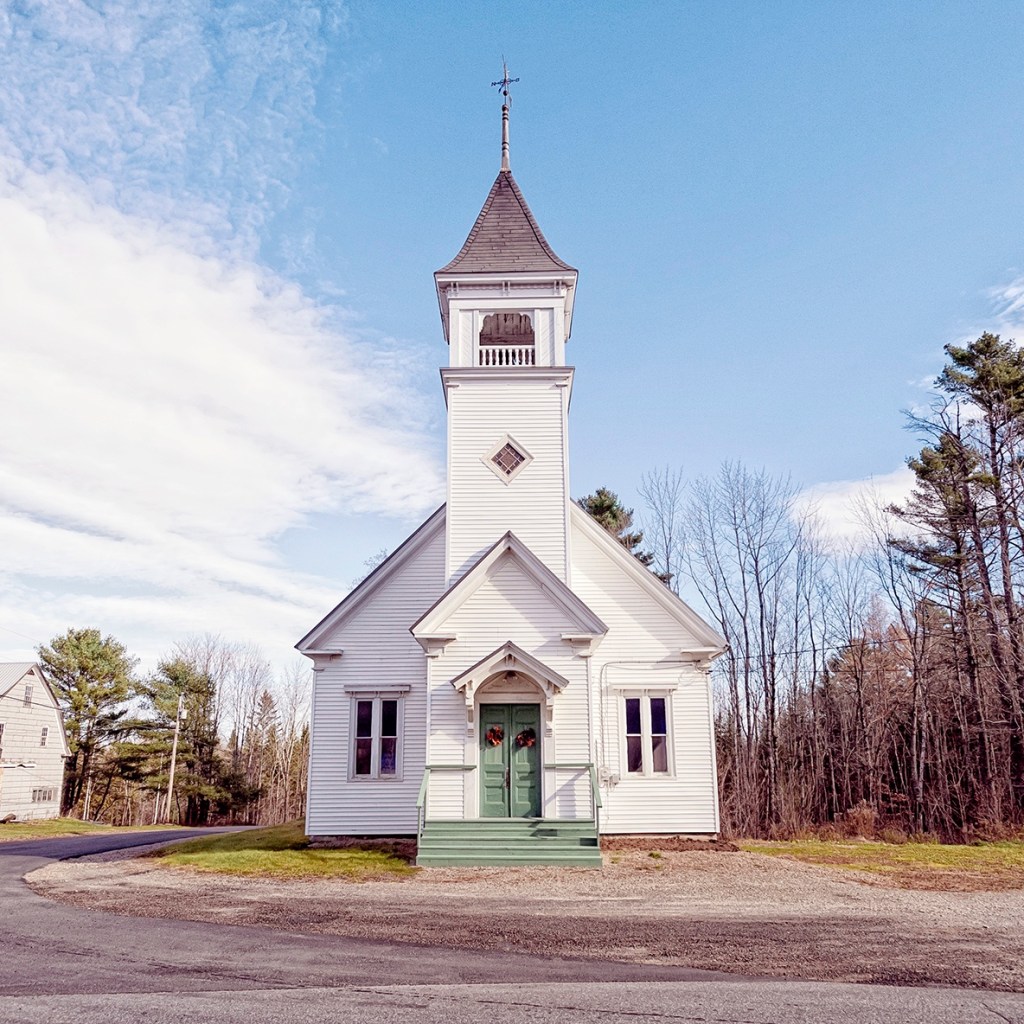
Jackson Congregational Church // c.1812

Image courtesy of Amy Higgins.

In the year 1812, Jackson, Maine, was organized as a plantation, and the Congregational Church of Jackson was organized the same year with Rev. Silas Warren, as its Pastor. Mr. Warren was born in Weston, Massachusetts and graduated from Harvard University in 1795. He was ordained as Pastor of the Jackson and Brooks Church in 1812 when it opened. The town of Jackson has not grown much since then (610 according to 2020 census) and has maintained its very rural character. The Congregational Church here was likely more vernacular when built and given the belfry after the Civil War. Gotta love these old churches on back roads!

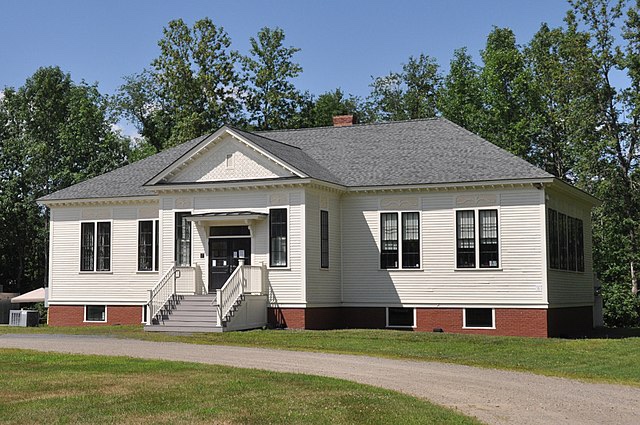
Unity Village School // 1898

The town of Unity, Maine, was incorporated in 1804, and for most of the 19th century had small district schools for the education of its children. In 1894, the state enacted legislation that encouraged the consolidation of school districts in order to improve quality and building standards. The town, whose population and student enrollment had been declining, voted in 1898 to build this school, which effectively replaced four of its eight district schools. The Colonial Revival style schoolhouse was built by Joseph Sawyer of Fairfield, Maine. The Village School remained the town’s largest primary school until 1953, when increasing enrollment and school overcrowding prompted the decision to build a new elementary school.

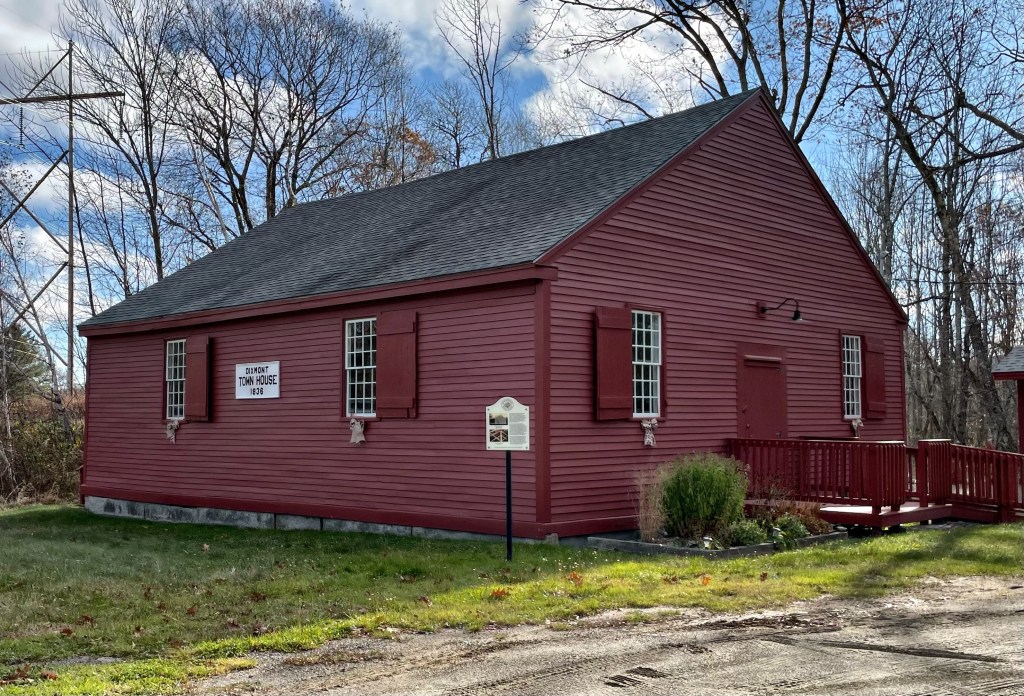
Dixmont Town House // c.1836

Dixmont, a small rural town in central Maine was originally originally a land grant by the Commonwealth of Massachusetts (of which Maine was then a part) to Bowdoin College, which sold the first settlers their land for profit to build on their campus. As a result, the town was originally called “Collegetown”, which was obviously short-lived. Dr. Elijah Dix (1747-1809) of Boston, who never lived there but took an interest in its settlement, encouraged others to settle there, and when the town was officially incorporated in 1807, it named itself after Dix, as Dixmont. A “malignant fever” broke out among the settlers in the early years, also killing Elijah Dix while in Dixmont on a trip there in 1809, he was buried in the Dixmont Corner Cemetery. Elijah was the grandfather of reformer and nurse Dorothea Dix. The early settlers had this Town House built in the center of the township around 1836 as a vernacular structure. The building (like many early town houses) was used for both secular and religious purposes. This small structure is one of the oldest surviving town houses in the state and served as the town government center until 1952 when it hosted its last town meeting. It was restored in the early 2000s and looks great!

Dixmont Corner Church // 1834

Dixmont, a small rural town in central Maine was originally originally a land grant by the Commonwealth of Massachusetts (of which Maine was then a part) to Bowdoin College, which sold the first settlers their land for profit to build on their campus. As a result, the town was originally called “Collegetown”, which was obviously short-lived. Dr. Elijah Dix (1747-1809) of Boston, who never lived there but took an interest in its settlement, encouraged others to settle there, and when the town was officially incorporated in 1807, it named itself after Dix, as Dixmont. A “malignant fever” broke out among the settlers in the early years, also killing Elijah Dix while in Dixmont on a trip there in 1809, he was buried in the Dixmont Corner Cemetery. Elijah was the grandfather of reformer and nurse Dorothea Dix. The early settlers had this church built by 1834 by Rowland Tyler, a local master builder whose only other documented work is the 1812 City Hall of Bangor. The Dixmont Corner Church is one of Penobscot County’s oldest Gothic churches and also exhibits some Greek/Classical elements.

Nevers Blacksmith Shop // c.1860s

While architecturally significant mansions, churches and civic buildings are great, the smaller wood-frame buildings such as this really tell the story of New England. When the town of Sweden, Maine was still in her infancy, the Nevers Family helped to establish the town and diversify its output from the typical agricultural village. Sweden supported an interesting variety of nineteenth century businesses including: general stores, saw mills, copper and cobbler shops, and a straw hat factory. The town of Sweden was distanced from major trade routes, railroads and navigable rivers, so it saw a period of decline from the late 19th to the 20th century. The town has since been a sort of “bedroom community” where people mostly live, but travel outside the town for commerce and work. This blacksmith shop shows us an example of a trade that has largely gone away, but it was a common structure and profession in early America.