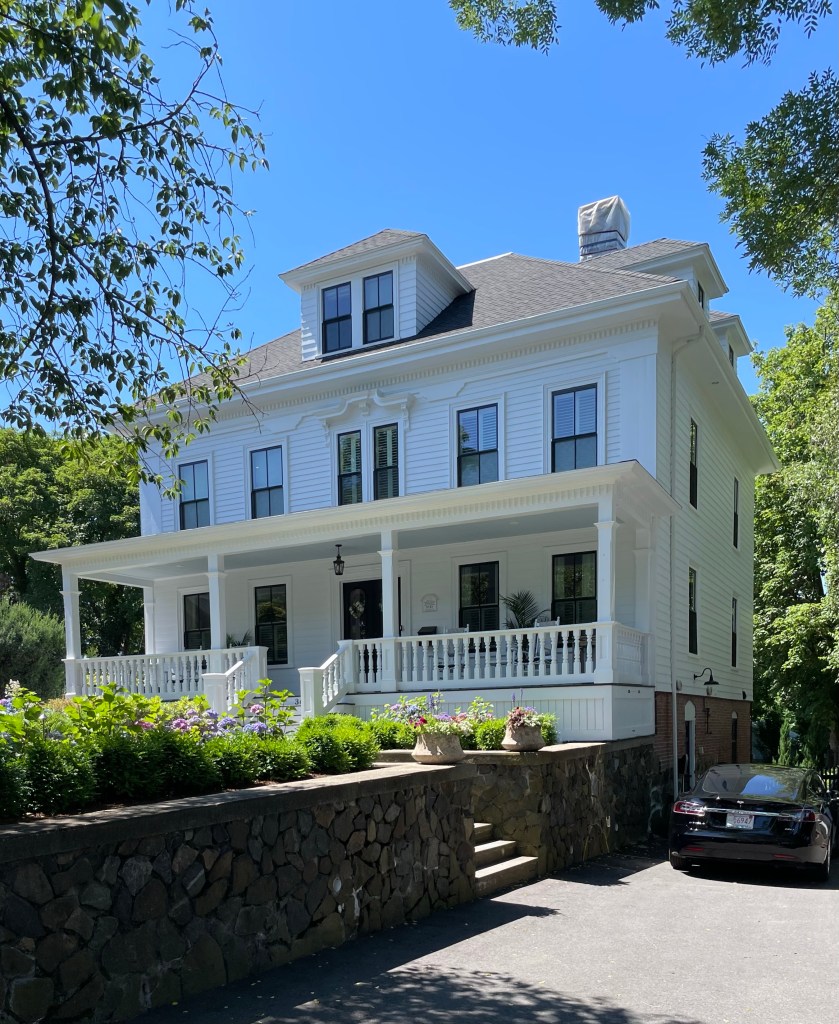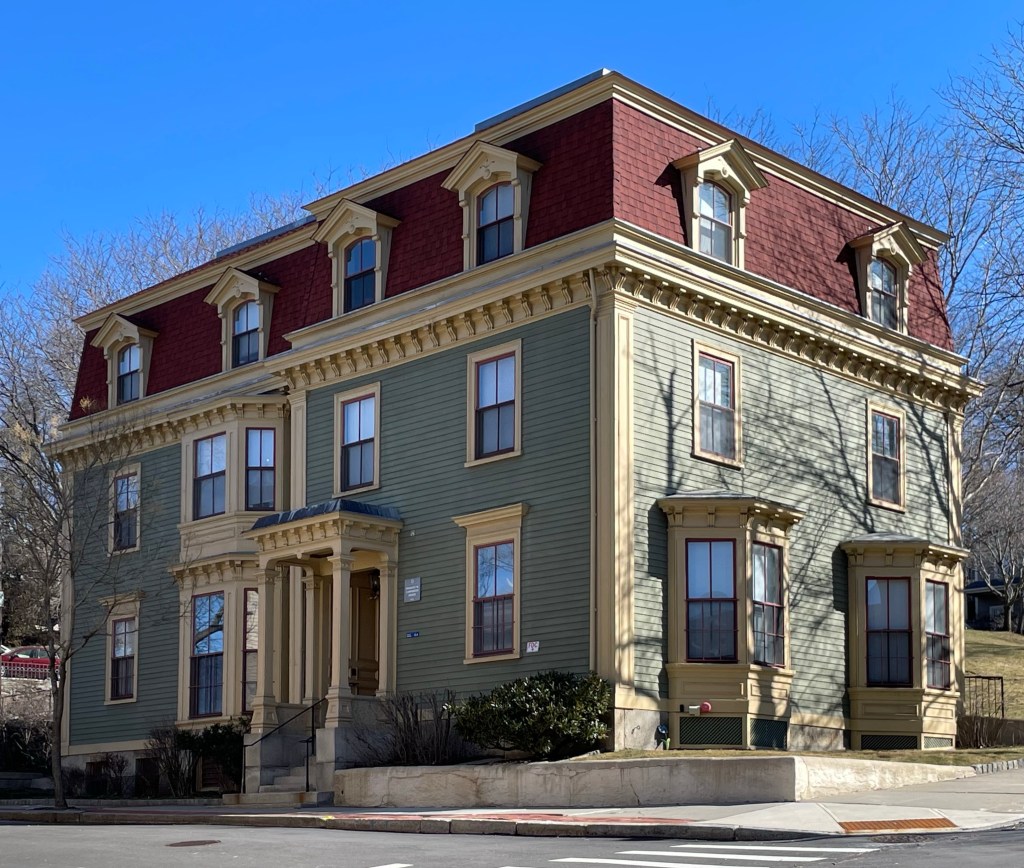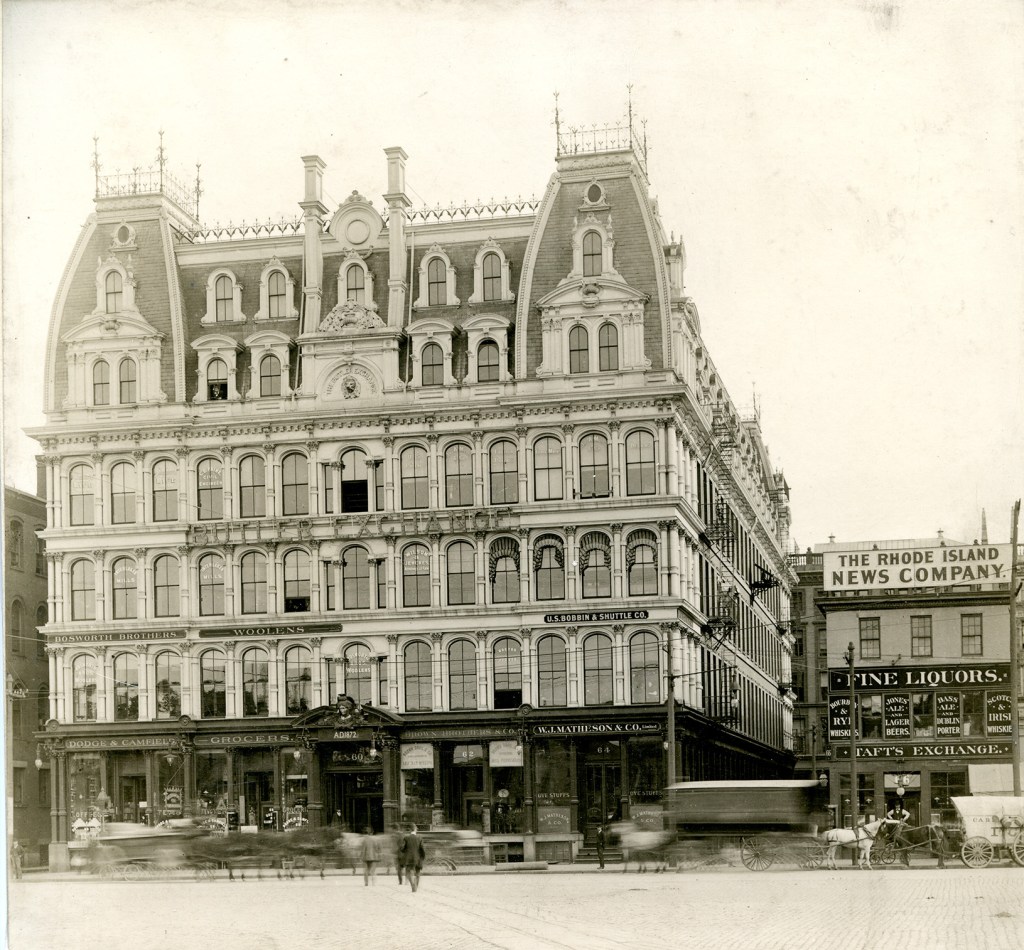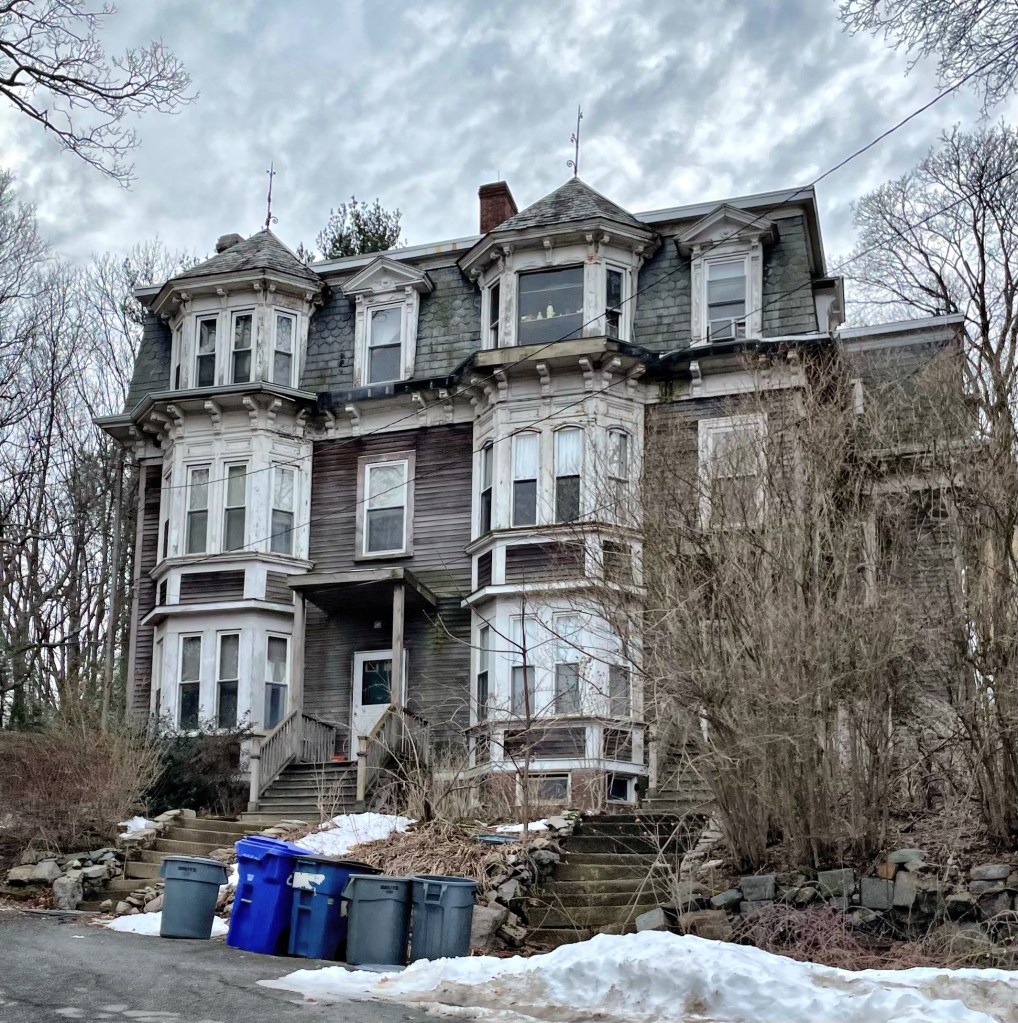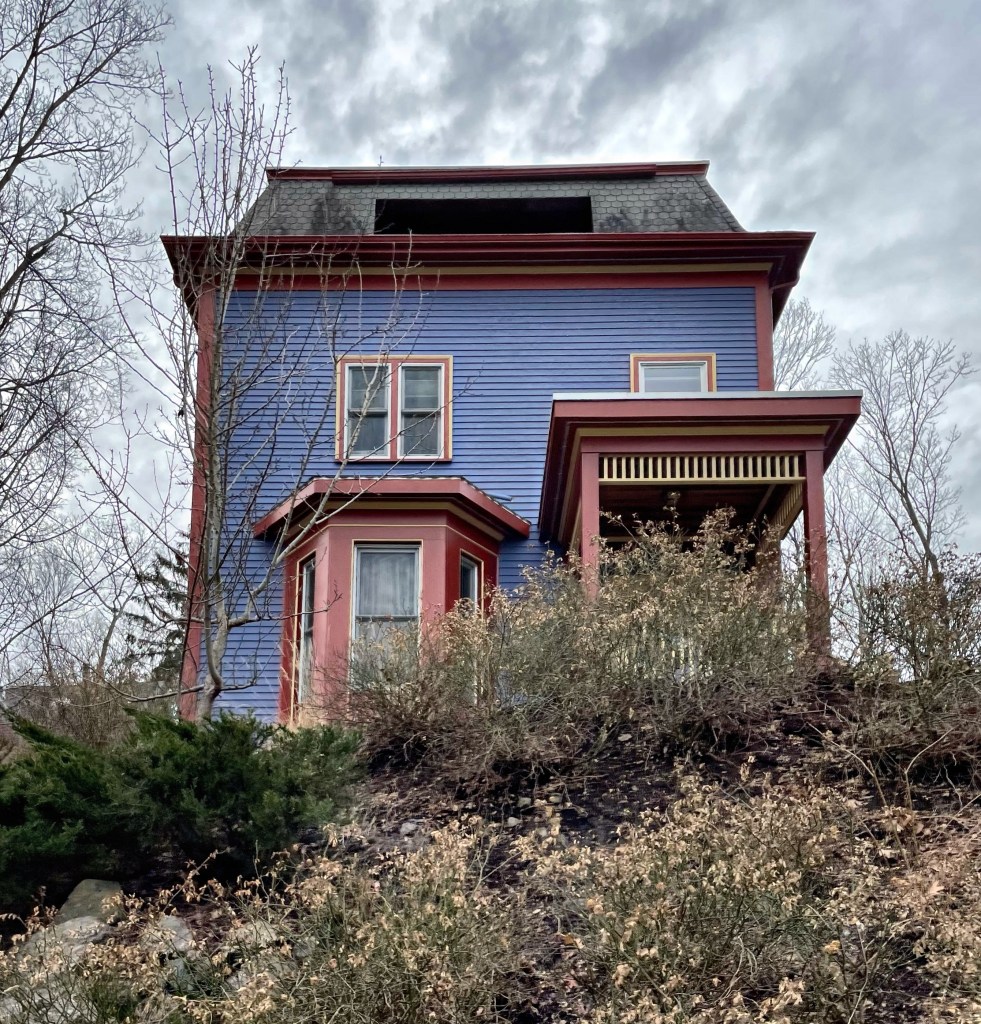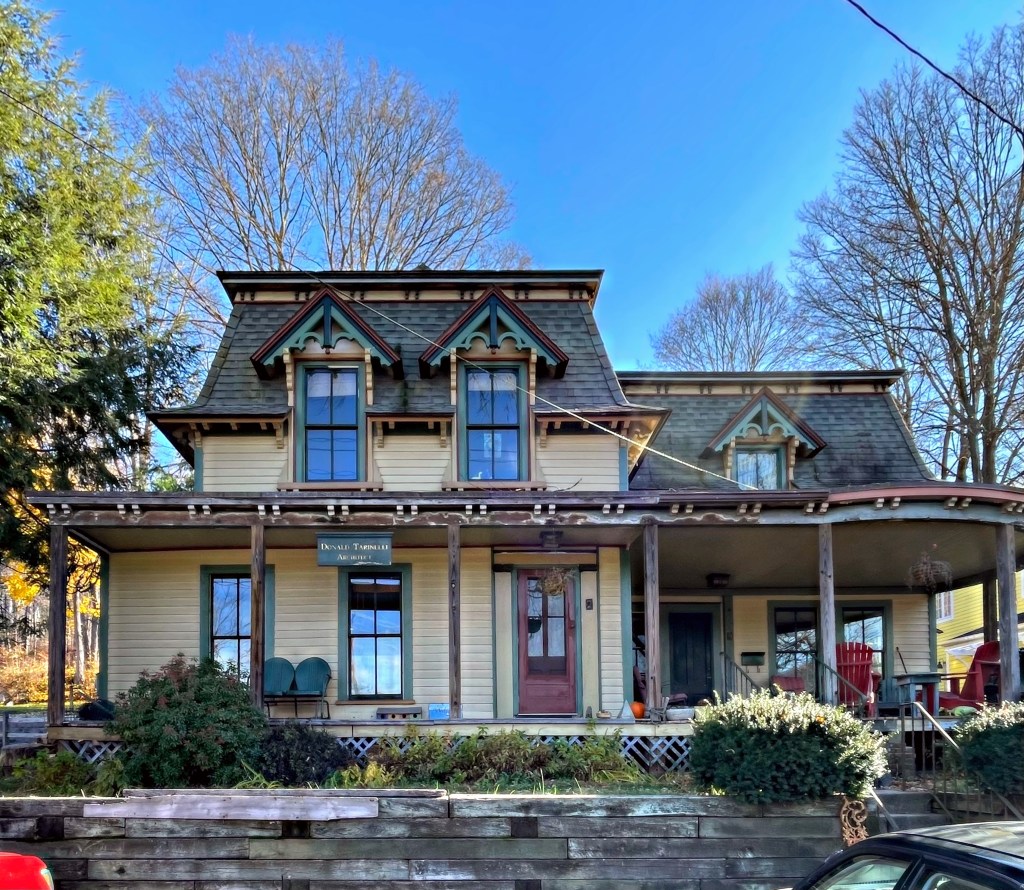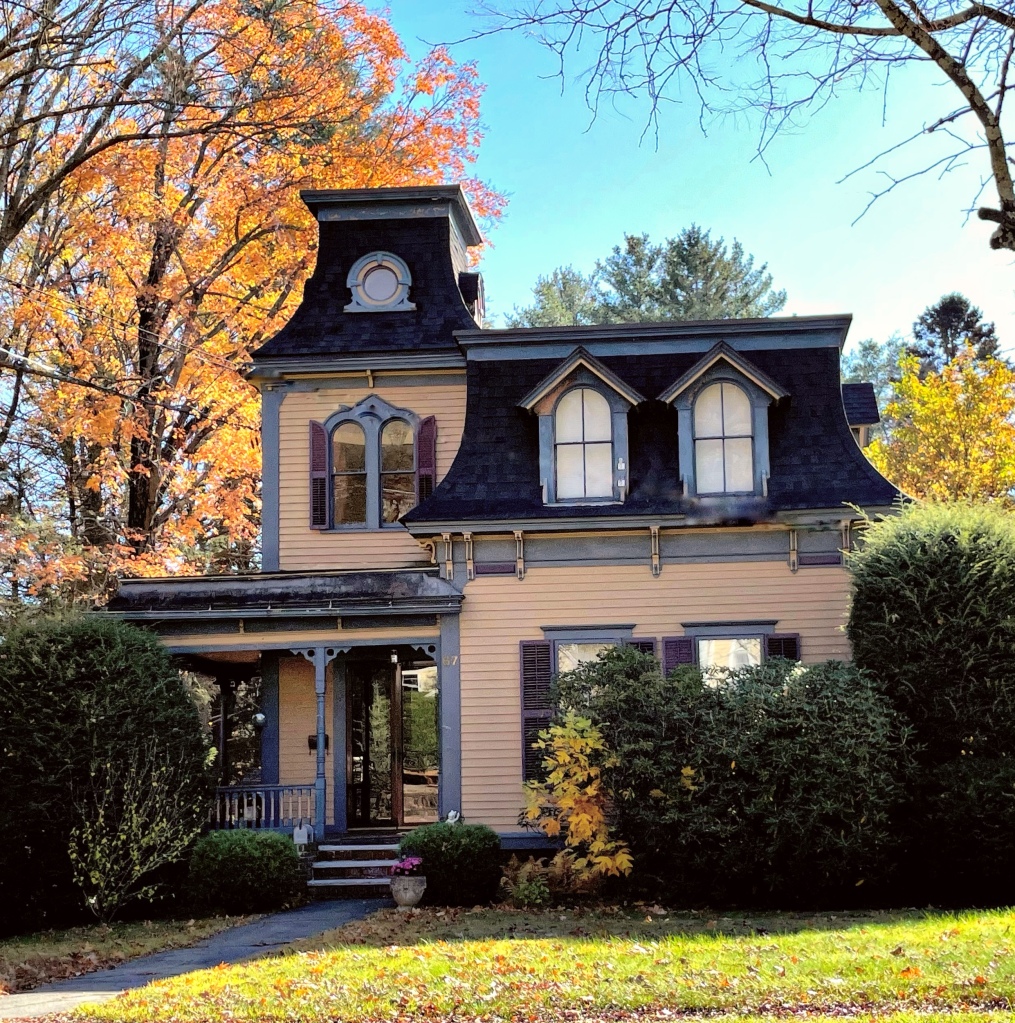
Polk-Haury House // c.1865

Collinsville, a village in Canton, Connecticut, sits along the Farmington River and is one of the most charming New England villages I’ve been to. The village sprung up around the Collins Axe Company, a manufacturer of edge tools, such as axes, machetes, picks and knives. With the company’s growth (more history on the company in a later post), immigrants moved to the town, and lived in workers cottages built by the factory owners. Churches, stores, schools, and parks came soon after, creating the dynamic village we see today. Nathan L. Polk moved to the village and built this charming Second Empire style cottage, walking distance to his apothecary shop. By 1872, Nathan died and the house was sold to Ulrich Haury. Haury was born and raised in Germany and settled in Collinsville by 1862, working at the Collins Axe Company. From his earnings, he opened up a grocery in the village, spending his earnings bringing his family for vacations to his homeland in Germany. The home remains in excellent condition.

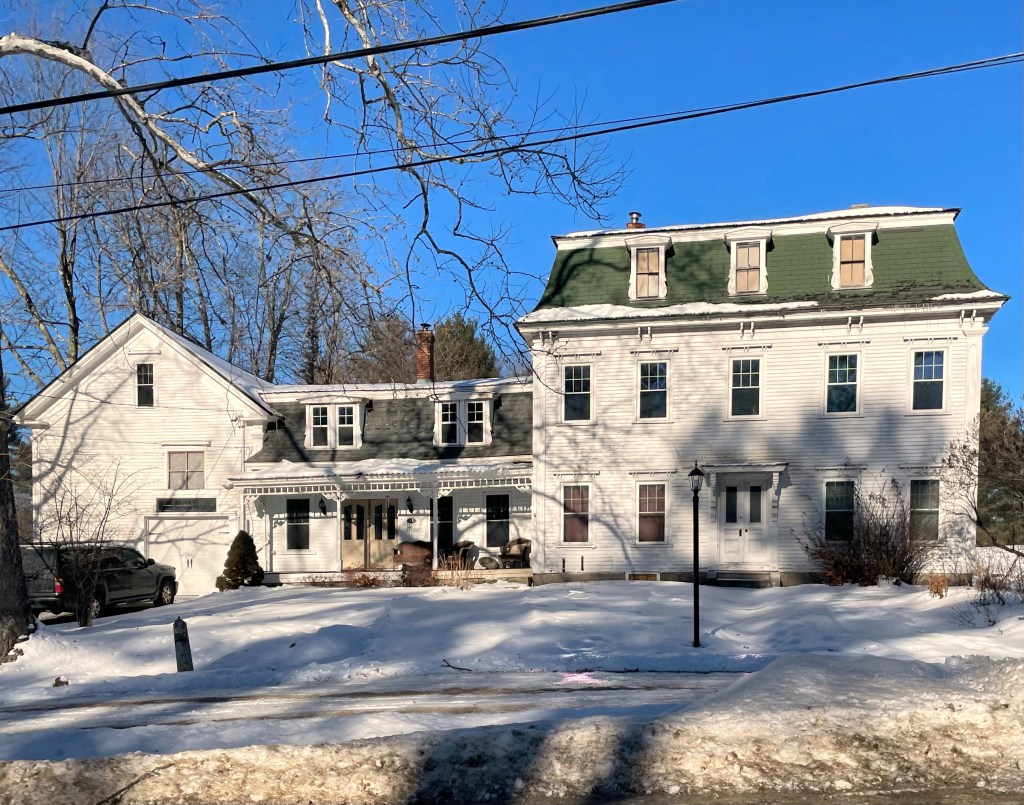
North Village Fire Station // 1888

After sharing the old Central Fire Station building in Lancaster (last post), I couldn’t help myself but to share another mini-mansard fire station constructed in town! Located in North Village, this station was built in 1888, and provided fire service to the more rural part of town. The wood-frame structure features a central tower which may have been used originally as a hose-drying tower. In the 1940s, the building was occupied by volunteers of the Ground Observer Corps, an American civil defense organization. The building’s tower provided unobstructed views of airspace where one could keep their eyes open for invading German aircraft. After the War, the Town of Lancaster sold the building, which then converted to a private residence. Sadly, a fire in 2015, damaged much of the interior of the building, but she survives!

Lancaster National Bank – Central Fire Station // 1836

Located on sleepy Main Street in Lancaster, Massachusetts, this cute mini-mansard building caught my eye immediately, and I had to take a picture! The building was constructed in 1836 for the Lancaster National Bank. The brick building was just one story with storefront windows and a central entrance, and was the only bank in the small town. When the neighboring town of Clinton saw a large increase in population due to industrial growth, the Lancaster National Bank decided to relocate to be closer to a larger clientele. They sold this building to the Town of Lancaster in 1882 and moved out. Within a year, the town added the mansard roof to the building, being careful to preserve the original cornice (now where the brick meets the roof), and converted the building to a fire station with double doors. The Central Fire Station was in operation here until 1967 when a new building was built nearby, with doors large enough to easily house modern engines. The building was then used as storage and offices for the Lancaster Water Department. Sadly, the replacement fire station doors really diminish the appeal of the building.

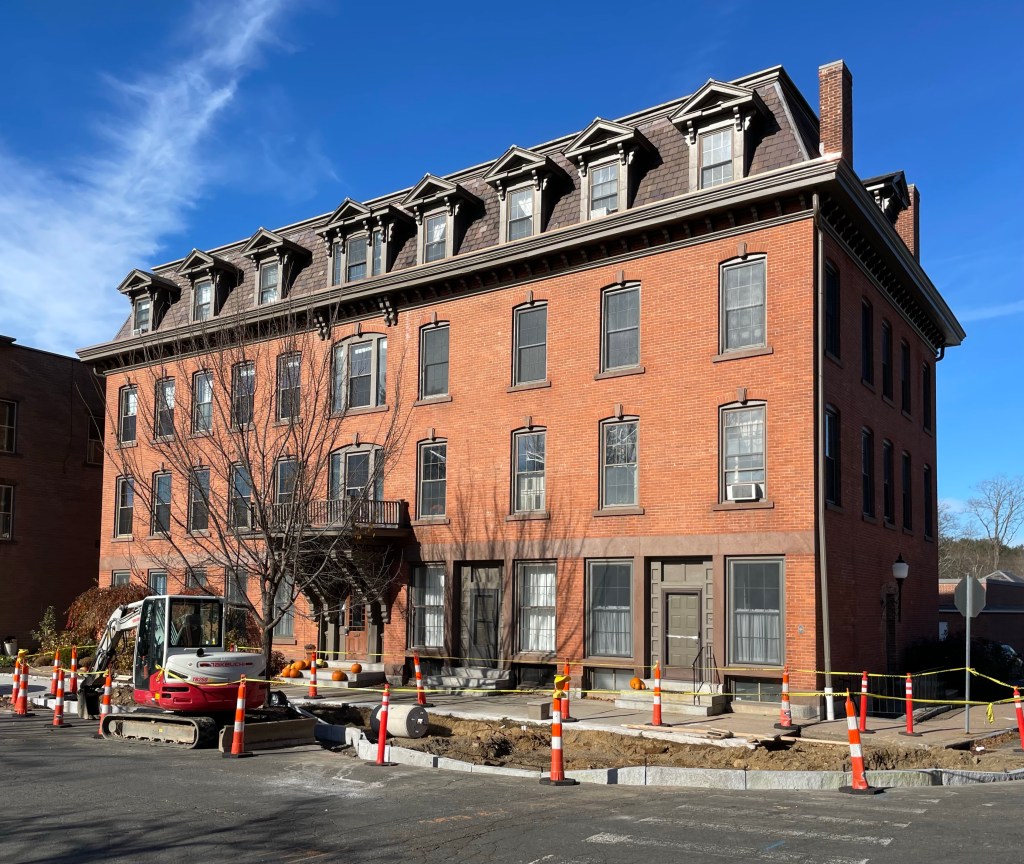
Adams-Pickering Block // 1871

Main Street USA! I just love historic Main Streets and Downtowns in New England, so many are full of old buildings and were designed for pedestrians, not cars (though some towns and villages have definitely caved to the automobile). Erected in 1871, the Adams-Pickering Block building was one of several grand, mansard roofed commercial structures which local architect George W. Orff designed for Bangor’s business district in the 1870’s. With its first-story cast iron front and its granite facade, from stone quarried nearby in Hallowell, Maine, the Adams-Pickering Block and its similar contemporaries were the most sophisticated Victorian commercial buildings in Eastern Maine. The Bangor Fire of 1911 and subsequent urban change, especially urban renewal in 1968, destroyed most of the city’s nineteenth century business district. The Adams-Pickering Block is a rare survivor and shows us how old buildings at a human scale can create vibrant, people-centric places.

Charles P. Brown Mansion // c.1872

Located next to the famed Stephen King House in Bangor (last post), this stunning Second Empire house was purchased by Stephen and Tabitha King in 2004, creating a small historic house campus in one of the nicest neighborhoods of the city. The Brown Mansion was constructed in the early 1870s for Charles P. Brown, an attorney who became involved in land speculation in the west. During and immediately following the Civil War, Brown purchased large land holdings in the “western frontier” in Minnesota and farther west, and re-sold the land years later at a huge profit when development began. He was thought to be one of the richest men in Maine upon his death in 1892, but it was discovered that many land holdings possibly vanished (or he lied about having much more land to his family), leaving his executors of his will very upset. The man who was estimated of having a net-worth of over $1,000,000 in 1892 (more than $31,000,000 in dollars today), left just $16,000, split between his two daughters, leaving nothing to his sister, whom he had been living with for the final two years in his life.

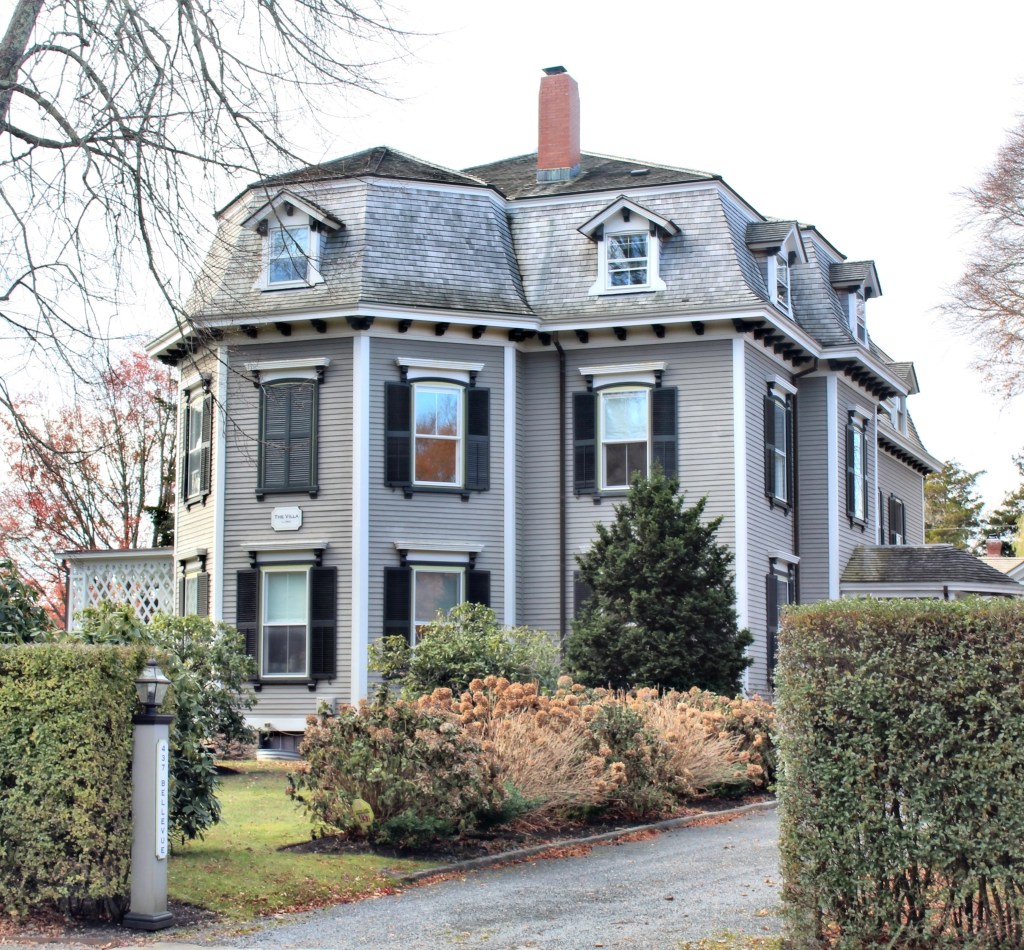
Joseph C. White House // 1866

Located a short walk from the Stephen King House in Bangor, this stunning Second Empire style house shines just as bright! This house was built in 1866 for Joseph C. White, a dry goods merchant in town. Just years after it was completed, he sold the mansion, possibly due to upkeep. The two-story mansard-roof house is clad in wood siding, scored to resemble stone rustication, a method to make the home appear more expensive. The corner entrance with later enclosed second-floor porch, massive brackets, and scrolled dormers add a lot of Victorian flair to the home. Would you move in here?

“The Kedge” // 1871

Built for an A. Veazie, this mini-mansard cottage stands out as the oldest home on Bar Harbor Maine’s beautiful West Street. The 1871 Second Empire style home was located elsewhere in the village, but moved to the current site in 1886 by new summer resident, William Sterling. The cottage was modified in 1916 by Maine Architect Fred Savage for William and his family. The stunning windows inset into the mansard roof are especially noteworthy.

Captain Nathaniel Stone House // 1872

The Captain Nathaniel Stone House in Farmingdale, Maine was constructed in 1872 on a small plot of land overlooking the Kennebec River. The charming home was constructed by Nathaniel Stone (1797-1884), a retired ship chandler,(a dealer in supplies or equipment for ships) who moved back to his hometown after making his fortune in Boston. He lived here with his wife, Martha, and his adopted son, Uriah, in this fashionable Second Empire style. Nathaniel died in 1884, outliving his wife by two years. The property was willed to his adopted son Uriah, who quickly sold the home on account of him seeing ghosts inside, he refused to live there because of it. The home was acquired by William Ring, a businessman who owned real estate in nearby Gardiner, Maine. Between 1886 and 1912 he and his family resided at the former Stone House, but by the turn of the Twentieth-century he grew increasingly in debt, and on several occasions he borrowed against his property to meet his obligations. Before the home went up for auction in 1912, a massive fire broke out in the home, destroying all the interior woodwork, and William perished inside. Although significantly damaged, it was largely rebuilt to its original appearance by its eventual buyer and has been an architectural landmark on the Kennebec River ever since. Now that I think of it, maybe Uriah Stone could see the future and saw William Ring as a ghost!

New London Ledge Lighthouse // 1909

Set way off the coast of Connecticut at the eastern end of Long Island Sound, sits this stunning lighthouse which appears more as a Second Empire style home than a lighthouse! By the early 1900s, New London, with its protected harbor at the mouth of the Thames River, had made the transition from whaling center to industrial city. New London Ledge Light was built because New London Harbor Light wasn’t sufficient to direct vessels around the dangerous ledges at the entrance to the harbor. The New London Ledge Lighthouse was completed in 1909, built by the Hamilton R. Douglas Company of New London and is an architectural antique as its Second Empire style is about 50 years past the time the style was popular in American architecture. The lighthouse reportedly owes its distinctive French Second Empire style to the influence of the wealthy home owners on the local coast, who wanted a structure in keeping with the elegance of their own homes. Sadly, many of the large homes near the shore in the area were destroyed in the Great Hurricane of September 21, 1938. Coast Guard crews lived at the light until it was fully automated in 1987. The lighthouse today is owned and operated as a museum by the New London Maritime Society.

Walter McQueen House // c.1865

Walter McQueen, a Scottish-born engineer, built this Second Empire style home with money he made in his role at the Schenectady Locomotive Works. The Schenectady Locomotive Works built trains from its founding in 1848 through its merger into American Locomotive Company (ALCO) in 1901. The company grew as railways connected the east coast to the west, coinciding with the California Gold Rush and westward expansion of the United States. The company manufactured trains for various railway companies all over the United States. The company grew so fast that they had hundreds of workers, with many children in their factories. Walter McQueen was master mechanic (the best master mechanic in the country on many accounts) at the Schenectady Locomotive Works, becoming superintendent in 1852 and subsequently a vice-president. It is likely that McQueen sought more expensive housing with his increased role and relocated from this brick mansard roof home. The home as of late has been adaptively reused into commercial use, most recently for Bier Abbey, a restaurant.