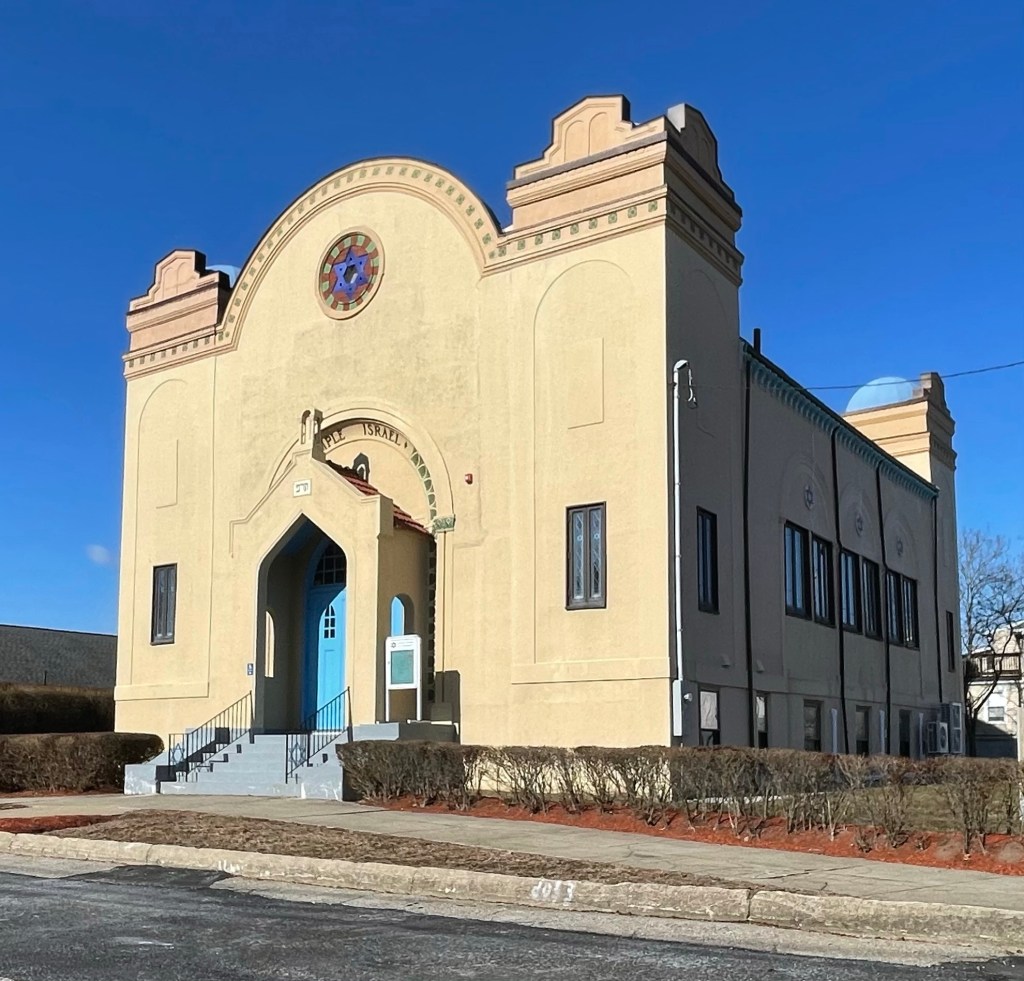
Temple Israel Synagogue // 1920

In the early 20th-century, Hull was linked by ferry, railway and road to Boston and this resort town became a popular urban recreational destination. Between 1915 and 1920, Jewish Bostonians started buying property and building summer homes in the area. The new Jewish summer residents required a temple for worship when away from their main homes. In 1920, land was purchased just north of the bustling Nantasket Beach for the erection of a place of worship. This temple was likely built by a Jewish architect/builder Joseph Rudnick, who arrived in Boston from present-day Lithuania in 1886. Unable to speak English, he hired a tutor to teach it to him, and quickly began working on constructing apartments and other buildings all over the Boston area. Temple Israel of Nantasket remains a handsome and rare example of a 1920 American
wood-framed, stucco-clad synagogue, with an active congregation.

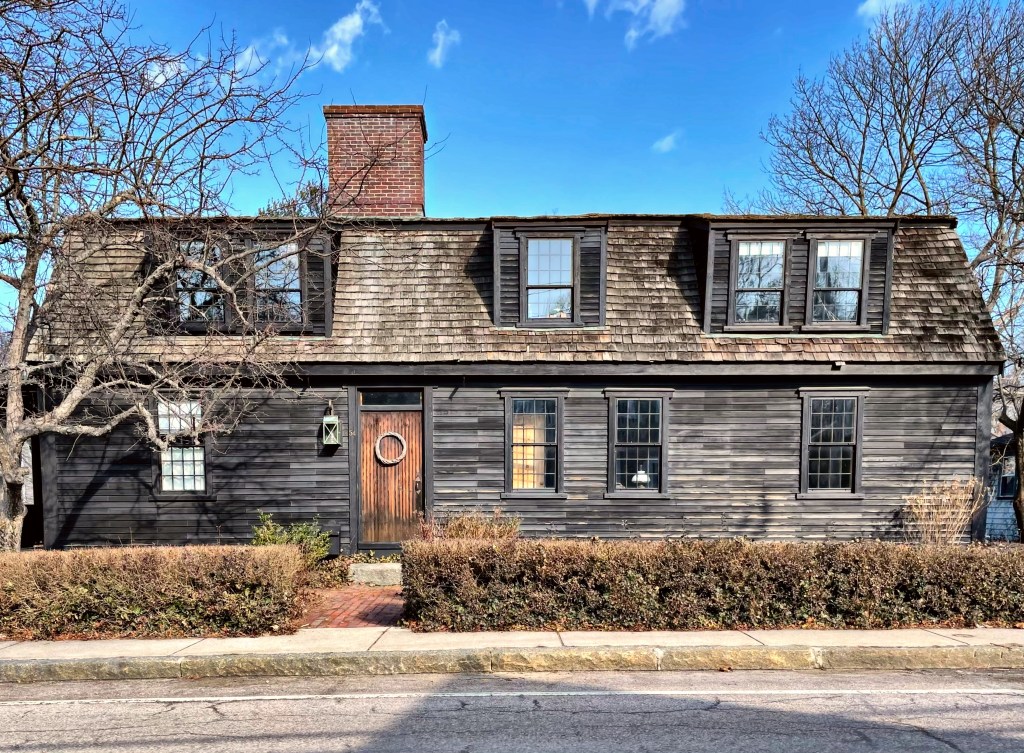
Tirrell-Cobb House // c.1750

One of the most stunning Georgian cape homes I have seen is this charming house in Hull, Massachusetts. Built in the mid-18th century, this house was acquired by Gideon Tirrell after the Revolutionary War. Gideon married Mary Loring, a descendant of John Loring, who built the home in my last post. The family appears to have occupied the home until the Cobb family acquired the house in about 1860, when Capt. Joseph Cobb and his wife, Eliza Turner settled here. He was the third “Keeper of the Lifeboat” from 1858-1876. In his role, he rowed out to sinking ships in the Boston Harbor and attempted to save any sailors still alive, often saving dozens of lives. The home was restored in the 1980s and remains one of the best-preserved in the town!

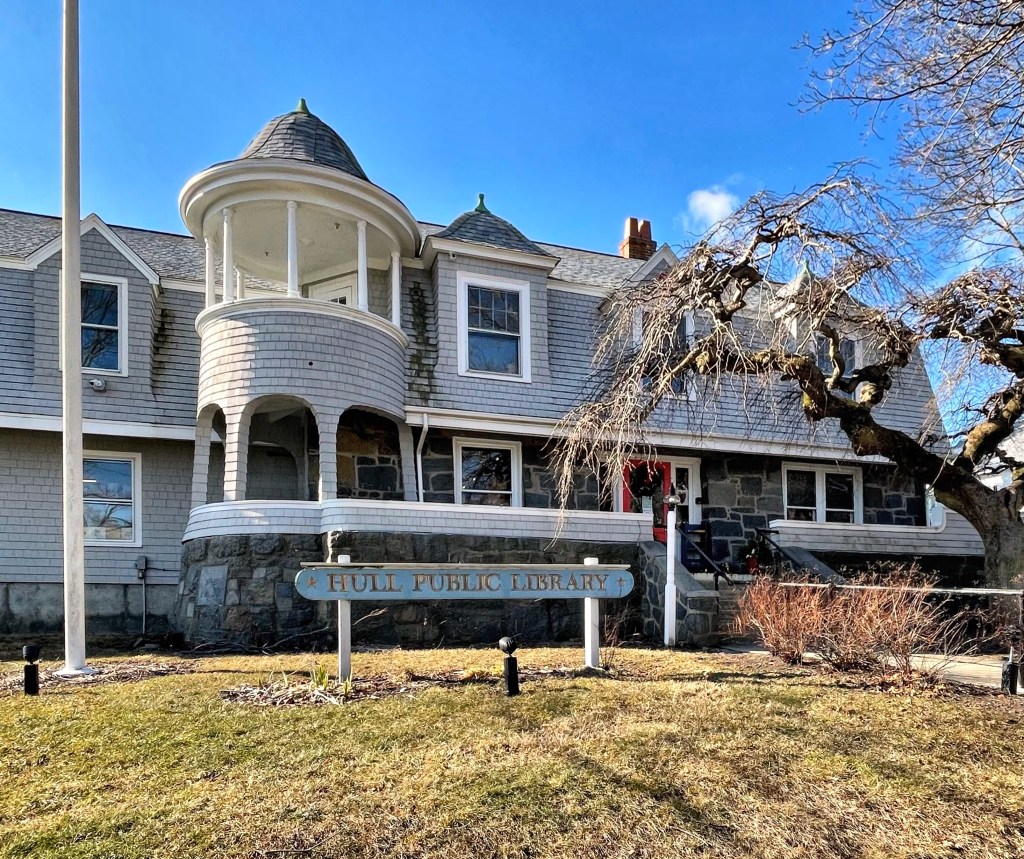
Hull Public Library // 1879

“We must not be Irish or African, or black or white. Not in America. We are gathering here … not to build up any petty community but to make the greatest nation and the strongest brotherhood that God ever smiled upon.”-John Boyle O’Reilly. This home (now the Hull Public Library) replaced the old Hunt House, which was the first parsonage of Hull, which was built around 1750. John Boyle O’Reilly, an Irish-American poet, journalist, author and activist bought the Hunt House in the 1870s and soon after demolished it as he felt it could not be salvaged. There are books about O’Reilly’s life story, so I recommend checking out his Wikipedia page. He constructed this house as a summer home by 1879, an excellent example of an early Shingle-style home. I cannot locate the architect, but am dying to learn! In the summer of 1890, O’Reilly took an early boat to his residence in Hull, Massachusetts from Boston. He had been suffering from bouts of insomnia during this time. That evening he took a long walk with his brother-in-law hoping that physical fatigue would induce the needed sleep.Later on that night he took some of his wife’s sleeping medicine and he apparently suffered an overdose of the medicine at this home, passing away at 46. Thousands of Bostonians mourned O’Reilly, and memorials were erected in the city, including the iconic 1896 John Boyle O’Reilly Memorial by Daniel Chester French.