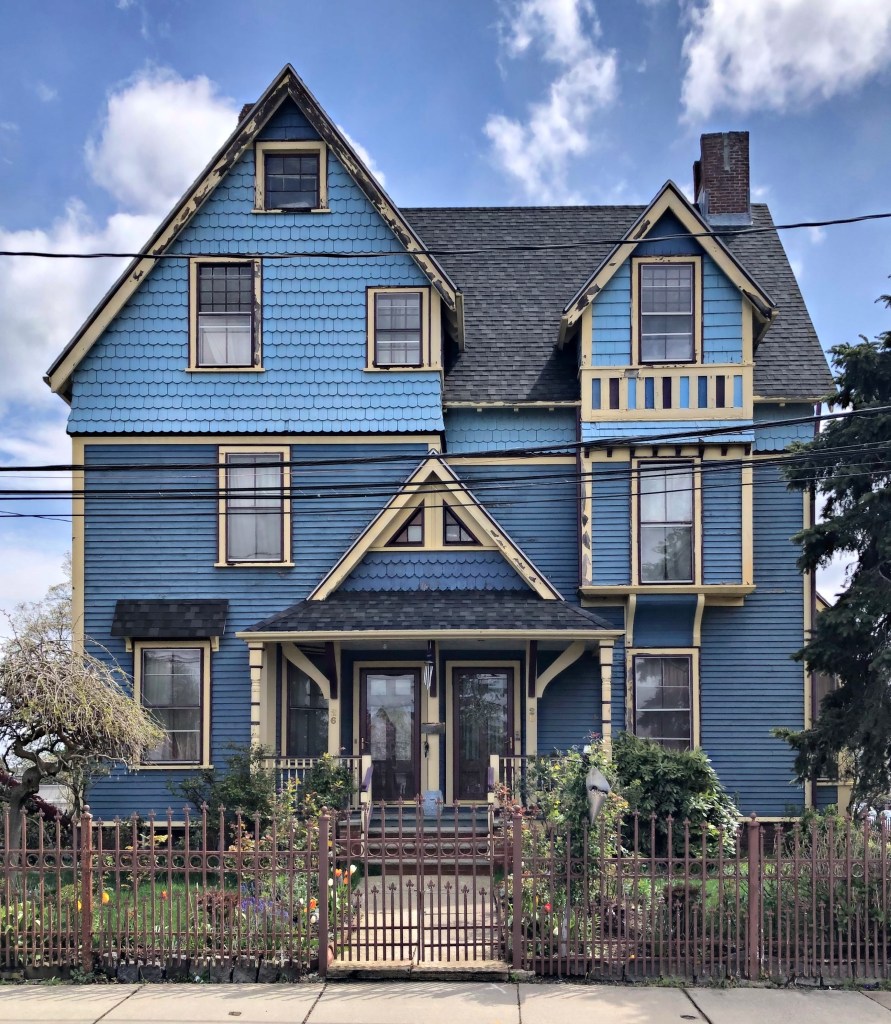
Hersey-Noyes Double House // 1879

Nothing beats a good Victorian-era house! This example in the Clam Point neighborhood of Dorchester does not disappoint. The Stick-style double-house was built for miss Mary E. Noyes and Ms. Hersey replacing an older house on the lot. The women hired architect John A. Fox to design the house which possesses one of the most complex forms and roof configurations in the neighborhood. Clad with clapboards at the first and second stories, its six intersecting gables are sheathed with scalloped shingles. At the main entrance on the façade is an open porch with square posts and railings with turned balusters. The side façade is even more complex with two side gables and a two-tier porch enlivened by Chinese Chippendale and spool work railings. The Herseys, along with Mary E. Noyes, co-owned the house until 1884; thereafter it was owned by Mary E. Noyes until around World War I. The stick style home really pops with that blue color, what do you think?
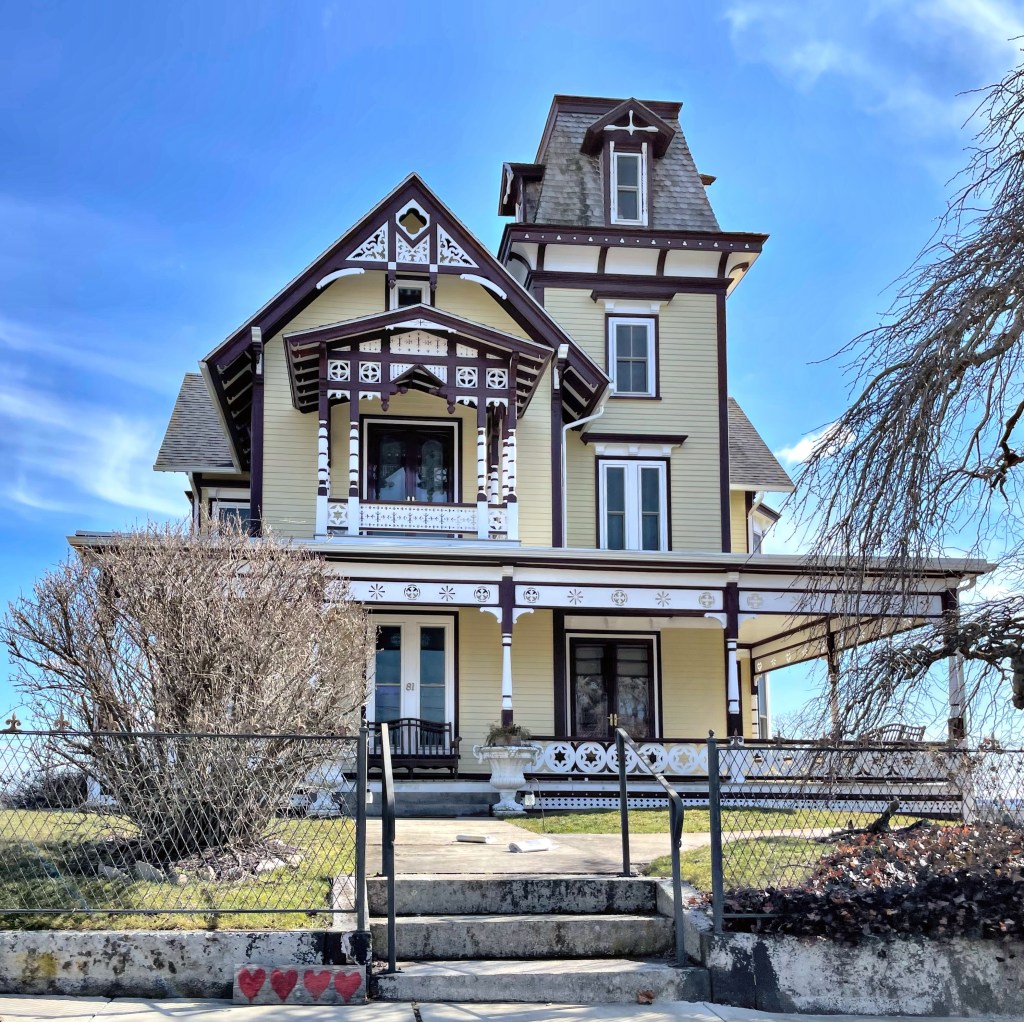
Deacon Robert Palmer House // 1884

Perched on the highest hill in the coastal village of Noank, Connecticut, you will find this absolutely enchanting gingerbread Victorian mansion. The house was built in 1884 for Deacon Robert Palmer (1825-1913), a wealthy man who wasn’t only deacon of the village’s Baptist church, he was the owner of a flourishing shipyard, and it was his shipyard workers who built him, with loving care, a house he could be proud of! Robert ran the shipyard in town first with his brother, and then with his son. During the late nineteenth and early twentieth centuries the shipyard was the largest facility for building and repair of wooden vessels in southern New England, employing over 300 men. The yard specialized in building railroad car floats, schooner barges, and dump scows as well as fishing smacks. Robert Palmer and Son went out of business in 1914 with the passing of the Robert. The Stick style mansion with mansard roofed tower remained in the Palmer family until the early 2000s when it sold and was restored to her former glory. The residence features exposed rafters, a pagoda-like second story balcony, a frieze with geometric cut-outs, and a wrap-around porch which provides sweeping views of the ocean. I can only imagine how beautiful this old Victorian is on the inside!

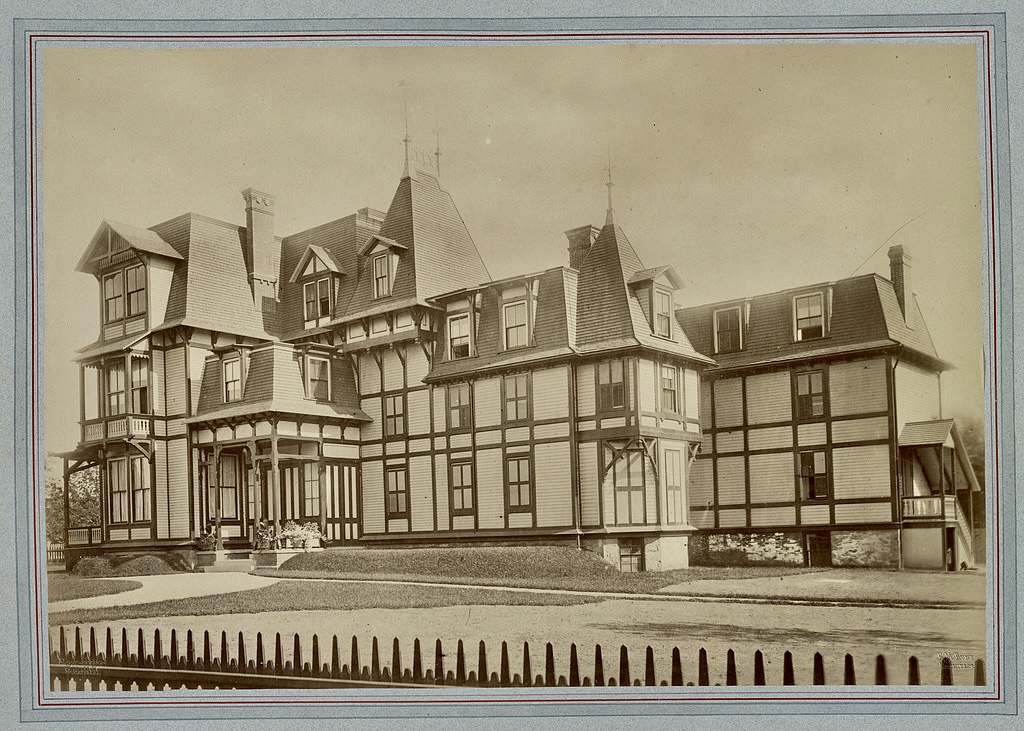
“The Lodge” // 1870-1899

Believe it or not, but Newport, Rhode Island was once a “tear-down town”. Despite having arguably the largest extant collection of Gilded Age mansions, many older, properties were razed and redeveloped as tastes changed between the mid-19th century and the turn of the 20th century. And then there was the 1960s… But that’s for another time. This stunning mansion formerly on Bellevue Avenue was built in 1870 for Elizabeth Underhill Coles (1813-1891), the widow of William F. Coles of New York City by the high-society architect Richard Morris Hunt. The “cottage” was their summer residence and one of the finest Stick style residences built in the seaside town. The irregular layout, half-timbering and complex roof forms show the influence on the emerging Queen Anne style. The mansion was sold out of the Coles Family after Elizabeth’s death and was razed by 1900 for the second mansion on the site (next post).

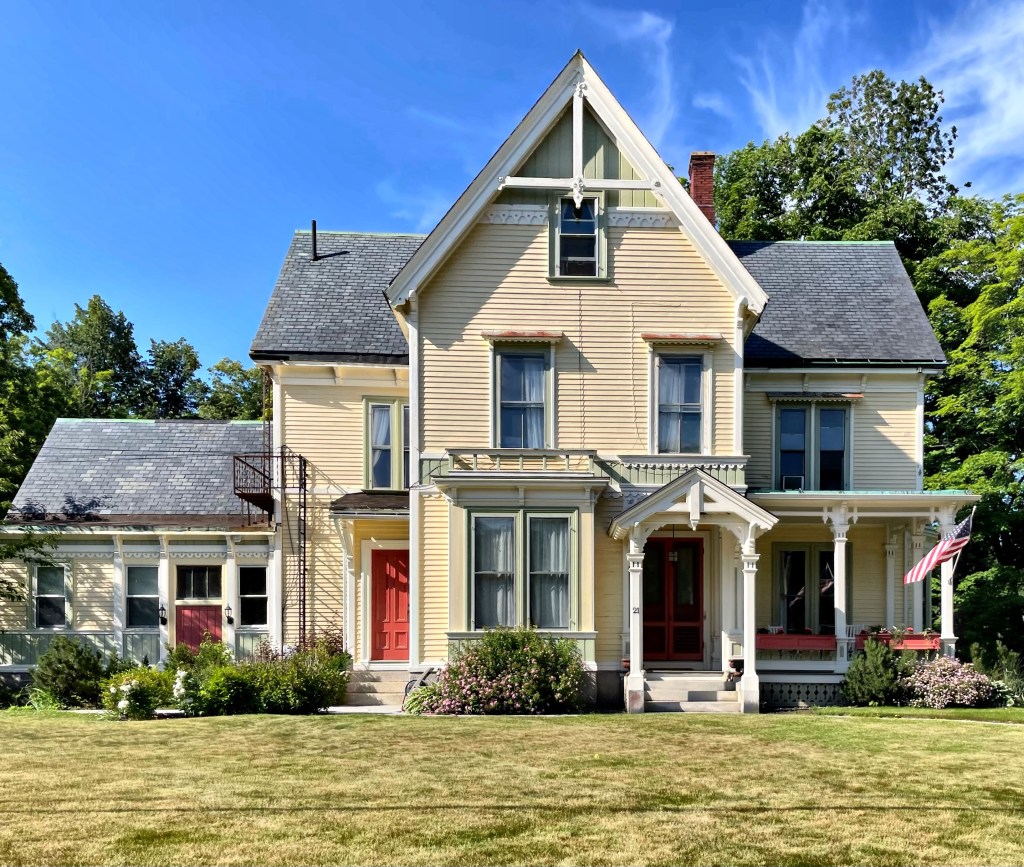
David Whiting House // c.1875

David Whiting (1810-1892) was one of the most prominent men in Wilton, NH in the 19th century. He was involved in local business and politics, eventually using his prominent land at a convergence on Main Street to erect the Whiting House, a large hotel. The building burned down in 1874, along with his other buildings nearby. He donated some of the land to the town, who built the present Town Hall, and he built a new home on another part of the site. This house was likely built for David Whiting as his own residence, shortly after the fire. The house was designed in the fashionable Stick style and represents the best in Victorian-era architecture.