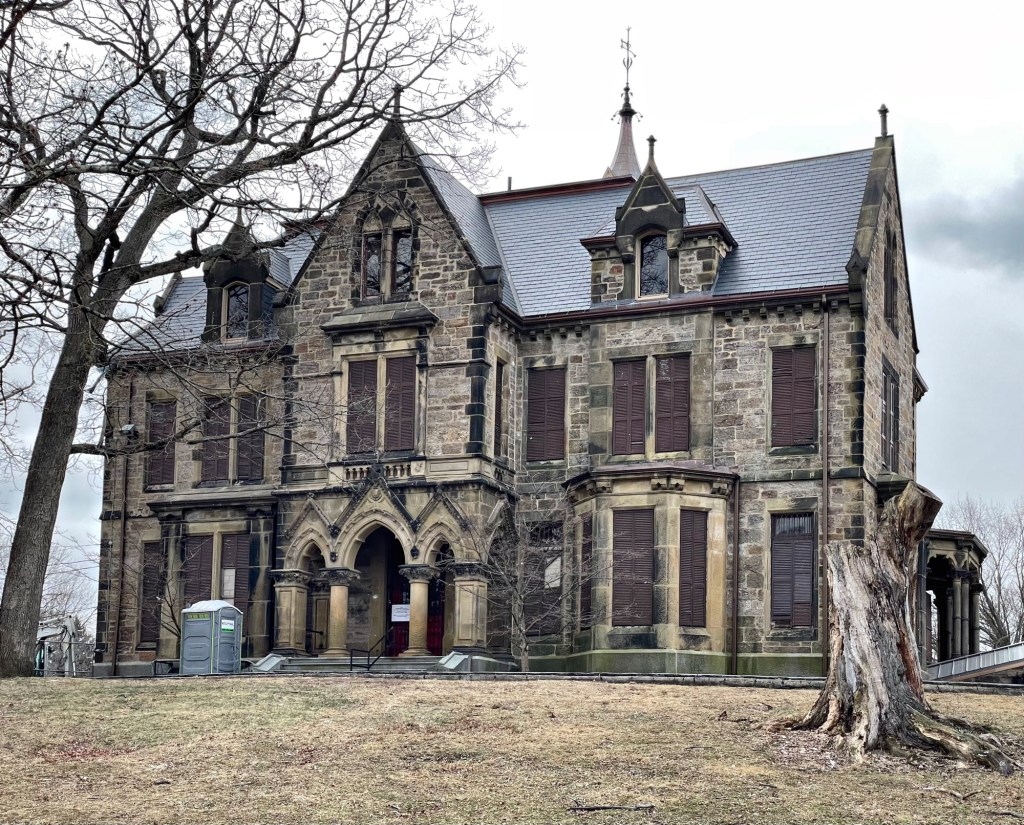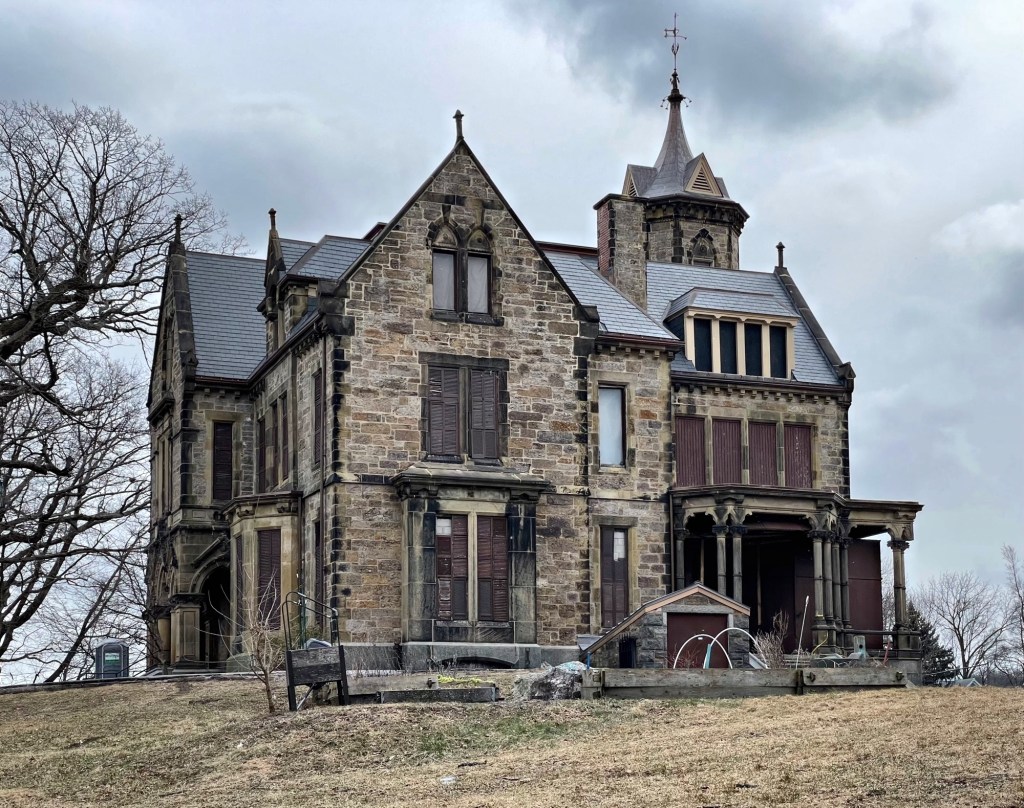
Abbotsford Mansion // 1872

The Abbotsford Mansion in the Roxbury neighborhood of Boston was designed in the High Victorian Gothic style and was built of Roxbury puddingstone, which was quarried locally. Abbotsford, originally named “Oakbend”, was built in 1872 as the residence of Aaron Davis Williams, Jr., (1821-1899) an industrialist and son of the founder of the Roxbury Institution for Savings. Roxbury-based architect Alden Frink designed the country estate and it is his most notable work. When Davis lost his fortune, James M. Smith, a brewer who had a passion for Sir Walter Scott, acquired the estate and renamed the house Abbotsford after Sir Walter Scott’s ancestral keep of the same name. The house continued to serve as a private residence until 1924, when the City of Boston acquired it for use as an elementary school and a disciplinary school for boys. The parcel was subdivided and the David A. Ellis School was built on the former grounds. After the building slipped into decline in the 1970s, the National Center for Afro-American Artists purchased the property, filling in the windows to create exhibit space. They have maintained the building to this day.

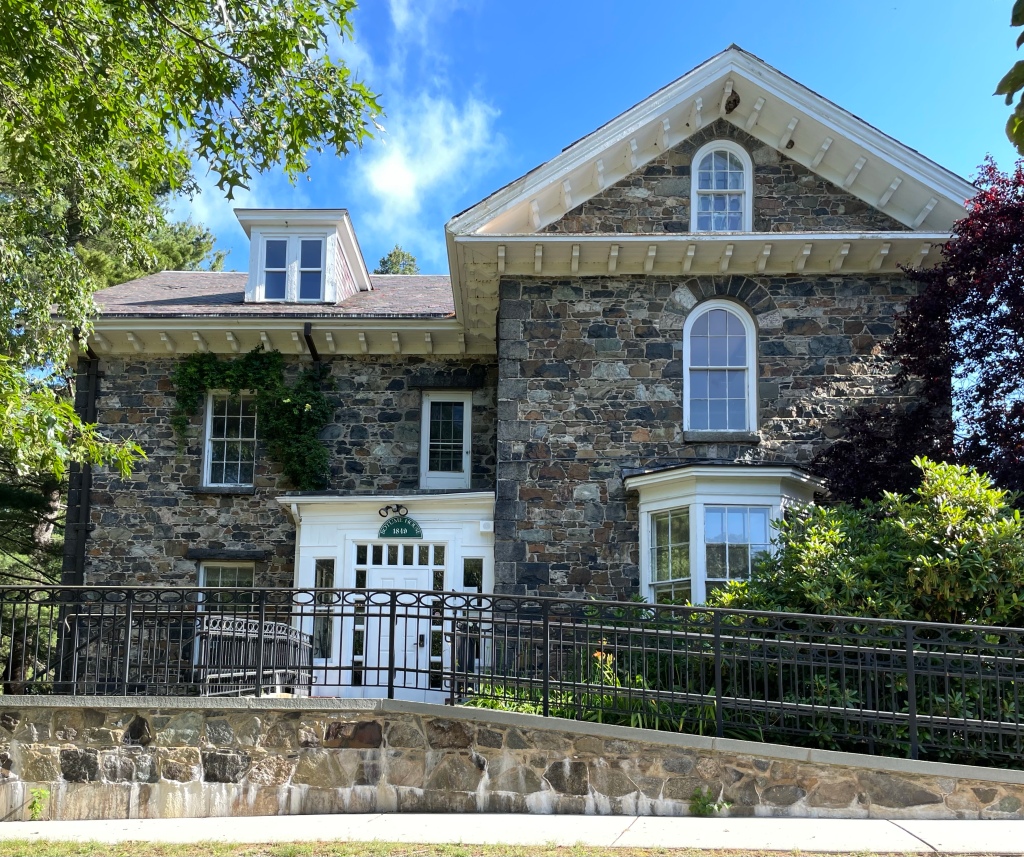
John Bottume House // c.1858

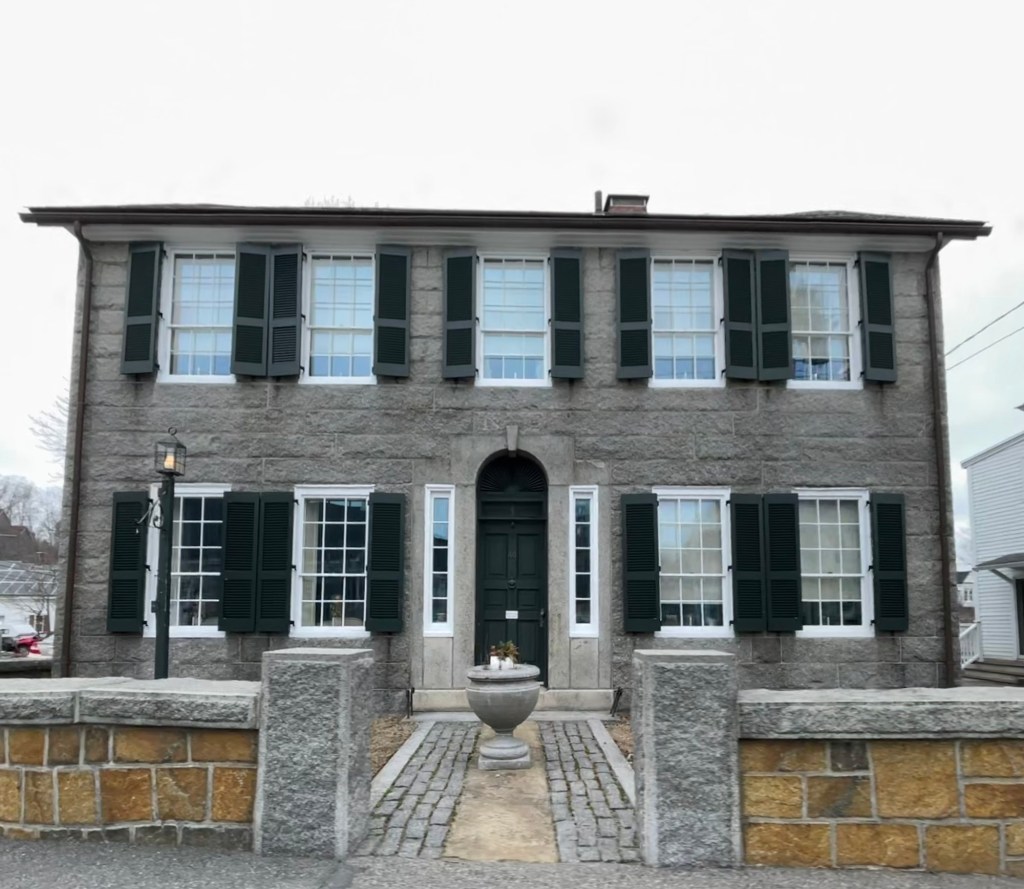
The John Bottume House in Stoneham, Massachusetts was built c.1858, this stone house was one of several built along the shore of Spot Pond by a Boston businessman as a retreat, and is the only one to survive. The coursed granite residence is an excellent and high-style example of the Italianate architecture style. It is owned today by the Massachusetts Department of Conservation and Recreation, and houses the visitors center for the Middlesex Fells Reservation.

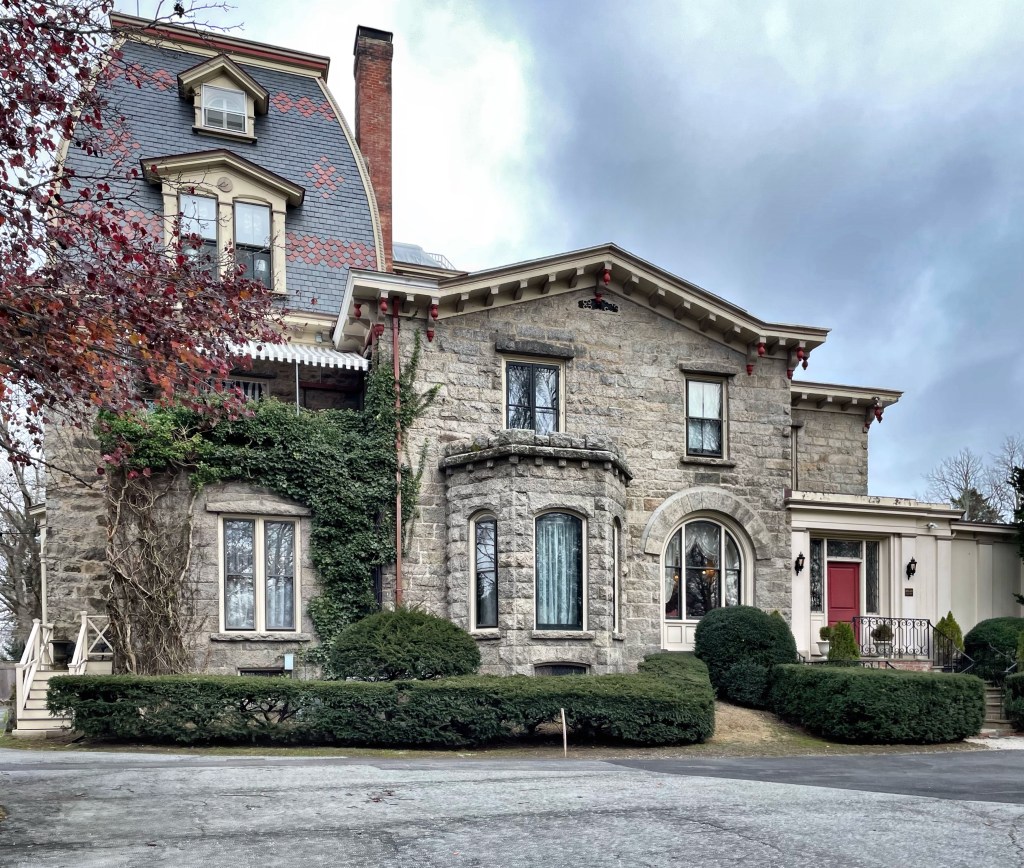
Belair Mansion // 1850

One of the most stunning summer “cottages” in Newport, Rhode Island is this stone behemoth named “Belair”. The house is set back way off the street and was one of the first summer estates built in this section of Newport. Belair was built in 1850 for New York oil baron H. Allen Wright in the Italianate style and constructed of roughly dressed stone and was originally about half of the size of the current footprint. The mansion was designed by architect Seth C. Bradford, who is also credited as architect of the similarly designed Chateau-sur-Mer, built one year later. Wright sold this house to George H. Norman two years after its completion. Norman (1827-1900), founded the Newport Daily News in 1848 and made his fortune as an engineer, first establishing gas works and later water works systems across New England, New York, and the Midwest. Norman made a fortune, and renovated and expanded his mansion in 1870 from plans by Newport architect Dudley Newton, with grand Second Empire additions, including the high convex-mansard corner tower. The original four acre Belair property has been extensively subdivided, and this house now occupies a lot of about an acre; with the original outbuildings sold off, and Belair is now 11 condominium units!

Polly Crispell Cottage // c.1700

Another of Hurley’s stone houses is this beauty, known as the Polly Crispel Cottage. The house was built before the American Revolution c.1700 by an Anthony Crispell, a cordwainer. The home was likely a half cape in form with the door and two windows to its right. The other half was added at a lower level later on with the floors uneven, likely in 1735 where a construction date plaque read. The home also features a dutch door, which I wish we had more of in New England.

Abram Elmendorf House // c.1789

As the Elmendorf family put its roots down in Hurley, Ulster County, New York, the descendants built stone houses as a nod to their ancestors of Dutch heritage, following those building traditions. This five-bay stone house was built around 1789 and is a vernacular Federal home with Dutch and English building influence. The property exhibits shed dormers and a Colonial Revival portico, but exudes 18th century charm.

Half Moon Tavern – Elmendorf House // c.1710

When Pieter Ostrander settled in Hurley, NY with his family in the late 1600s. Being of Dutch descent, he (and other settlers) built their homes and barns in Dutch traditions. This lot along the village’s main street was acquired by Pieter and inherited by his son, Arent in about 1710, about the time the home is estimated to have been built. It was acquired by the Elmendorf Family by the early 19th century. At that time, the property operated as the Half Moon Tavern, after Petrus Elmendorf purchased it in 1804. The addition to the east (right) was built as a weaving room. The property remained in the Elmendorf family until 2008 (that’s almost 300 years in two families!) It was acquired by the new owner who has been restoring and researching the home ever since. He runs a blog documenting the property’s rich history.

James Spaulding House // c.1840

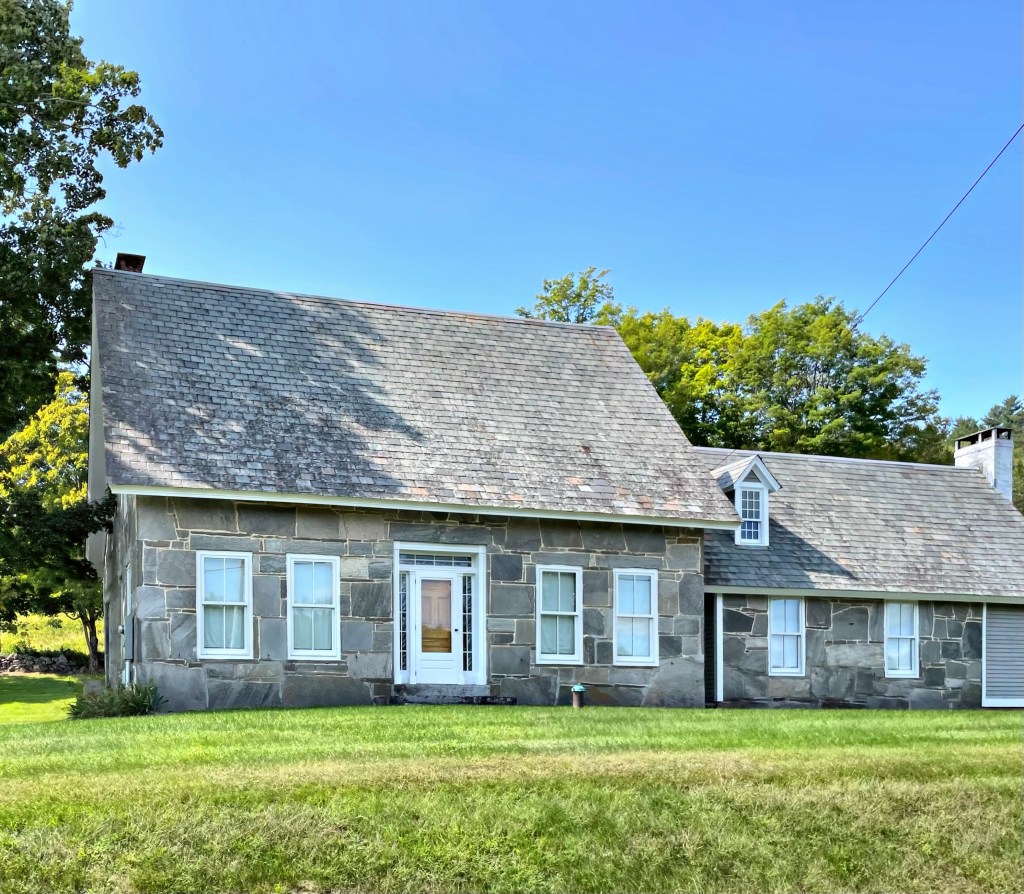
This Greek Revival cape house in Cavendish, Vermont sits along a rural road and is one of the few dozen examples of Snecked Ashlar buildings in this part of the state. In the early 1830s, skilled masons from Scotland settled in central Vermont to work on building projects there. A number of these builders, mainly from the Aberdeen area, were experienced in snecked ashlar construction, in which plates of stone are affixed to a rubblestone wall. This home was built for James Spaulding, and remained in the Spaulding family for generations, lovingly maintained as an excellent example of a Snecked Ashlar home in Vermont.

Case Tavern // 1786

I now have a new favorite house! This STUNNING stone Georgian house with gambrel roof is located on a quiet country road in Canton, Connecticut. The house was built in 1786 by Dan Case (1761-1815), who served in the Revolutionary Army as a boy. Case operated the building as a tavern with an events/meeting hall in the third floor. Daniel later moved to Ohio, likely for more opportunity. The property is a single-family home and just looks so dang cozy. I am picturing small candles lit in the windows, with wreaths and snow dusting the lawn. Is it too early to dream about old houses dressed up for the Holidays?

Mathes House // c.1835

Benjamin Mathes built this stone home around 1835 for his family, of the same stone he used to build a store across the street. The Federal/Greek Revival building has amazing granite quoins (stone blocks at the corners) and lintels (blocks above the windows). Even though there are later alterations, including the bracketed door hood and massive central dormer at the roof, the home remains one of the most visually stunning buildings in town.

Israel Moore Snecked Ashlar House // c.1846

Located on Main Street in Chester, Vermont, you can find this perfect little Snecked Ashlar home. The building technique is very local and can be found in just a handful of towns in central Vermont. Scottish-born masons from Canada introduced the technique to local masons while erecting a mill in nearby Cavendish in 1832, and within a few years, the first stone structure in North Chester village was built by local masons. Soon after, the local school, church and other homes were all constructed the same way. This home outside the Stone Village district was built later than almost all other examples in town. It features Federal and Greek Revival detailing with a central fluted fan at the door and large gable-front roof.

Have you heard of Snecked Ashlar before?