In 1891, Laura Denby McCrea, a wealthy widow based Philadelphia, sought to maintain her social standing all year by building a summer cottage on Grindstone Neck, a summer colony in Winter Harbor, Maine. She was one of the first to build a cottage here, and she hired renowned architect Wilson Eyre to furnish plans for the rustic home. The Shingle style house is dominated by its massive gambrel roof and was historically clad entirely with wood shingles (asphalt shingles have since replaced cedar at the roof).
John Godfrey Moore (1847-1899) was born in Steuben, Maine, a small town just east of Mount Desert Island, the son of a ship captain. He moved to New York City at 18 and would become was a wildly successful businessman, financier and Wall Street stock market promoter during the Gilded Age. He gained fame by successfully suing the United States government in 1893, to stop the new income tax Act from coming into effect, delaying it by 20 years. Oh how the rich stay rich… He purchased a 2,000-plus acre estate on the Schoodic Peninsula and formed the Gouldsboro Land Improvement Company, which sought to develop the peninsula into a summer colony that would rival Bar Harbor. As part of this, Moore was a huge reason for Winter Harbor separating from Gouldsboro, to lower his and his neighbors’ property taxes. He built a cottage here in 1891 and named it “Far From The Wolf” a cheeky reference to its comfortable distance from Wall Street. He died unexpectedly in 1899. His second wife Louise and daughters Ruth and Faith did not share his aspirations for Winter Harbor, and their visits to the area became less frequent. A large portion of his land on the Schoodic Peninsula became a part of Acadia National Park. His property in Winter Harbor was sold, expanded in 1902, and renamed “Ingleside” by Frank B. Noyes, a publisher and later founder of the Associated Press. The home was for a time operated as an inn, and was recently sold for $1 Million at auction. What a steal!
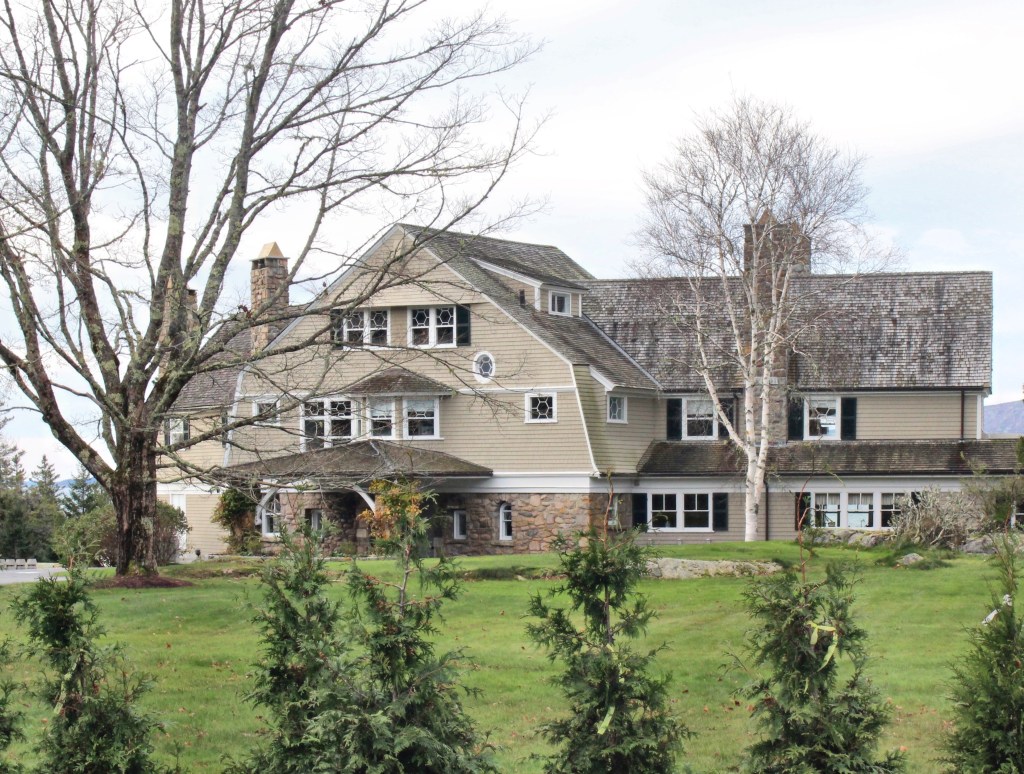
One of the two largest summer “cottages” on Grindstone Neck, Winter Harbor, Maine is this massive Shingled mansion overlooking Frenchman’s Bay. Due to its scale and design, the house possibly replaced a more modest cottage in the early 20th century. The “cottage” was owned by Samuel Price Wetherill, a Philadelphia-based manufacturer and businessman. Wetherill spent most of his time at a Rittenhouse Square Beaux Arts mansion in Philadelphia, which after his death, was purchased by the Philadelphia Art Alliance. The Wetherills hosted lavish events in the mansion and clearly wanted to make a statement with their summer home, which rivals almost any “cottage” in the more prestigious Bar Harbor over the bay.
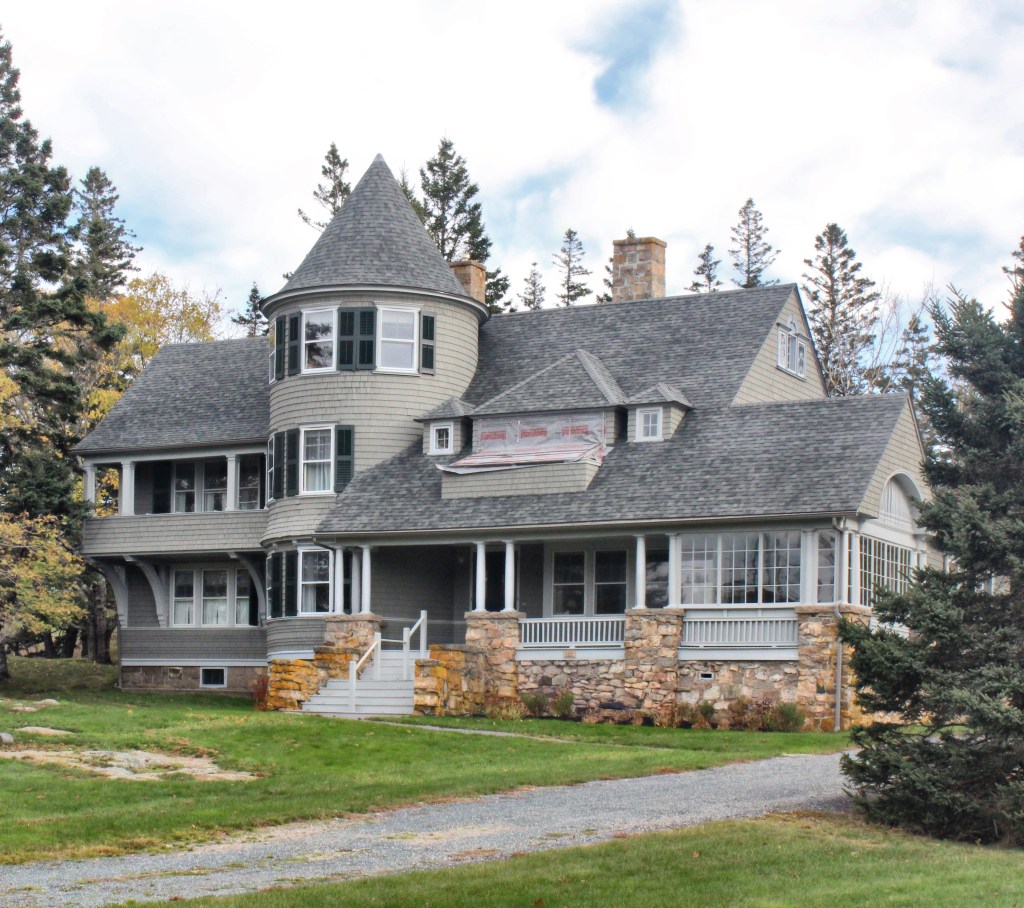
The Dixon Cottage on Grindstone Neck was built around 1891 for Alexander J. Dallas Dixon (1850-1948) who appears to have either shared the summer house with his brother Thomas, or sold the property soon after. The Dixon brothers (along with George Dallas Dixon), were early investors in the Grindstone Neck colony and they built summer homes here in its early development. The Dixon Cottage was the summer retreat for Thomas’ eldest son, Fitz Eugene Dixon, who married Eleanor Elkins Widener, a philanthropist and heiress to the Widener and Elkins families. Eleanor and Fitz would later own Park Cottage, featured previously. The Dixon Cottage deviates from the traditional Shingle style cottages seen so frequently on Grindstone Neck and is a refined example of the Queen Anne style with its varied siding, rounded tower, and asymmetrical plan.
Queen Anne Victorian perfection! This is the Trotter Cottage on Grindstone Neck in Winter Harbor. The house was built in 1892 for one of the proprietors of the Gouldsboro Land Improvement Company, the group that developed the Grindstone Neck Summer Colony. Nathan Trotter (1852-1915) was a commission merchant from Philadelphia who made a name for himself there, eventually investing his money into real estate. He had Philadelphia-based architect Lindley Johnson, who also built other cottages on Grindstone Neck (including one for himself), to design this cottage for his family to visit for the summer seasons. The property became known as Park Cottage under later owner Eleanor Widener Dixon, she and her husband would summer here when not occupying their palatial Pennsylvania estate. Her father, George Dunton Widener and brother, Harry Elkins Widener both perished in 1912 aboard the Titanic. After the Titanic disaster, Eleanor’s mother presented to Harvard University the $2,000,000 Widener Memorial Library in memory of her son. Park Cottage is one of the finest cottages on Grindstone Neck.
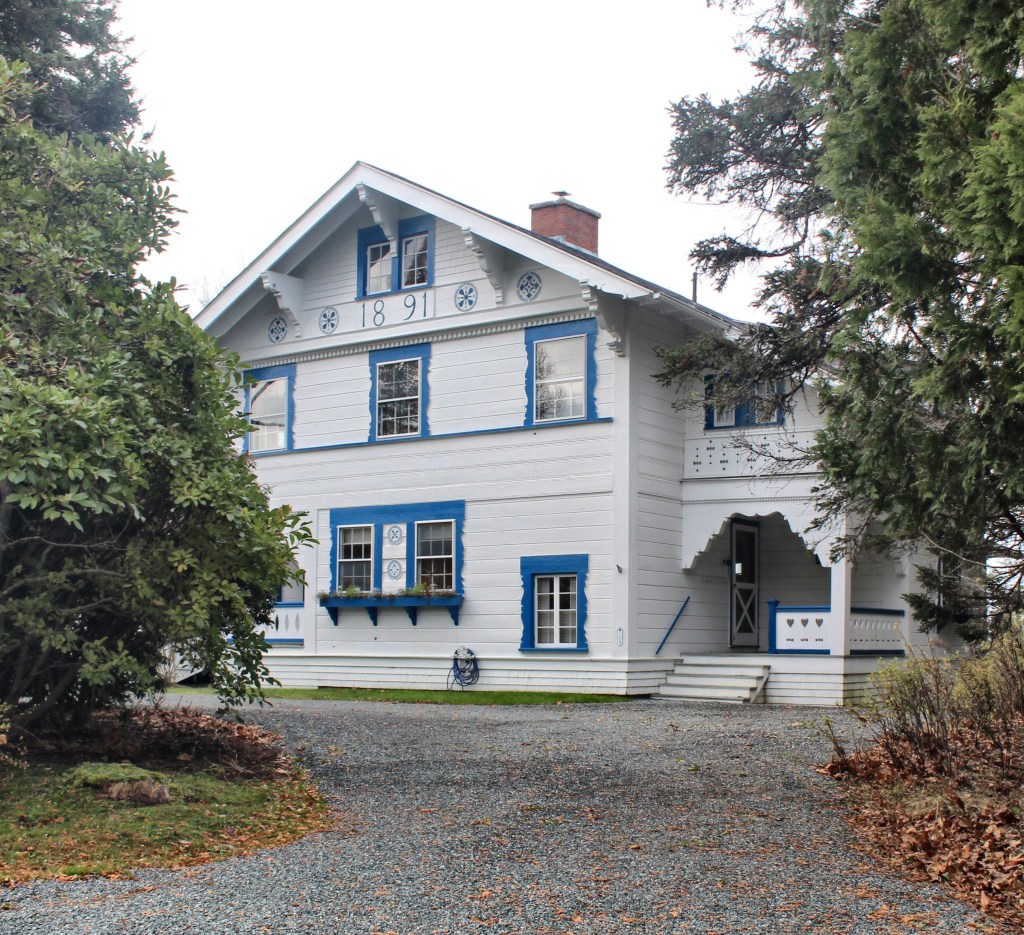
Philadelphia-based architect Lindley Johnson was hired as the official company architect by the Gouldsboro Land Improvement Company’s Grindstone Neck summer colony. As a result, he became the chief tastemaker for the bucolic neighborhood of summer cottages, chapels, and an inn (since demolished). Johnson would design a majority of the cottages in the Shingle style, taking cues from the natural topography and rugged coastlines, but he did deviate from that style a couple times; most notably for his own cottage, “Red Chalet”. While no longer red, the cottage stands out as an extremely rare example of a Swiss Chalet, with its sloping gable roof with wide eaves, exposed stickwork and oversized brackets, decorative carving, and shiplap siding.
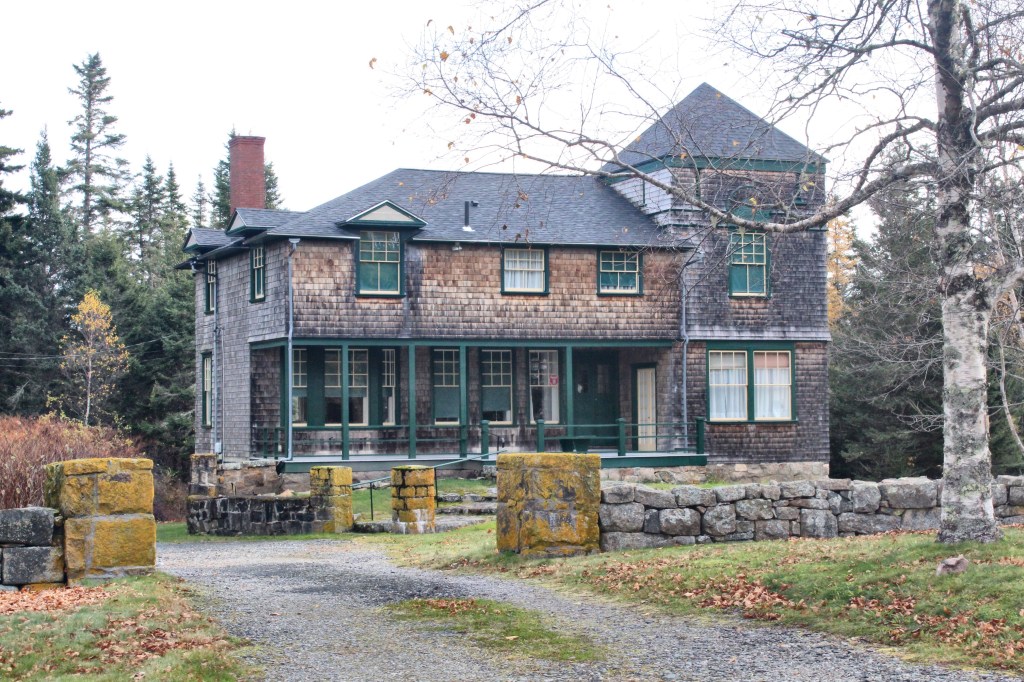
One of my (many) favorite cottages in the Grindstone Neck summer colony of Winter Harbor, Maine, is this pleasing shingled home, built in 1891 for John Jacob Ridgway. Ridgway lived in Philadelphia and worked as an attorney and president of a real estate investment company after sometime as serving as Philadelphia’s Sheriff. For his summer retirement home, he hired the colony’s staff architect, Lindley Johnson (a name I have been repeating on here a lot lately). The Shingle style cottage has a recessed porch, square corner tower with pyramidal roof, and dormers that project over the eaves. I love to see these old rustic cottages with weathered wood siding and deep green trim!
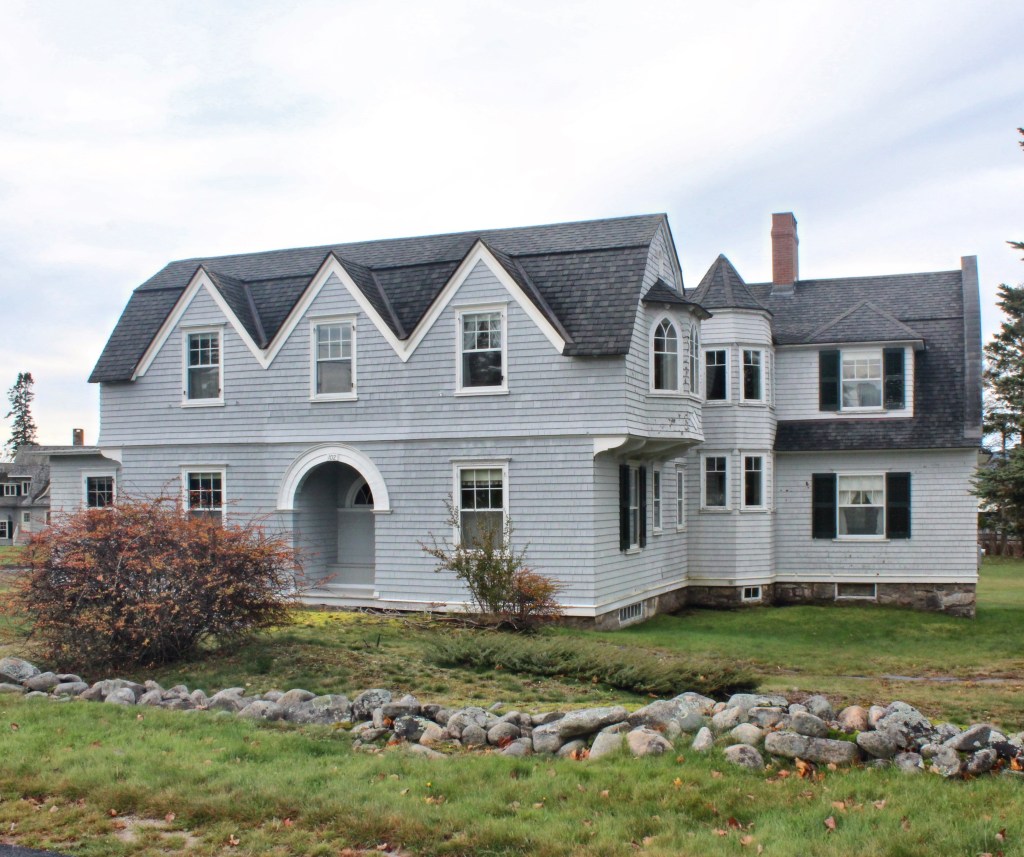
One of the more unique summer cottages on Grindstone Neck is this perfect home built around 1892 for Angelo Tillinghast Freedley. Angelo was one of many Philadelphians who built cottages here on Grindstone Neck, and worked as an attorney there. The house is an excellent example of the Shingle styles under a gross gambrel roof. Houses like this showcase how versatile architect Lindley Johnson was in his many designed cottages here in Maine. The house’s entrance is tucked away on the side of recessed arched opening, how perfect!
When the Grindstone Neck Summer Colony of Maine was in full-swing, wealthy summer residents would frequent the colony’s Episcopal chapel (featured previously). What the summer residents did not really plan for was the influx of other residents as summer staff, largely Irish servants who in large part were Catholic. As a result, the St. Margaret Catholic Chapel was built to provide a house of worship, largely for those summer workers on Grindstone Neck. Keeping with the rustic architectural character of the colony, the chapel was designed in the Shingle style. I could not find any information on the architect, so any additional insight would be greatly appreciated!
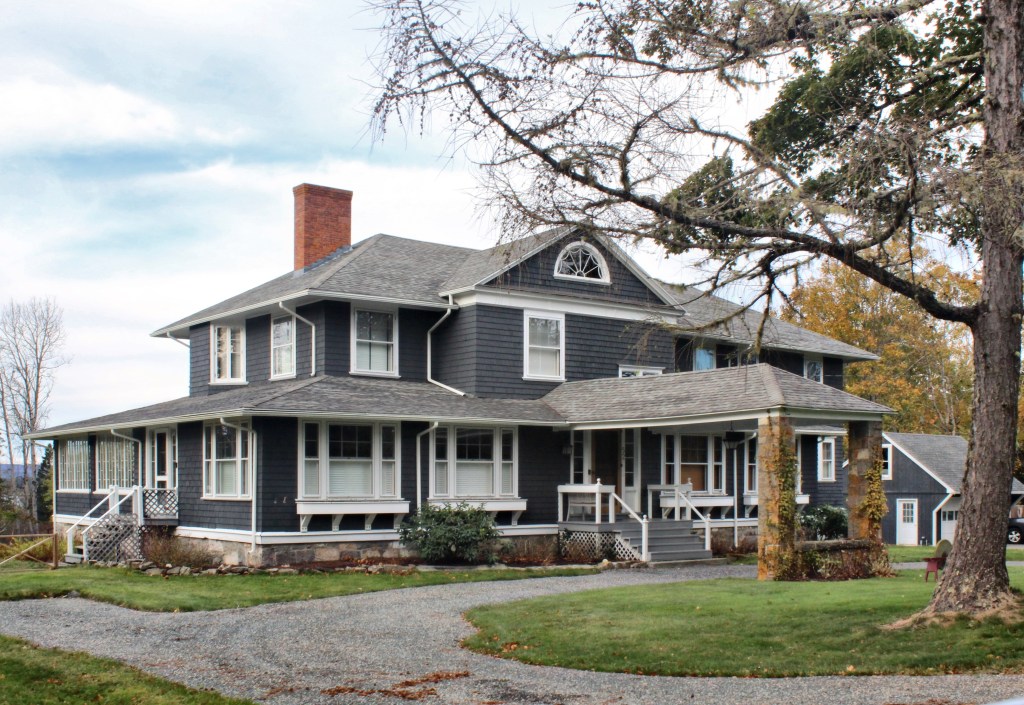
Who doesn’t love a good porte-cochere? In case you don’t know what they are, a porte-cochere is a covered porch-like structure at an entrance to a building where either a horse and carriage (historically) or car (today) can pass under to provide arriving and departing occupants protection from the elements. They are normally found on larger residences and institutional building where the wealthy frequent. The Thompson Cottage on Grindstone Neck in Winter Harbor was built around 1892 for James B. Thompson from Philadelphia. The original cottage was largely updated after Thompson’s death in 1915, the property was owned by Annie Cannell Trotter, who summered at another house in the colony with her husband Nathan Trotter, until his death.




 Buildings of New England