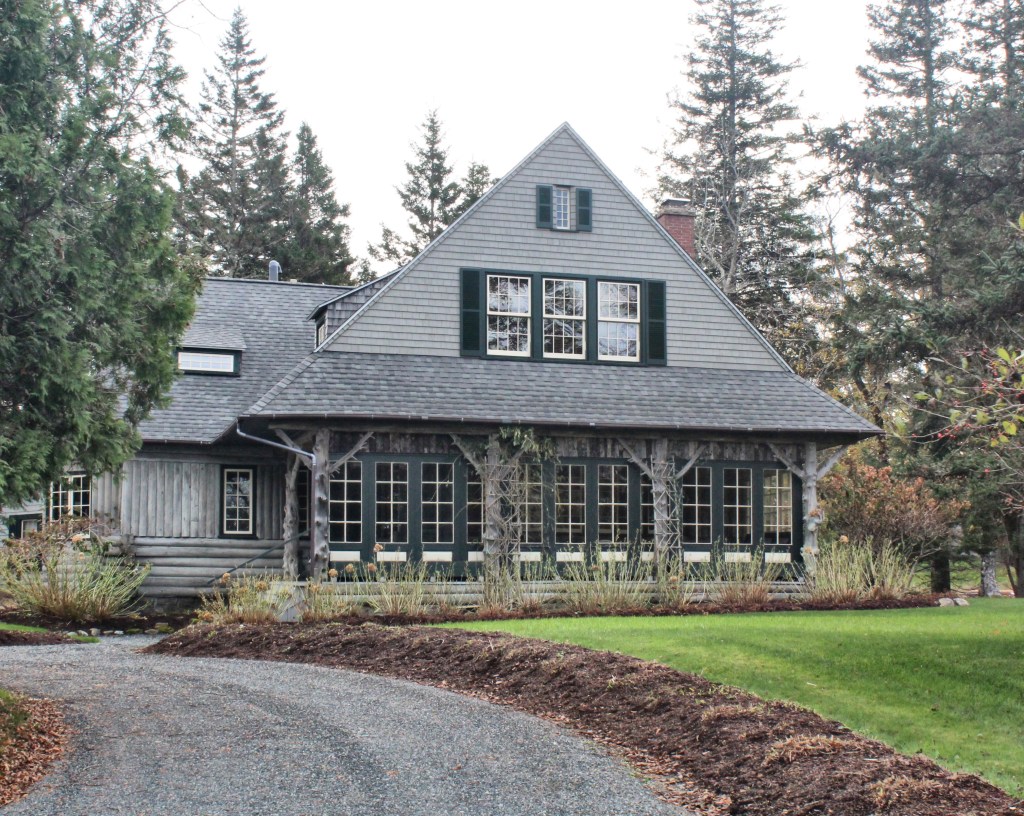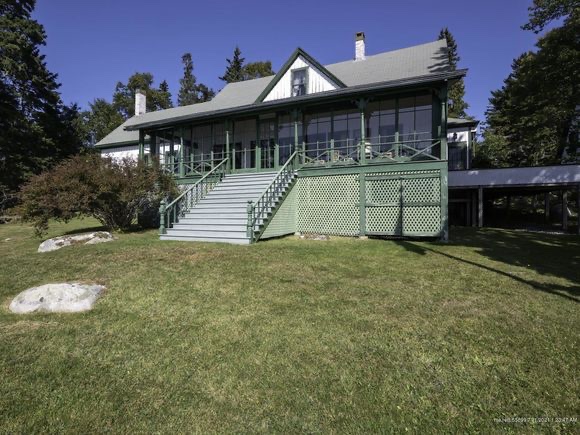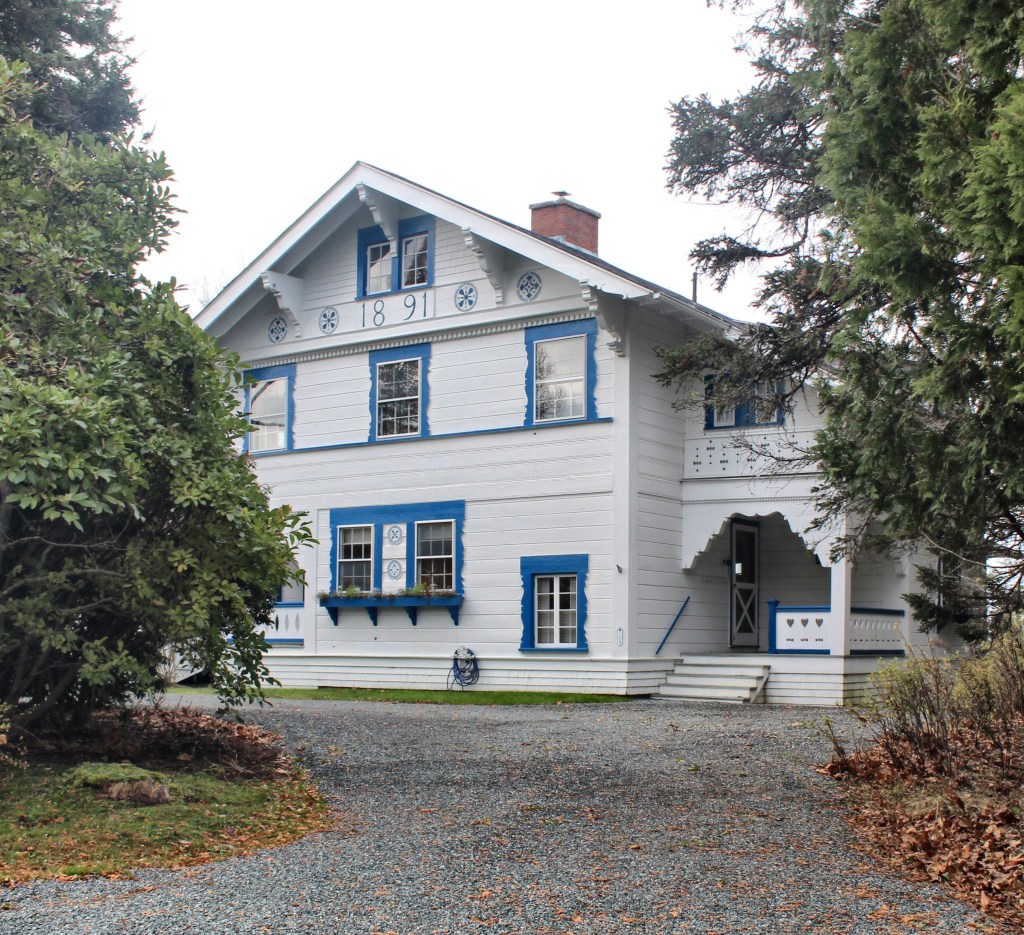
Red Chalet // 1891

Philadelphia-based architect Lindley Johnson was hired as the official company architect by the Gouldsboro Land Improvement Company’s Grindstone Neck summer colony. As a result, he became the chief tastemaker for the bucolic neighborhood of summer cottages, chapels, and an inn (since demolished). Johnson would design a majority of the cottages in the Shingle style, taking cues from the natural topography and rugged coastlines, but he did deviate from that style a couple times; most notably for his own cottage, “Red Chalet”. While no longer red, the cottage stands out as an extremely rare example of a Swiss Chalet, with its sloping gable roof with wide eaves, exposed stickwork and oversized brackets, decorative carving, and shiplap siding.
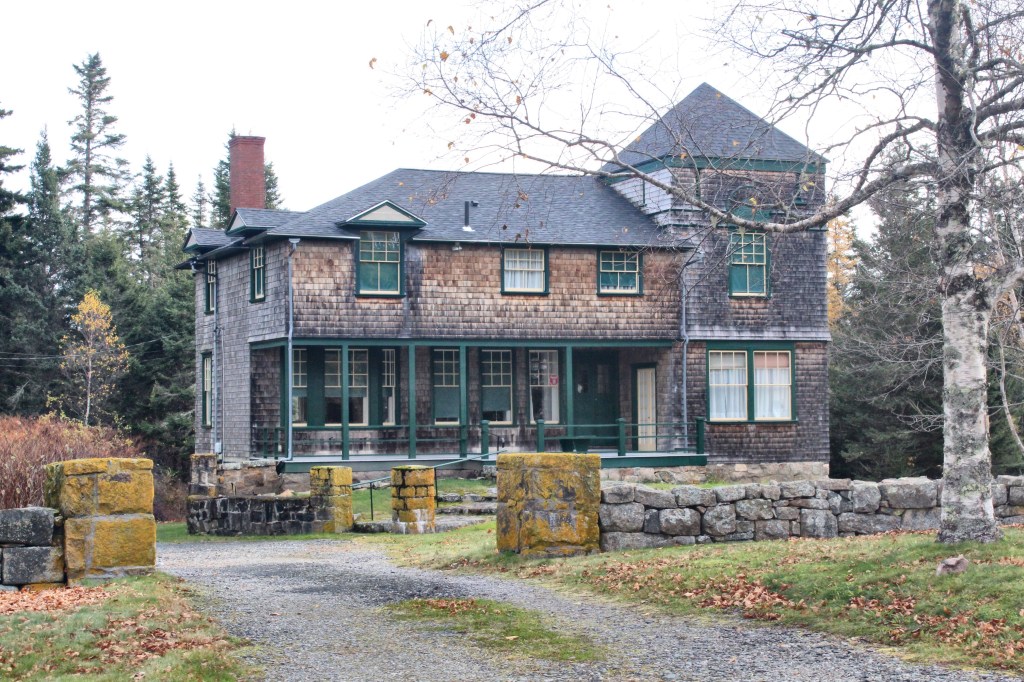
Ridgway Cottage // c.1891

One of my (many) favorite cottages in the Grindstone Neck summer colony of Winter Harbor, Maine, is this pleasing shingled home, built in 1891 for John Jacob Ridgway. Ridgway lived in Philadelphia and worked as an attorney and president of a real estate investment company after sometime as serving as Philadelphia’s Sheriff. For his summer retirement home, he hired the colony’s staff architect, Lindley Johnson (a name I have been repeating on here a lot lately). The Shingle style cottage has a recessed porch, square corner tower with pyramidal roof, and dormers that project over the eaves. I love to see these old rustic cottages with weathered wood siding and deep green trim!

Landreth Cottage // c.1892

Lucius S. Landreth, a Philadelphia attorney had this cottage built on Grindstone Neck in Maine around 1892 for his family. The cottage, like so many in the colony, was designed by architect Lindley Johnson in the Shingle style. The house is so perfect with its gambrel roof which is covered with cedar shingles all the way down to the stone foundation.

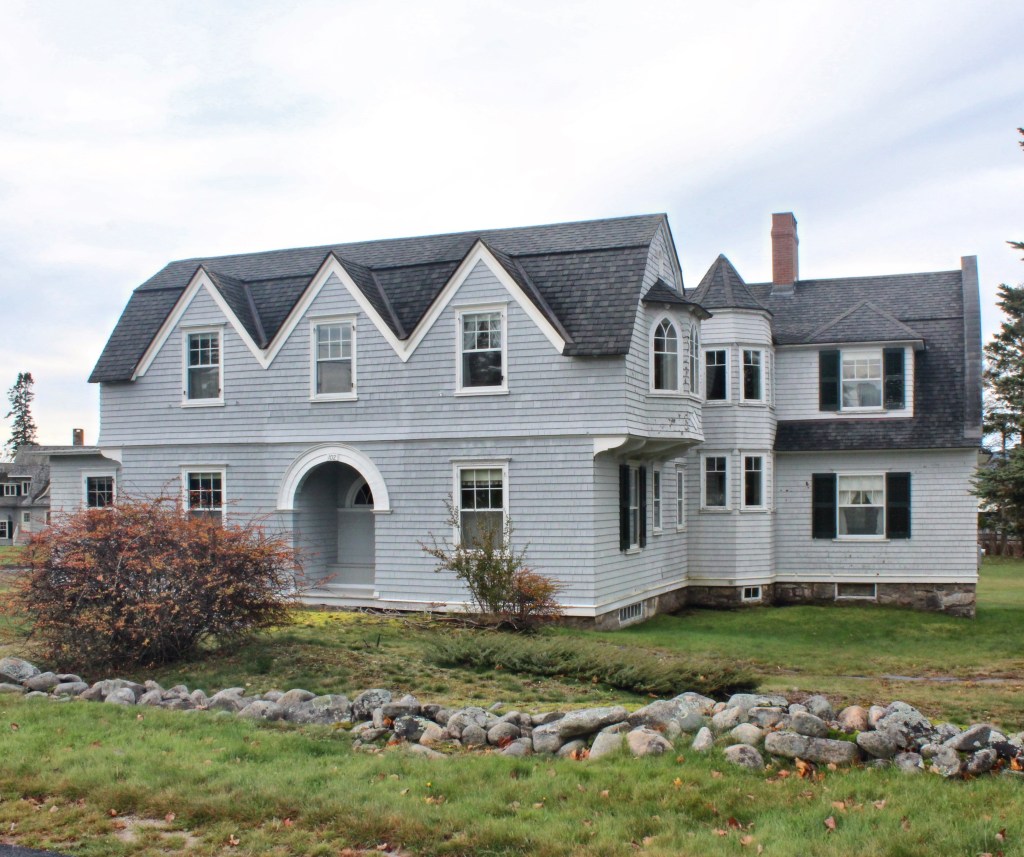
Angelo T. Freedley Cottage // 1892

One of the more unique summer cottages on Grindstone Neck is this perfect home built around 1892 for Angelo Tillinghast Freedley. Angelo was one of many Philadelphians who built cottages here on Grindstone Neck, and worked as an attorney there. The house is an excellent example of the Shingle styles under a gross gambrel roof. Houses like this showcase how versatile architect Lindley Johnson was in his many designed cottages here in Maine. The house’s entrance is tucked away on the side of recessed arched opening, how perfect!

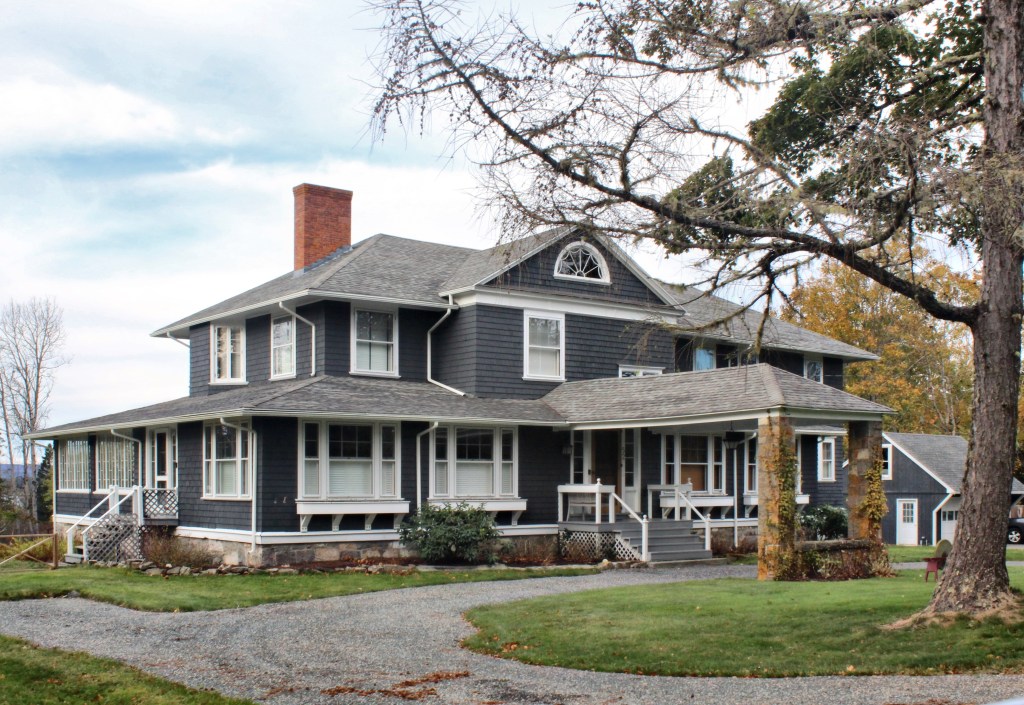
J. Bonsall Taylor Cottage // c.1892

John Bonsall Taylor (1854-1929), a Philadelphia patent lawyer and Director of the Gouldsboro Land Improvement Company, charged with developing Grindstone Neck in Maine, built this rustic cottage around 1892 for his family. He hired Lindley Johnson, a Philadelphia-based architect who furnished plans for many other buildings in the summer colony. Johnson trained under renowned architect Frank Furness before opening his own office. The rustic Craftsman house even has a “widows walk” which provides views to Bar Harbor across Frenchman Bay.

Thompson Cottage // c.1892

Who doesn’t love a good porte-cochere? In case you don’t know what they are, a porte-cochere is a covered porch-like structure at an entrance to a building where either a horse and carriage (historically) or car (today) can pass under to provide arriving and departing occupants protection from the elements. They are normally found on larger residences and institutional building where the wealthy frequent. The Thompson Cottage on Grindstone Neck in Winter Harbor was built around 1892 for James B. Thompson from Philadelphia. The original cottage was largely updated after Thompson’s death in 1915, the property was owned by Annie Cannell Trotter, who summered at another house in the colony with her husband Nathan Trotter, until his death.

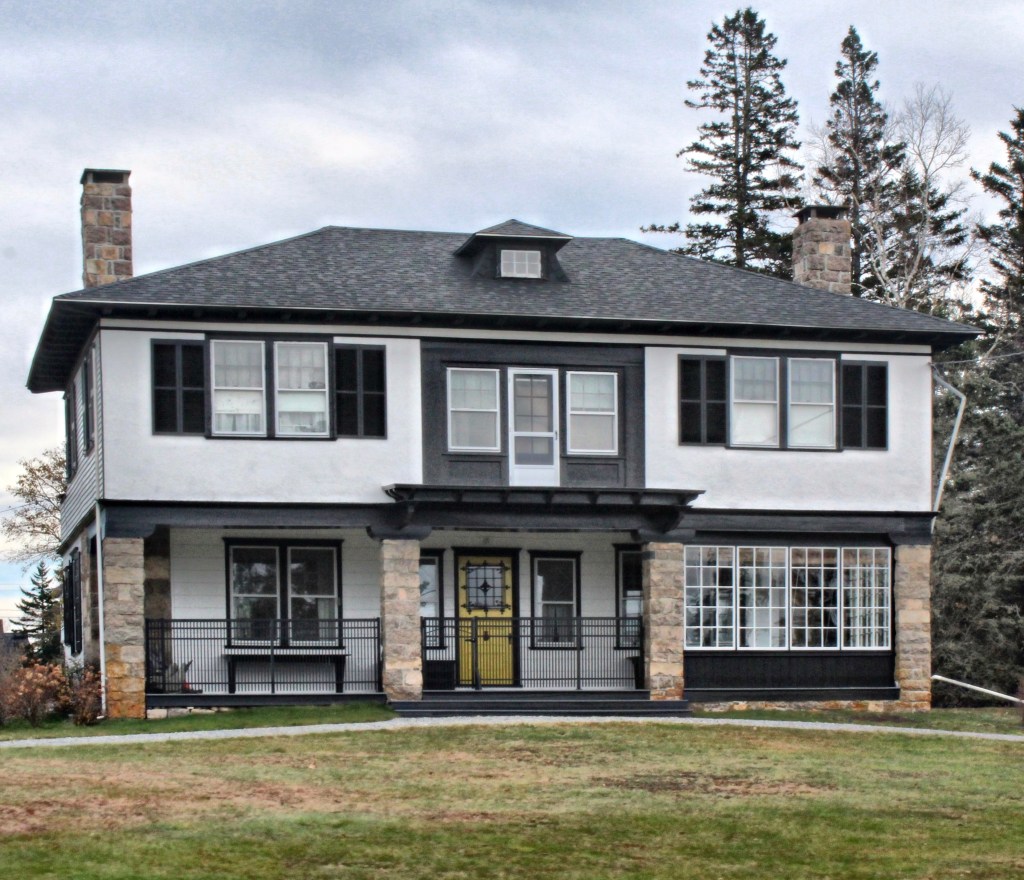
Levis Cottage // c.1892

Samuel W. Levis, a real estate agent from Philadelphia built this summer cottage on Grindstone Neck in the enchanting town of Winter Harbor, Maine in 1892. The Levis Cottage was designed by the Gouldsboro Land Improvement Company’s favorite Philadelphia architect, Lindley Johnson, who designed a majority of the cottages and buildings in the summer colony. Samuel does not appear to have ever married nor did he have children. The property was later owned by Frances and Mitchell Rosengarten. The cottage is boxy in form with a stucco facade and clapboard siding on the sides. Local stone was used to construct the large columns at the first floor porch. The former recessed balcony at the second floor has been enclosed, but otherwise, the house looks near-identical to when it was built over 130 years ago!

Charles and Elizabeth Doremus Cottage // c.1892

In 1889, the Gouldsboro Land Improvement Company, bought 300 acres of farmland to build a residential summer colony as an alternative to the busy Bar Harbor across the bay. They hired landscape architect Nathan Franklin Barrett to design the subdivision of 198 cottage lots of at least one acre and arranged them on roughly parallel roads, with a primary road (Grindstone Avenue) running the length of the peninsula’s spine through woodlands to dramatic ocean views at the tip. The summer colony has many great cottages and chapels tucked away on rocky outcroppings with towering spruce trees all around. This charming cottage was built for Charles Avery Doremus and his wife Elizabeth Ward Doremus around 1892. Charles was a scientist, the son of chemist and physician Robert Ogden Doremus. He graduated from the College of the City of New York in 1870. He became a professor in chemistry and became a leading specialist on toxicology, often called into court cases to help solve crimes. Elizabeth was a playwright from Kentucky and her father and his brother owned plantations in Mississippi before the American Civil War. The couple summered at this cottage on Grindstone Neck until Charles’ death in 1925. It is a great example of a rustic Shingle style summer cottage.

Elwin Cove // 1908

While Blue Hill has historically been a summer colony for wealthy city-dwellers to escape to experience the beauty of Maine, it has never gotten the coverage as Bar Harbor or the other Mount Desert Island towns. Many of Blue Hill’s summer cottages are more refined and hidden away amongst the trees, and that is how the town likes it, unpretentious. I was lucky enough to take a wrong-turn and stumbled upon this gem of a cottage between the Blue Hill village and East Blue Hill, I had to take a photo! Upon further research, the rambling cottage was built in 1908 for Ellen and Edward J. Brooks of New Jersey. The cottage was named Elwin Cove, possibly as a merge of their children’s names ELinor and WINfred.

Radnor Cottage // c.1907

The historic summer cottages for middle-class summer residents of Maine have little written about them, but oh are these little cottages beautiful!! This is Radnor Cottage, a charming waterfront dwelling in the Haven Colony in Brooklin, Maine. The summer colony is comprised of a dozen quaint cabins (most historically without running water) for those of more modest means that wanted to escape the city for peace and tranquility on Maine’s rocky coast. The colony was developed in the late 19th and early 20th centuries as a respite for academics and more who did not want to flaunt their credentials or social prestige. This home was purchased a few years ago and the inside looks like it’s never been altered! This is a dream home!