Nesmith-Kent Cottage // 1891

One of the most iconic summer “cottages” in Kennebunkport’s late 19th-early 20th century summer colony is the Nesmith-Kent Cottage, located next door to the often photographed St. Ann’s-by-the-Sea summer chapel. The cottage was built for Julia and Mary Nesmith, the daughters of John Nesmith a wealthy industrialist and textile manufacturer from Lowell MA. The sisters named the cottage “The Pebbles”, and spent their first night there on July 24, 1891. The half-timbered shingled house stood at the edge of the ocean near a former War of 1812 fortification. The sisters sold the property in 1910 to Arthur Atwater Kent, prominent radio manufacturer based in Philadelphia, who invented the modern form of the automobile ignition coil. Kent renovated the cottage extensively, increasing its size, and renamed “The Pebbles”, “At Water’s Edge” in a cheeky play on his last name. In 1919, he expanded again, purchasing a lot adjacent to his mansion which was the old fort constructed to protect the ships moored in the harbor during the War of 1812. In early 1919, workmen uncovered a few bones of what was calculated to be a seven-foot-tall man and two skulls of white men that had clearly met their end at the hands of Native people; one pierced by an arrow and the other scalped. The Kennebunkport Historical Society has one of these skulls in their collections. Today, the Nesmith-Kent Cottage is owned by the St. Ann’s-by-the-Sea congregation as their rectory.

Harkness Estate – Eolia Mansion // 1908

Eolia, the Harkness Estate, sits on the shoreline of Waterford, Connecticut and is significant as one of the most complete grand-scale, seaside estates in Connecticut. Similar to Seaside Sanatorium (featured previously), the Harkness Estate is another Connecticut State Park in the coastal town, but is quite opposite as the buildings and grounds are in much better condition and get use! The property was developed as a formal seasonal retreat and working farm in the early 1900s for William Taylor and Jessie Stillman, until it was purchased by Jessie’s sister Mary and her husband Edward Harkness soon after. Edward S. Harkness (1874-1940) spent most of his life managing, with his older brother Charles, a tremendous fortune built up by their father Stephen Harkness, who had had the foresight in 1870 to become John D. Rockefeller’s business partner by investing in the Standard Oil Company. Edward Harkness married Mary Stillman, daughter of wealthy New York attorney Thomas E. Stillman, in 1904. Mary’s maternal grandfather was Thomas S. Greenman, a shipbuilder in Mystic, Connecticut, who co-founded George Greenman & Co shipyard (now part of the Mystic Seaport Museum). As the centerpiece of this summer estate, the premier NY architectural firm of Lord & Hewlett, designed this stunning Renaissance Revival mansion which holds a whopping 42-rooms. Mary hired female landscape architect Beatrix Farrand to design the absolutely stunning gardens on the grounds. In 1918, Edward Harkness was ranked the 6th-richest person in the United States, and the couple decided to give away much of their wealth, including selling off some of their property in Waterford for Camp Harkness for children with polio. Mary and Edward were very private people who avoided public attention and acclaim, unlike many of the rich of today. Mary Harkness’s final gift, was written in her will, that her beloved estate Eolia, would be gifted to the State of Connecticut.

Stay tuned for some more buildings on this stunning estate!

Marion Nichols Summer Home // 1935

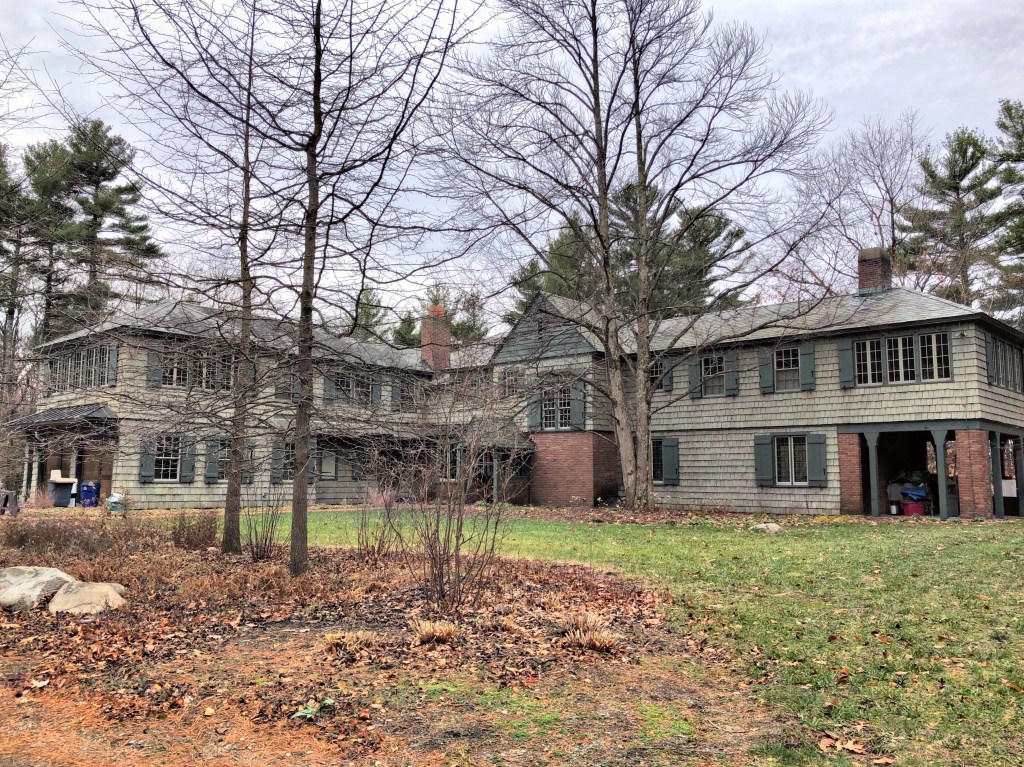
This summer estate in Hollis, NH epitomizes the hidden architectural splendor that can be found off the beaten path in many small New England towns. Hollis began serving as a summer destination in the late 1880s and the trend continued until WWII. In many cases, old family homesteads became summer residences for descendants who had moved to the city but desired to return to their “roots” periodically. The Nichols Home is unique in Hollis as it was designed to be a summer retreat for a well-to-do widow and her considerable servant staff, combining all the comforts available with the advantages of a rural retreat. The design of the main house offers separate living spaces for the family and the servants, including a library, living room and dining room for the use of the family. The servants’ wing was designed to include a two-car garage, a butler’s pantry, a manual dumbwaiter connecting the basement and first floor used to transport fireplace wood and a receiving unit for the delivery of milk, groceries and other goods. Sleeping porches, capitalizing on the benefits of the fresh country air, are an integral component of the house design and are included in both the family and servant wings. The home was designed by the Boston architectural firm of Densmore, LeClear & Robbins, who were hired by the 52 year old widow’s children for their mothers’ summer home. It is said that Ms. Nichols never liked the home and decided to summer instead at the old family summer home down the street.

“Seas the Day” Cottage // 1875

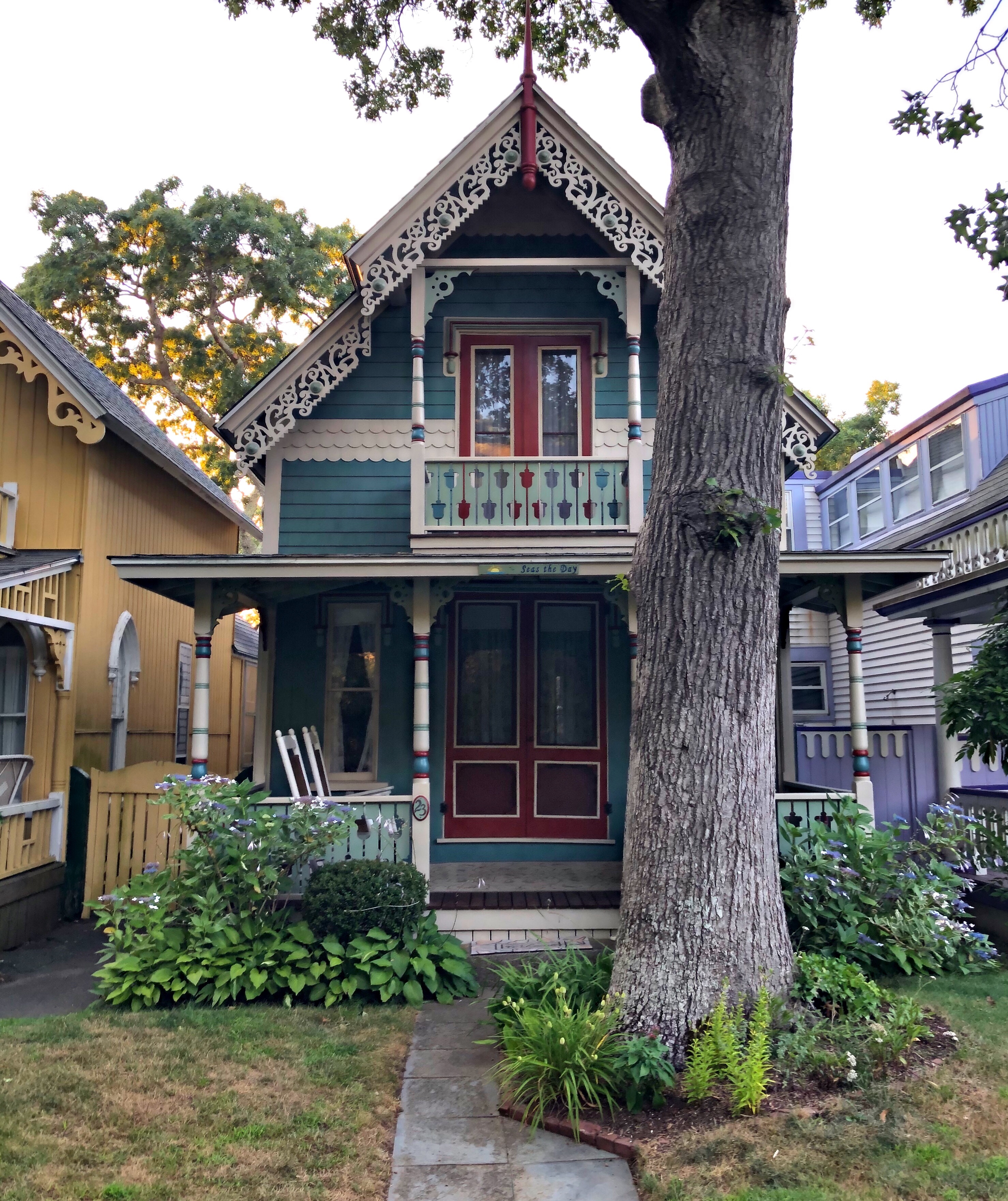
This quaint little summer cottage in Wesleyan Grove was built in 1875 for Hanson Arnold, a merchant and methodist from Woonsocket, R.I. The home is typical of many other summer cottages in Oak Bluffs on Martha’s Vineyard, with its delicate stick work, turned posts, full-length porch, and second story balcony with pierced bargeboards. The home was at one point named “Seas the Day”, a trend of naming the cottages occurred sometime in the 20th century by families who summered on the island, many incorporating the family’s name somehow. The home was restored recently with all new detailing and a reversion back to the original porch configuration.

Governor Oliver Ames Summer House // 1878

This stunning Victorian home in Oak Bluffs on Martha’s Vineyard was built in 1878 as a summer home for Oliver Ames (1831-1895), a businessman, investor and Governor of Massachusetts. Oliver Ames was the son of Oakes Ames, who is credited by many historians as being the single most important influence in the building of the Union Pacific portion of the transcontinental railroad. After his father’s death in 1873, Oliver Ames became the executor of his father’s vast estate and business dealings, and spent vast sums of money on properties in the places he lived including North Easton, MA, Boston and Martha’s Vineyard. He summered at this large home fronting the ocean in Cottage City, then a part of Edgartown. He decided to run for state senate in 1879, after he was unsuccessful in securing passage for the separation of the Martha’s Vineyard community of Cottage City, where he owned a summer house, from Edgartown. Winning election, he saw through the incorporation of the town (now known as Oak Bluffs). Ames served as the Governor of Massachusetts between 1887 and 1890, and continued to summer in his beachfront home during that time. The eclectic Victorian home blends many popular styles at the time from the Shingle style with the continuous shingle siding, the Stick style with the delicate stick-work at the veranda, to Queen Anne with its asymmetric massing and square tower.

Melville Walker House // 1860

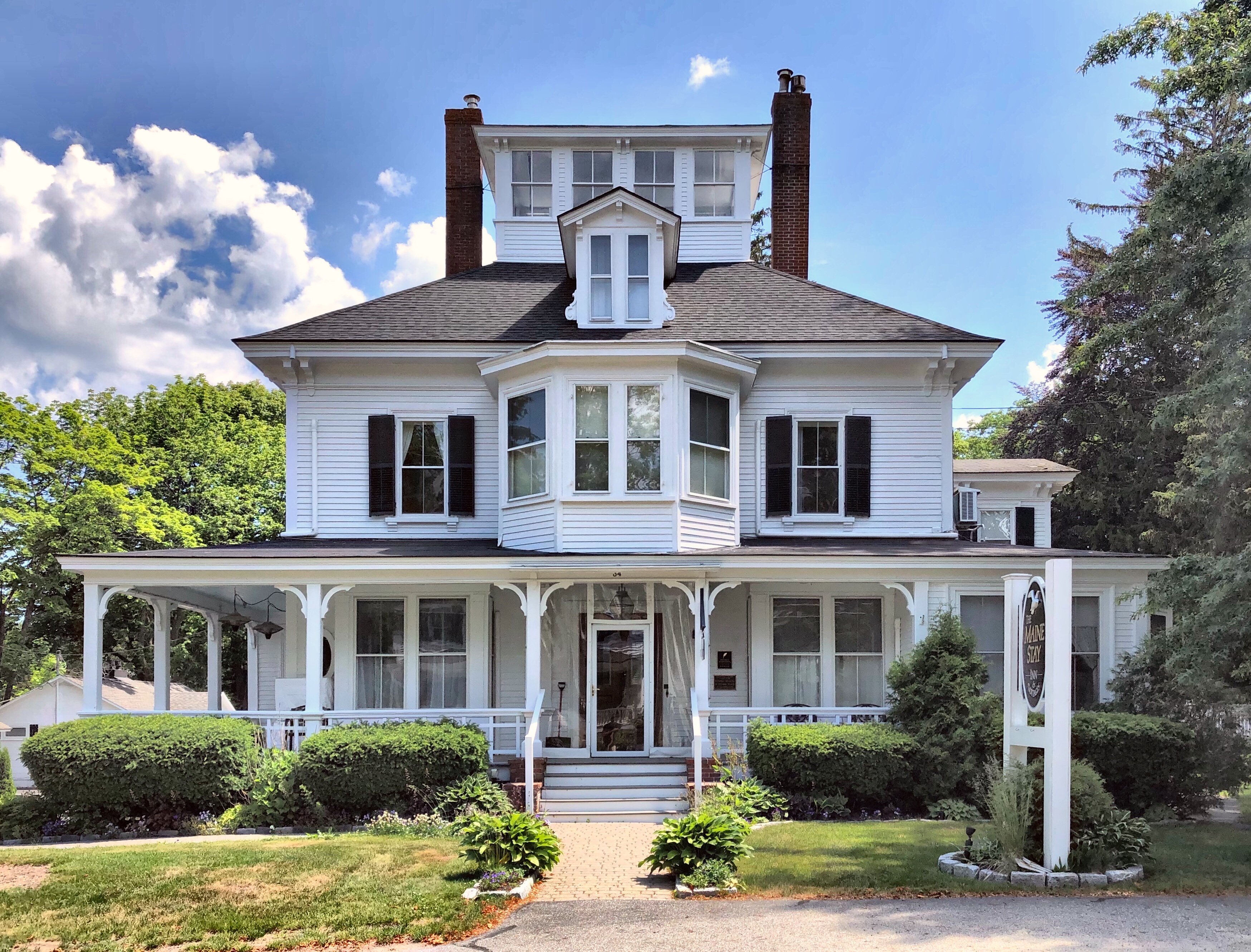
Built for Melville Walker, a sea captain on land gifted to him by his father, this home perfectly exhibits the changing dynamic of Kennebunkport. Melville Walker would often be out at sea for months at a time, and he apparently brought along his wife, three daughters and son on many trips to ports all over the world. The Italianate home was eventually sold out of the family, and by 1901, it was purchased by George Little, an executive with the New York, New Haven and Hartford Railroad. That year, he had the summer home renovated with Colonial Revival detailing, including the hipped roof, dormer, and other detailing. The belvedere, 2/2 windows, and Victorian era porch were retained, showing the original form and detailing of the Italianate version. In the 1950s, the home was converted to an inn, with small cottages constructed surrounding the property to house additional families. Today, Maine Stay Inn & Cottages welcomes families from all over the world to experience the beauty of Kennebunkport.