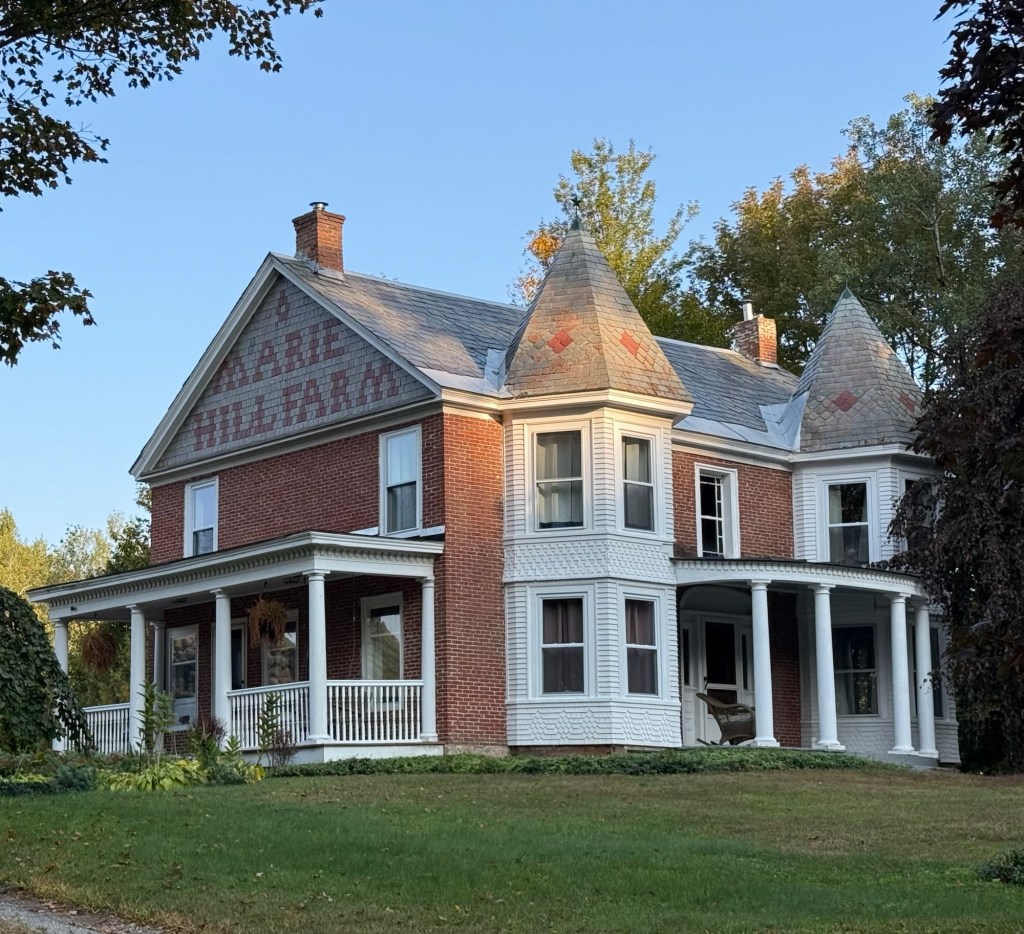
Marie Hill Farmhouse // c.1810

Located in the charming rural town of Andover, Vermont, the Marie Hill Farmhouse is one of the most interesting and charming residences in the area. Built around 1810, the brick farmhouse was designed in the Federal style, with a symmetrical five-bay facade, brick end chimneys, and a fanlight over the front door. The property was purchased by New Yorkers, Laurence Pfluger and his wife Mary “Marie” Pfluger, who operated the farm, raising dairy cows. Laurence would ship eggs, dairy and meat to his market in New York from this farm, which did quite well financially. The farmhouse was “modernized” by the turn of the 20th century with the addition of the two-story octagonal towers on the facade, front and side porches, along with the decorative slate spelling out “Marie Hill Farm” after his Marie Pflueger. The residence was later converted into a guesthouse, a use that remains to this day, still retaining the iconic name and branding in the southern gable.

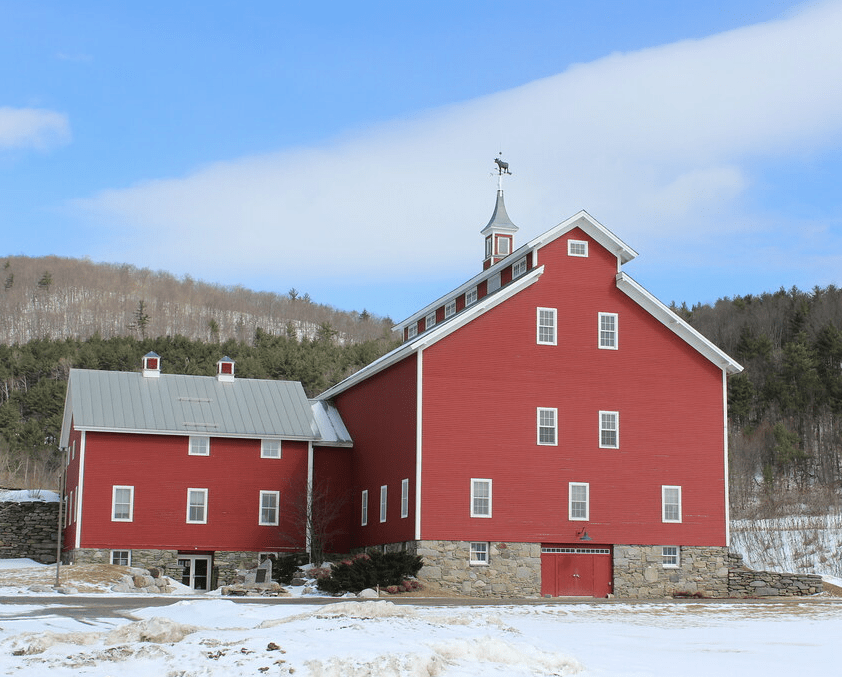
Robert Frost Farm // c.1820

Robert Frost, the famed American poet is best known for his realistic depictions of rural life in New England. Frequently honored during his lifetime, Frost is the only poet to receive four Pulitzer Prizes for Poetry, and in 1961, he was named poet laureate of Vermont, one of his favorite places to write. Though his writing is often beautiful, Robert Frost did suffer tragedies. His beloved wife, Elinor, died in 1938, causing him to resign from a teaching position at Amherst College. In the fall of 1940, the Frost family experienced another tragedy when Robert’s only son Carol committed suicide at 38 years of age. Robert Frost, who suffered from depression himself, would buy this farm in rural Ripton, Vermont, that year. The farm was a respite to escape to nature and be free from painful memories of the past. Frost chose the site eight miles from Middlebury College, and two miles from the Broad Loaf Inn, where each summer the college sponsored the Bread Loaf Writers’ Conference, the oldest and most prestigious writers conference in the country. The farm he purchased was established by and known as the Homer Noble Farm. The farmhouse seemingly dates to the early 19th century, and the property was added to by a cabin built for Mr. Frost to write and occupy when spending summers on the farm. The property would serve as his country retreat for summers away from his main residence in Cambridge, Massachusetts, until his death in 1963. The property is now owned by Middlebury College. The grounds are open to the public during daylight hours.

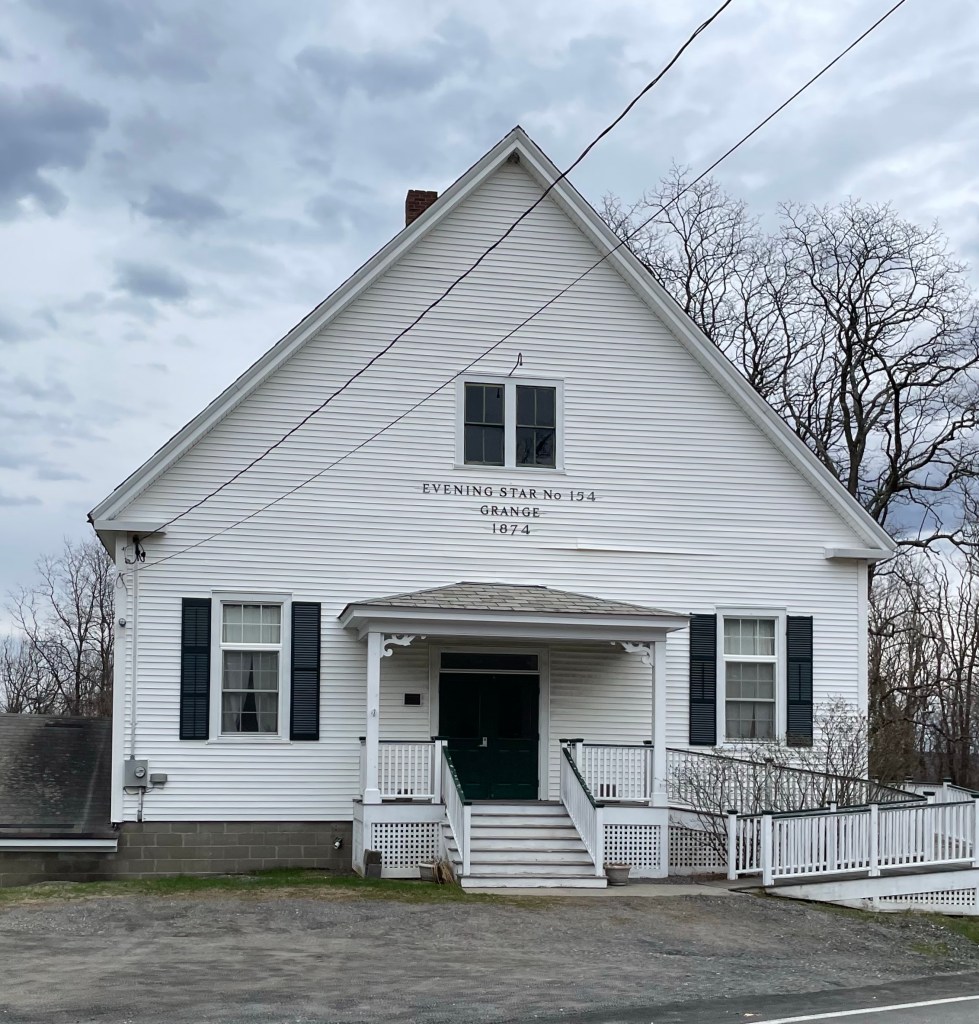
Evening Star Grange Hall // c.1874

Rural New England towns like Dummerston, Vermont long relied on agriculture as a means of life. From this, local farmers and their families would organize in regional Grange Halls through the The National Grange of the Order of Patrons of Husbandry, an agricultural advocacy group. Many rural communities in the United States still have a Grange Hall and local Granges still serve as a center of rural life for many farming communities. The local Evening Star Grange was organized in Dummerston Center in 1874 with 32 members, growing by the end of the 19th century. This building would have held meetings where farmers could share trade secrets, make deals, and “talk shop” regarding farm life. Such buildings are significant as community centers for agricultural communities and should be preserved for future generations.