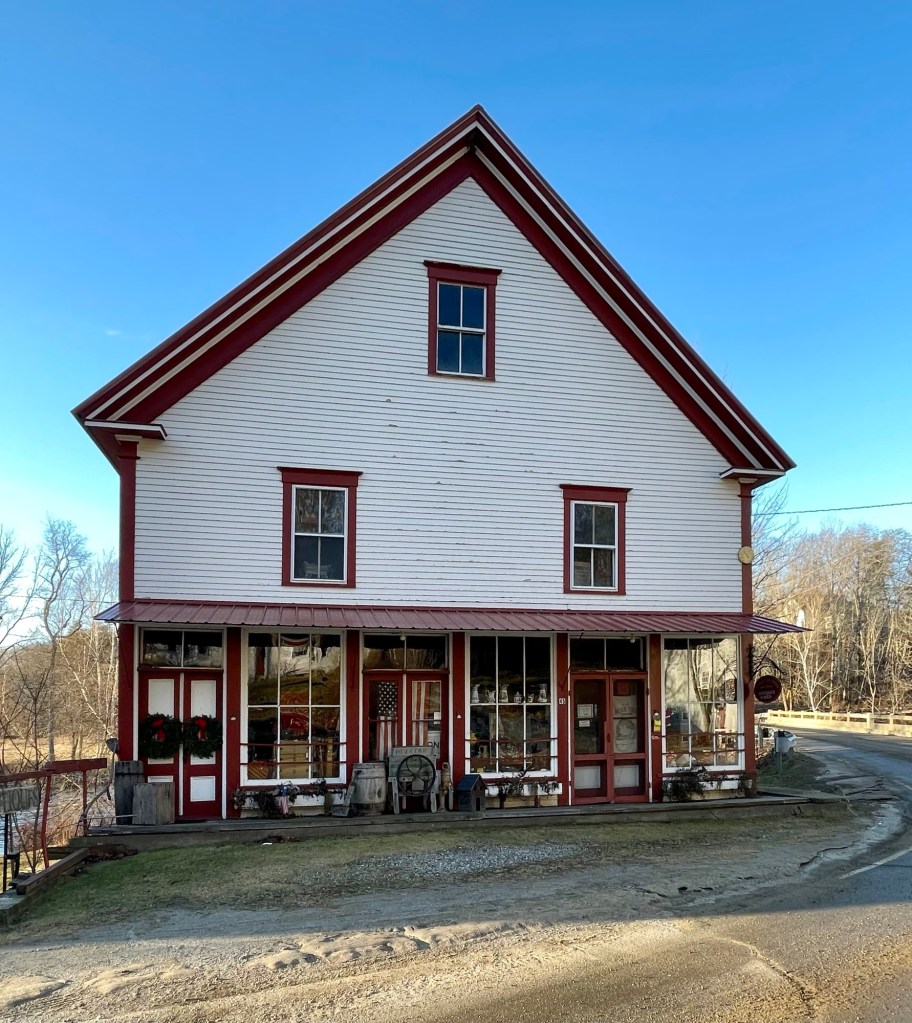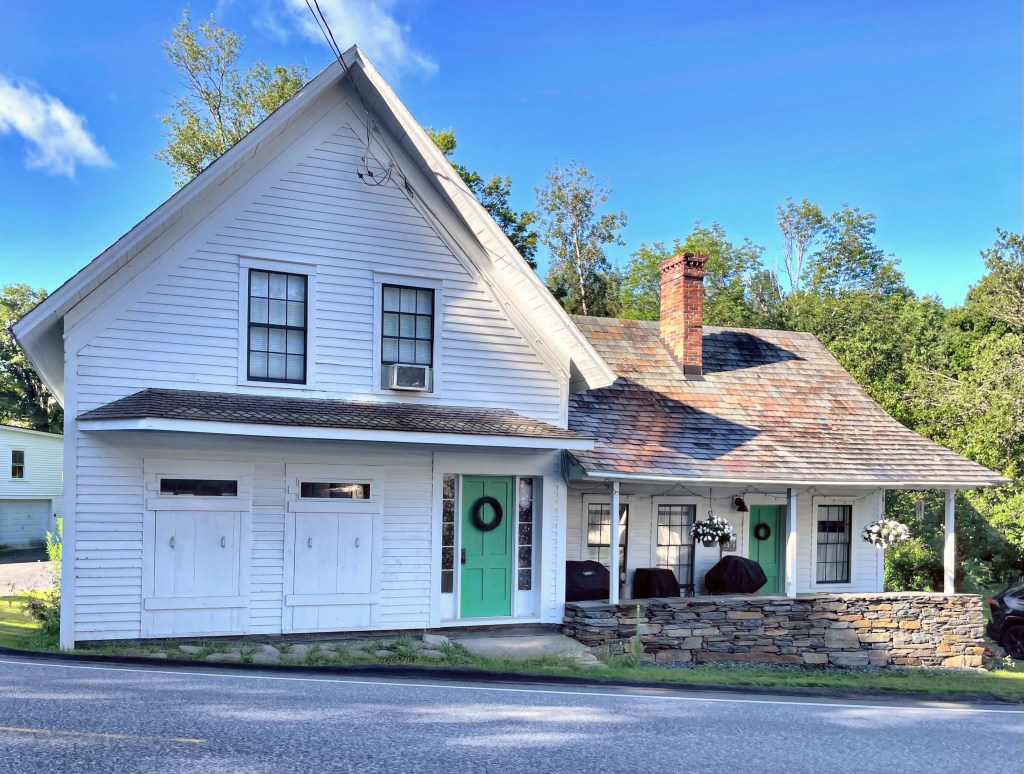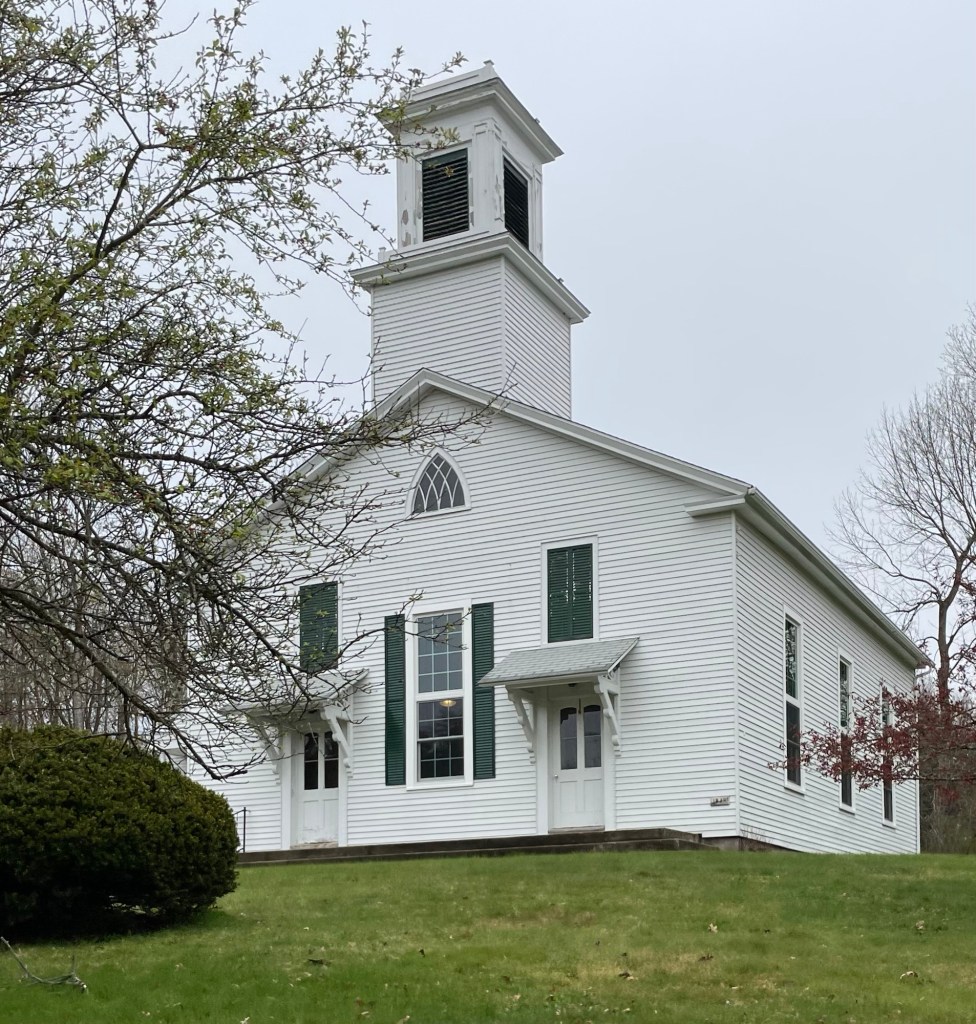
Every village needs a general store, and the store in the Head Tide village of Alna was this vernacular building constructed around 1886. The store was operated for years by John Allen Jewett, who’s ancestors settled in Alna generations before. Jewett sold grain from the building to local farmers and residents and lived across the street in the family home. Vernacular “mom and pop” stores like this are becoming more rare, but they are among the most charming in New England. Be sure to shop local and support small businesses when you can!
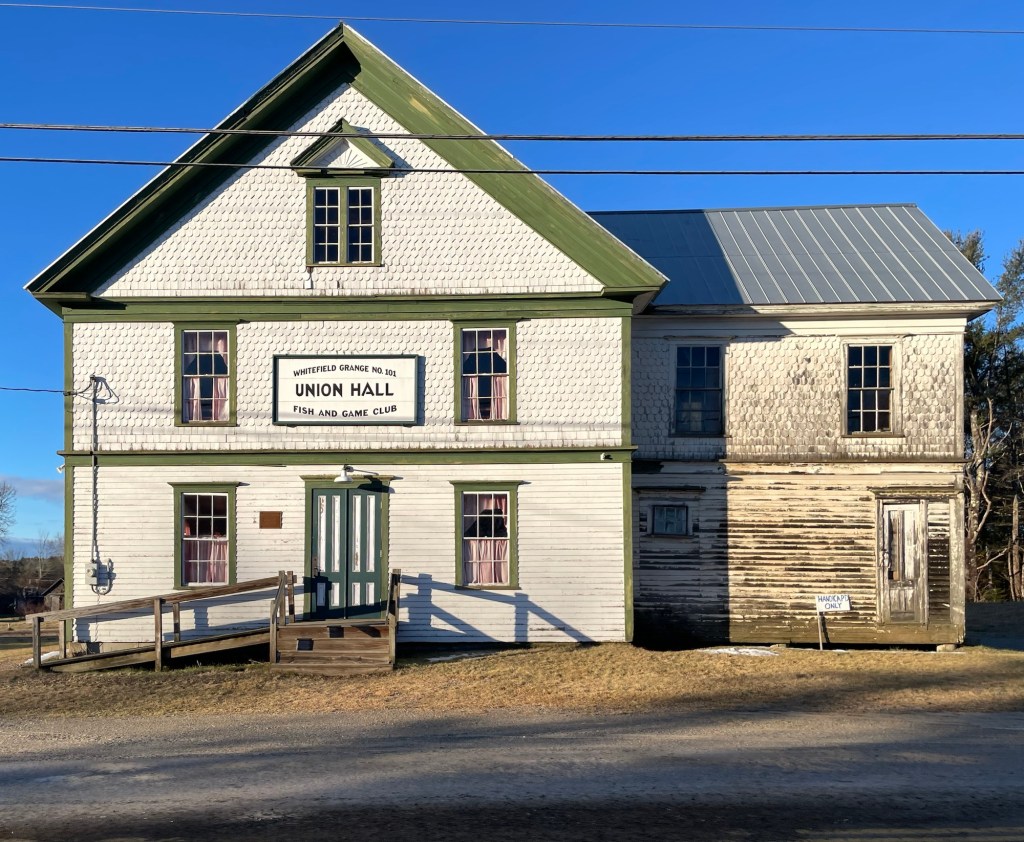
Finding a Grange Hall in Maine are almost as common as finding an old church, they are everywhere! Located the next town over from Jefferson, Maine’s Willow Grange Hall, the town of Whitefield has an equally charming example. The National Grange of the Order of Patrons of Husbandry was established in 1867 to advance methods of agriculture, as well as to promote the social and economic needs of farmers in the United States. Communities all over built grange halls where farmers and residents could meet and discuss prices, trade, and share tips for larger crop yields. The Whitefield Union Hall was built in 1900, primarily under the auspices of the Whitefield Fish and Game Club, but with design input from the local Grange chapter, which contributed funds to its construction and was also a tenant. It was until 1919 the only public hall with a stage in southern Whitefield, playing host to dances, meetings of fraternal and social organizations, and other community events. The hall was managed by an association of the two organizations until 1947, and by the Fish and Game Club after the Grange chapter merged with another in 1969. The club closed down in 1974, and the hall is now managed by a union consortium of village community groups. The building is listed on the National Register of Historic Places.
Weare, New Hampshire has a pretty cool history. Located at the northern edge of Hillsborough County, the land presently known as Weare was granted to veterans of the Canadian wars in 1735 by Governor Jonathan Belcher, who named it “Beverly-Canada” after many of the veteran’s hometown, Beverly, Massachusetts. After various disputes over the settlement and naming of the town, it became known as “Weare’s Town” before being incorporated by Governor Benning Wentworth in 1764 as Weare, after Meshech Weare, who served as the town’s first clerk and later went on to become New Hampshire’s first Governor. The town grew slowly during the 18th and 19th centuries around five major villages, with farmland and forests connecting them. Near the geographic center of town, this Town House was built in 1837 to be a government and religious center of the town. Originally, town meetings were held on the first floor and the Universalist Church met on the second floor and the local high school was installed on the second floor in 1919. The building remains the town offices with event space for rent inside today. The building is a great example of a vernacular Greek/Gothic Revival town house of the period with a two-stage tower with pinnacles at the corners of each stage and a louvered belfry at the bell.
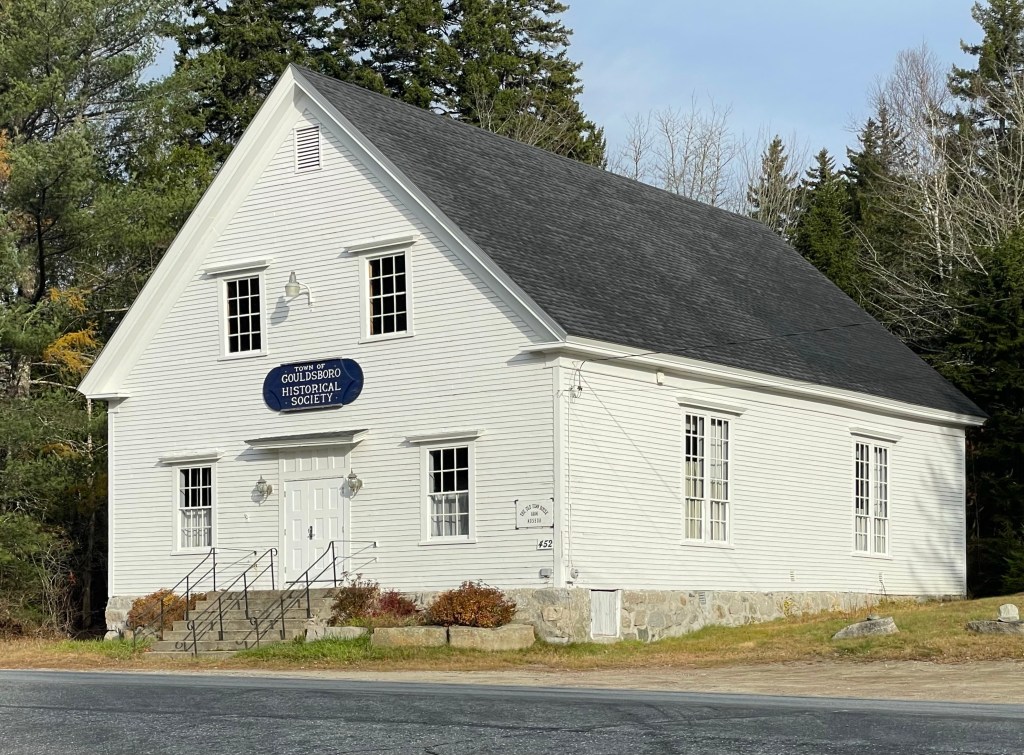
Welcome to Gouldsboro, Maine! The town is a charming community made up of many small fishing villages and neighborhoods dotting the rugged Maine coastline. Land in what was then part of Massachusetts, was given to Colonel Nathan Jones, Francis Shaw and Robert Gould in 1764 by the General Court of the Commonwealth of Massachusetts. Francis Shaw and Robert Gould were both merchants from Boston. Francis Shaw had worked hard to develop Gouldsboro, and reportedly died broke because of it, and his son Robert Gould Shaw returned to his parents’ native Boston. Development in the area was slow and never really took-off due to the distance from Boston, but fishing, mills, and villages were built and remain to this day. Now, much of the area is home to summer residents flocking to the area from urban areas. This building was Gouldsboro’s second townhouse. It was constructed in 1884, soon after the first townhouse burned a year prior. The structure was used for town meetings and elections until 1983. It is now owned by the Gouldsboro Historical Society. It is a late, vernacular example of a Greek Revival townhouse.
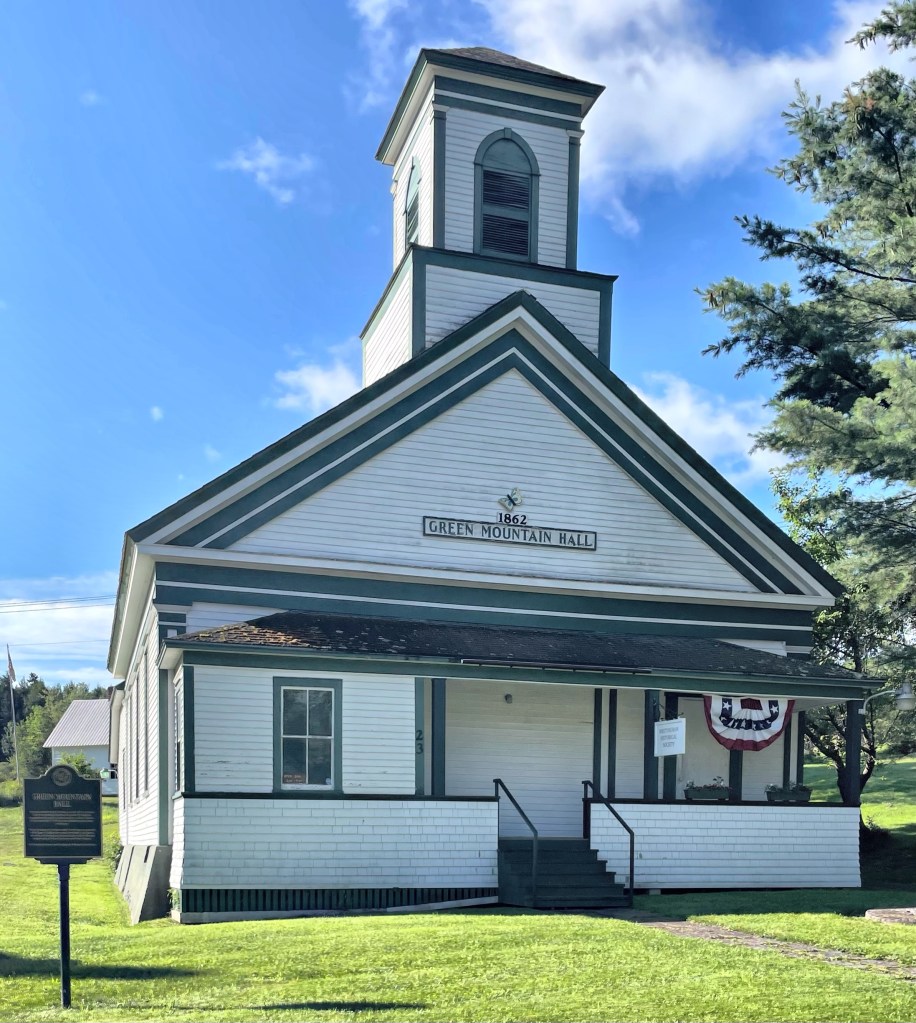
This simple Greek Revival style country church in Whitingham, Vermont is similar in form to the Methodist Church (last post) with a gable front double entry, large full pediment, corner pilasters, and centered two-tiered steeple. Also like the Community Church nextdoor, this was built circa 1860 as a church, but for the Universalist Unitarians in town. In 1892, the church was transferred to the Green Mountain Club, giving it the informal name “Green Mountain Hall,” and in 1905 the Town of Whitingham took it over. The building was used for dances, meetings, social gatherings, and other events until the Whitingham Historical Society took it over in a lease in 1971 to develop into a museum. The well-preserved vernacular building with its c.1920 front porch is a great representation of Vermont architecture, reuse for new uses and update. No waste, and a whole lot of charm!
One of the cutest old houses in Whitingham Village in Vermont is the Abraham F. Chase House, just a stone’s throw from the country store and post office. Abraham Chase was a dealer in dry goods, groceries, boots, shoes, and hardware in this village, possibly from half of this building. The vernacular one-story clapboarded frame house has some Gothic details like the rear steep double gable wall dormer. I am actually a huge fan of the green doors and newer stone porch wall, they really make this cottage pop!
Before the days of USPS trucks delivering mail to your door, mail was delivered to local post offices for pick-up daily. Due to this, many villages had their own post offices to service local communities better due to ease of access by residents. A post office first arrived in East Blue Hill Village, Maine in 1873, likely due to the distance traveled to the central village for mail. By 1884, George Long built this vernacular structure as the village post office, which belonged to members of the Long family, who also served as postmasters, until 1997. The post office is distinct in the state as the only known example of a purpose-built post office facility that is not owned by the United States Postal Service, and that was not built or adapted to its standards. The building sold out of the Long family in 1997, when it was purchased by the East Blue Hill Village Improvement Association, who have preserved it ever-since!
David Belding (1785-1860) was born in Swanzey, NH and at 25 years old, moved to Moretown, Vermont in 1810, marrying an eighteen-year-old Florinda Freeman a year later. The couple built a farmhouse on the outskirts of town near a brook. David worked as a farmer and would later officiate as a justice of the peace, the town lister, selectman, and represented the town in the State Legislature for two terms. From his enhanced wealth, David appears to have expanded his farmhouse in the 1820s or 30s with this vernacular Federal and Greek Revival style residence. The Belding Homestead would remain in the family for decades and eventually became the Belding House Bed & Breakfast.
The township of Moretown, Vermont was chartered on June 7, 1763 by Governor Benning Wentworth of New Hampshire. The original charter contained approximately 23,040 acres of land to be divided into about 65 shares of proprietors. Active settlement did not occur until after the Revolutionary War with early buildings constructed on the Winooski River (the northern boundary of the town) and subsequent development along the Mad River (which cuts through the middle of town). Saw and grist mills were built and the town developed as a rural farming and industrial community on the rivers. The Moretown Town Hall was erected in 1835 in the Greek Revival style. It has a pedimented portico with Doric columns that support a large pedimented gable peak in imitation of a Greek temple. Like most buildings in the Mad River Valley, the building is unapologetically Vernacular which means it relies on local materials, local builders, and not on architect-designed finishes. This is an aspect of Vermont architecture that makes the state so charming.
This is the first church ever built in Duxbury, Vermont. On December 18, 1854, at the South Duxbury schoolhouse, representatives from six denominations in the newly formed town, gathered to form the First Union Society of Duxbury. The participants were: the Congregationalists, Universalists, Free Will Baptists, Protestant Methodists, Episcopalian Methodists, and the Adventists. Twenty-five names appear on the original subscription list, indicating the pledged money or materials that each would contribute to the construction of the church. Samuel Cook Turner was contracted to build the church, with pews inside purchased by individual families to help fund the construction. The building is vernacular and modest due to the rural character of the congregations and town’s location, but it has a more Classically inspired door enframement. In 1890, funds were gathered for a church hall, which sits nextdoor. The meeting hall would serve as the meeting space for a temperance organization known as the “Independent Order of the Good Templar”. The church hall appears to have some deferred maintenance, but both buildings together share an early history of a rural and often overlooked small Vermont town.